Ethiopia’s Quest for Sea Access: Regional Rivalries, Legal Disputes, and Strategic Interests

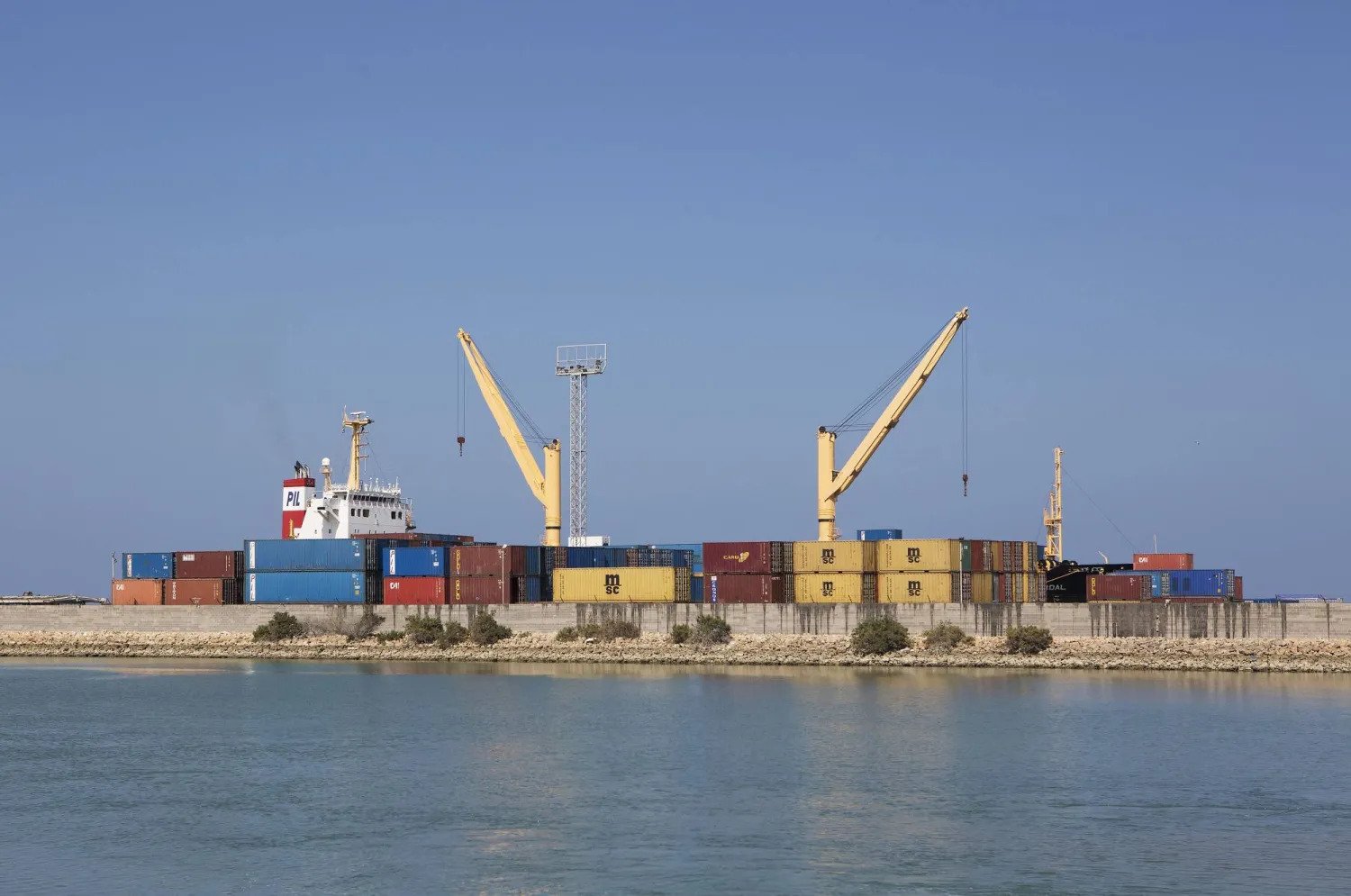
Ethiopia’s efforts to secure access to the sea have intensified over the past decade, driven by its desire to overcome the geographic constraints imposed by Eritrea’s independence in 1993, which left the country landlocked and heavily dependent on the ports of neighboring Djibouti. However, Addis Ababa’s determination to break its geographic isolation has encountered strong resistance from Somalia to the east and Eritrea to the north, amid tensions with Sudan to the northwest and renewed internal armed conflicts that have escalated in recent days.
Egypt has expressed solidarity with Ethiopia’s neighbors amid its longstanding dispute with Addis Ababa over Nile waters, while Israel has offered notable support for Ethiopia’s maritime ambitions.
Against this backdrop, African affairs experts interviewed by Asharq Al-Awsat believe that Ethiopia’s efforts to secure sea access will face significant obstacles, including international legal complexities, repeated Egyptian objections, persistent tensions with neighboring countries, and domestic instability.
An Ethiopian parliamentarian interviewed by the newspaper, however, defended Prime Minister Abiy Ahmed’s characterization of access to the sea as an “existential right.” He argued that this right should be pursued through mutual benefits and the preservation of security in the Horn of Africa. He also expressed confidence that Addis Ababa could eventually achieve its objective through official consultations and agreements, despite the prevailing tensions.
This article examines Ethiopia’s position on maritime access, the diplomatic understandings on which it hopes to rely, and the positions of countries supporting or opposing its ambitions. Opponents argue that accepting Ethiopia’s demands outside the framework of international law could destabilize regional arrangements and encourage other landlocked African countries to seek similar access.
Ethiopia’s Position
Since Abiy Ahmed came to power in April 2018, Ethiopia has pursued what he described as “port diplomacy,” seeking to regain maritime access after losing the ports of Assab and Massawa following Eritrea’s independence in 1993.
Abiy’s government subsequently concluded several agreements, including one with Sudan in May 2018 concerning access to Port Sudan. The following month, Ethiopia signed an agreement with Somalia to invest in several seaports. Neither initiative ultimately materialized, however, owing to disagreements and other complications that prevented their implementation.
In October 2023, Abiy adopted a more assertive tone, declaring in a speech that access to a seaport was an “existential necessity” for Ethiopia.
Such statements have continued, both from the prime minister and in Ethiopian media. In July 2026, Ethiopian Chief of Staff Berhanu Jula said at a graduation ceremony for the National Defence College that Ethiopia’s pursuit of maritime access required a high level of military readiness, particularly as the security situation in the Red Sea and the Horn of Africa continued to deteriorate.
Jula also warned that external actors and local armed groups were coordinating efforts to undermine Ethiopia’s security and prevent it from playing a role in regional stability.
Ethiopian parliamentarian Mohammed Nur Ahmed told Asharq Al-Awsat that securing maritime access was an urgent strategic and economic necessity, given Ethiopia’s size, geography, and large population.
He stressed that Addis Ababa remained committed to peaceful engagement and constructive dialogue with neighboring countries, ruling out confrontation as a means of achieving its objective.
“Ethiopia emphasizes that access to a seaport will not come at another party’s expense,” he said. Instead, he argued, it should be based on reciprocity and cooperation under international law, generating shared economic and developmental benefits for Ethiopia and the host country.
Ahmed suggested that Ethiopia could offer several incentives to potential partners, including electricity generated by the Grand Ethiopian Renaissance Dam, natural resources, and other economic opportunities.
He also maintained that maritime access would strengthen efforts to promote security and stability in the Horn of Africa and the Red Sea, helping countries address shared challenges, including piracy and maritime security threats.
The parliamentarian further predicted that internal tensions in northern Ethiopia would prove temporary and would not derail the country’s plans to obtain access to the sea.
Egypt’s Position
Egypt has explicitly opposed Ethiopia’s efforts to obtain maritime access, presenting its position as a matter of regional sovereignty and security rather than simply an extension of its dispute with Addis Ababa over Nile waters.
On September 10, Egyptian Foreign Minister Badr Abdelatty said that sovereign states already possessed ports along the Red Sea and that no country had the authority to grant another state military access to the sea.
Otherwise, he warned, the region could descend into disorder, particularly given the large number of landlocked African countries.
In late August, during a telephone conversation with Massad Boulos, an adviser to the US president, Abdelatty emphasized the importance of respecting the sovereignty, unity, and territorial integrity of regional states. He also called for an end to unilateral actions that could threaten regional peace and security or impose maritime access by force in violation of international law.
Abdelatty has repeatedly stressed that coastal states retain sovereignty over their Red Sea ports and that granting another country military access could open the door to instability. At the same time, he has distinguished between military access and commercial arrangements, indicating that Egypt does not oppose legally negotiated commercial access for landlocked countries.
In October 2025, he explicitly stated that Egypt opposed Ethiopia’s participation in the governance of the Red Sea coastline.
The issue was also discussed during Abdelatty’s meeting with Yemeni Prime Minister Shaea al-Zindani in Cairo in May, when the Egyptian foreign minister reiterated Cairo’s rejection of efforts to internationalize or militarize the Red Sea and the Gulf of Aden, as well as the involvement of non-coastal states in security arrangements concerning these waterways.
During a visit to Asmara that same month, Abdelatty met Eritrean Foreign Minister Osman Saleh. Both officials emphasized that responsibility for the security and management of the Red Sea belonged exclusively to its coastal states, according to a statement issued by Egypt’s Foreign Ministry.
Ethiopia, meanwhile, has accused Egypt of obstructing its efforts to secure maritime access. In May, Ethiopian Foreign Ministry spokesman Nebiat Getachew said Cairo was attempting to contain Ethiopia and prevent it from reaching the Red Sea. He nevertheless affirmed that Ethiopia would continue pursuing access through peaceful and sustainable means.
African affairs expert Ramadan Qarni argues that Egypt does not oppose Ethiopia obtaining commercial access to a seaport through legally established arrangements with neighboring countries. Djibouti has previously proposed such arrangements, he noted, although Ethiopia rejected them.
Cairo’s opposition, Qarni explained, is directed primarily at the prospect of an Ethiopian military foothold on the Red Sea. Egypt is concerned that such a development could have implications for Arab and African national security, particularly amid the involvement of outside powers such as Israel and the security threats affecting the Bab al-Mandab Strait.
Despite the Ethiopian government’s diplomatic and media campaign, Qarni believes that the prospects of securing a permanent military presence on the Red Sea remain constrained by complex regional and international considerations.
These include opposition from regional and international organizations, concerns over Somalia’s sovereignty, and Ethiopia’s potential exposure to diplomatic isolation in Africa. Domestic economic and security challenges in Oromia, Amhara, and Tigray, as well as tensions with Sudan, Eritrea, and Somalia, add further complications.
Qarni also argues that Cairo has strengthened its regional and international political and security partnerships to discourage unilateral moves and protect vital maritime routes.
Eritrea and Somalia Reject Ethiopia’s Maritime Ambitions
Eritrea and Somalia have emerged as prominent opponents of Ethiopia’s efforts to secure maritime access.
Mogadishu strongly objected to a memorandum of understanding signed by Addis Ababa and the breakaway region of Somaliland in 2024. The agreement was intended to give Ethiopia access to the port of Berbera.
Somalia subsequently announced the cancellation of the agreement, receiving support from several Arab countries, particularly Egypt. Turkish mediation later that year helped move the dispute out of the immediate diplomatic spotlight.
Eritrea, which controls the port of Assab, has also repeatedly rejected Ethiopia’s ambitions, accusing Addis Ababa of seeking to regain control over the port.
In July 2025, Eritrean President Isaias Afwerki accused Ethiopia of pursuing policies that threatened regional stability under the pretext of water-related concerns and demands for access to the Red Sea. He described the maritime-access issue as a pretext for escalating conflict.
Eritrean Information Minister Yemane Gebremeskel similarly characterized Ethiopia’s rhetoric as reckless and warned that it amounted to a return to the language of war. He insisted that Eritrea’s sovereignty and coastline were not open to renegotiation.
In May, Ethiopian Foreign Ministry spokesman Nebiat Getachew compared Egypt’s diplomatic outreach to countries including Eritrea, Djibouti, and Kenya to an attempt to encircle Ethiopia and prevent it from gaining maritime access.
According to Qarni, the dispute over the Ethiopia–Somaliland memorandum marked a strategic turning point in the Horn of Africa and became a major driver of Egyptian foreign policy in the region.
He described the agreement as a wake-up call that prompted Cairo to intensify its diplomatic engagement on several fronts to protect its national security and regional stability.
That response, he said, translated into closer partnerships with Eritrea and Somalia, alongside a broader convergence of positions among Egypt, Eritrea, Djibouti, and Somalia on the principle that coastal states should retain exclusive authority over arrangements concerning their coastlines and the Red Sea.
Israel’s Support for Ethiopia
In September, the Ethiopian News Agency reported that Israel had expressed diplomatic support for Ethiopia’s efforts to secure access to the sea.
Israeli Ambassador to Ethiopia Avraham Neguise was quoted as saying that his country strongly supported Ethiopia’s efforts to obtain access to the Red Sea.
“Empowering Ethiopia, strengthening it, and achieving stability in the Red Sea are interests shared by everyone, not Ethiopia alone,” the ambassador said, adding that Israel stood alongside Ethiopia in pursuing these objectives.
This was not the first time Neguise had commented on issues linked to tensions between Egypt and Ethiopia. In August, he said Israel would continue strengthening its support for Ethiopia to help it become a leading economic power in Africa.
Those remarks prompted a warning from Mohamed al-Orabi, Egypt’s former foreign minister, a member of the Senate’s Foreign Relations Committee, and head of the Egyptian Council for Foreign Affairs. He argued that Israel’s statements would neither alter nor undermine Egypt’s position.
Qarni likewise doubts that Israeli support will change Cairo’s opposition to an Ethiopian military presence on the Red Sea. He believes Israel is seeking to exert pressure on Egypt over other regional issues, while maintaining that Egypt has the capacity to safeguard its interests.
African affairs expert Abdel Moneim Abu Idris also told Asharq Al-Awsat that Ethiopia would find it difficult to secure maritime access amid its current tensions with neighboring countries. He noted that Sudan has accused Ethiopia of supporting the Rapid Support Forces militia.
Abu Idris added that Egypt would not accept an Ethiopian military presence along Sudan’s coastline or on the Red Sea, citing the implications for Egyptian and regional security.
Ahmed, the Ethiopian parliamentarian, offered a more optimistic assessment, arguing that his government could still persuade neighboring countries to reconsider their positions and enter into agreements designed to advance shared interests.
A Dispute With Broader Regional Implications
Ethiopia’s pursuit of maritime access reflects a combination of economic needs, strategic calculations, and concerns about its long-term geopolitical position. As one of the world’s most populous landlocked countries, Ethiopia has strong incentives to diversify its access to international trade routes and reduce its dependence on neighboring ports.
Yet the issue extends beyond commercial access. Questions surrounding military facilities, sovereignty, control of strategic coastlines, and the security of the Red Sea have made the dispute increasingly sensitive.
For Egypt, the central concern is not simply whether Ethiopia can use a seaport for trade, but whether any arrangement could establish a precedent for a military presence or unilateral changes to regional security arrangements. For Somalia and Eritrea, the issue is closely tied to territorial sovereignty and fears that Ethiopia’s ambitions could threaten their security.
Israel’s declared support adds another dimension, placing the dispute within a broader regional landscape already shaped by competing strategic interests.
The available positions suggest that a negotiated commercial arrangement remains conceptually distinct from the establishment of an Ethiopian military foothold on the Red Sea. Whether that distinction can form the basis of an agreement will depend on the willingness of Ethiopia and its neighbors to reconcile economic interests with sovereignty and security concerns.
For now, Ethiopia’s maritime ambitions remain a source of diplomatic friction across the Horn of Africa. Their eventual outcome will depend not only on Addis Ababa’s determination, but also on the legal framework, regional balance of power, and political compromises that neighboring states are prepared to accept.
Most read




Read also