Israel Between Internal Cohesion Crises and International Isolation

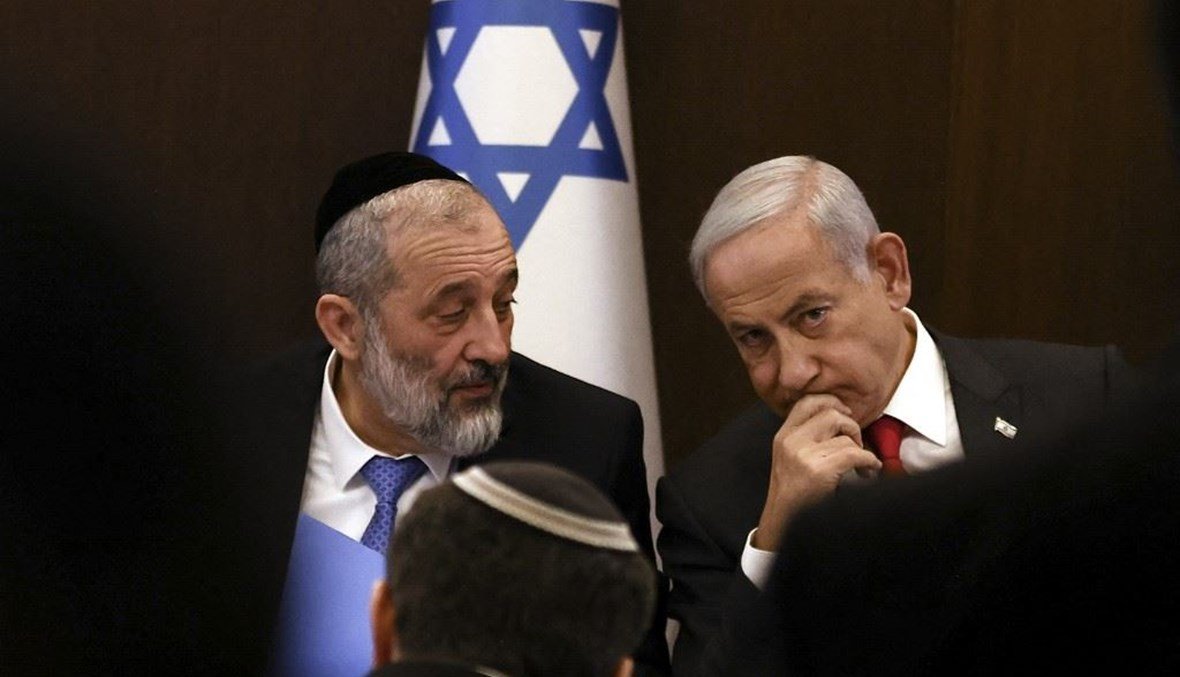
The challenges facing Israel are no longer confined to the consequences of military confrontations or partisan competition for power. Rather, they are unfolding within a more complex crisis in which shifts in Israel’s international standing intersect with structural imbalances within its society and political system. The significance of this convergence lies in the fact that external pressures are no longer separate from domestic contradictions but are increasingly contributing to their intensification. This raises fundamental questions about the capacity of Israeli institutions to restore stability and generate sustainable political and social consensus.
Changes in Israel’s international environment represent an important dimension in understanding its current crisis, particularly amid mounting criticism of its military policies and growing political and diplomatic pressure associated with the wars in which it is engaged. Although Israel continues to maintain strategic relations with several Western powers, most notably the United States, the widening opposition to its policies points to increasing challenges affecting its international image and its ability to preserve traditional levels of support.
The significance of these developments extends beyond their immediate diplomatic implications to their potential impact on Israeli society’s perception of the sources of its strength and security. For decades, the strategic relationship with the United States has constituted one of the principal pillars underpinning Israel’s military superiority and expanding its political room for maneuver. It has also reinforced the perception that Israel benefits from an external support framework capable of mitigating some of the threats and challenges it faces.
From this perspective, declining levels of public and political support for Israel within certain American constituencies, despite the continuation of official commitments, may raise concerns about the future and sustainability of such support. These concerns become particularly significant when they coincide with the rising economic and military costs of prolonged wars, growing divisions over national security priorities, and disagreements concerning the nature and direction of political leadership.
Nevertheless, growing international isolation does not necessarily imply that Israel is losing its strategic alliances or becoming completely isolated. A distinction must be drawn between the deterioration of its image in international public opinion and actual changes in the government policies of allied states. Even so, the widening gap between these two dimensions could become an additional source of pressure on decision-makers, particularly if it begins to influence calculations concerning political, military, and economic assistance.
This raises a deeper question regarding the relationship between external legitimacy and internal cohesion. As uncertainty surrounding Israel’s supportive international environment increases, so too does the likelihood that external pressures will spill over into the domestic political and social sphere, potentially constraining successive governments’ ability to manage internal divisions or contain their consequences.
Against this backdrop, the forthcoming general elections present another test of the Israeli political system’s ability to overcome the polarization that has become a defining characteristic of its domestic landscape. Although elections constitute the primary constitutional mechanism for redistributing political power and renewing political legitimacy, they do not necessarily provide solutions to structural crises that extend beyond party competition.
According to the public opinion trends and estimates cited in the report under discussion, political forces opposing Prime Minister Benjamin Netanyahu may gain an advantage without necessarily securing the parliamentary majority required to establish a stable government. Should this balance persist, the political system could find itself reproducing the same deadlock, even if the elections alter the distribution of power among political parties.
This possibility is particularly relevant given the nature of Israel’s electoral system, which is based on proportional representation and a multiparty structure. Government formation therefore depends on the ability of political actors to construct coalitions capable of overcoming ideological and social differences. As divisions widen between religious and secular constituencies, as well as among right-wing, centrist, and left-wing political forces, coalition-building becomes increasingly complicated, particularly when security considerations intersect with disputes over the identity of the state and the role of religion within its institutions.
Israel’s political experience between 2019 and 2022 illustrates the limitations of repeated elections as a mechanism for resolving political fragmentation. During this period, the country held five general elections in less than four years, with the earlier rounds failing to establish lasting governmental stability.
Consequently, the central question concerns not merely which party or alliance might secure the largest number of parliamentary seats, but whether the victorious political forces can assemble a cohesive majority, develop an implementable political program, and manage contradictions among coalition partners.
Changing the political leadership, therefore, may be important but is insufficient in itself to resolve the crisis if the underlying drivers of polarization remain unchanged. Elections may succeed in reshaping the partisan landscape without necessarily rebuilding the social and political consensus required for systemic stability.
Israel’s current crisis extends beyond partisan divisions, revealing deeper structural imbalances in the relationship between the state and its various social constituencies, particularly regarding the distribution of obligations, resources, and burdens across society.
Military conscription represents one of the clearest manifestations of these imbalances, especially amid continuing disputes over exemptions from military service for segments of the ultra-Orthodox Jewish population, known as the Haredim, while other social groups continue to shoulder the responsibilities of compulsory military service and reserve duty.
This disagreement cannot be reduced to an administrative dispute over conscription policies. Rather, it reflects more profound differences in how various social groups understand citizenship, equality, and the role of religion in regulating the relationship between individuals and the state.
These contradictions become more pronounced during prolonged wars, when the human and economic burdens of military service increase and the distribution of sacrifices becomes subject to intensified social and political scrutiny. Under such circumstances, perceptions of unequal obligations may fuel polarization and weaken mutual trust among different social constituencies.
This issue intersects with other disputes concerning the powers of judicial institutions, the limits of executive authority, the nature of the democratic system, and cultural and ideological disagreements over the identity of the state.
It is also important to recognize that Israeli society is neither socially nor politically homogeneous. Beyond divisions within the Jewish population, questions of citizenship, equality, and political representation affecting Arab citizens of Israel introduce additional dimensions to debates over the nature of the state and its capacity to accommodate social and political pluralism.
The accumulation of these contradictions therefore reveals a crisis concerning the fundamental principles governing relations between the state and society, rather than merely disagreements over government decisions or the performance of political leaders.
In other words, what distinguishes the current period is the simultaneous convergence of several crises that the Israeli political system might, under different circumstances, have addressed separately. Wars are depleting economic and human resources, political divisions are obstructing decision-making, and social disputes are reopening fundamental questions concerning identity and citizenship. Meanwhile, international pressures are imposing additional constraints on security and foreign policy calculations.
This convergence complicates crisis management, as measures intended to address one structural imbalance may intensify others. For example, attempts to expand military conscription could increase tensions with religious parties participating in governing coalitions, while postponing a resolution could deepen perceptions of injustice among other segments of society regarding the distribution of national burdens.
Similarly, continued military operations may enable the government to mobilize sections of society around national security considerations, but they may simultaneously intensify economic and social pressures and sharpen disagreements over the strategic objectives, costs, and outcomes of war.
Within this framework, the principal challenge lies in the political system’s ability to produce compromises that command sufficient social acceptance, rather than merely maintaining institutional continuity or forming a new government.
In earlier periods, Israel managed to contain some of its internal contradictions through coalition negotiations or by invoking external threats as a means of strengthening social cohesion. However, the effectiveness of these mechanisms becomes increasingly uncertain when external threats themselves contribute to disagreements over leadership, priorities, and the distribution of responsibilities.
More broadly, an assessment of Israel’s current crisis requires distinguishing between the possibility of sudden political collapse and the gradual erosion of the system’s capacity to manage its internal contradictions. Persistent polarization, repeated elections, and escalating social disputes do not necessarily indicate that state collapse is imminent or that its institutions are approaching paralysis.
Israel continues to possess administrative, military, and economic institutions with significant organizational capabilities, alongside external strategic relationships that contribute to the continuity of its political system. Accordingly, based on the available evidence, the more analytically plausible scenario concerns declining governance effectiveness, persistent political deadlock, and erosion of public trust in institutions, rather than the inevitability of comprehensive collapse.
Nevertheless, prolonged institutional erosion may have far-reaching strategic consequences. It can undermine the system’s ability to make consistent and sustainable decisions, increase the costs of political compromise, and make crisis management increasingly dependent on narrow partisan calculations rather than broader national consensus.
The persistence of these conditions may also transform temporary crises into chronic structural imbalances, leaving successive governments more preoccupied with securing their political survival than with addressing the underlying challenges confronting society.
Ultimately, these developments suggest that Israel’s central challenge is not simply a crisis of political leadership, but a declining capacity within its existing political and social framework to accommodate accumulated contradictions and manage them in ways that preserve stability. Growing international isolation, economic pressures resulting from prolonged wars, disputes over military conscription, and conflicts concerning the relationship between religion and the state interact to place the political system under a test that extends well beyond the outcome of the next elections.
The future trajectory of this crisis will therefore depend on three principal variables: the ability of political institutions to restore their effectiveness; the possibility of reaching more durable social compromises regarding the distribution of rights and responsibilities; and Israel’s capacity to contain external pressures without allowing them to become additional drivers of domestic polarization.
In the absence of meaningful progress in these areas, Israel may continue to experience prolonged political and social instability, even if governments change or party alliances are reconfigured.
The fundamental challenge, therefore, is not merely whether state institutions can continue performing their immediate functions, but whether they can generate renewed political and social legitimacy while preserving the minimum level of trust necessary to manage internal conflicts. From this perspective, Israel’s crisis represents a structural test of the political system’s capacity for resilience, continuity, and adaptation, rather than simply another temporary electoral crisis.
Most read




Read also