The Tunisian Economy in 2026: Resilience That Prevents Collapse, but Does Not Yet Deliver a Takeoff

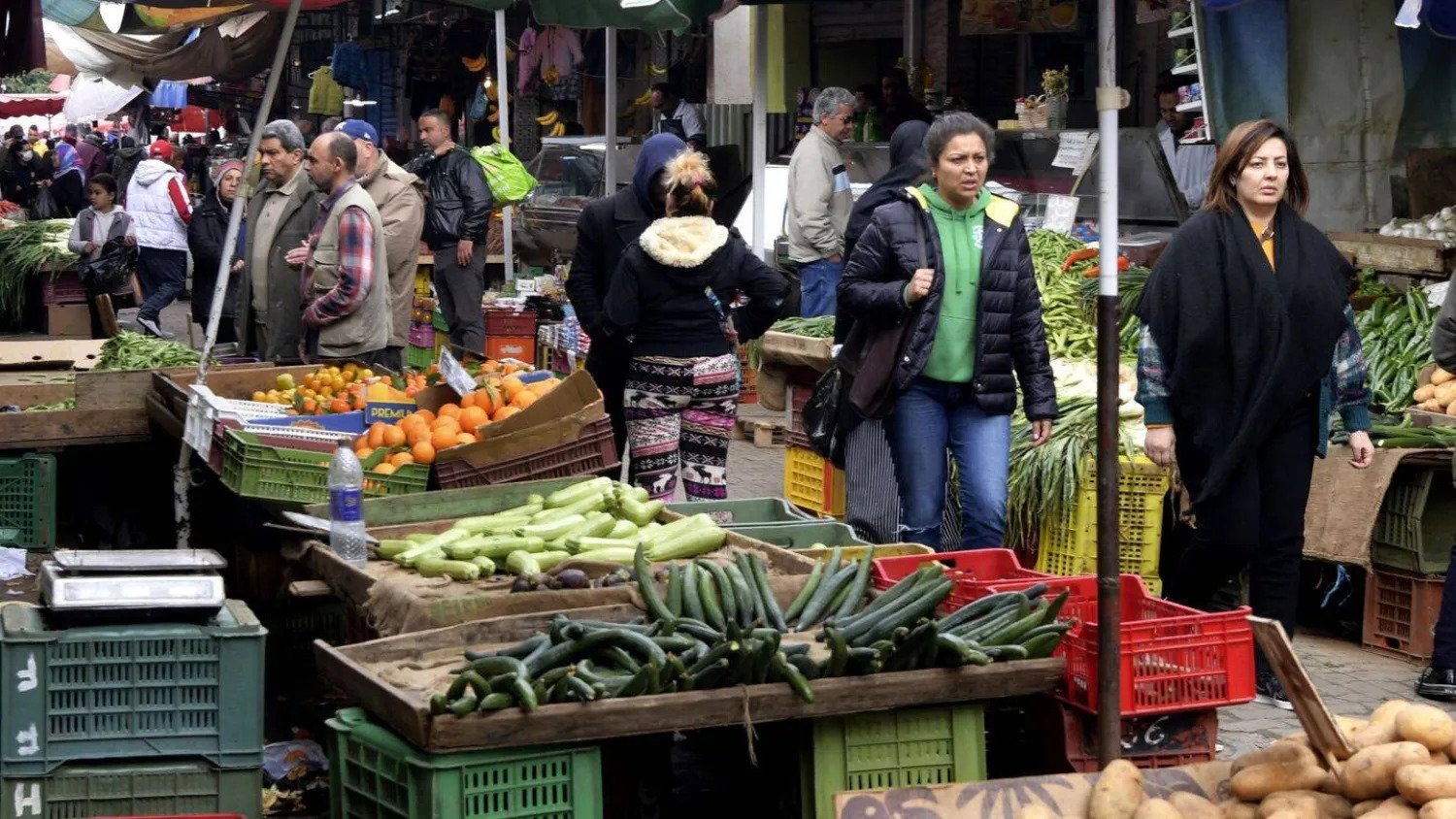
Tunisia enters the second half of 2026 with an economic picture more complex than either the positive indicators or the more pessimistic warnings might suggest. On the one hand, the economy has managed to maintain a degree of monetary and financial stability, while growth has improved and inflation has declined. Tourism, remittances from Tunisians abroad, and exports have also helped strengthen the country’s foreign-currency reserves. On the other hand, unemployment remains high, purchasing power continues to face pressure from accumulated price increases, investment is constrained by limited financing, and debt servicing consumes a significant share of government resources.
The central paradox in Tunisia’s economic outlook is therefore clear: the economy has demonstrated resilience, but it has not yet achieved a sustainable economic takeoff. The gap between avoiding collapse and achieving development is likely to shape the next phase.
Stability Does Not Necessarily Mean Recovery
Official indicators provide grounds for a more positive reading of the economic situation. GDP growth reached 2.6 percent year-on-year in the first quarter of 2026 before easing to 2.3 percent in the second quarter. Tourism, remittances from Tunisians abroad, and industrial and agricultural exports also improved, with these inflows contributing approximately $10 billion and supporting the Central Bank’s foreign-currency reserves.
Yet these indicators alone are insufficient to determine whether the economy has overcome its structural problems. Growth of between 2 and 3 percent may help prevent deterioration, but it remains modest for an economy facing official unemployment of close to 15 percent, particularly among young people and university graduates.
This highlights the difference between aggregate growth and socially meaningful growth. GDP may expand without generating jobs or income opportunities quickly enough to improve living standards. The key economic question for Tunisia is therefore no longer simply whether the economy is growing, but whether it is growing at a sufficient pace and in a way that can absorb unemployment, improve incomes, and broaden the productive base.
This gap helps explain the different assessments offered by the government, some economists, and labor organizations. The government views improving indicators as evidence that its policy of relying on domestic resources can deliver stability, while critics argue that financial stability has limited economic meaning unless it translates into tangible improvements in people’s daily lives.
The Inflation Dilemma: Slower Price Increases Do Not Mean Lower Prices
Prices provide perhaps the clearest example of the gap between an economic indicator and people’s actual experience.
A decline in inflation from levels exceeding 10 percent in previous years to around 5 percent means that prices are rising more slowly; it does not mean that prices themselves have returned to previous levels. In other words, lower inflation does not necessarily mean that households have recovered the purchasing power they lost during years of rising prices.
Consequently, continued pressure on incomes has become an issue extending beyond monetary policy into the social and political sphere. Middle-class and lower-income households do not experience inflation as an economic statistic, but through the cost of food, energy, transportation, and services, and through their actual ability to meet basic needs.
This also explains why wages and social dialogue have returned to the center of the debate. Financial stability requires spending discipline, while social stability requires limiting the erosion of household incomes. Tunisia’s economic policy is therefore operating within a narrow space between these two requirements.
Public Debt: When Financing Becomes a Burden on Investment
If prices represent the social dimension of the crisis, debt is one of its most significant financial challenges.
The report indicates that more than one-third of the state budget is allocated to debt servicing, limiting the resources available for investment at a time when the government is relying increasingly on domestic borrowing.
The problem is not simply the amount of borrowing, but also the way resources are distributed within the financial system. When banks devote a large share of their resources to financing the state, government securities become a safer alternative to lending to companies and productive projects. This can reduce the credit available to the private sector.
A structural dilemma consequently emerges: the state needs banks to finance its deficit, but it also needs banks to finance the private sector so that the economy can grow and generate jobs.
Thus, the government’s ability to secure its short-term financing needs does not necessarily amount to success in economic policy over the longer term if that financing comes at the expense of investment and productivity.
Monetary Financing Between a Temporary Solution and a Risk
The dilemma becomes more sensitive when the discussion turns to direct financing of the Treasury by the central bank.
Injecting additional liquidity into an economy in which the supply of goods and services is not expanding at a comparable rate could renew pressure on prices and the value of the currency. Monetary financing may therefore provide the public finances with room to maneuver in the short term, but it does not address the underlying problems of weak productivity and insufficient investment.
From this perspective, the issue is essentially a trade-off between immediate stability and long-term sustainability. Exceptional measures can help the government overcome a specific financing crisis, but they become more problematic if temporary instruments evolve into permanent mechanisms for financing public expenditure.
Energy: At the Heart of the External Imbalance
The trade balance reveals another dimension of the challenge. During the first seven months of 2026, Tunisian exports reached approximately 40.6 billion dinars, compared with imports of about 55.6 billion dinars, leaving a gap of roughly 15 billion dinars, or slightly more than $5 billion based on the exchange rate cited in the report.
The analysis presented in the report indicates that energy accounts for more than half of this trade deficit, giving the transition toward renewable energy significance beyond environmental considerations.
Investment in solar and wind power could, from this perspective, reduce the need for energy imports, lower demand for foreign currency, improve the trade balance, and contribute to more reliable electricity supplies for industry.
Energy policy is therefore directly linked to the concept of economic sovereignty. The less dependent the economy is on imported energy, the greater its ability to manage part of its external needs and the less exposed it becomes to fluctuations in international oil and gas prices.
Power Disruptions Reveal a Problem Beyond Financing
Summer power disruptions demonstrated that the challenge is not simply the cost of energy or the amount of financing available. It is also related to the state’s ability to convert resources into effective investment in generation capacity and networks.
The report notes that public investment allocations increased from 4.7 billion dinars in 2023 to 6.5 billion dinars in 2026, while the government emphasized that the challenge is no longer merely securing funds but implementing projects on schedule.
This highlights a deeper problem: financing is not an end in itself; it is a means of generating productive investment.
If funding is available but does not translate into completed projects that raise productivity, reduce energy costs, and strengthen the private sector, higher public investment may not produce the expected economic impact.
The Economy and Politics: Where Does One End and the Other Begin?
Tunisia’s economic performance cannot be separated from its political and social environment. Opposition groups and labor organizations view deteriorating social indicators as part of a broader crisis involving political dialogue and accountability, while the government argues that its policies have restored greater national independence in economic decision-making and enabled the country to maintain stability despite external pressures.
Regardless of the differing political interpretations, economic and social conditions remain an important component of overall stability.
Persistent increases in prices or unemployment do not remain purely economic issues for long. Likewise, weak investment affects not only growth rates but also the state’s ability to create jobs, improve services, and preserve social balances.
The challenge for Tunisia is therefore not simply to achieve economic stability in a narrow sense, but to turn stability into the foundation for more inclusive growth.
Three Possible Paths for the Tunisian Economy
Based on the information presented in the report, three broad paths can be envisaged for the next phase.
The first is the continuation of the current situation: growth of between 2 and 3 percent, relatively manageable inflation, continued tourism, remittances and exports, and the state’s ability to meet its obligations. This path could prevent a broad crisis, but it would not necessarily resolve unemployment, weak purchasing power, or insufficient investment.
The second would involve renewed financial pressure if debt continues to rise and reliance on domestic financing expands, while the trade deficit widens or new shocks to energy prices emerge. Under such circumstances, the risks associated with inflation, monetary financing, and the declining ability of the state to direct resources toward investment could increase.
The third—and the one most closely associated with turning stability into growth—would involve directing resources toward productive investment, accelerating renewable-energy projects, improving infrastructure and ports, simplifying administrative procedures, restructuring public enterprises, expanding the financial system’s capacity to finance companies, and making greater use of the savings and investment potential of Tunisians abroad.
From Crisis Management to Building a Growth Model
Based on the information presented in the report, Tunisia’s predicament in 2026 does not appear to be one of imminent collapse, nor is it a story of completed economic recovery. Rather, it is a transitional phase in which the state has managed to contain a number of risks but has not yet resolved the structural problems that produced them.
This will be the central test of economic policy in the period ahead.
It may be possible to maintain modest growth, contain inflation, secure the financing needed for the budget, and avoid a major monetary crisis. But these achievements will remain defensive in nature unless they are converted into investments that increase productivity, create jobs, reduce import dependence, and expand the export base.
The central question facing Tunisia is therefore no longer simply how to avoid a crisis, but how to turn the stability that has been achieved into a new cycle of investment, production, and employment.
The answer will determine whether the policy of relying on domestic resources becomes the foundation for more sustainable growth, or instead remains primarily a framework for managing a prolonged financial and economic challenge.
In either case, the most sensitive equation will remain the balance between the state’s ability to maintain fiscal discipline, its need to finance investment, the imperative of protecting purchasing power, and the need to create jobs. Resilience gives the economy time, but it is not, by itself, a growth strategy.
Tunisia therefore appears to have an opportunity to transform relative stability into a point of departure. The success of that opportunity, however, will depend to a significant extent on the ability of public policy to move from managing available resources to expanding the economy’s productive capacity.
Most read


Read also