The Transformation of Algeria’s Security Doctrine: Military Deployment in Niger and the Reshaping of Influence in the Sahel

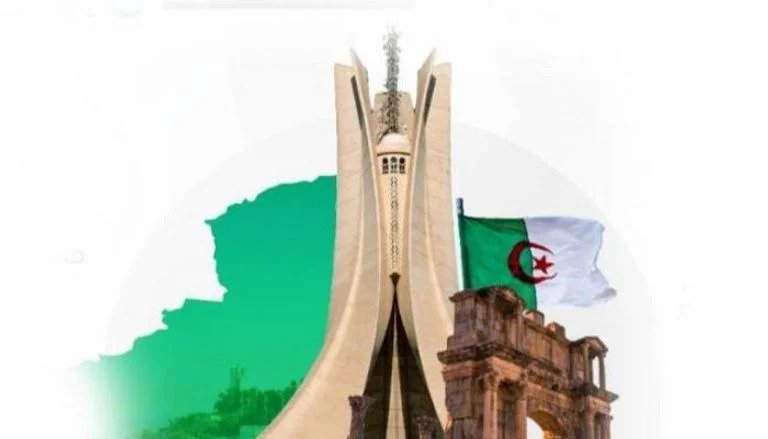
Algeria’s deployment of military assets to Niger following the mutiny that took place in late August marks a potentially significant development in the country’s security and foreign policy. The move reflects a possible shift in Algeria’s traditional approach to regional crises, particularly in the Sahel, where deteriorating security conditions, the expansion of armed extremist groups, and growing geopolitical competition have placed increasing pressure on neighboring states.
On August 30, Algeria reportedly deployed four Su-30 fighter jets and an aerial refueling aircraft to Niger’s Air Base 101 in Niamey, following a mutiny on August 29. This deployment came after four helicopters had reportedly been sent to Niger earlier in August. If confirmed as described, the move would represent a notable departure from Algeria’s longstanding reluctance to project military power beyond its borders. Some accounts have characterized it as Algeria’s first military deployment outside its territory since 1973.
The significance of this development extends beyond the immediate circumstances in Niger. It raises broader questions about the evolution of Algeria’s security doctrine, its conception of strategic depth, its relations with neighboring Sahelian states, and its willingness to assume a more direct role in addressing regional instability.
Algeria has traditionally emphasized non-interference, respect for state sovereignty, diplomatic engagement, and the protection of its national borders. Although it has maintained an active security role in the Sahel, its approach has generally prioritized intelligence cooperation, border security, and political mediation over the direct deployment of military forces abroad.
The reported deployment to Niger may indicate a reassessment of this approach. By positioning combat aircraft and supporting assets at a military base in Niamey, Algeria appears to be demonstrating a greater willingness to engage with regional security challenges beyond its own territory. However, the precise objectives of the deployment remain unclear, and its presence alone does not establish that Algeria intends to pursue a sustained military intervention.
The distinction between a temporary deployment undertaken at the request of a neighboring government and the establishment of a permanent foreign military presence is particularly important. These scenarios carry different political and strategic implications. A limited deployment could be presented as a cooperative security measure intended to support a neighboring state, whereas a permanent presence would represent a more fundamental change in Algeria’s regional military posture.
Accordingly, the deployment should be understood as a potential indicator of doctrinal evolution rather than conclusive evidence that Algeria has abandoned its traditional principles.
The broader security environment provides an important context for understanding Algeria’s decision. The Sahel has experienced persistent instability driven by armed insurgencies, political upheavals, weak state institutions, and the growing operational reach of extremist organizations.
Niger, Mali, and Burkina Faso have faced significant security challenges associated with groups affiliated with Jama’at Nusrat al-Islam wal-Muslimin (JNIM) and the Islamic State Sahel Province. These threats extend beyond the immediate areas of conflict, affecting border communities, trade routes, population movements, and the security calculations of neighboring countries.
For Algeria, instability in the Sahel is not a distant foreign policy concern. The country shares a border of approximately 951 kilometers with Niger and 1,359 kilometers with Mali. These extensive frontiers create opportunities for cross-border movement by armed groups and illicit networks, while political instability in neighboring states can weaken security coordination and complicate efforts to contain regional threats.
From this perspective, the deployment to Niger may reflect a growing recognition that border protection alone is insufficient to address threats whose origins, operational networks, and logistical routes extend deep into neighboring territories.
Nevertheless, the presence of Algerian aircraft in Niamey does not, by itself, demonstrate that Algeria intends to conduct offensive operations against armed groups. Establishing such an objective would require additional evidence regarding the deployment’s mandate, operational arrangements, and subsequent activities.
Niger occupies a strategically important position in Algeria’s regional calculations, not only because of its geographic proximity but also because of its potential role in trans-Saharan connectivity and energy cooperation.
One of the most consequential projects linking the two countries is the proposed Trans-Saharan Gas Pipeline, designed to transport natural gas from Nigeria’s Niger Delta through Niger to Algeria’s Mediterranean coast. The planned pipeline extends for more than 4,100 kilometers. According to the available account, approximately 2,400 kilometers have been built in Algeria and Nigeria, while around 1,600 kilometers remain to be completed, largely along the route through Niger.
The project could strengthen energy cooperation between the participating countries and expand opportunities for gas exports to international markets. It could also form part of a broader trans-Saharan transport and infrastructure network incorporating railways, roads, and communications systems.
However, the pipeline’s realization depends on more than engineering and financing. Political stability, security guarantees, cross-border coordination, and sustained cooperation among the countries involved are essential to its completion and long-term operation.
Insecurity in Niger could therefore have direct implications for Algeria’s economic and strategic interests. The protection of energy corridors and regional infrastructure may be one factor shaping Algeria’s broader approach to the country, although it should not be treated as a confirmed explanation for the military deployment.
The concept of strategic depth is relevant here. From Algeria’s perspective, national security may increasingly depend on developments beyond its immediate borders, particularly in neighboring states whose stability affects its border security, economic connectivity, and regional influence.
The reported deployment also points to a possible evolution in Algeria’s foreign policy. Rather than relying exclusively on diplomatic engagement and border defense, Algeria may be adopting a more pragmatic approach that combines political dialogue with a greater readiness to participate in regional security arrangements.
Riccardo Fabiani of the International Crisis Group has argued that Algeria cannot safeguard its security solely by protecting its borders. This assessment highlights a central dilemma facing countries exposed to cross-border insurgencies: threats may originate outside national territory, making cooperation with neighboring governments and engagement with the surrounding security environment increasingly important.
A more pragmatic approach would not necessarily mean abandoning Algeria’s longstanding commitment to sovereignty and non-interference. Instead, it could reflect an effort to reinterpret these principles in response to changing regional conditions.
Under this approach, Algeria could seek to strengthen cooperation with neighboring governments, improve intelligence sharing, support regional security coordination, and develop mechanisms that allow it to respond more effectively to threats originating beyond its borders.
The arrival of the Algerian military delegation, reportedly led by Major General Rachid Cheblaoui, and the appearance of Algerian officials at a press conference alongside Nigerien representatives suggest a degree of visible institutional coordination. Nevertheless, the precise scope of the arrangements and the operational responsibilities associated with the deployment remain insufficiently clear to support definitive conclusions about the long-term direction of Algerian policy.
Air Base 101, located near Niamey’s international airport, has additional strategic significance because it has been associated with the activities of Russia’s Africa Corps. Its location could, in principle, provide Algeria with an operational platform from which to support certain security activities in the Sahel.
Depending on the nature of the bilateral arrangements, such a position could potentially facilitate surveillance, intelligence gathering, logistical support, and coordination related to regional security. In a broader operational context, the use of drones and other intelligence capabilities could also be considered.
However, these possibilities should not be confused with confirmed Algerian intentions. There is no clear indication, based on the reported deployment alone, that Algeria plans to conduct drone operations or establish a sustained intelligence presence extending across the Sahel or the Lake Chad Basin.
The presence of Russian Africa Corps personnel at the same base also raises questions about the wider geopolitical environment in which Algeria’s deployment is taking place. Yet the location itself does not establish the existence of direct operational coordination between Algeria and Russia. Such a conclusion would require evidence of specific agreements, joint activities, or coordinated command arrangements.
The principal significance of the deployment lies instead in Algeria’s apparent willingness to place military assets in a neighboring country as part of a regional security response. Whether this remains a limited and temporary measure or develops into a broader operational role will depend on subsequent decisions and the evolution of the security situation.
Algeria’s deployment must also be considered in light of its changing relations with the countries of the central Sahel. Niger, Mali, and Burkina Faso are members of the Alliance of Sahel States (AES), a regional grouping formed amid political tensions with several international partners and growing emphasis on security cooperation among its members.
The three countries face overlapping security challenges, particularly from JNIM and the Islamic State Sahel Province. Their regional alignment creates both opportunities and complications for Algeria, which has traditionally sought to preserve its diplomatic influence and maintain working relations with neighboring governments.
Relations between Algeria and Mali deteriorated following Mali’s 2023 military coup and subsequent political and security disagreements. The two countries announced plans in July to rebuild their relationship, suggesting that both sides recognize the importance of restoring communication and cooperation.
For Algeria, stronger engagement with Niger could provide an additional channel through which to address regional security concerns. At the same time, the country must navigate a complex political environment in which the AES states are reassessing their external partnerships and their approaches to regional security.
Algeria’s ability to maintain constructive relations with these governments will depend on whether its actions are perceived as supporting their sovereignty and security priorities rather than seeking to impose external preferences. Any sustained military role would therefore require careful diplomatic management, clear terms of cooperation, and sensitivity to the political circumstances of the host country.
A more active Algerian role in the Sahel could offer several potential advantages. It may improve coordination with neighboring governments, provide greater awareness of emerging threats, and enable Algeria to respond more directly to security developments that could affect its territory. It could also help protect regional infrastructure and reinforce Algeria’s position as a consequential actor in North African and Sahelian affairs.
However, a broader military role would carry substantial risks.
First, deeper involvement could expose Algeria to security threats that extend beyond its borders and increase the likelihood of becoming directly entangled in conflicts whose political and military outcomes remain uncertain.
Second, military engagement could generate diplomatic friction if neighboring governments, regional organizations, or external partners interpret Algeria’s actions as an attempt to expand its influence at their expense.
Third, a deployment without a clearly defined mandate could create uncertainty about the limits of Algeria’s responsibilities, the duration of its presence, and the circumstances under which it might become involved in combat operations.
Fourth, military deployments cannot substitute for the political and institutional measures needed to address the underlying causes of instability. Armed extremist groups operate in environments shaped by governance deficits, local grievances, economic marginalization, and weak public institutions. Sustainable security therefore requires more than military capabilities alone.
For these reasons, the effectiveness of Algeria’s emerging approach will depend on its ability to combine security measures with diplomacy, regional cooperation, and support for political stability. It will also depend on maintaining a clear distinction between limited cooperative deployments and open-ended military commitments.
In conclusion, Algeria’s reported deployment of military aircraft and supporting personnel to Niger may represent an important development in the evolution of its security doctrine. It suggests that Algiers is increasingly attentive to the relationship between instability in the Sahel and its own national security, economic interests, and regional influence.
The deployment highlights the strategic importance of Niger as a neighboring state, a potential corridor for trans-Saharan infrastructure, and a key component of the wider Sahelian security environment. It also raises the possibility that Algeria may become more willing to combine its traditional diplomatic approach with a more direct military role when regional developments are perceived to threaten its core interests.
Nevertheless, it would be premature to conclude that this deployment marks a definitive abandonment of Algeria’s traditional security principles. Its long-term significance will depend on the mission’s mandate, the duration of the deployment, the nature of cooperation with Nigerien authorities, and whether Algeria subsequently expands its military activities in the region.
Ultimately, Algeria faces a strategic challenge: how to protect its national interests in an increasingly unstable neighborhood without becoming drawn into prolonged conflicts or undermining the diplomatic principles that have historically shaped its regional policy. Its response to the situation in Niger may provide an important indication of how it intends to balance these competing imperatives in the years ahead.
Most read



Read also