
Explosions Rock Khartoum as Drone Warfare Escalates in Sudan, Leaving

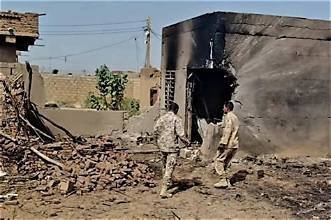
Powerful explosions rocked Sudan’s capital, Khartoum, on Saturday, amid reports of smoke rising from the vicinity of a military facility north of the city of Bahri. The incident came as drone warfare intensified across the Darfur and Kordofan regions, alongside reports of dozens of people killed and wounded in attacks targeting civilian areas, markets, and economic facilities.
The escalation comes amid an expanding air campaign between the Sudanese Armed Forces and the Rapid Support Forces (RSF), with both sides increasingly relying on long-range drones to strike military positions and critical infrastructure. This trend reflects a growing shift in the nature of the war, from direct battlefield engagements toward aerial attacks whose effects extend far beyond traditional front lines.
Explosions Reported Near Military Facility North of Bahri
Eyewitnesses reported hearing explosions in several areas of Khartoum State, with columns of smoke rising from the vicinity of the Sudanese army’s Weapons Corps facility in the Al-Kadرو area, north of Bahri.
No immediate official statement was issued explaining the cause of the explosions or the extent of the resulting damage. Meanwhile, accounts circulated on social media suggesting that the facility may have been targeted by a drone, although these reports have not been independently verified.
The incident comes as the RSF has stepped up its use of long-range drones in recent months to target military installations, airports, and facilities belonging to the army, including sites in the capital, Khartoum.
The widening geographical reach of these attacks suggests that both sides retain the capacity to extend hostilities beyond direct combat zones, increasing security pressures on cities and critical infrastructure.
Airstrikes Target RSF Positions in Nyala
In the Darfur region, the Sudanese army announced that it had carried out intensive airstrikes against military positions and command centres belonging to the RSF in Nyala, the capital of South Darfur State. The army said the strikes killed dozens of RSF fighters and destroyed several command centres.
In a statement issued overnight from Friday into Saturday, the army spokesperson’s office said the air force had carried out “precision strikes” against RSF positions in the city, adding that operations against the group’s concentrations and command centres would continue.
The army also published photographs on its Facebook page that it said documented airstrikes against three RSF sites in Nyala. However, the reported casualty figures and the extent of the damage have not been independently verified.
The strikes are particularly significant because the RSF has established the headquarters of its parallel government in Nyala. Targeting command facilities in the city therefore represents a notable development in the confrontation between the two sides, both militarily and in terms of efforts to weaken the group’s administrative and military infrastructure in areas under its control.
Allegations of Attack on Livestock Market as Casualties Mount
Meanwhile, the Tasis Alliance, which is aligned with the RSF, accused the Sudanese army of carrying out airstrikes on a livestock market in Nyala on Friday. Local sources and eyewitnesses reported that the attack killed more than 30 people and wounded dozens of others.
The casualty figures and circumstances surrounding the reported attack could not be independently verified. Sufficient independent information was also unavailable to establish the precise nature of the targets struck.
The allegations have heightened concerns that aerial attacks are increasingly affecting markets and civilian gatherings, as military operations continue and access for emergency responders and independent verification teams remains difficult in several affected areas.
Repeated accusations of attacks on civilians are further complicating Sudan’s humanitarian crisis, particularly as public facilities have been damaged and essential services disrupted across large parts of the country. Independent investigations and accountability for any substantiated violations remain critical.
Drone Attack Hits Gold-Mining Market in South Kordofan
In a parallel development, the Sudanese Mineral Resources Company, a state-owned institution, announced that the Bajon gold-mining market in South Kordofan State had been attacked by drones on Friday. The company accused the RSF of carrying out the attack.
In a statement published on Facebook, the company said the attack had caused substantial material damage, adding that preliminary reports indicated no deaths or injuries.
The company said it was monitoring the aftermath of the incident in coordination with the relevant authorities to assess the losses and evaluate the damage sustained by the market.
The attack comes as South Kordofan experiences intensifying ground clashes and drone strikes, with both sides seeking to strengthen their military positions and gain control of strategic areas and important economic resources.
The targeting of mining facilities raises concerns about the expanding economic consequences of the war, particularly in areas where residents depend on artisanal mining and related trade for their livelihoods. Damage to these activities could further undermine local incomes and employment opportunities in communities already struggling with deteriorating services and worsening living conditions.
Drones Expand the Threat to Civilians
The latest escalation follows reports, days earlier, of airstrikes targeting artisanal mining areas in Sudan’s far north, near the Egyptian border. Reports indicated that dozens of people may have been killed, renewing attention to the dangers facing workers in the traditional mining sector.
Over recent months, strategic and suicide drones have become some of the most prominent weapons used in Sudan’s war, as both sides increasingly deploy them to strike targets far from direct combat lines.
The attacks are no longer confined to military installations. Civilian areas across Darfur and Kordofan have also come under fire, with markets, hospitals, schools, and service facilities reportedly targeted amid repeated United Nations warnings about rising civilian casualties and worsening humanitarian needs.
The United Nations has documented numerous drone attacks that caused significant civilian casualties in recent months, highlighting the expanding geographical reach of the conflict and the growing difficulty of protecting populations amid continued military operations.
This shift raises questions about the ability of the warring parties to limit civilian harm, particularly in areas where military objectives overlap with markets, residential communities, and economic infrastructure.
Military Escalation Deepens Sudan’s Humanitarian Crisis
Developments in Khartoum, Nyala, and South Kordofan point to an expanding aerial campaign and a widening range of targets, as each side seeks to weaken its opponent’s capabilities and consolidate its position on the ground.
While the army says it is targeting RSF command centres and military positions, allegations of attacks on markets, civilian areas, and economic facilities continue to emerge. Many of these incidents and the reported casualty figures remain difficult to verify independently.
As reliance on long-range drones grows, civilians face increasing risks even in areas far removed from direct fighting. Damage to markets, mining facilities, and essential services is also adding further economic pressure to Sudan’s already severe crisis.
With no clear signs of a reduction in hostilities, protecting civilians, ensuring humanitarian access, and independently investigating reported attacks remain urgent challenges. These efforts must proceed alongside broader measures to prevent attacks on residential areas and civilian infrastructure and to contain the expanding geographical and humanitarian consequences of the war.
Most read




Read also