The Taliban and Europe: From Isolation to Pragmatism

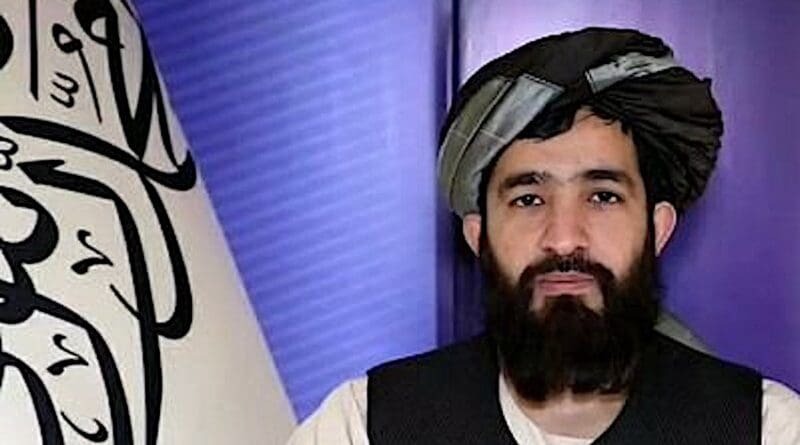
The unprecedented visit by a Taliban delegation to Brussels in June 2026 marked a significant political milestone whose implications extend far beyond consular services or arrangements for the return of Afghan migrants from Europe. The visit, described by the Taliban as “historic,” reflects deeper shifts in the nature of relations between the European Union and Afghanistan’s de facto authorities. It also signals the emergence of a new phase of political pragmatism, one in which both sides are increasingly willing to move beyond ideological considerations in favor of addressing pressing concerns related to security, migration, and regional stability.
Although the European Union continues to withhold formal recognition from the Taliban government that returned to power in August 2021, the very fact that Taliban representatives were received in Brussels and engaged in direct discussions with European officials highlights a widening gap between Europe’s political rhetoric and the practical realities that have emerged on the ground over the past five years.
From International Isolation to the Politics of Reality
When the Taliban took control of Kabul following the U.S. withdrawal from Afghanistan in August 2021, many observers assumed that the movement would face prolonged international isolation because of its record on human rights, women’s rights, and political freedoms. Western governments largely refused to recognize the new authorities, Afghan assets worth billions of dollars were frozen, and official engagement with Kabul was severely restricted.
Yet subsequent developments demonstrated that complete isolation was not a viable long-term policy. The Taliban became the undisputed governing authority of a country of more than forty million people located at a strategic crossroads linking South Asia, Central Asia, and the Middle East.
Over time, many Western governments gradually shifted from a policy of total disengagement to one of limited engagement. The United Nations, European institutions, and Western governments established channels of communication with Kabul to manage humanitarian assistance, counterterrorism concerns, migration issues, and regional stability. Doha, in particular, hosted multiple international meetings involving Taliban representatives, the United Nations, and major world powers, underscoring a growing recognition that the movement represents a political reality that cannot simply be ignored.
In this sense, the Brussels visit should not be viewed as a sudden breakthrough but rather as the latest step in a broader process of pragmatic engagement.
The Taliban’s Search for Functional Legitimacy
The Taliban understand that formal diplomatic recognition from Western states remains a distant objective. Instead, they have pursued what might be described as a strategy of acquiring “functional legitimacy.”
While the movement lacks formal recognition, it increasingly interacts with governments and international organizations on matters ranging from security and trade to humanitarian assistance and migration management.
From the Taliban’s perspective, the issue of consular services extends beyond administrative concerns affecting Afghan communities abroad. It is part of a broader effort to reestablish control over Afghanistan’s diplomatic representation and demonstrate that the movement is the sole authority capable of representing the Afghan state internationally.
Most Afghan embassies across Europe remain staffed by diplomats appointed before the collapse of the previous government, a situation the Taliban regard as one of the clearest symbols of their continuing political isolation. Consequently, any progress in consular affairs is viewed in Kabul as another step toward broader international legitimacy.
Migration: The Real Driver of European Engagement
Despite the diplomatic symbolism surrounding the visit, migration appears to be the principal factor shaping European calculations.
Since 2015, Afghans have consistently ranked among the largest groups of asylum seekers entering Europe. The Taliban’s return to power generated additional migration pressures and renewed debates over asylum policies across the continent.
At the same time, the rise of right-wing and populist political movements in countries such as Germany, France, the Netherlands, Austria, and Italy has elevated migration to the center of domestic political discourse.
As a result, European governments have increasingly prioritized the return of rejected asylum seekers and individuals convicted of serious crimes. This helps explain why recent discussions focused heavily on issues such as identification procedures, travel documentation, and repatriation arrangements.
Viewed from this perspective, the Brussels talks were less about diplomatic symbolism and more about Europe’s search for a practical partner capable of helping manage one of its most politically sensitive challenges.
Afghanistan’s Economy: The Hidden Factor Behind Europe’s Approach
Economic realities also play a crucial role in shaping European policy toward Afghanistan.
Since 2021, Afghanistan has experienced a profound economic shock. International institutions estimate that the country lost a significant portion of its economic output in the years following the Western withdrawal, while millions of Afghans remain dependent on humanitarian assistance.
United Nations assessments indicate that more than half of Afghanistan’s population continues to require regular humanitarian support, while poverty and unemployment remain at extraordinarily high levels.
European policymakers recognize that continued economic deterioration could trigger new waves of migration toward the continent. Consequently, maintaining a minimum degree of economic stability in Afghanistan has become a direct European interest, regardless of broader political disagreements with the Taliban.
In this context, consular cooperation forms part of a broader strategy aimed at addressing migration pressures before they reach Europe’s borders.
Geopolitical Competition: China and Russia Fill the Vacuum
The changing European approach cannot be understood without considering the broader geopolitical competition unfolding in Afghanistan.
Following the U.S. withdrawal, China moved quickly to expand its diplomatic and economic presence, seeking access to Afghanistan’s vast reserves of lithium, copper, and rare earth minerals—resources estimated to be worth hundreds of billions of dollars.
Russia has likewise deepened its engagement with Kabul, while Central Asian states have expanded economic and political cooperation with the Taliban authorities.
European policymakers increasingly recognize that maintaining a policy of complete isolation risks surrendering influence in Afghanistan to rival powers. Consequently, limited engagement serves not only migration and security objectives but also broader geopolitical interests.
Counterterrorism Remains a Western Priority
Although Afghanistan no longer dominates international headlines, it remains a significant concern in Western security planning.
Since the U.S. withdrawal, the Islamic State Khorasan Province (ISIS-K) has emerged as one of the most serious security threats inside Afghanistan, carrying out numerous attacks against civilian and government targets.
While the Taliban have achieved some success in containing the group, Western intelligence agencies continue to monitor developments closely, concerned that extremist organizations could exploit economic hardship or security gaps to rebuild operational capabilities.
For this reason, maintaining direct channels of communication with Kabul is increasingly viewed in Europe and the United States as a security necessity rather than a diplomatic choice.
Europe Between Principles and Practical Necessity
The Brussels discussions illustrate a fundamental dilemma confronting the European Union.
On the one hand, European institutions cannot ignore concerns regarding women’s rights, education, political freedoms, and human rights in Afghanistan. On the other hand, migration management, counterterrorism cooperation, and regional stability require some degree of engagement with the authorities currently governing the country.
As a result, Brussels has sought to draw a distinction between technical cooperation and political recognition. The EU continues to reject formal recognition of the Taliban government while simultaneously engaging with it on matters directly affecting European interests.
History suggests, however, that prolonged technical cooperation often creates political realities that become increasingly difficult to ignore over time.
Is the West Moving Toward Gradual Normalization?
The most important question raised by the Brussels visit concerns not consular services or migration management but the future trajectory of relations between the West and the Taliban.
Over the past five years, the movement has evolved from being a military adversary of Western powers into a governing authority that controls an entire country and plays a central role in issues of security, migration, and regional stability.
This does not mean that formal recognition is imminent. However, current trends suggest that the policy of comprehensive isolation adopted after 2021 is gradually eroding under the weight of geopolitical realities, security imperatives, and economic considerations.
The Taliban delegation’s visit to Brussels reflects an important transformation in the relationship between the movement and the European Union. While the Taliban seek to expand their international legitimacy and diplomatic presence, Europe finds itself increasingly compelled to engage with the authorities in Kabul due to concerns over migration, security, and regional stability.
Between the Taliban’s quest for legitimacy and Europe’s pragmatic calculations, a new phase of relations is beginning to take shape. It may not lead to formal diplomatic recognition in the near future, but it is gradually laying the foundations for a framework of coexistence and practical cooperation driven more by strategic realities than by political preferences.
In this regard, the Brussels visit may prove significant not as a diplomatic formality, but as an early indicator of a broader redefinition of relations between Europe and Afghanistan in a world increasingly shaped by strategic interests as much as by political principles.
Most read


Read also