Receding Morality Police in Iran: Tactical Adaptation or a New Phase in State–Society Relations?

The noticeable decline in the enforcement of Iran's mandatory hijab regulations across several major cities, particularly Tehran, has prompted growing questions about the political significance of this shift. For decades, compulsory veiling represented one of the most visible symbols of the Islamic Republic's ideological authority. Today, however, the public landscape appears markedly different. Increasing numbers of women are appearing in public without head coverings or in more relaxed attire, while the once-prominent "morality police" have largely disappeared from everyday urban life, despite the absence of any official amendment to the country's legal framework governing mandatory hijab.
This evolving reality suggests that the change does not lie in the law itself, but rather in its implementation. Consequently, the issue extends well beyond dress codes, offering broader insight into how the Iranian state is attempting to balance the preservation of its ideological legitimacy with mounting social and political pressures.
Since the establishment of the Islamic Republic in 1979, the hijab has never been merely a religious or cultural issue. It gradually evolved into one of the defining symbols of the state's ideological identity. Successive governments have consistently portrayed mandatory veiling as an essential component of preserving Islamic values and maintaining public order.
Over time, however, the debate surrounding the hijab expanded beyond religious considerations to become a broader reflection of the relationship between the state and society, particularly regarding the limits of state authority over personal freedoms. As generational shifts, higher educational attainment, urbanization, and digital connectivity reshaped Iranian society, compulsory hijab increasingly emerged as one of the most contested aspects of public life, especially in major urban centers.
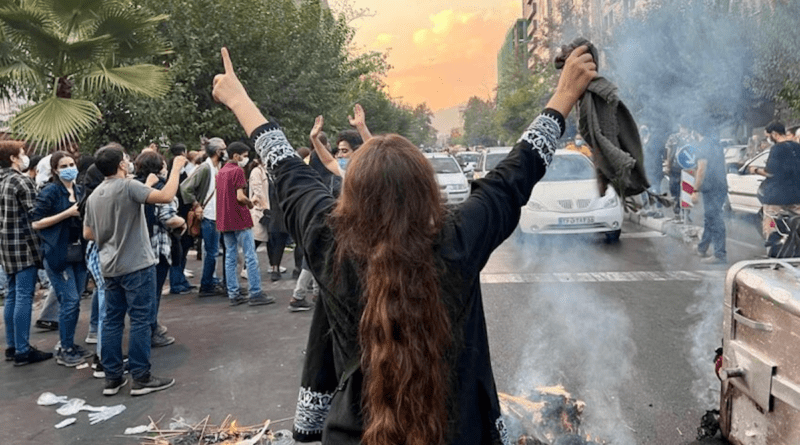
The nationwide protests that erupted in 2022 following the death of Mahsa Amini while in the custody of Iran's morality police represented a watershed moment in the evolution of state–society relations.
Although the authorities ultimately succeeded in suppressing the demonstrations through extensive security measures, the political and social consequences proved far more enduring. The protests demonstrated that the hijab issue had evolved into a broader symbol encompassing demands for civil liberties, individual rights, and a redefinition of the state's role in regulating public life.
Since then, widespread non-compliance with mandatory hijab regulations has become increasingly visible across many Iranian cities, making strict enforcement both politically and operationally more costly.
Despite the legal framework remaining formally intact, developments on the ground indicate that the authorities have adopted a more flexible approach to enforcement without publicly announcing any policy reversal.
This apparent adjustment reflects an attempt to reconcile two competing imperatives. On the one hand, the leadership remains reluctant to retreat from a principle that has long constituted a core element of the Islamic Republic's ideological identity. On the other hand, officials appear increasingly aware that restoring the previous level of enforcement could reignite domestic tensions at a particularly sensitive political moment.
The emerging approach therefore appears to preserve the legal framework while granting implementing institutions greater discretion in its application, thereby reducing daily friction with society without incurring the political costs associated with formally abandoning the law.
The current shift cannot be understood in isolation from Iran's broader domestic and regional circumstances.
In recent years, the country has confronted an accumulation of challenges, including prolonged economic sanctions, persistent inflation, declining purchasing power, repeated waves of social unrest, and heightened regional security tensions. Together, these developments have compelled state institutions to reassess their internal priorities.
Under such conditions, reducing potential sources of domestic confrontation may represent a pragmatic political choice, particularly when external pressures require greater social cohesion.
From this perspective, the easing of hijab enforcement appears less an expression of ideological transformation than a pragmatic effort to manage domestic tensions while avoiding the opening of an additional front of internal conflict during a period of considerable economic and strategic strain.
Observers remain divided over the significance of this apparent shift.
One interpretation suggests that the authorities have implicitly recognized the limitations of coercive social regulation after years of public resistance demonstrated that traditional enforcement mechanisms had become increasingly ineffective.
An alternative interpretation argues that the current policy does not constitute a structural transformation but rather a temporary tactical adjustment imposed by prevailing political and economic circumstances. According to this view, the state has preserved the legal and institutional instruments necessary to restore stricter enforcement should future conditions become more favorable.
Support for this interpretation lies in the continued issuance of judicial penalties in some hijab-related cases and the persistence of stricter enforcement within certain government institutions and major religious sites. These developments indicate that the current relaxation remains selective rather than universal.
Recent developments also reveal significant regional variation in the implementation of hijab regulations.
In Tehran and several other large cities, women appear to enjoy greater social flexibility than in more conservative urban centers such as Mashhad, where enforcement remains more visible, particularly in religious institutions and locations of symbolic importance.
This uneven pattern suggests that policymakers are increasingly adapting implementation to local social and cultural conditions rather than imposing a uniform national approach, thereby seeking to minimize political friction across diverse constituencies.
Regardless of official policy, recent years have highlighted profound social changes within Iranian society.
Younger generations are increasingly connected to global information networks, more exposed to international cultural influences, and more willing to express their views regarding social and cultural issues.
Within this broader context, the hijab has evolved beyond a purely religious matter to become a symbol of the wider debate concerning the relationship between citizens and the state, particularly regarding the limits of governmental authority over public life.
This does not imply the emergence of a social consensus. Significant conservative constituencies continue to support mandatory hijab, ensuring that the issue remains one of the most politically sensitive and socially contested questions in contemporary Iran.
Current trends suggest that Iranian authorities are attempting to manage the hijab issue through a strategy of gradual containment rather than direct confrontation. This approach is likely to continue as long as economic stability, domestic cohesion, and regional security remain the government's primary concerns.
Nevertheless, the long-term sustainability of this policy will depend upon several interrelated factors, including Iran's domestic political stability, the evolution of regional dynamics, economic performance, and the state's ability to balance its ideological foundations with rapidly changing social realities.
At the same time, Iranian society appears unlikely to relinquish the degree of social space that has emerged in recent years, making any return to previous levels of strict enforcement potentially more politically costly than before.
The diminished visibility of Iran's morality police should not necessarily be interpreted as evidence of a formal legal transformation regarding compulsory hijab. Rather, it appears to reflect an adjustment in the state's methods of governance amid an increasingly complex domestic and regional environment.
The Iranian leadership seems to be pursuing a delicate equilibrium: preserving the legal framework that remains central to the Islamic Republic's ideological identity while reducing day-to-day confrontation with society in order to ease internal pressures. Consequently, the current developments are perhaps best understood not as the resolution of the hijab debate, but as the beginning of a new phase in state–society relations—one characterized by greater political pragmatism, yet without conclusively determining the future direction of one of Iran's most enduring and contentious public policy issues.
Most read


Read also