Balochistan and the Crisis of National Integration in Iran: Marginalized Identity and the Challenges of the Centralized State

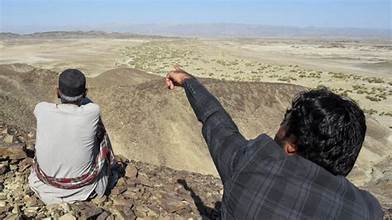
The issue of Balochistan represents one of the most complex ethno-political challenges in contemporary Iran. Its significance stems not only from the region’s unique geographical and demographic characteristics but also from the deeper questions it raises regarding the Iranian state's ability to construct a balanced model of national integration capable of accommodating ethnic and sectarian diversity within its borders. More than four decades after the establishment of the Islamic Republic, the province of Sistan and Balochistan in southeastern Iran remains one of the country's most vulnerable regions in terms of development and security. As a result, it has become a persistent arena of tension between the center and the periphery, serving as a critical test of the state's capacity to manage diversity and sustain national cohesion.
Balochistan: Geography as a Driver of Politics
The significance of Balochistan extends far beyond its status as a border region. Its geopolitical location has made it one of the most strategically important areas in Iranian calculations. Covering approximately 181,000 square kilometers, Sistan and Balochistan is Iran’s second-largest province by area, accounting for nearly 11 percent of the country’s total territory. It shares more than one thousand kilometers of borders with Pakistan and Afghanistan—two states that have experienced decades of political instability, armed conflict, and weak governmental control over peripheral territories. Consequently, the province has become one of the most sensitive security frontiers for Tehran.
The region derives additional importance from its access to the Gulf of Oman and the Arabian Sea. It contains Iran’s only coastline directly connected to the Indian Ocean outside the Persian Gulf and the Strait of Hormuz. In light of recurring concerns regarding maritime security in the Gulf, Iranian policymakers view this outlet as a strategic lifeline that provides access to global markets while reducing dependence on the geopolitically vulnerable Strait of Hormuz.
The province’s strategic value is further enhanced by the Port of Chabahar, the most significant maritime development project in eastern Iran. Since the early 2000s, Tehran has sought to transform Chabahar into a regional transportation and trade hub linking the Indian Ocean to Central Asia and Afghanistan. International interest in the port increased substantially following India’s involvement in financing and developing parts of its infrastructure. New Delhi regards Chabahar as a strategic gateway to Afghanistan and Central Asia that bypasses Pakistani territory.
At the same time, Chabahar has emerged as a key element in the geopolitical competition with Pakistan’s Port of Gwadar, located less than one hundred kilometers from the Iranian border. Gwadar is being developed by China as a cornerstone of the China–Pakistan Economic Corridor (CPEC), one of the flagship projects of the Belt and Road Initiative. As a result, southeastern Iran has become increasingly integrated into broader regional and international dynamics involving trade corridors, connectivity projects, and strategic competition among major powers.
The importance of the province extends beyond maritime infrastructure. Its location makes it a critical arena for border security, anti-smuggling operations, and the management of irregular migration. The relatively porous border environment has facilitated the movement of fuel, narcotics, and weapons trafficking networks, particularly given the province’s proximity to Afghanistan, which for decades has remained the world’s largest producer of opium. Iranian estimates have repeatedly indicated that a substantial proportion of the country’s anti-narcotics operations are concentrated in the border areas of Sistan and Balochistan, helping to explain the heavy security and military presence in the province compared to other regions of Iran.
In addition, the province possesses significant yet underutilized economic potential, including rich fisheries, maritime resources, mineral deposits, and a geographic position well suited for becoming a regional logistics hub. Nevertheless, these advantages have long been constrained by security considerations, insufficient investment, and inadequate infrastructure, limiting their ability to generate sustainable development for local communities.
The central paradox, however, is that the province’s strategic importance has not translated into improved living conditions for its inhabitants. Despite hosting one of Iran’s most important strategic projects, Sistan and Balochistan has consistently ranked among the country’s most deprived provinces. Government reports frequently place it among the regions with the highest rates of poverty, unemployment, and illiteracy, while also highlighting deficiencies in healthcare services, water availability, transportation networks, and basic infrastructure compared to national averages.
Water scarcity has played a particularly important role in deepening the region’s socio-economic challenges. Over recent decades, the Sistan area has experienced a significant decline in water inflows from Afghanistan’s Helmand River, contributing to agricultural deterioration and population displacement from rural areas. As a result, environmental pressures have become intertwined with economic and political grievances, forming an integral component of the broader instability affecting the province.
This situation has generated one of the most important sources of tension between the state and local society. While Tehran views Balochistan primarily as a strategic gateway for national security and international trade, many local residents regard their daily realities as evidence of continued marginalization and developmental exclusion. The widening gap between the region’s geopolitical significance and its level of human development has reinforced a growing perception among many Baloch that the state invests more heavily in the geography of the province than in its people. This perception constitutes one of the deepest roots of the crisis of national integration in the region.
The Ethnic and Sectarian Dimensions of the Crisis
Most Balochs in Iran belong to the Baloch ethnic group and speak the Balochi language, which is part of the Western Iranian language family. The majority also adhere to Sunni Islam, primarily the Hanafi school, within a state where Twelver Shiism constitutes the dominant religious identity and serves as a central pillar of the political system’s legitimacy. This intersection of ethnic and sectarian identities has made the Baloch question one of the most sensitive issues within Iran’s domestic political landscape, as it combines challenges of ethnic identity with questions of religious representation.
The uniqueness of the Baloch case lies in the fact that the sense of difference is not rooted solely in language or ethnicity. Rather, it is reinforced by a perception among many Balochs that a sectarian divide separates them from the political and religious center of the state. Unlike the Azerbaijani population, which is predominantly Shiite, or other ethnic communities that have achieved varying degrees of integration within state institutions, the Balochs occupy the position of both an ethnic and a religious minority. This dual status has significantly complicated their relationship with the central government.
The roots of this perception can be traced to decades of disparities in development and political representation. Although Baloch figures have participated in parliament and local administrative institutions, the representation of Balochs in senior positions within Iran’s political, military, security, and bureaucratic structures has remained limited relative to both their population size and the strategic significance of their region. Consequently, demands for greater participation in the administration of local affairs have remained a recurring theme in Baloch political and social discourse.
The cultural dimension also constitutes a major point of contention between the state and local society. While Iranian authorities emphasize the importance of national unity, Baloch elites have consistently called for broader recognition of the region’s linguistic and cultural distinctiveness. These demands include expanding local educational initiatives and increasing the presence of the Balochi language in cultural and media spheres. Although the Iranian Constitution theoretically permits the use of local languages alongside Persian, the practical implementation of these provisions has remained a subject of debate and criticism among many non-Persian communities.
Religion has likewise played a significant role in shaping Baloch political consciousness over recent decades. Sunni religious institutions in the province have increasingly become platforms for articulating social and political grievances. Several Sunni clerics have emerged as influential public figures within the local community. Among them, Molavi Abdolhamid, the Imam and Friday Prayer leader of Zahedan, has gained particular prominence as one of the most vocal advocates for equality, justice, and development, especially during the wave of protests that has affected Iran since 2022.
The events that took place in Zahedan in September 2022—later referred to as “Bloody Friday”—represented a major turning point in the relationship between the state and the Baloch community. The clashes that followed the protests resulted in dozens of deaths and injuries and became a powerful symbol for many Balochs of what they perceive as long-standing political and security-related marginalization. Since then, Zahedan has remained one of the most significant centers of sustained protest activity within Iran, bringing the Baloch issue back to the forefront of both national and international discussions.
The growing prominence of Baloch ethnic consciousness cannot be understood independently of broader regional developments. The expansion of modern communication technologies and social media platforms has strengthened cultural ties among Baloch communities in Iran, Pakistan, Afghanistan, and the global diaspora. These developments have contributed to a stronger sense of shared identity across borders. Although the dominant demands among Iranian Balochs continue to focus primarily on development, citizenship, and cultural rights rather than separatism, Iranian authorities remain cautious toward transnational ethnic narratives that could potentially challenge national unity.
As a result, Baloch identity has gradually evolved from a primarily cultural and tribal affiliation into a broader political and social framework through which demands for developmental justice, political equality, and cultural recognition are articulated. In this sense, the Baloch issue serves as a clear example of the intersection between identity and citizenship in contemporary Iran. The core of the crisis does not lie in ethnic or sectarian diversity itself, but rather in the nature of the relationship between that diversity and the centralized structures through which political power and economic resources are distributed.
The Roots of the National Integration Crisis
The contemporary Baloch reality cannot be understood apart from the nature of the modern Iranian state, which emerged during the twentieth century on the foundations of strong political and cultural centralization. Prior to the rise of the Pahlavi state in 1925, many regions of Iran—including Balochistan—enjoyed varying degrees of local autonomy and tribal governance, while the authority of the central government remained relatively limited in many peripheral areas. However, the state-building project launched by Reza Shah Pahlavi was based on the creation of a centralized nation-state capable of extending its authority across the entire territory and unifying the population under a single national identity.
Within this framework, the state pursued policies aimed at strengthening Persian as the national language and expanding the reach of central institutions at the expense of local and tribal structures. While these measures contributed to state consolidation and institutional development, they also generated tensions with several non-Persian communities that felt their cultural and linguistic identities were insufficiently recognized within the emerging national framework.
For the Balochs, incorporation into the modern Iranian state was accompanied by the gradual decline of traditional tribal leadership structures and the growing presence of state administrative and security institutions. Since then, a complex relationship has developed between the state and local society—one characterized by legal and political integration into Iran on the one hand, and by a growing perception that state-building occurred at the expense of local autonomy and cultural distinctiveness on the other.
The Roots of the National Integration Crisis (Continued)
When the Islamic Republic was established in 1979, many observers expected that its trans-ethnic Islamic discourse would reduce ethnic tensions by emphasizing a shared religious identity. In practice, however, many of the underlying challenges persisted. Although the new regime redefined the state's political identity through a revolutionary Islamic framework, it retained a significant degree of the political and administrative centralization that had characterized the modern Iranian state. Consequently, the complex relationship between the center and the periphery continued, albeit in forms that differed from those of the Pahlavi era.
This challenge became even more pronounced in the Baloch case because of the overlap between ethnic and sectarian identities. While the state achieved varying degrees of integration with some non-Persian communities that shared the Shiite faith of the majority population, many Balochs continued to perceive themselves as facing a dual challenge: ethnic difference and religious difference simultaneously. As a result, issues of identity, culture, development, and political representation became deeply intertwined within the collective consciousness of the local population.
Over time, a growing deficit of trust emerged between the center and the periphery. This trust gap is reflected in recurring debates over the teaching and public use of the Balochi language, the participation of local elites in provincial governance, the representation of Balochs in senior administrative and security positions, and the distribution of public investments across Iran’s provinces. It is also evident in the widespread perception among segments of the Baloch population that security considerations often take precedence over developmental priorities in the state’s approach to the region.
The significance of this issue becomes clearer when viewed in comparison with the experiences of other ethnic communities in Iran. Azerbaijani Iranians, for example, have generally achieved higher levels of political and economic integration due to a combination of factors, including their demographic weight, economic significance, and shared Shiite identity with the state’s ruling establishment. By contrast, Kurds, Arabs, and Balochs have experienced varying degrees of tension related to development, identity, and political representation, although each case possesses its own distinct historical and political characteristics.
This comparison suggests that the challenge extends beyond the particularities of the Baloch community itself. Rather, it reflects a broader structural issue concerning the historical relationship between the centralized state and Iran’s peripheral regions. The Baloch question therefore cannot be reduced to a local grievance; it is part of a wider debate about the nature of state-society relations in a multiethnic political system.
At its core, the crisis of national integration in Balochistan reveals a deeper dilemma facing contemporary Iran: how to reconcile the imperatives of national unity and state sovereignty with the demands of cultural recognition and inclusive citizenship. Comparative experiences from other multiethnic states suggest that long-term stability is not achieved solely through centralized authority, but also through the construction of a national framework that accommodates local identities within a broader civic order.
From this perspective, the Baloch issue appears less connected to separatist aspirations than to questions of participation, recognition, and developmental justice within the modern Iranian state. The central challenge is therefore not whether diversity exists, but whether political institutions are capable of incorporating that diversity into a more inclusive and sustainable model of national integration.
Development Deficits as a Driver of Recurring Protest
Contrary to perspectives that reduce the Baloch issue to a purely security problem, the roots of the crisis are closely linked to patterns of uneven development that have shaped the relationship between the region and the Iranian state for decades. Despite its strategic location and its role in hosting major national projects such as the Port of Chabahar, Sistan and Balochistan has consistently remained among Iran’s least developed provinces. This contrast between geopolitical significance and socio-economic deprivation constitutes one of the principal sources of political and social discontent within the Baloch community.
Official Iranian statistics and development reports have repeatedly placed the province near the bottom of national rankings in indicators such as income levels, employment opportunities, healthcare provision, educational attainment, and infrastructure development. Large areas of the province continue to suffer from inadequate transportation networks, limited access to electricity and clean water, and insufficient public services. Consequently, many residents perceive that they have not benefited proportionately from the resources invested by the state in strategic projects located within their region.
The water crisis has become particularly important in understanding the province’s developmental challenges. Over recent decades, declining water flows from Afghanistan’s Helmand River have significantly damaged agricultural production, especially in the northern Sistan region. The drying of Lake Hamoun—once one of the area’s most important environmental and economic resources—has further undermined local livelihoods, forcing many families to abandon traditional economic activities. As a result, environmental degradation has become deeply intertwined with social and economic hardship.
The deterioration of agricultural conditions has also contributed to patterns of internal migration, with many rural residents relocating to urban centers or other provinces in search of employment and basic services. These demographic shifts have intensified existing social pressures and added new dimensions to the region’s developmental challenges.
In the absence of sufficient formal economic opportunities, many residents have turned to the informal economy as a means of survival. One of the most visible manifestations of this trend is the phenomenon known locally as soukhtbari—the transportation of fuel across the border into Pakistan. For thousands of Baloch families, this activity has become an essential source of income. While Iranian authorities classify such activities as smuggling, many local residents regard them as a direct consequence of the lack of viable economic alternatives and stable employment opportunities.
The deaths and injuries of fuel carriers during border security operations have repeatedly become sources of public anger and protest. These incidents have reinforced local perceptions that the state focuses primarily on controlling informal economic activities without adequately addressing the structural conditions that drive people toward them in the first place.
Development Deficits as a Driver of Recurring Protest (Continued)
The province’s border location has also contributed to the emergence of a parallel economy based on informal cross-border trade with Pakistan and Afghanistan. While this economy provides livelihoods for segments of the population, it simultaneously reflects the fragility of the local economic structure and its inability to absorb labor into stable and productive sectors. In this sense, informal cross-border activities have become a substitute for development rather than a manifestation of it.
Another striking paradox lies in the fact that the city of Chabahar has witnessed considerable investments in port facilities and infrastructure over the past decade. Yet the benefits of these projects have not been distributed evenly across the province. Many inland districts continue to face chronic poverty, weak public services, and limited employment opportunities. As a result, many residents perceive that development efforts are concentrated in strategic projects that serve national economic and geopolitical interests, while local communities remain largely excluded from their benefits.
Within this context, recurring protests in the province can be understood through the concept of relative deprivation—the perception that the level of development and public services available to local residents does not correspond to the strategic importance of the region or its contribution to national interests. Consequently, the demands voiced by many residents tend to focus on employment, infrastructure, public services, and equitable resource allocation rather than on separatist or radical political agendas.
Development, therefore, should not be viewed merely as an economic issue in the Baloch case. Rather, it represents one of the most important entry points for addressing the broader political and security challenges facing the region. Comparative experiences suggest that border regions characterized by ethnic and cultural diversity are more likely to achieve stability and integration when security policies are accompanied by meaningful developmental initiatives that improve living standards and strengthen perceptions of equal citizenship.
In other words, development and security have become two sides of the same crisis. Underdevelopment generates social frustration, frustration contributes to instability, and instability discourages investment and economic growth. The result is a vicious cycle that is difficult to break without adopting a comprehensive strategy that places developmental justice at the center of state policy toward Balochistan rather than relying primarily on short-term security measures.
The Over-Securitization of the Baloch Issue
Given Balochistan’s strategic border location and the presence of armed groups and transnational smuggling networks, Tehran regards the province as one of the most sensitive areas for national security. Situated at the intersection of the volatile security environments of Afghanistan and Pakistan, the region has long served as a corridor for the trafficking of narcotics, weapons, fuel, and undocumented migrants. Consequently, the Iranian state has adopted a heavily securitized approach toward the province, characterized by an expanded military and security presence and extensive efforts to monitor and control border activities.
This approach has also been shaped by Iran’s historical experience with Baloch militant organizations. Beginning in the early 2000s, groups such as Jundallah, led by Abdolmalek Rigi, carried out a series of attacks against Iranian security forces before the organization was effectively dismantled in 2010. However, the disappearance of Jundallah did not eliminate the security challenge altogether. Other organizations, most notably Jaish al-Adl, subsequently emerged and continued to launch intermittent attacks against military and security targets in the province, taking advantage of the region’s rugged terrain and the complexities of the Iranian-Pakistani border.
These developments reinforced the perception within Iran’s security establishment that Balochistan constitutes a frontline security zone rather than merely an underdeveloped peripheral province. This perception became even stronger following the return of the Taliban to power in Afghanistan in 2021, which generated additional concerns regarding border management, the movement of extremist networks, and the expansion of transnational smuggling activities.
The fundamental problem, however, is that security policies gradually evolved from instruments designed to address specific threats into a broader framework for managing the province as a whole. Instead of distinguishing between armed militancy and the social, cultural, and economic grievances of the local population, state institutions often approached developmental concerns and protest movements primarily through a security lens. As a result, issues related to poverty, unemployment, public services, and political representation were increasingly interpreted within the context of national security and stability.
The limitations of this approach became particularly evident during the protests that swept Zahedan and other cities in the province beginning in 2022. Although many demonstrators focused on demands related to accountability, justice, and civil rights, the security-oriented response contributed to widening the gap between the state and local society. The events of “Bloody Friday” in Zahedan became a defining moment in the collective memory of many Balochs, not only because of the human losses involved but also because they reinforced perceptions that the state viewed the province primarily through a security framework rather than as an integral component of the national community.
From a broader perspective, the Baloch experience illustrates a classic dilemma in the governance of ethnically diverse peripheral regions. As security concerns intensify, security institutions tend to acquire greater authority; as their presence expands, the space available for political dialogue and community-based development often contracts. Under such circumstances, the state may become more capable of maintaining short-term stability while becoming less capable of addressing the structural causes of tension.
Moreover, excessive securitization tends to redefine social problems as security threats. Poverty becomes a matter of stability, unemployment becomes a potential source of extremism, and protests are interpreted as challenges to public order. Consequently, developmental and reform-oriented policies are often subordinated to security priorities, thereby exacerbating the very problems that security measures are intended to contain.
This dynamic creates a self-reinforcing cycle: economic and social marginalization fuels frustration; frustration generates protests or instability; the state responds with additional security measures; and those measures further deepen feelings of exclusion and mistrust. As long as this cycle persists, the crisis remains capable of reproducing itself even during periods when levels of violence temporarily decline.
Accordingly, the central challenge facing the Iranian state in Balochistan is not merely the containment of armed groups or the policing of borders. Rather, it lies in developing a broader approach that balances national security requirements with the imperatives of development, political inclusion, and social integration. International experience demonstrates that sustainable stability in ethnically diverse border regions cannot be achieved through coercive measures alone. It requires trust-building, inclusive governance, and developmental justice. From this perspective, the crisis in Balochistan appears less as a purely security problem and more as a crisis of national integration that has largely been managed through security mechanisms.
Most read



Read also