The Strait of Hormuz and the Hidden Chokepoint: Financial Power in the Confrontation with Iran

The confrontation with Iran in the Middle East is no longer confined to the military domain or the security of maritime routes. Behind the escalating tensions surrounding the Strait of Hormuz, another, less visible battle is taking shape—one that may prove more consequential over the long term: the struggle for control over the financial and commercial networks on which Iran depends to sustain its economic capacity.
Recent developments suggest that Washington is moving beyond the traditional model of sanctions toward a more targeted strategy aimed at the financial networks that enable Iran to circumvent restrictions. In August 2026, US measures targeted financial networks, companies, and intermediaries associated with what the US Treasury described as Iran's shadow banking system. These measures were followed by a broader campaign, described as "Operation Economic Outcast," which focused on tightening the channels through which the Iranian economy continues to function despite sanctions.
This development points to an important paradox. While political and media attention remains concentrated on the Strait of Hormuz as the region's most prominent geographical chokepoint, the most consequential chokepoint may lie elsewhere: within the infrastructure of the global financial system.
From Frozen Assets to Network Control
The roots of financial pressure against Iran can be traced back to the 1979 hostage crisis, when President Jimmy Carter ordered the freezing of Iranian government and central bank assets subject to US jurisdiction. At the time, this represented a conventional form of sanctions based on controlling assets located within a defined legal jurisdiction.
The nature of international financial power, however, changed significantly over the following decades. Economic pressure gradually moved beyond the freezing of assets toward controlling the networks through which money and financial information circulate.
The Society for Worldwide Interbank Financial Telecommunication, or SWIFT, represents one of the clearest examples of this transformation. SWIFT is neither a bank nor a direct payment processor. Rather, it provides the messaging infrastructure through which financial institutions communicate instructions for international transactions. Because of its central position within the global financial system, access to SWIFT has become an important source of geopolitical and geoeconomic leverage.
This is where the concept of "weaponized interdependence," developed by Henry Farrell and Abraham Newman, becomes particularly useful for understanding the nature of financial power. Global economic networks are not distributed evenly; instead, they tend to concentrate around highly central nodes. When states possess legal or institutional influence over these nodes, they can transform economic interdependence into a source of political leverage.
This power operates through two principal mechanisms: the ability to observe the flows passing through a network—the so-called "panopticon effect"—and the ability to exclude selected actors from the network, or the "chokepoint effect."
SWIFT: When Infrastructure Becomes a Source of Power
The history of Iran's relationship with SWIFT illustrates how this mechanism has evolved.
Following the September 11, 2001 attacks, the US Treasury gained access, through the Terrorist Finance Tracking Program, to financial messages stored at a US-based SWIFT facility. This provided Washington with an important capacity to monitor portions of global financial flows. After the program became public in 2006, European concerns over data protection led to the establishment of a negotiated framework governing the transfer of financial data between the European Union and the United States.
The other dimension of this power—the ability to exclude—became more evident in 2012, when the European Union prohibited financial messaging services from serving Iranian institutions subject to sanctions. In March of that year, a number of Iranian banks were disconnected from SWIFT.
This episode reveals a distinctive feature of contemporary economic power: a state does not necessarily need to directly control an institution in order to influence its decisions. In some cases, it is sufficient to occupy a sufficiently central position within a network to make the cost of ignoring that influence prohibitively high for other actors.
This became even more apparent after the United States withdrew from the Iran nuclear agreement in 2018. While the European Union attempted to shield European companies from the extraterritorial application of US sanctions, international financial institutions faced the risk of losing access to the US financial system if they continued dealing with sanctioned Iranian entities.
Europe's attempt to establish INSTEX as a mechanism for facilitating trade with Iran illustrated the difficulty of constructing an effective alternative to the existing global financial infrastructure. Established in 2019, the mechanism was eventually closed in 2023 after reportedly facilitating only a single transaction, highlighting the gap between political aspirations for economic autonomy and the practical capacity to build an alternative financial architecture.
Hormuz: A Geographical, Not Financial, Chokepoint
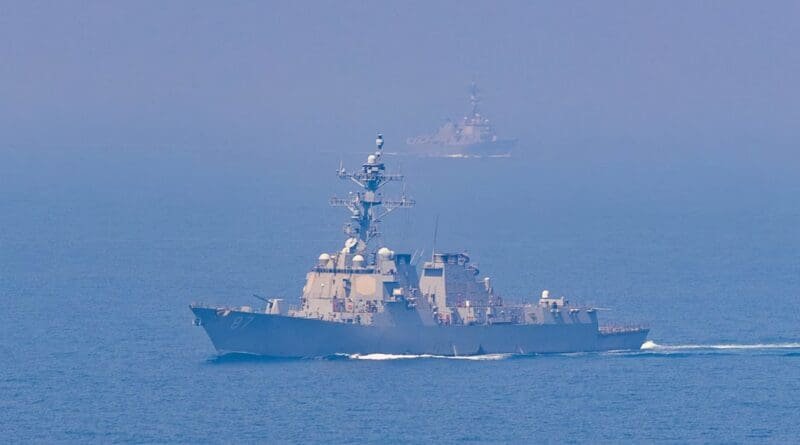
Against this backdrop, the Strait of Hormuz has acquired renewed importance as one of the world's most critical energy transit routes. The targeting of a vessel inside the strait, combined with the closure of a Saudi east-west pipeline, has once again highlighted the vulnerability of the region's energy infrastructure.
Yet equating Hormuz with the type of chokepoints identified in the theory of weaponized interdependence requires some conceptual precision.
The Strait of Hormuz is a geographical chokepoint, whose strategic significance derives from its physical location and from the capacity to use military force to affect maritime passage. By contrast, chokepoints within global economic networks—such as financial payment infrastructure—emerge from a long accumulation of economic and institutional decisions that make certain networks more central than others.
The distinction concerns not only the source of power but also the nature of the benefits derived from it. Control over a maritime passage provides the ability to influence the movement of trade and potentially generate what may be described as transit rents. Control over financial networks, by contrast, provides the ability to monitor economic flows and influence the intermediaries through which commercial activity is conducted.
Hormuz and SWIFT therefore represent two distinct forms of chokepoint power: the first is geographical and physical; the second is institutional and network-based. The latter, however, may be more suitable for sustained coercion because it does not necessarily require closing a maritime route or engaging in direct military confrontation. Instead, it operates by reshaping the incentives and risks confronting banks, companies, and states.
Why Is It Difficult for Iran to Build an Alternative?
One of the most important consequences of this strategy is that Iran has not, despite decades of sanctions, succeeded in building a comprehensive alternative to the international payments infrastructure.
Tehran has developed alternative financial and commercial channels and deepened its economic relations with Russia and other partners. Yet these channels remain limited compared with the international financial infrastructure underpinning global trade. At the same time, Iranian oil exports have increasingly relied on complex and opaque networks, some of which have themselves become targets of recent US sanctions.
This creates a fundamental dilemma for Iran. Circumventing sanctions is possible, but doing so raises the cost of trade, increases opacity, and reduces the number of intermediaries willing to engage with Iran. As sanctions expand, the question is therefore no longer simply whether Iran can sell its oil. It is also whether it can receive the proceeds, transfer funds, settle payments, and maintain a network of institutions willing to bear the risks associated with sanctions.
Sanctions thus move from targeting the economic transaction itself to targeting the capacity to conduct the transaction.
Reopening Hormuz: Economic Pressure as Part of the Price
The significance of this issue becomes even clearer when considering the conditions Iran has articulated for reopening the Strait of Hormuz. Among its demands have been compensation for wartime damage, the lifting of sanctions, and the release of frozen assets, making the financial dimension an explicit component of any potential settlement over the strait.
This means that negotiations over Hormuz cannot be separated from negotiations over the economic system surrounding Iran. Reopening the maritime route may appear to be primarily a military or geopolitical decision, but at its core it is connected to the broader question of whether Iran can regain access to financial resources and reintegrate its economy into the global trading system.
From this perspective, financial sanctions become more than an instrument for punishing behavior. They become a bargaining instrument capable of reshaping the cost of Iran's strategic choices and influencing the terms of any future settlement.
From Sanctions to the Engineering of Interdependence
The Iranian case reveals a broader transformation in the nature of international economic power. Modern sanctions increasingly rely not simply on denying a state access to specific assets or markets, but on identifying the nodes without which the targeted economy cannot operate effectively.
This shift is significant from the perspective of international politics because it moves competition from controlling resources to controlling the networks that connect resources to markets.
In the Iranian case, Washington appears increasingly focused on the proposition that pressure on financial networks, intermediaries, and correspondent institutions may be more sustainable than simply targeting exports or assets. Recent US measures reinforce this direction by focusing on companies, individuals, and intermediaries that constitute links within a broader financial and commercial network.
At the same time, however, this strategy contains an inherent paradox. The more extensively financial networks are used as instruments of geopolitical power, the greater the incentives for targeted states and their partners to develop alternatives. Those alternatives may not currently be capable of competing with the dominant system, but they could gradually accumulate and contribute to a more fragmented financial architecture that is less dependent on Western financial centers.
The short-term effectiveness of sanctions may therefore carry a potential long-term strategic cost: encouraging states to invest in parallel financial infrastructures.
Conclusion: The Chokepoint That Cannot Be Seen
The crisis surrounding Hormuz and the broader economic confrontation with Iran reveal an important transformation in the nature of power in the international system. A state that controls a maritime passage can influence the movement of goods. A state that possesses significant leverage over financial networks, however, can influence the ability of actors to conduct the transactions that make the movement of goods possible in the first place.
Financial sanctions should therefore not be viewed merely as an extension of traditional US foreign policy. They are increasingly part of a broader struggle over control of the infrastructure underpinning the global economic system.
The Strait of Hormuz is the most visible chokepoint. Ships, military threats, and disruptions to maritime traffic can all be seen. The financial chokepoint is far less visible, but it operates at a deeper level: through bank accounts, intermediaries, financial messaging, access to currencies, and access to markets.
From this perspective, the future of the confrontation with Iran will not be determined solely by who controls maritime routes. It will also depend on who possesses the capacity to influence the networks that make international commerce possible.
The key strategic question, therefore, is no longer simply: When will the Strait of Hormuz be reopened?
It is also: Under what economic and financial conditions can Iran be reintegrated into the network on which the global economy depends?
That is where the real chokepoint lies—not in the waterway separating two shores, but in the financial network connecting Iran to the world.
Most read



Read also