The Strait of Hormuz After the Geneva Framework: Has Iran Shifted from the Strategy of Closure to the Strategy of Control?

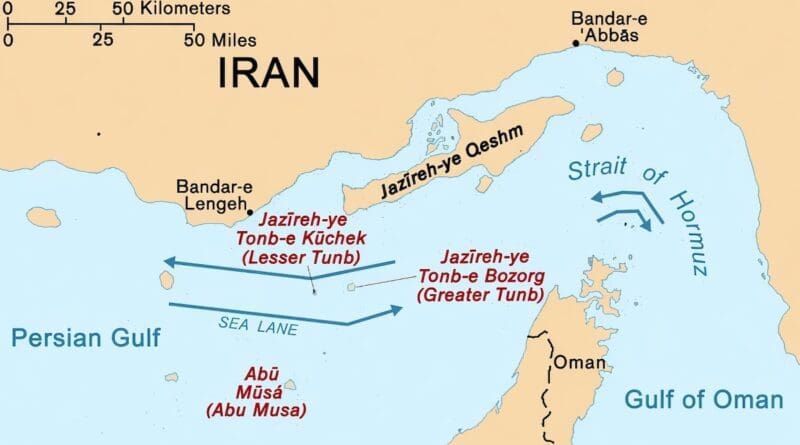
The debate surrounding the Strait of Hormuz is no longer confined to whether Iran will close one of the world's most vital maritime chokepoints. Instead, it has evolved into a far more consequential question: who ultimately controls access to the strait, and who sets the rules governing navigation through it?
Following the understandings reached during the Geneva negotiations between Washington and Tehran, emerging developments suggest that the crisis has not truly been resolved. Rather, it may have entered a new phase in which Iran is seeking to transition from threatening to close the strait toward establishing itself as the de facto authority overseeing maritime traffic.
Although the United States has denied granting Tehran any extraordinary powers and insists that the agreement neither authorizes Iran to levy transit fees nor gives it formal control over navigation, the practical arrangements that appear to be emerging raise fundamental questions about the extent of Iranian influence over the waterway. More importantly, they invite speculation over whether Washington may have made concessions extending beyond the nuclear issue into the broader architecture of Gulf maritime security.
From the Strategy of Closure to the Strategy of Control
For decades, Iran has relied on the threat of closing the Strait of Hormuz as one of its most powerful deterrence tools against Western pressure and economic sanctions. Yet this option has always carried enormous risks, as any attempt to physically block the waterway would almost certainly provoke direct confrontation with the United States and international naval coalitions while simultaneously inflicting severe damage on Iran's own economy.
Recent developments, however, suggest that Tehran may have identified a far more sustainable and effective alternative.
Rather than shutting the strait entirely, Iran appears to be pursuing a strategy centered on managing maritime access. Instead of preventing all vessels from passing, it could exercise selective authority through inspections, demands for vessel documentation, administrative delays, or differentiated treatment of commercial shipping. Such measures would allow Tehran to influence global energy flows without crossing the threshold into open military conflict.
If this interpretation proves accurate, it would represent a profound strategic transformation. Control over the rules governing navigation could become considerably more valuable than the ability to close the strait outright, enabling Iran to employ the waterway as a continuous instrument of political leverage rather than an exceptional wartime weapon.
Political Hegemony Is More Dangerous Than Financial Extortion
Much of the public debate has focused on the possibility of Iran imposing transit fees on commercial shipping. Yet this issue is arguably secondary compared to the broader geopolitical implications.
Even if Tehran never collects a single dollar from passing vessels, the mere ability to question ships, require advance reporting, verify cargo information, or approve passage effectively transfers part of the authority governing one of the world's most strategic maritime corridors into Iranian hands.
Under such circumstances, the Strait of Hormuz could evolve into a permanent instrument of geopolitical influence.
Iran could potentially employ maritime administration to pressure Gulf states during political disputes, selectively disrupt oil exports, delay shipments destined for specific markets, or incorporate commercial navigation into broader diplomatic bargaining across unrelated regional issues.
In this sense, maritime control becomes not an economic privilege but a strategic tool of political coercion with implications extending far beyond the Gulf itself.
A New Security Equation for the Gulf
Should Iran succeed in institutionalizing its role as the principal regulator of maritime traffic through the Strait of Hormuz, the security architecture of the Gulf would inevitably undergo significant transformation.
The economies of the Gulf Cooperation Council depend heavily upon uninterrupted maritime exports of oil and natural gas, while global energy markets remain closely tied to stable shipping through Hormuz. Consequently, any shift in effective control over the strait would reverberate well beyond the immediate region, affecting international energy prices, global supply chains, and economic stability worldwide.
Recognizing these vulnerabilities, several Gulf states have increasingly invested in alternative export routes, including overland pipeline networks, ports located on the Arabian Sea, and broader logistical diversification initiatives designed to reduce dependence on a single maritime corridor.
Similarly, Oman's proposal for a parallel shipping corridor reflects growing regional efforts to diversify maritime access. Nevertheless, the long-term viability of such initiatives will depend heavily upon credible international security guarantees capable of shielding them from regional political pressures.
Why Was Washington So Eager to Reach an Agreement?
The Geneva understandings have generated widespread debate regarding the motivations behind the United States' apparent willingness to conclude negotiations despite Iran's increasingly difficult military and economic circumstances.
A purely military explanation appears insufficient.
Instead, economic considerations likely played a decisive role in reshaping Washington's negotiating posture.
Any prolonged disruption to shipping through the Strait of Hormuz would almost certainly have driven global oil prices significantly higher, fueling inflation and increasing gasoline prices across the United States—developments carrying serious domestic political consequences, particularly with important electoral contests approaching.
Moreover, the decline of America's Strategic Petroleum Reserve to relatively low levels substantially reduced Washington's margin for maneuver. Under these circumstances, containing the crisis through diplomacy may have appeared considerably less costly than sustaining prolonged regional escalation, even if doing so required concessions extending beyond the nuclear dossier.
From this perspective, the United States appears to have prioritized preventing a broader economic shock capable of affecting domestic political stability as much as regional security.
Iranian Gains Beyond the Nuclear File
A broader reading of the Geneva understandings suggests that Tehran's objectives extended well beyond obtaining guarantees concerning its nuclear program.
Alongside the prospect of sanctions relief and renewed access to frozen financial assets, Iran appears to have sought broader strategic recognition of its regional role and security influence throughout the Gulf.
This objective may explain the noticeably greater confidence displayed by Iranian officials following the negotiations.
Tehran's post-Geneva rhetoric has become increasingly assertive despite the absence of major visible concessions regarding regional security issues or its broader strategic posture.
Indeed, even the reopening of the Strait of Hormuz appears, according to some accounts, to have been accompanied by procedures granting Iranian authorities an expanded supervisory role over commercial shipping. From Tehran's perspective, such arrangements may represent recognition of a new strategic reality, whereas Washington continues to characterize them as temporary technical security measures.
Has the Logic of Deterrence Changed?
The recent crisis reveals an important transformation in the nature of strategic deterrence between the United States and Iran.
Historically, deterrence centered on preventing Iran from physically closing the strait through the threat of overwhelming military force.
Today, however, competition appears increasingly focused on a different question: who establishes the operational rules governing maritime navigation, and who possesses the authority to interpret and enforce them?
This shift reflects Tehran's growing recognition that long-term influence derives not only from missiles, drones, or naval capabilities but also from shaping the institutional rules governing regional security.
At the same time, Washington continues attempting to preserve a delicate balance between preventing military escalation and safeguarding freedom of navigation without becoming drawn into another costly regional conflict.
The Future of the Strait: Stability or Strategic Domination?
The central question now is whether these emerging arrangements will produce lasting stability or instead establish a new form of low-intensity geopolitical competition.
If Iran succeeds in institutionalizing a supervisory role over maritime traffic without meaningful international resistance, it will have achieved one of its longest-standing strategic ambitions: transforming itself from a state threatening to close the Strait of Hormuz into one exercising significant influence over how it operates.
Conversely, if the United States and its regional partners succeed in establishing credible international oversight mechanisms capable of preventing the political weaponization of maritime transit, the Geneva framework could become an instrument for reducing tensions while preserving the internationally recognized principle of freedom of navigation.
Ultimately, the future of the Strait of Hormuz is no longer defined simply by whether it remains open or closed. The more consequential question concerns who ultimately possesses decision-making authority over one of the world's most strategically important maritime passages. The answer to that question will shape not only the future security architecture of the Gulf but also the broader geopolitical balance of the Middle East for years to come.
Most read



Read also