The Sahel Between Militarization and Personalized Rule: Are Coups Becoming Permanent Political Systems?

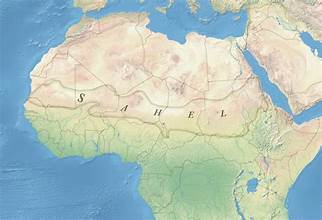
Over the past few years, the Sahel region has undergone profound political and security transformations that go far beyond the traditional phenomenon of military coups. What is emerging instead is a new model of governance centered on the concentration of power around military rulers and the gradual transformation of transitional regimes into long-term personalist systems.
In Mali, Burkina Faso, and Niger, military juntas no longer present themselves merely as temporary authorities tasked with restoring order before returning power to civilians. Rather, they are increasingly reshaping state institutions in ways that ensure authority remains concentrated in the hands of a single military leader.
The decision by Mali’s junta leader, General Assimi Goïta, to personally assume the position of defense minister following the killing of General Sadio Camara reflects the depth of this transformation. On the surface, the move appears to be a pragmatic wartime measure driven by deteriorating security conditions and escalating insurgent attacks in northern Mali. Yet at a deeper level, it reveals a growing pattern of personalized rule in which military, security, and financial power are consolidated around the presidency itself.
From “Transitional Rule” to the Reengineering of Power
When military officers overthrew former Malian President Ibrahim Boubacar Keïta in 2020, they portrayed themselves as reluctant saviors whose sole mission was to restore security and organize elections within a limited timeframe. However, the years that followed demonstrated that military rule was not merely a temporary phase, but part of a broader project to restructure the political system itself.
Constitutional amendments paved the way for Goïta to run for future presidential elections. Political parties were dissolved or restricted, civilian oversight institutions weakened, and military influence expanded deeply into state administration and public institutions.
More importantly, the armed forces were reorganized according to what political scientists describe as “coup-proofing” strategies — the creation of parallel security and military structures with overlapping mandates and separate chains of command designed to prevent any single institution from becoming strong enough to threaten the ruler.
In this context, the military increasingly functions not only as a protector of the state, but also as a mechanism for protecting the regime from rivals both inside and outside the armed forces.
The Rise of the “Military Strongman” in the Sahel
What is happening in Mali is not an isolated case, but part of a wider regional trend. In Burkina Faso, Captain Ibrahim Traoré has, since seizing power in 2022, carefully cultivated the image of a revolutionary anti-colonial leader inspired by the legacy of Thomas Sankara. Through coordinated media campaigns and nationalist rhetoric, Traoré has increasingly been portrayed as the symbolic savior of the nation, while elections have repeatedly been postponed and democratic processes sidelined in the name of revolutionary stability.
A similar trajectory can be observed in Niger, where General Abdourahamane Tiani consolidated power following the coup against President Mohamed Bazoum. Political parties were dissolved, the transitional period extended until at least 2030, and civilian administration gradually militarized.
Thus, military coups in the Sahel are no longer simply temporary responses to security crises. They are evolving into personalized systems of governance built around loyalty to the leader rather than institutional legitimacy.
Security and Terrorism: Genuine Threat or Permanent Justification?
There is no doubt that Sahelian states face severe security challenges, including the expansion of armed groups linked to Al-Qaeda and Islamic State, as well as the inability of previous civilian governments to contain violence. Military juntas have consistently used this reality to justify their seizure of power as the only viable means of restoring stability.
Yet the paradox is that security conditions have not fundamentally improved despite years of military rule. In Mali, insurgent groups continue to launch large-scale attacks, while violence has expanded further across Burkina Faso and Niger.
This raises a critical question: has the “war on terrorism” become a permanent justification for extending military rule and suspending democratic transition?
Russia and the Western Retreat from the Sahel
This transformation also coincides with the decline of French and broader Western influence in the region and the growing presence of Russia through security partnerships and military cooperation. In Mali, Russian-backed security formations replaced French forces in several counterterrorism operations, while Sahelian military regimes increasingly rely on anti-colonial and sovereignty-centered rhetoric to strengthen domestic legitimacy.
However, this shift does not necessarily represent full strategic independence. Rather, it reflects a geopolitical realignment in which military rulers seek new international partners less concerned with democracy and human rights.
The Dangers of Personalized Military Rule
For decades, political scientists have warned about the dangers of personalist systems because they tend to weaken institutions, marginalize competence, and tie political advancement to personal loyalty rather than institutional effectiveness.
Within military regimes, the consequences can be especially dangerous. Armed forces gradually become less focused on operational efficiency and more concerned with protecting the ruler from internal rivals. Over time, this undermines trust within the military itself, encourages the proliferation of parallel security agencies, and deepens struggles between competing centers of power.
More critically, personalized rule ties the stability of the entire state to a single individual, increasing the likelihood of political collapse or instability in the event of a sudden leadership crisis.
Is the Sahel Entering the Era of “Military Republics”?
The evolving experiences of Mali, Burkina Faso, and Niger suggest that the Sahel may be entering a new political phase that could be described as the era of “military republics,” where the legitimacy of counterterrorism operations merges with nationalist and sovereignist rhetoric to justify prolonged military governance.
Yet this model contains a deep contradiction. While presenting itself as a project aimed at restoring the state, it often weakens civilian institutions and concentrates authority within a narrow military elite.
Amid persistent economic crises, expanding violence, and chronic underdevelopment, the central question remains whether these regimes are genuinely capable of delivering the stability they promised—or whether they are merely laying the foundations for new cycles of authoritarianism and instability in one of the world’s most fragile regions.
Most read