
Moscow and Beijing: An Energy Alliance in an Age of Great Transformations

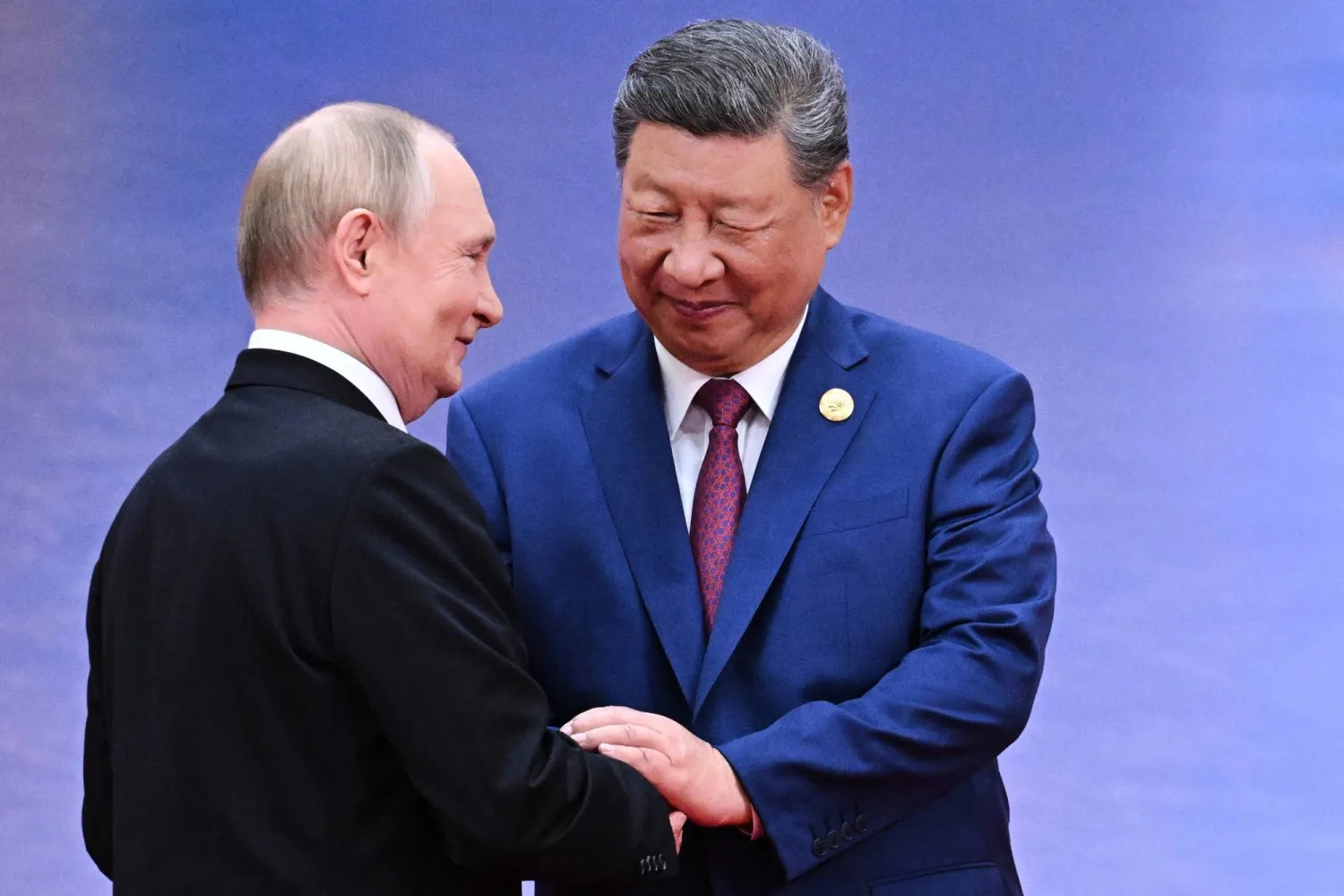
At a moment of profound international turbulence, Russian President Vladimir Putin arrives in Beijing carrying far more than economic files or routine bilateral understandings. The visit—Putin’s twenty-fifth to China—clearly reflects how Sino-Russian relations have moved beyond the boundaries of conventional partnership and gradually evolved into what may be described as a “strategic alliance of necessity,” shaped by major geopolitical transformations, most notably the war in Ukraine, the intensifying U.S.-China rivalry, and the instability of global energy markets.
Significantly, the summit comes immediately after former U.S. President Donald Trump visited China, giving the meeting symbolic dimensions that extend well beyond economics and energy. Beijing increasingly appears to be emerging as the new center of international balance, where the interests of major powers intersect, while both Washington and Moscow seek to redefine their respective relationships with China in accordance with the shifting realities of the international order.
Behind the diplomatic protocol and political messaging, however, energy remains the true core of the visit. The massive “Power of Siberia 2” gas pipeline project is no longer merely a delayed economic initiative; for the Kremlin, it has become a strategic issue tied directly to the future of the Russian economy itself. Since the outbreak of the Russia–Ukraine war, Moscow has steadily lost its most important European markets and has been forced to redirect its energy exports eastward toward Asia, particularly China.
This transformation was not entirely a voluntary Russian choice, but rather a direct consequence of Western sanctions and Europe’s attempts to reduce its dependence on Russian energy. Consequently, the “Power of Siberia 2” pipeline, with its projected annual capacity of 50 billion cubic meters, represents Moscow’s effort to construct an alternative economic lifeline capable of partially compensating for the collapse in Russian gas exports to Europe. In this context, Russia’s determination to finalize the agreement becomes understandable, even if it requires offering pricing concessions to Beijing.
China, meanwhile, appears more pragmatic and cautious. Despite its growing demand for energy, Beijing understands that excessive dependence on Russia carries long-term strategic risks—much like Europe’s earlier concerns over overreliance on Russian gas. For this reason, the Chinese leadership is seeking to exploit Russia’s difficult economic circumstances in order to secure lower prices and preferential conditions, fully aware that Moscow is currently the party most in need of the deal.
Yet the most decisive factor accelerating the rapprochement between the two countries lies not in Europe, but in the Middle East. The U.S.-Israeli war against Iran, along with the resulting disruption of maritime routes and the closure of the Strait of Hormuz, has once again exposed one of the most dangerous geopolitical realities of the contemporary world: China’s energy security remains highly vulnerable.
Historically, China has relied heavily on the Middle East to secure a substantial portion of its oil and gas imports, much of which passes through the Strait of Hormuz. As a result, any military escalation in the region immediately becomes a direct threat to the Chinese economy. The crisis has already manifested itself through fuel shortages, rising inflation, and noticeable economic slowdown, pushing Beijing to reconsider the concept of “energy security” from a far more strategic perspective.
Within this framework, Russia’s growing importance to China becomes evident—not merely as an energy supplier, but as a relatively secure geographic partner located beyond the maritime chokepoints that the United States and its allies can influence. Overland pipelines stretching from Siberia provide China with a strategic advantage that traditional maritime trade routes cannot guarantee.
Nevertheless, describing the Sino-Russian partnership as a relationship “without limits” remains somewhat exaggerated. The relationship between the two powers is built upon a delicate balance of cooperation, mutual interest, and strategic caution. China supports Russia politically in the face of Western pressure, yet it remains unwilling to be fully drawn into a direct confrontation with the West because of Moscow. At the same time, Beijing recognizes that Russia—despite its military strength—has become economically weaker and increasingly dependent on the Chinese market, a reality that is gradually reshaping the balance of power in the relationship in China’s favor.
In this context, the visit also appears to represent an attempt to institutionalize political and diplomatic coordination in opposition to the U.S.-led international order. Kremlin statements emphasizing the “alignment” of Russian and Chinese foreign policy positions reveal a growing ambition to construct an international axis capable of challenging Western dominance—or at least imposing a new balance within the global system.
The paradox, however, is that this rapprochement is not rooted in ideological unity, as was the case during the Cold War, but rather in converging interests and shared pressures. Russia needs China economically; China needs Russia strategically and energetically; and both perceive Western policies as a long-term challenge to their global influence.
For this reason, the current summit is not merely a bilateral meeting about gas and energy. It is an expression of a new international phase in which maps of influence and alliances are being redrawn. It is a world in which old certainties are fading, while geography, energy, and strategic corridors regain central importance, and where international relations are gradually shifting from temporary partnerships toward the logic of major blocs and existential interests.
At the heart of this transformation, Beijing and Moscow appear to be attempting to construct a new global equation—one based not solely on trade and economics, but on the redistribution of power and influence in the twenty-first century.
Most read


Read also