
Arab–Chinese Relations: The Formation of a Strategic Partnership in a Post-Hegemonic World

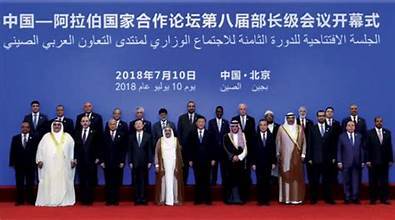
Arab–Chinese relations have undergone a profound transformation in recent years, evolving beyond the framework of traditional economic cooperation into a multidimensional strategic partnership. This shift reflects the deeper structural changes taking place within the international system amid the gradual decline of Western dominance and the rise of new global powers seeking to reshape the balance of power. At the heart of these transformations, China has emerged as one of the most influential international actors expanding its presence in the Middle East—not only through economics and energy, but also through diplomacy, technology, security, and culture.
China’s presence in the Arab world is no longer merely an extension of its need for oil and consumer markets. Rather, it has become part of a broader strategic vision through which Beijing seeks to construct a global network of influence anchored in the Belt and Road Initiative, while redirecting trade, energy, and investment routes in ways that align with its emergence as a global power competing with the United States. Simultaneously, Arab states increasingly view China as a partner capable of providing economic, developmental, and political alternatives at a time when doubts are growing regarding the sustainability of traditional Western commitments to the region’s security and stability.
Economic indicators reveal the magnitude of this transformation. Trade volume between China and Arab countries reached approximately $431 billion in 2022, with continued growth throughout 2023 and 2024, making China the largest trading partner for most Arab states. These figures demonstrate that the relationship is no longer confined to the traditional equation of oil in exchange for goods. Instead, it has expanded to encompass infrastructure, ports, logistics, renewable energy, the digital economy, and artificial intelligence.
Within this context, the Belt and Road Initiative has played a central role in consolidating China’s Arab presence. Beijing has invested in more than 200 projects across the Arab world, with a total value exceeding $200 billion. The Gulf states and Egypt stand at the forefront of China’s strategic partners. Saudi Arabia and the United Arab Emirates have developed increasingly deep economic and investment ties with Beijing, while Egypt represents a pivotal gateway for Chinese industrial and logistical projects through the Suez Canal Economic Zone.
Yet the true significance of this rapprochement lies not merely in economic figures, but in the geopolitical transformation it reflects. China presents itself in the Middle East as a global power fundamentally different from the traditional Western model. Beijing promotes principles of “non-interference” and respect for state sovereignty, while avoiding the linkage of economic cooperation to political or human rights conditions. This approach has granted China broad acceptance among many Arab governments seeking more pragmatic partnerships with fewer external political constraints.
This transformation became especially evident when Beijing successfully mediated the Saudi–Iranian rapprochement, a move that underscored China’s growing political role in the region. The mediation was not simply a tactical diplomatic success, but rather an indication that China seeks to transition gradually from the role of an “economic partner” to that of a “geopolitical actor” capable of influencing regional security and strategic balances.
In the security sphere, Arab–Chinese relations have also witnessed notable expansion in military and technological cooperation. China has conducted joint naval exercises with several Arab states, while its arms exports to the region have increased significantly, benefiting from Western restrictions on certain categories of advanced military technologies. More importantly, cooperation now extends into the fields of artificial intelligence and cybersecurity—sectors that are expected to become major arenas of international competition in the twenty-first century.
Despite this rapid expansion, the Arab–Chinese partnership faces complex challenges. The intensifying U.S.–China rivalry increasingly casts its shadow over the Middle East, as Washington continues to pressure several Arab states to limit Chinese technological influence, particularly in telecommunications and fifth-generation networks associated with Huawei.
Arab states recognize that deeper engagement with China may at times place them in a difficult position regarding the management of strategic balance between partnership with Beijing and the preservation of traditional alliances with the United States and the West. Consequently, many Arab governments are adopting policies of “diversifying partnerships” rather than replacing one partner with another, seeking to benefit from Chinese economic opportunities without becoming trapped in sharp international polarization.
For its part, China appears determined to deepen its role within transforming Arab economies, particularly in light of Gulf diversification strategies such as Saudi Vision 2030 and Kuwait Vision 2035. Beijing presents itself as a partner capable of providing financing, technology, and industrial expertise in renewable energy, green hydrogen, and smart infrastructure.
Non-oil Arab states such as Egypt and Morocco are also benefiting from cooperation with China in developing industrial and logistical sectors and integrating their economies into emerging global trade networks. This reflects growing Arab awareness that global economic transformations require the construction of diversified partnerships extending beyond exclusive dependence on the West.
Equally significant is the growing cultural dimension of Arab–Chinese relations. The spread of Confucius Institutes, the increasing number of Arab students studying in China, and the expansion of tourism and cultural exchange all point to Beijing’s effort to cultivate long-term soft power within the Arab region. Although this dimension remains less influential than the economic and political aspects of the relationship, it nonetheless signals China’s broader ambition to build sustainable societal influence.
Looking toward the future, Arab–Chinese relations are likely to expand even further, driven by several interconnected factors: the ongoing shift toward a multipolar international order, Asia’s growing importance within the global economy, rising Arab demand for technology, investment, and infrastructure, and China’s strategic need to secure energy supplies and expand its geopolitical influence.
Nevertheless, the success of this partnership will depend on the ability of both sides to manage the challenges associated with the U.S.–China rivalry and to transform their relationship from a primarily economic partnership into a balanced strategic cooperation that serves mutual interests without forcing Arab states into complete alignment within broader international polarizations.
Ultimately, Arab–Chinese relations are no longer a temporary phenomenon or a tactical rapprochement. They have become an expression of deeper structural transformations reshaping the international system itself. The Arab world is no longer merely a traditional sphere of Western influence, and China is no longer simply an economic power searching for energy and markets. Rather, Beijing has become a global actor seeking to reshape the balance of power worldwide. Between these two transformations, the contours of an Arab–Chinese partnership are emerging—one that may well become among the most significant axes of international politics in the decades ahead.
Most read



Read also