
The Nile Dam Dispute: Egypt Raises the Diplomatic Stakes with Ethiopia

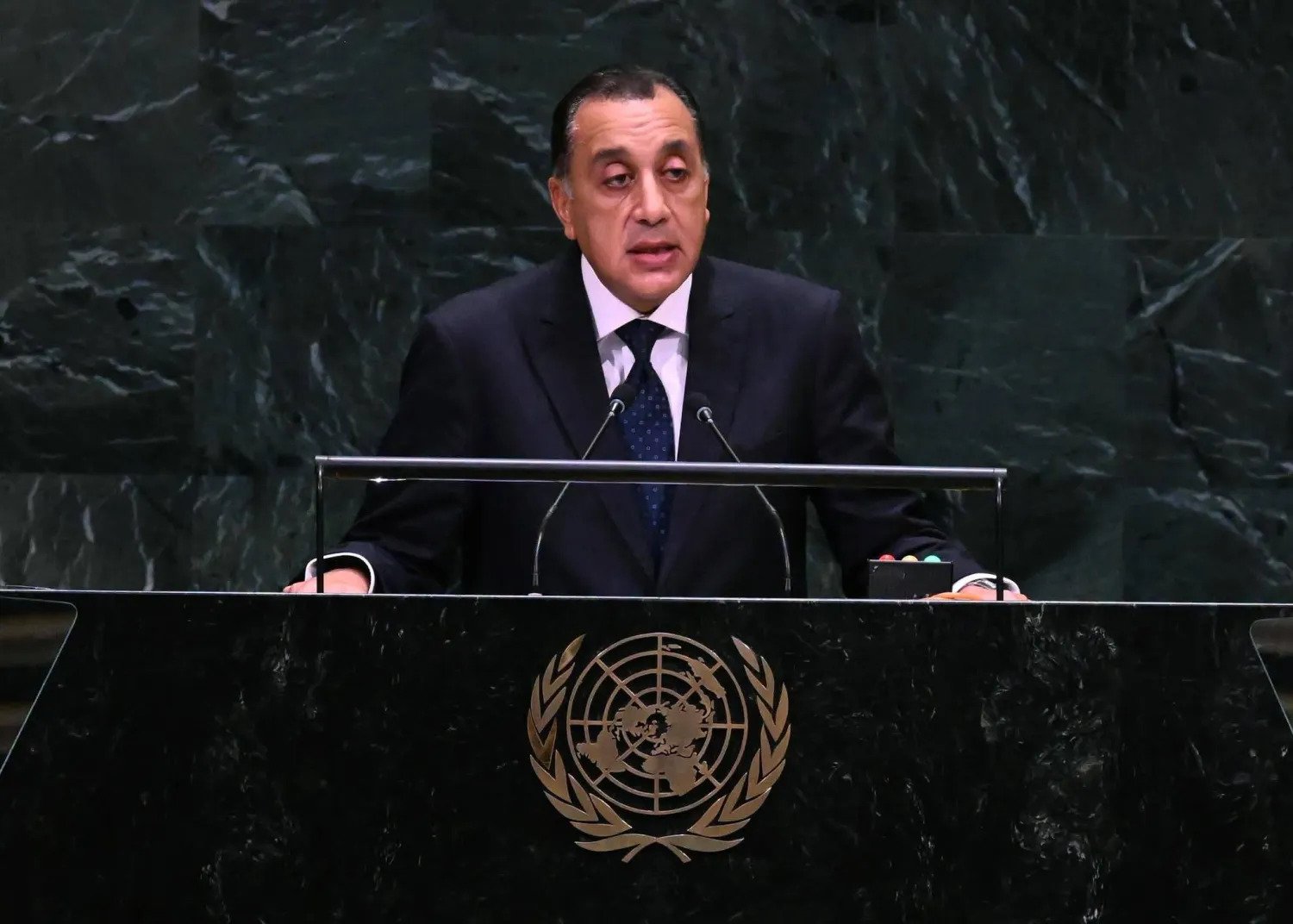
Egypt's latest messages regarding Ethiopia's Grand Ethiopian Renaissance Dam (GERD) suggest a noticeable hardening in Cairo's diplomatic discourse, particularly over the issue of water security and what Egypt considers Ethiopia's unilateral approach to the management of the Nile's waters.
Addressing the United Nations General Assembly, Egyptian Prime Minister Mostafa Madbouly reaffirmed Egypt's right to protect its water security in accordance with the UN Charter and international law, while stressing that transboundary water resources should be a field for cooperation rather than conflict.
The significance of the statement lies not simply in its language, but in the broader context in which it was delivered. It followed increasingly explicit statements by Egypt's ministers of irrigation and foreign affairs, suggesting that Cairo is seeking to move the GERD dispute beyond the narrow framework of bilateral negotiations and toward a broader international discussion about the principles governing transboundary rivers.
At the center of the Egyptian position is a basic proposition: Ethiopia's right to development should not, in Cairo's view, come at the expense of the water security of downstream states.
From Negotiation to Internationalization
Egypt and Ethiopia have spent roughly a decade attempting to reach an agreement on the rules governing the filling and operation of the dam.
The negotiations have repeatedly stalled. After an earlier suspension, talks resumed in 2023 before being suspended again in 2024, amid Ethiopia's continued rejection of what Cairo and Khartoum have sought as a binding agreement governing the dam's operation and the management of prolonged drought conditions.
The latest Egyptian statements indicate that Cairo is placing greater emphasis on the international legal framework surrounding the dispute.
Madbouly told the UN General Assembly that Egypt does not oppose development efforts in other countries, but rejects the principle that one state's development should come at the expense of another. He called instead for cooperation, good-neighborly relations, and legally binding agreements based on international law.
This formulation is important because it allows Egypt to frame the dispute not as opposition to Ethiopian development, but as a disagreement over the rules governing a shared transboundary resource.
The distinction is central to Cairo's diplomatic strategy.
Rather than arguing that Ethiopia has no right to build infrastructure on its territory, Egypt seeks to emphasize the consequences that the operation of such infrastructure could have for downstream countries and the need for rules acceptable to all parties.
From Water Security to an Existential Issue
The most consequential aspect of Egypt's recent rhetoric is the increasingly explicit description of Nile water security as an existential national-security issue.
Madbouly described the issue as one that cannot be compromised, while Egyptian officials have repeatedly referred to water as a national-security priority.
Egyptian Irrigation Minister Hani Sewilam went further in recent remarks by describing the dam as illegitimate and emphasizing that all lawful options remain available to the Egyptian state.
Foreign Minister Badr Abdelatty has likewise referred to Egypt's right to defend its interests under international law.
Such language represents a significant escalation in tone, even though Egyptian officials continue to emphasize diplomatic and legal mechanisms.
The distinction is important. Raising the possibility of defending national interests does not in itself amount to announcing a military option. Rather, it expands the range of signals directed toward Ethiopia and international actors regarding the seriousness with which Cairo views developments on the Nile.
In diplomatic terms, the objective may be to increase the cost of unilateral action without necessarily crossing the threshold into direct confrontation.
The Limits of Diplomatic Pressure
The challenge for Egypt is that increasingly strong diplomatic language does not automatically translate into a change in Ethiopia's position.
Addis Ababa has consistently argued that the dam is primarily a development project and has rejected Egyptian and Sudanese concerns that its operation would necessarily harm downstream countries.
This fundamental disagreement has remained one of the central obstacles to reaching a comprehensive agreement.
Egypt therefore faces a difficult diplomatic equation.
On one hand, it needs to demonstrate that the status quo is unacceptable from its perspective. On the other, it must preserve sufficient diplomatic space for negotiations should an opportunity for renewed talks emerge.
Excessive escalation could narrow that space. Insufficient pressure, meanwhile, could reinforce perceptions that the existing negotiating framework can remain suspended without significant consequences.
The challenge is consequently not simply to raise the level of pressure, but to combine pressure with a credible diplomatic pathway toward an agreement.
Ethiopia's Domestic Challenges and the Negotiating Environment
Some African affairs specialists cited in the original reporting argue that the prospects for an immediate revival of negotiations remain limited, partly because Ethiopia itself faces significant internal challenges.
Conflict and political instability in regions including Amhara, Tigray, and Afar have placed additional pressures on the Ethiopian government.
From this perspective, Addis Ababa may have incentives to prioritize domestic political and security concerns rather than devote significant political capital to a renewed negotiation process over the Nile.
However, Ethiopia's domestic challenges do not necessarily eliminate the possibility of negotiations. International crises and domestic instability can sometimes create incentives for governments to seek external diplomatic arrangements as well.
The more immediate issue may therefore be whether either side can identify a negotiating framework that allows both governments to return to talks without appearing to concede their core positions.
The International Dimension
Egypt's decision to emphasize the issue at the United Nations reflects the importance Cairo attaches to internationalizing the dispute.
The strategy has several potential objectives: reinforcing the legal framing of the Egyptian position, increasing international awareness of the dispute, building diplomatic support, and emphasizing that the issue concerns broader principles governing the use of transboundary water resources.
It also provides Egypt with an opportunity to engage countries beyond the immediate Nile basin.
Italian Foreign Minister Antonio Tajani has expressed readiness for Rome to mediate between Egypt and Ethiopia, illustrating the potential for European actors to become involved in efforts to bridge the differences.
Whether such mediation can succeed, however, depends on the willingness of both Cairo and Addis Ababa to accept a framework that moves beyond statements of principle toward specific operational rules.
Egypt's African Dimension
The dispute is not exclusively a bilateral Egyptian-Ethiopian issue.
Sudan is directly affected as a downstream state, while other Nile Basin countries have interests in the broader question of how the river's waters should be managed.
This makes Egypt's effort to strengthen cooperation with Nile Basin countries an important component of its broader diplomatic approach.
For Cairo, building stronger relations with African states can serve several purposes: increasing understanding of Egypt's concerns, strengthening diplomatic networks, and preventing the dispute from being framed exclusively as a confrontation between Egypt and Ethiopia.
But this approach also carries its own challenge.
African states do not necessarily share identical positions on the Nile, and many countries are primarily interested in preserving their own development opportunities and water interests. Egypt therefore faces the task of presenting its position in a manner that connects its national concerns to broader principles of equitable and sustainable management of shared water resources.
A Narrowing Space for Compromise?
The most important question is whether the increasingly firm Egyptian rhetoric represents preparation for a new negotiating phase or the consolidation of a long-term strategy for managing the dispute outside direct negotiations.
The answer remains uncertain.
Egypt continues to emphasize that it does not oppose Ethiopia's development and that it supports cooperation under international law. At the same time, its repeated references to its right to protect its water security indicate that Cairo is seeking to make clear that there are limits to what it considers acceptable.
This creates a dual-track strategy: preserve the diplomatic and legal track while strengthening deterrence through increasingly explicit political messaging.
The effectiveness of this approach will depend largely on whether it can persuade Ethiopia that a negotiated arrangement offers greater benefits than continued unilateral action.
What Could Bring the Negotiations Back?
A return to negotiations would likely require more than simply restarting meetings between Egyptian and Ethiopian officials.
The central challenge is to address the substantive issues that have prevented an agreement, particularly the rules governing dam operations during prolonged droughts, mechanisms for exchanging information, coordination between upstream and downstream states, and procedures for managing future disputes.
The disagreement is therefore not simply about the physical existence of the dam. It concerns how the dam will be operated over the long term and what commitments will govern its operation under changing hydrological conditions.
This distinction is critical.
A political agreement that merely recognizes the existence of the dam without establishing sufficiently clear rules for its operation may fail to resolve the underlying concerns. Conversely, an arrangement that provides predictable rules while recognizing Ethiopia's development interests could potentially create space for compromise.
Between Diplomacy and Deterrence
Egypt's latest statements reflect a broader transformation in the way Cairo is presenting the Nile dispute.
The language has become more direct, the international dimension has become more prominent, and the references to Egypt's legal right to protect its water security have become increasingly explicit.
Yet the diplomatic track remains open.
This suggests that Cairo is attempting to combine two objectives that are not necessarily contradictory: maintaining the possibility of negotiation while signaling that the absence of an agreement cannot be treated as an indefinite license for unilateral action.
The challenge is to maintain this balance without allowing rhetoric to become an obstacle to diplomacy.
For Ethiopia, the challenge is equally significant: demonstrating that its development ambitions can coexist with credible guarantees for downstream countries.
For Sudan, the issue remains particularly sensitive because it must balance its own interests in electricity generation, water management, and dam safety with its position as a downstream state.
The Nile as a Test of Regional Cooperation
Ultimately, the GERD dispute is larger than the dam itself.
It is a test of whether countries sharing a major transboundary river can reconcile development ambitions with the security concerns of downstream states.
The dispute also reflects a broader question confronting many regions of the world: How can countries exercise sovereign rights over resources located within their territories while managing the consequences those actions create for neighboring states?
There is no simple answer.
But the Nile dispute demonstrates the risks that emerge when negotiations remain suspended while infrastructure continues to change the strategic and hydrological reality on the ground.
For Egypt, the priority is to preserve what it considers its essential water interests while maintaining international and legal support for its position.
For Ethiopia, the challenge is to secure the developmental benefits of the dam while addressing downstream concerns sufficiently to make a negotiated framework possible.
And for the international community, the central interest lies in preventing a dispute over a shared natural resource from evolving into a broader source of regional instability.
The latest Egyptian messages therefore should be understood not simply as another escalation in rhetoric, but as part of a broader attempt to redefine the parameters of the GERD dispute.
The critical question now is whether the growing diplomatic pressure will eventually create the conditions for a return to negotiations—or whether the widening gap between the positions of Cairo and Addis Ababa will continue to make the Nile one of the region's most persistent strategic disputes.
Most read



Read also