
The Horn of Africa Between Regional Power Competition and the Repercussions of the Red Sea Crisis

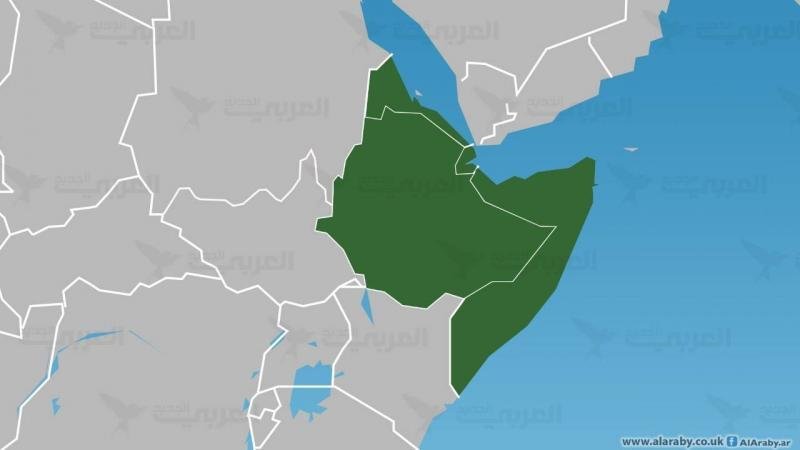
Developments in the Horn of Africa can no longer be separated from broader transformations in Red Sea security and regional competition over ports, trade routes, and political influence. A region encompassing Ethiopia, Eritrea, Somalia, Somaliland, Sudan, and Djibouti has increasingly become part of an interconnected security environment in which local conflicts intersect with Gulf and international interests.
The situation is further complicated by continuing tensions around the Bab el-Mandeb Strait and the interaction between the repercussions of the war in Yemen and the crises in Sudan, Ethiopia, and Somalia. Against this backdrop, the crises of the Horn of Africa can no longer be viewed simply as separate domestic conflicts. They are increasingly shaped, to varying degrees, by a cross-border network of interactions involving maritime security, energy trade, port investments, competition over resources, and political and military support for local actors.
The United Arab Emirates has emerged as one of the Gulf actors that has expanded its economic, political, and security presence in the Horn of Africa in recent years. The nature of this presence has generated growing debate over the boundaries between economic investment and the use of commercial infrastructure and ports as instruments of geopolitical influence.
The Red Sea and Its Ports: Where Economics and Geopolitics Intersect
The Red Sea is one of the world's most important maritime corridors, linking the Indian Ocean with the Mediterranean. This geographical position gives ports along its shores significance that extends beyond their immediate commercial functions.
In this context, UAE-based companies, particularly DP World, have expanded their investments in ports and logistics facilities in the Horn of Africa. The source material identifies locations such as Berbera, Bosaso, and Assab as important components of the UAE's presence along the western Red Sea and Gulf of Aden.
Investment in ports does not, in itself, necessarily transform these facilities into military or political instruments. However, the strategic importance of their geographical locations, combined with regional competition over Red Sea security, gives investments in maritime infrastructure potential geopolitical implications.
Ports can therefore be understood as part of a broader conception of economic power. Influence over important logistical nodes can provide states or companies with greater access to markets, an ability to affect trade routes, and stronger relationships with local governments.
This function becomes particularly significant in an environment where some Horn of Africa states face institutional weakness and multiple centers of power, allowing external investments to intersect directly with political and security considerations.
Yemen and the Horn of Africa: Two Shores of the Same Crisis
Red Sea security cannot be analyzed separately from the war in Yemen. Tensions along the Arabian side of the Red Sea have affected the African side, particularly as attacks by the Houthi movement on shipping in the Bab el-Mandeb and Red Sea have intensified.
These developments have contributed to a redefinition of Red Sea security as an interconnected system in which developments on either side of the maritime corridor can affect the other. Disruptions to shipping through Bab el-Mandeb affect not only the Gulf states and Yemen, but also African countries bordering the Red Sea and Gulf of Aden.
The source material argues that Saudi-Emirati competition in Yemen has contributed to reshaping security calculations in the Horn of Africa, particularly in Sudan, Somalia, and Eritrea. According to this interpretation, some aspects of Gulf competition have shifted from the Yemeni theater into the African arena, where relations with governments and local actors have become instruments for managing regional interests.
Yet explaining developments in the Horn of Africa solely through the Gulf factor would be insufficient. Domestic political crises, competition over power, ethnic and regional tensions, institutional weakness, and conflicts over resources are all longstanding and influential factors. External intervention may therefore amplify existing conflicts, but it does not by itself explain their origins.
Saudi-Emirati Competition and the Sudan Crisis
Sudan represents one of the clearest examples of the interaction between domestic conflict and regional competition.
The Sudanese war has reshaped the security environment around the Red Sea and created incentives for regional powers to strengthen their relationships with competing local actors. The source material refers to allegations that the UAE has supported the Rapid Support Forces (RSF), led by Mohamed Hamdan Dagalo, known as Hemedti, while Saudi Arabia has moved more strongly toward engagement with the Sudanese government and the Sudanese Armed Forces.
These allegations need to be treated as part of the broader political debate surrounding the Sudanese conflict rather than as independently established facts, particularly because the nature and extent of external support to the warring parties have become subjects of competing claims by regional and local actors.
Regardless of the validity of each individual allegation, however, continued regional competition over influence in Sudan adds another layer to an already highly complex domestic conflict. When local parties gain external resources or support, their capacity to continue fighting may increase, potentially prolonging the conflict and complicating prospects for a political settlement.
Sudan therefore illustrates the interactive relationship between domestic warfare and regional competition: local conflict creates opportunities for external intervention, while external intervention can, in turn, influence the balance of power within the conflict.
Ethiopia: Geography at the Center of Regional Competition
Ethiopia presents an even more complex case. Although it is landlocked, its strategic location makes its stability and political weight important to the security of the Horn of Africa and the Red Sea.
The source material argues that relations between the Ethiopian government and the UAE have developed substantially, and that Emirati economic and military support has played an important role in strengthening the relationship between the two countries. It also contains allegations that Abu Dhabi has provided military support to the Ethiopian government and links this to regional tensions involving Sudan.
Describing Ethiopia as a "proxy" of an external power, however, requires analytical caution. Ethiopia has its own interests, priorities, and security calculations, and its foreign policy cannot be reduced to its relationship with any single state.
Ethiopia's importance lies partly in the fact that major deterioration in its internal stability could have consequences beyond its borders, given its population size, geographical position, and relationships with Sudan, Somalia, Eritrea, and South Sudan, as well as its historical role in regional security institutions.
The stability of Ethiopia should therefore be understood not simply as a domestic concern, but as one component of wider regional stability in East Africa.
Domestic Conflicts and the Limits of External Explanations
Developments inside Ethiopia also demonstrate the need to avoid explaining regional crises exclusively through external intervention.
Conflicts between the central government and regional forces, as well as tensions in regions such as Tigray, Amhara, and Oromia, are connected to a long history of competition over political authority, resources, the structure of the state, and relations between the center and the regions.
The source material refers to the emergence of a broad opposition alliance involving multiple political and armed forces confronting the government of Prime Minister Abiy Ahmed.
The ability of such an alliance to develop into a stable political alternative, however, does not automatically follow from the breadth of its opposition base. The diversity of opposition forces can be a source of strength, but it can also generate internal disagreements if these actors lack a common political project and clear arrangements for managing a transitional period.
The future of the Ethiopian crisis will therefore depend not only on military balances, but also on the ability of the parties involved to develop a political framework capable of accommodating the country's regional and social diversity.
The United States and the African Union: Limits of External Influence
The source material strongly criticizes US policy toward Ethiopia and argues that Washington has not sufficiently addressed the roots of the crisis. It also questions the role of the African Union in managing regional conflicts.
From an analytical perspective, these criticisms highlight a broader problem concerning the limits of external powers and multilateral institutions when dealing with conflicts rooted in complex domestic political and social structures.
The United States can employ diplomatic and economic instruments, including sanctions, mediation, and assistance, but its influence faces constraints when dealing with conflicts whose roots lie deeply within domestic political structures.
The African Union, meanwhile, possesses important regional legitimacy, but it also faces institutional constraints related to its ability to impose and implement settlements, as well as differences among its member states.
Addressing the crises of the Horn of Africa therefore requires a combination of regional diplomacy, international mediation, and efforts to address the domestic roots of conflict rather than reliance on a single instrument.
The Military Dimension: Support Networks and External Actors
Competition in the Horn of Africa is not limited to investment and diplomacy. It also extends into the military and security spheres.
The source material points to growing reliance on foreign fighters and transnational security networks. It links the Russian-backed Africa Corps to supply networks associated with the Sudanese conflict and refers to the recruitment of foreign fighters for conflicts in the region.
This reflects a broader trend in contemporary conflicts: the movement of some military activity away from conventional national armies toward networks involving paramilitary forces, private security companies, foreign fighters, and local intermediaries.
The significance of this pattern lies partly in the difficulty of determining responsibility and accountability. It also increases the number of actors capable of influencing the trajectory of a conflict and can prolong wars when combatants gain access to external sources of financing, weapons, and manpower.
Europe and the Paradox of Economic Leverage
Europe retains direct interests in the stability of the Horn of Africa and the Red Sea, whether because of maritime and trade security or because of migration, security, and counterterrorism concerns.
The source material proposes that Europe could use its economic and financial relations with the UAE to influence its regional policies, including through financial sanctions, tighter oversight of illicit gold flows, and the conditioning of certain forms of economic and security cooperation on the behavior of regional actors.
The use of such instruments, however, involves significant political and economic trade-offs. Europe does not engage with the UAE solely as a security actor; it also regards the country as an important commercial and investment partner.
Any attempt to use economic relations as a source of political leverage would therefore have to balance the objective of reducing regional conflict against broader European economic and security interests.
The effectiveness of sanctions and economic restrictions is also not guaranteed. It depends on the level of cooperation from other actors, the availability of alternatives, and the clarity of the political objectives that such measures are intended to achieve.
The Risk of Crisis Spillover into the Red Sea
The significance of developments in the Horn of Africa lies partly in their proximity to one of the world's most sensitive maritime corridors.
If conflicts in Sudan, Ethiopia, and Somalia continue to interact with tensions in Yemen and the Red Sea, it may become increasingly difficult to separate the internal security of regional states from the security of international shipping.
This does not necessarily mean that the region is inevitably heading toward a comprehensive regional war. However, the accumulation of crises increases the possibility that conflicts will generate cross-border effects through refugee flows, arms trafficking, militant activity, or disruptions to trade routes.
These risks are particularly significant in the case of Ethiopia, given its population size and geographical position. The source material argues that a broad state collapse could generate major displacement with regional and European consequences.
The scale of such consequences, however, will depend on the trajectory of the crisis and on the ability of regional and international institutions to prevent existing conflicts from developing into interconnected crises that become increasingly difficult to contain.
Conclusion: From Port Competition to the Reshaping of the Regional Order
The crises of the Horn of Africa reveal a transformation in the nature of competition over the Red Sea. Competition is no longer confined to borders or direct political influence. It increasingly encompasses ports, infrastructure, supply chains, resources, security networks, and military partnerships.
In this environment, the UAE's presence represents one component of a broader regional picture, but it is not the sole factor determining the trajectory of the region. Alongside the UAE, Saudi Arabia, Turkey, Qatar, Iran, and other regional actors, the interests of the United States, Russia, China, and the European Union intersect with the calculations of the local states themselves.
The central challenge is that the interaction of these interests with domestic conflicts can transform local crises into arenas of regional and international competition. The longer this interaction continues, the more difficult domestic political settlements may become.
Stabilizing the Horn of Africa therefore requires an approach that goes beyond managing crises after they erupt and instead addresses their political, economic, and security roots. This includes supporting domestic political settlements, strengthening national institutions, limiting the flow of weapons to conflict parties, reinforcing regional mediation mechanisms, and establishing clearer rules governing foreign investment in strategically important ports and infrastructure.
As for the Red Sea, sustainable security cannot be achieved through maritime protection alone. The security of shipping is also connected to the stability of the states on both shores. As long as conflicts in the Horn of Africa and Yemen remain unresolved, the security and economic risks surrounding the Red Sea will persist.
The fundamental challenge, therefore, is not simply to prevent the Bab el-Mandeb Strait from becoming a chokepoint for international shipping. It is to prevent the Horn of Africa as a whole from becoming an arena where local conflicts intersect with regional and international competition.
Most read



Read also