
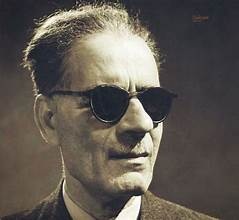
When the name Taha Hussein is mentioned, one does not merely recall a great writer, a distinguished critic, or a former minister of education. Rather, one recalls a complete model of the intellectual who sought to change the course of modern Arab culture. Taha Hussein was among the most significant figures who embodied the Arab transition from an age of imitation to an age of questioning, from the authority of rigid inherited tradition to the right of reason to examine and reassess, and from education as a privilege of elites to education as a universal right. For this reason, he was not a passing figure in the history of Arab thought, but a project in himself—one with a vision, tools, struggles, and a lasting influence that continues to this day.
Any serious reading of Taha Hussein must free itself from two opposing tendencies: the tendency to sanctify him as an infallible icon, and the tendency to condemn him as an enemy of heritage, religion, and identity. Like all major thinkers, he was more complex than these simplified portrayals. He was a product of his environment and time, yet he was also ahead of his age in many of the questions he raised, and a permanent subject of controversy because of the boldness with which he framed his answers.
Born in Egypt within a traditional social and cultural context, Taha Hussein lost his sight in childhood. Yet this disability did not become an obstacle; perhaps it became one of the sources of his inner strength. His consciousness was shaped early by the idea that a human being can transcend imposed limitations through willpower and knowledge. This explains his deep attachment to education—not merely as a personal path of advancement, but as a collective instrument of social and cultural liberation. This personal experience helps explain his later enthusiasm for free education and his famous insistence that education should be “like water and air.”
Yet the most provocative and influential dimension of Taha Hussein’s project was neither administrative nor political, but epistemological and methodological. He realized early that the crisis of modern Arab culture lay not only in weak capacities or foreign colonialism, but in ways of thinking themselves. Thus, he sought to introduce a critical spirit into the Arab cultural sphere—that is, to move reason from passive reception to active questioning. Ancient texts were no longer unquestionable truths, inherited narratives were no longer immune from scrutiny, and fame was no proof of authenticity. Hence came his great confrontation with inherited tradition in his famous book On Pre-Islamic Poetry, which marked a shocking moment in the history of modern Arab culture.
In that book, Taha Hussein was not merely discussing a literary issue concerning the attribution of certain poems to the pre-Islamic era. He was announcing the birth of a new method for dealing with heritage. He attempted to apply modern historical skepticism to Arab transmitted narratives, inspired by Cartesian philosophy, which begins with doubt in order to reach certainty. Here lies both the significance and the danger of the book. Its significance was that it stirred stagnant waters and compelled cultural circles to accept the idea that heritage is open to criticism and reassessment. Its danger was that it employed language and conclusions that many saw as hasty and confrontational, opening the door to hostility rather than dialogue.
Taha Hussein believed that a nation afraid to review its own history is condemned to remain captive to its illusions. Yet his problem was not in raising the question, but at times in how he raised it. Societies do not receive epistemological criticism in the abstract; they receive it through their religious sensitivities, symbolic attachments, and identity concerns. Thus, to conservative public opinion, he appeared to be demolishing sacred foundations, while he believed he was rescuing reason from blind submission. Here lies the great paradox of his career: he sought to liberate heritage from sanctification, yet at times he simplified the relationship between society and its heritage.
Nevertheless, accusing Taha Hussein of hostility toward heritage is inaccurate. He wrote with deep admiration about Abu al-Ala al-Ma'arri, celebrated Al-Mutanabbi, and read Ibn Khaldun through a modern lens. He also engaged seriously with prophetic biography, Islamic history, and Abbasid literature. His aim was not to erase heritage, but to repossess it through a new intellect. For him, the gravest danger to heritage was for it to become an untouchable idol, because idols lose the capacity for life. Living heritage, in his view, is heritage engaged in continuous dialogue with the present.
On the other hand, his broad openness to Europe was one of the most debated aspects of his project. Having studied in France and absorbed modern methodologies, he saw in the European experience a successful model of state-building, institutions, and science. In his book The Future of Culture in Egypt, he called for linking Egypt’s renaissance to the modern Mediterranean world, believing that progress could only be achieved by joining the march of contemporary civilization. This vision was advanced in its rejection of isolation and closure, but it also raised a legitimate question: can modernity only be achieved through reproducing the European model?
Here appears one of the limits of Taha Hussein’s project. He was deeply committed to modern rationality, yet he did not always give sufficient weight to the particularities of local societies and the complexities of interaction between identity and modernization. Progress cannot be achieved simply by importing institutions; it requires long-term cultural and social accommodation. Nor is modernity a single template, but multiple experiences. Thus, one may say that Taha Hussein was right to advocate openness, but at times he overstated the centrality of the European model.
In the field of education, Taha Hussein was among the most visionary Arab thinkers in understanding the relationship between knowledge and social justice. He did not regard education as a cultural luxury, but as a condition for national liberation and the making of the modern citizen. When he assumed public office, he worked to expand free education and make it accessible to the poor. He understood early that a society that monopolizes knowledge merely reproduces poverty and dependency. For this reason, his legacy in this field remains present in every Arab debate about the right to education.
Yet despite its greatness, his project was not free of elitism. At times he spoke from the position of the intellectual who knows society’s interests better than society itself. This was a common trait of many twentieth-century enlightenment projects, in which elites imagined modernization could be managed from above through guidance and cultural disciplining. Historical experience, however, has shown that societies do not change through elite decrees alone, but through broader participation in which transformations gradually take root.
Still, Taha Hussein must be judged within his historical context. He lived in an era when the Arab nation was searching for its path between colonialism, backwardness, and stagnation. In such moments, intellectuals are sometimes compelled to exaggerate in order to break inertia, and to shock in order to open debate. Perhaps this is why his impact has outlasted his mistakes. The ideas he raised concerning reason, freedom, education, and method remain alive today in new forms.
The true significance of Taha Hussein lies not only in his books, but in the kinds of questions he forced Arab culture to confront: How do we read heritage without worshipping or abolishing it? How do we open ourselves to the world without losing ourselves? How do we reconcile religion with reason, identity with modernity, and education with social justice? And how do we practice criticism without descending into total rupture with society?
For all these reasons, Taha Hussein remains a foundational figure in modern Arab thought. We may disagree with some of his conclusions, revise many of his judgments, and move beyond some assumptions of his age, but it is difficult to surpass his historical significance. He taught Arab culture that questioning is not a crime, that doubt is not disbelief, that reason is not the enemy of faith, and that renaissance begins when a society dares to think about itself. And that, in the final analysis, is the deepest value of any great intellectual project.
Most read