

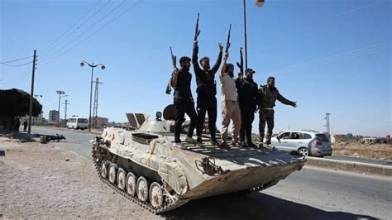
The latest developments between Turkey and Israel, triggered by the Israeli strike on the Abu al-Duhur military airbase in Syria’s Idlib countryside, reveal that the Syrian arena is increasingly becoming a testing ground for competing regional spheres of influence rather than merely a theater for Syria’s internal conflicts. The escalating rhetoric between Ankara and Tel Aviv reflects a deeper clash between two competing visions for the political and security arrangements that will shape Syria in the next phase.
From this perspective, the U.S. call for de-escalation, voiced by U.S. Special Envoy for Syria Tom Barrack, appears to be an attempt to prevent growing friction between Turkey and Israel from developing into an open confrontation that could prove difficult to contain. Washington understands that any direct Turkish-Israeli clash on Syrian territory would not remain a localized security incident. Instead, it could reshape the network of alliances and understandings that the United States is seeking to establish across the region.
The Israeli Strike and the Redefinition of the “Status Quo”
The Israeli strike on Abu al-Duhur is significant because it came amid increasingly explicit Israeli warnings about preventing any military deployment that Tel Aviv considers a threat to its security, particularly in areas that could affect military positioning and lines of communication between Israel and Iran.
Israel has framed the operation as an effort to prevent a change to what it describes as the “status quo” in Syria, after concluding that the deployment of Turkish forces at an airbase near Aleppo could undermine existing security understandings. Ankara, however, has rejected this narrative, describing the Israeli strikes as a violation of Syrian sovereignty and accusing Israel of using unconvincing justifications to expand its military operations.
The core problem, therefore, lies in the fact that the term “status quo” no longer carries the same meaning for the various parties. For Israel, preserving the status quo means preventing the establishment of military infrastructure that could allow Iran or its allies to move closer to Israeli territory or strengthen their capabilities inside Syria. Turkey, by contrast, views Syria as a vital arena for its national security and regional influence, and regards its military and political presence as part of the broader post-war arrangements shaping the country.
The dispute, therefore, is not simply about a military base or an airstrike. It is fundamentally about who has the authority to define security boundaries inside Syria and who gets to determine what kind of military presence is acceptable there.
Turkey and Israel: From Managing Disputes to Testing Influence
Turkish-Israeli relations have long been characterized by a combination of cooperation and rivalry. Yet the war in Gaza and the broader changes in the regional environment have pushed the relationship toward a far sharper level of political confrontation.
Ankara increasingly views Israel as a power seeking to reshape the region’s security environment according to its own priorities, while Tel Aviv sees Turkey’s expanding role in Syria as part of a broader regional influence that could eventually become a direct security concern.
The issue is particularly sensitive because of the nature of Turkey’s role in northern Syria. Ankara does not view its presence there simply as a temporary military deployment. Rather, it forms part of a broader strategy linked to border security, the Kurdish issue, and Turkey’s ability to influence the future structure of the Syrian state.
Israel, meanwhile, monitors changes in Syria’s military landscape through a highly sensitive security lens, particularly when developments could create new military infrastructure near areas of Israeli interest or alter existing operational corridors.
As a result, the possibility of further friction between the two countries remains significant even if Washington succeeds in containing the current crisis. The dispute is rooted less in misunderstanding than in the structural clash between their respective interests.
Washington Seeks to Prevent a Clash Between Allies
Tom Barrack’s statements highlight a clear American dilemma. The United States finds itself dealing with two important partners—Turkey and Israel—whose rivalry is increasingly spilling into the Syrian arena.
Washington’s immediate priority, therefore, appears to be managing the competition rather than resolving it. The United States does not want Syria to become the setting for a direct Turkish-Israeli confrontation, particularly amid fragile regional balances and multiple highly sensitive issues, ranging from Gaza to Iran and Lebanon.
Barrack’s call for Israel to notify Turkey in advance before carrying out similar military operations is particularly significant. It suggests that Washington recognizes that the problem is not only the nature of Israeli military actions, but also the absence of effective coordination mechanisms capable of preventing miscalculation between two heavily armed powers operating within the same geographic theater.
Yet the American role has clear limits. Washington can pressure both sides to prevent escalation, but it cannot easily eliminate the structural factors driving their competition inside Syria.
Turkish-Israeli Escalation Extends Beyond Syria
The escalation surrounding Israeli Prime Minister Benjamin Netanyahu also demonstrates that the dispute between Ankara and Tel Aviv has moved beyond military calculations in Syria.
Turkey’s announcement that it would seek Interpol red notices against Netanyahu and other Israeli officials as part of a criminal case related to the interception of activists attempting to deliver humanitarian aid to Gaza represents an expansion of the confrontation into the international legal and diplomatic arena.
Israel responded sharply. Netanyahu’s office accused Turkish President Recep Tayyip Erdoğan of attempting to intimidate Israel and destabilize the region.
This exchange indicates that the two countries are no longer managing a limited dispute over a single issue. Instead, they are engaged in a broader struggle over political legitimacy and competing regional narratives.
Turkey seeks to position itself as a defender of the Palestinian cause and an opponent of what it regards as Israeli violations, while Israel portrays Turkey’s actions as part of a broader strategy aimed at expanding Turkish influence and exerting pressure on Israel.
Syria: The Key Arena in the Emerging Regional Balance of Power
The most significant aspect of these developments is that Syria appears simultaneously to be the subject of the conflict and largely absent from its management.
Regional and international powers are competing to determine the nature of their military and security presence on Syrian territory, while the Syrian state itself remains constrained in its ability to control many of these interactions.
This dynamic risks reproducing Syria’s role as an arena where competing regional projects intersect. Israel seeks to establish a security environment that prevents threats associated with Iran from approaching its borders. Turkey seeks to preserve its influence and prevent arrangements it considers detrimental to its national security. Meanwhile, the United States seeks to contain competition between its own partners and prevent it from turning into an open confrontation.
Under these circumstances, any change in military deployments or alliances inside Syria can be interpreted by one party as an attempt to alter the balance of power. This increases the risk of miscalculation and makes limited military strikes capable of developing into much broader crises.
Toward a New Phase of Regional Competition
The current crisis between Turkey and Israel is unlikely to end simply because the two sides return to the negotiating table. Dialogue may prevent escalation, but it cannot eliminate the underlying contradiction between their respective visions for Syria and the wider region.
The most likely scenario is the continuation of managed competition: limited Israeli military operations whenever Tel Aviv believes its security interests are threatened; political, diplomatic, and potentially military objections from Ankara when it believes those operations undermine its influence; and continued American intervention to prevent either side from crossing red lines that could trigger a direct confrontation.
The danger of this scenario, however, is that crisis management does not necessarily prevent crises from accumulating. Every military operation, every new deployment, and every exchange of accusations can alter the parties’ calculations and make the next crisis more difficult to contain than the previous one.
The latest developments should therefore not be viewed merely as a temporary Turkish-Israeli dispute over an airstrike in Syria. They are better understood as an indicator of a new phase in the redistribution of influence within the Syrian arena.
In this emerging phase, Washington’s ability to manage competition between its allies, together with Ankara and Tel Aviv’s ability to establish clear rules of engagement, will be crucial in determining whether Syria remains an arena for controlled rivalry or once again becomes a potential flashpoint for a broader regional confrontation.
Most read



Read also