Strategic Containment or Strategic Repositioning? Hezbollah and the Future of Lebanon's Security Order

Introduction
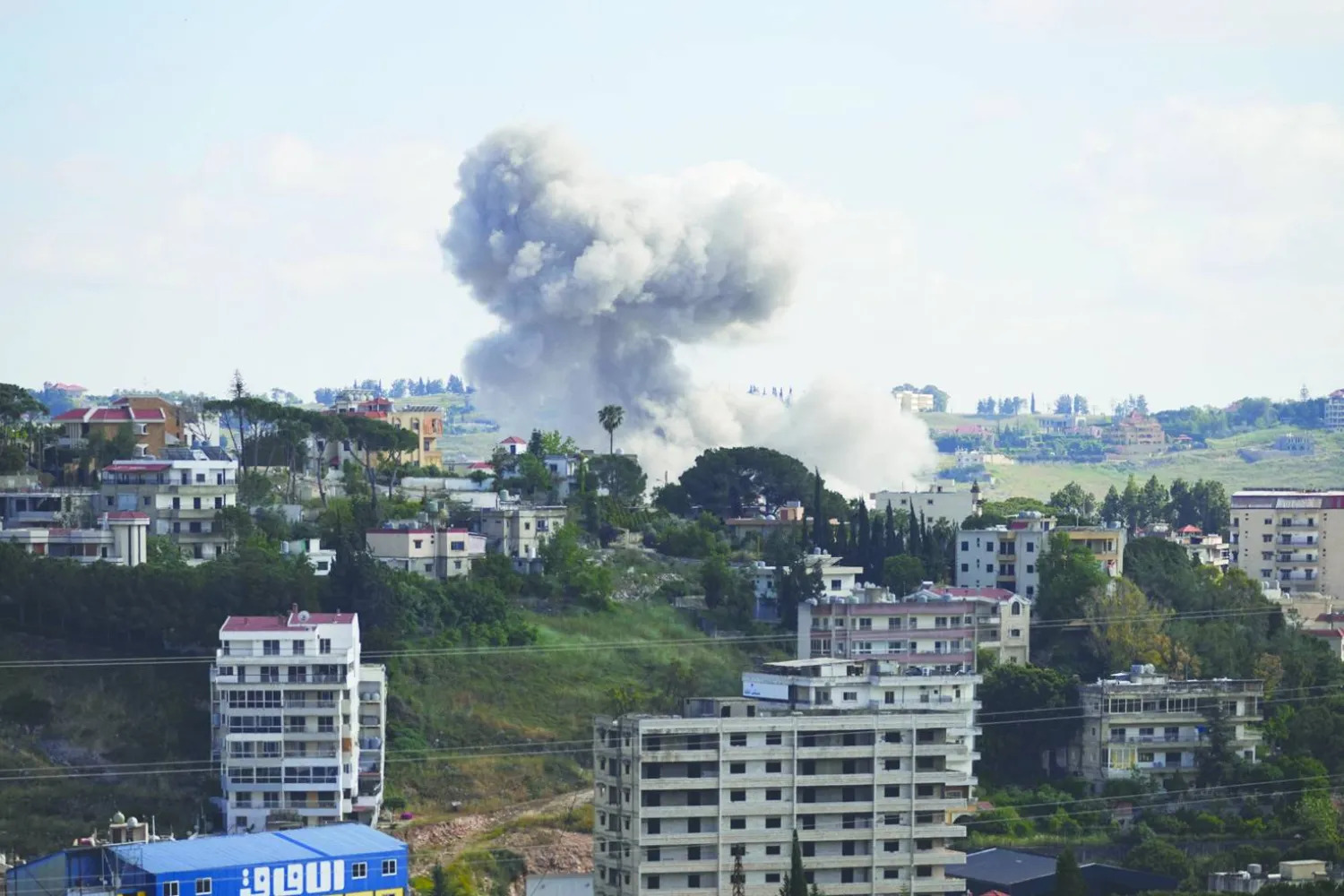
Lebanon is no longer merely a theater of recurring border confrontations between Israel and Hezbollah. Rather, it has become one of the Middle East's most significant arenas for the ongoing reconfiguration of the regional balance of power in the aftermath of the escalating confrontation between Israel and Iran. Recent developments suggest that the focus has gradually shifted from managing border clashes and maintaining temporary ceasefires toward a broader effort to reshape southern Lebanon's security environment and redefine the relationship between the Lebanese state and non-state armed actors within a wider regional and international security framework designed to prevent a broader regional conflict.
These developments are particularly significant because Lebanon represents one of the region's most complex geopolitical arenas, where domestic sectarian dynamics intersect with Israel's security concerns, Iran's strategic interests, and Washington's broader efforts to redesign the regional security architecture. Consequently, any shift in Lebanon's internal balance of power extends far beyond the country's borders, affecting regional deterrence dynamics and the alliance structures that have shaped Middle Eastern geopolitics over the past four decades.
Against this backdrop, international approaches toward Lebanon appear to be undergoing a gradual transformation. Rather than merely managing conflict and containing its consequences, regional and international actors increasingly seek mechanisms capable of restoring the authority of Lebanese state institutions and strengthening their capacity to perform core security functions, thereby reducing the influence of non-state armed groups. Although this approach continues to face significant political and military obstacles, it reflects growing recognition that Lebanon's enduring dual-security structure has become one of the principal sources of instability in the Eastern Mediterranean.
This objective is neither politically nor legally new. Its foundations can be traced back to the 1989 Taif Agreement, which called for the dissolution of all Lebanese militias and the transfer of their weapons to the state as a prerequisite for rebuilding national institutions after the civil war. Nevertheless, Hezbollah remained effectively exempt from this disarmament process under the justification of resisting the continued Israeli occupation of southern Lebanon.
Following Israel's withdrawal in 2000, the issue re-emerged more forcefully through UN Security Council Resolution 1559 (2004), which called for the disbanding and disarmament of all Lebanese and non-Lebanese militias. The 2006 Security Council Resolution 1701 reinforced this framework by emphasizing that no weapons or authority should exist in Lebanon outside the authority of the state, while limiting armed presence south of the Litani River to the Lebanese Armed Forces (LAF) and the United Nations Interim Force in Lebanon (UNIFIL). Yet implementation remained incomplete because of Lebanon's domestic political constraints and the broader regional environment that continued to provide Hezbollah with both strategic justification and political legitimacy for maintaining its military capabilities.
Accordingly, the debate today extends well beyond Hezbollah's weapons. It fundamentally concerns the future of the Lebanese state itself and its ability to restore the state's monopoly over the legitimate use of force—one of the defining characteristics of modern state sovereignty. Simultaneously, current developments raise broader questions regarding the future of Iranian influence across the Levant, Israel's evolving security doctrine, and the nature of the United States' role in reshaping the regional security order.
From Conflict Management to Security Re-engineering
Recent developments suggest that the management of Lebanon's security crisis has evolved beyond simply preventing military escalation. Increasingly, regional actors appear to be attempting to redesign the security environment that has allowed persistent instability along the Lebanese-Israeli border.
Instead of focusing exclusively on ceasefire arrangements or temporary de-escalation mechanisms, attention has gradually shifted toward addressing the structural conditions that enabled non-state armed actors to exercise security responsibilities traditionally reserved for sovereign governments.
Underlying this transformation is a growing conviction among several international actors that long-term stability along Israel's northern frontier cannot be achieved solely through military deterrence. Rather, sustainable security requires strengthening Lebanese state institutions so that they can exercise effective authority over border regions and reduce the ability of armed organizations to independently determine questions of war and peace.
Yet this vision immediately encounters one of the central complexities of the regional security architecture: the nature of Hezbollah's relationship with Iran.
Although Hezbollah remains the most sophisticated component of what Tehran describes as the "Axis of Resistance," its relationship with Iran cannot accurately be described as one of direct command and control. Instead, it more closely resembles the model of a strategic proxy—an organization enjoying substantial operational autonomy while remaining fully integrated into Iran's broader regional strategic framework.
Historical experience strongly supports this assessment. From the 2006 Lebanon War to Hezbollah's subsequent regional engagements and the military dynamics following the Gaza conflict, the organization has repeatedly demonstrated significant tactical flexibility in accordance with Lebanese operational realities while remaining broadly aligned with Iranian strategic objectives.
Consequently, any assumption that Tehran can simply compel Hezbollah to comply fully with regional diplomatic arrangements remains analytically questionable. Their relationship is better understood as one based upon strategic convergence rather than hierarchical obedience.
Israel's position presents an equally important variable.
Since the conclusion of the 2006 war, Israeli security doctrine has increasingly centered on preserving unrestricted operational freedom. Rather than accepting political agreements as permanent constraints, Israel has adopted what military planners describe as the Campaign Between Wars (CBW)—a strategy based on continuous intelligence-driven preventive operations designed to delay or disrupt the military modernization of hostile actors without triggering full-scale war.
Initially implemented primarily inside Syria to prevent Iranian military entrenchment and advanced weapons transfers to Hezbollah, this doctrine has gradually expanded to encompass Lebanon itself. Israeli security planners increasingly argue that traditional deterrence alone is insufficient to prevent Hezbollah from rebuilding its military capabilities.
As a result, ceasefire arrangements today depend less upon diplomatic understandings than upon the evolving balance of military deterrence on the ground. Their sustainability ultimately depends not only on governmental commitments but also on the willingness of armed non-state actors to observe them and on regional powers' readiness to redefine the boundaries of their influence inside Lebanon.
These realities illustrate that southern Lebanon is no longer simply a contested border zone. It has evolved into one of the Middle East's principal geopolitical arenas, where competing regional security visions intersect.
For Israel, southern Lebanon represents the primary defensive buffer protecting its northern front.
For Iran, it constitutes one of the most important forward deterrence lines against both Israel and the United States.
For Washington, meanwhile, the area has become a critical test of whether the Lebanese state can gradually restore sovereign authority while limiting the operational autonomy of non-state armed actors without triggering another cycle of internal conflict.
Ultimately, therefore, the future of southern Lebanon will depend less on temporary security arrangements than on whether regional and international actors can construct a sustainable security framework capable of reconciling three competing imperatives: Israel's security requirements, Lebanon's sovereign authority, and Iran's enduring regional influence.
To date, such a strategic equilibrium remains elusive, leaving every ceasefire vulnerable to renewed escalation whenever regional power balances or political calculations shift.
II. The Lebanese State Between Sovereignty and Structural Constraints
The state's monopoly over the legitimate use of force constitutes one of the defining characteristics of modern statehood. Lebanon, however, has remained one of the clearest exceptions to this principle since the end of its civil war in 1990. Although the Taif Agreement established both the legal and political framework for dismantling armed militias, implementation remained selective. Hezbollah retained its military capabilities under the banner of "resistance" against the Israeli occupation of southern Lebanon. Following Israel's withdrawal in 2000—and even more so after the 2006 Lebanon War—Hezbollah's military arsenal evolved from an instrument of anti-occupation resistance into one of the principal pillars of Lebanon's domestic political equilibrium and a critical component of the broader regional balance of power.
Consequently, the question of Hezbollah's arms gradually moved beyond the realm of domestic politics to become deeply embedded within the strategic calculations of regional and international actors.
Over the past two decades, successive Lebanese governments have failed to translate constitutional principles and international resolutions into effective state authority. This failure cannot be attributed solely to Hezbollah's military superiority. Rather, it reflects the structural characteristics of Lebanon's confessional political system, which distributes power among sectarian communities and encourages political accommodation rather than decisive confrontation.
Within this framework, Lebanese governments have generally preferred managing disagreement over Hezbollah's weapons rather than attempting to resolve it outright. The prevailing concern has been that any effort to impose a military solution could destabilize the country's fragile sectarian balance and potentially revive the dynamics that led to the 1975–1990 civil war.
At the same time, Hezbollah itself has undergone a profound transformation. It can no longer be understood merely as an armed organization. Instead, it has become a hybrid political-military actor deeply embedded within Lebanon's institutional, social, and economic landscape.
Beyond maintaining one of the region's most sophisticated non-state military forces, Hezbollah commands significant parliamentary representation, participates directly and indirectly in successive governments, and operates an extensive network of educational institutions, healthcare facilities, charitable organizations, and social welfare programs. During Lebanon's financial collapse after 2019, many of these institutions became increasingly important within the party's social constituency, further reinforcing Hezbollah's domestic legitimacy.
This institutional entrenchment fundamentally complicates any discussion of disarmament. Hezbollah is no longer simply an armed movement; it has become an integral component of Lebanon's political order.
Lebanon's unprecedented economic crisis has further constrained the state's capacity to reclaim sovereign authority.
Since 2019, the country's financial collapse has severely weakened public institutions, including the security sector. Currency depreciation, declining military salaries, shrinking defense budgets, and institutional paralysis have collectively reduced the operational effectiveness of state agencies. Although the Lebanese Armed Forces continue to receive substantial assistance—particularly from the United States and France in the form of training, equipment, intelligence support, and logistical aid—international assistance has primarily focused on preserving institutional cohesion rather than transforming the LAF into a force capable of confronting Hezbollah militarily.
The Lebanese Armed Forces continue to enjoy perhaps the highest degree of public legitimacy among state institutions precisely because they have largely remained outside Lebanon's sectarian political competition. Yet legitimacy alone has not translated into effective coercive capacity.
Political realities have consistently prevented the military establishment from confronting Hezbollah directly. Military commanders have long recognized that any internal military confrontation could threaten the cohesion of the armed forces themselves, whose personnel reflect Lebanon's sectarian diversity.
Understanding Hezbollah's military role also requires examining its broader regional evolution.
Since its establishment during the early 1980s, Hezbollah has evolved from a local resistance movement into a regional strategic actor operating across multiple theaters, including Syria and Iraq, while maintaining extensive security cooperation with other components of Iran's so-called Axis of Resistance.
This regionalization has fundamentally altered the strategic context of Lebanon's internal debate. Hezbollah's future can no longer be separated from the future of Iran's regional strategy.
Equally important is Hezbollah's domestic social base.
For a significant segment of Lebanon's Shiite community, Hezbollah is not viewed merely as an armed organization but as a political movement that has compensated for decades of state failure through healthcare, education, reconstruction, and welfare services. Moreover, many supporters continue to associate Hezbollah with two defining moments in modern Lebanese history: Israel's withdrawal from southern Lebanon in 2000 and the organization's resilience during the 2006 war.
These historical narratives continue to provide Hezbollah with symbolic legitimacy that extends well beyond its military capabilities.
Nevertheless, recent years have witnessed signs of gradual public frustration within Hezbollah's own constituency. Lebanon's prolonged economic crisis, criticism of the organization's involvement in the Syrian conflict, and growing concerns regarding the economic and diplomatic costs of maintaining dual centers of military authority have all contributed to a more nuanced public debate.
Yet such developments should not be interpreted as evidence of Hezbollah's social collapse. Rather, they indicate shifting public priorities, in which economic survival increasingly competes with traditional security narratives.
Accordingly, restoring the Lebanese state's monopoly over the legitimate use of force cannot realistically be achieved through military means alone.
Nor can international pressure or United Nations resolutions substitute for broad domestic political consensus.
Experience since 2006 demonstrates that initiatives focused exclusively on Hezbollah's military capabilities have consistently failed because the underlying challenge is fundamentally political rather than purely security-related. The weapons issue reflects deeper questions concerning Lebanon's constitutional order, sectarian power-sharing arrangements, and regional geopolitical positioning.
Consequently, the most realistic long-term scenario is unlikely to involve outright disarmament. Instead, it may revolve around gradually redefining the relationship between the Lebanese state and Hezbollah within the framework of a comprehensive National Defense Strategy—an idea repeatedly discussed over the past two decades but never successfully implemented because of persistent domestic political divisions and conflicting regional interests.
Ultimately, Lebanon's central challenge extends beyond recovering control over weapons. It concerns rebuilding the state itself.
A genuine monopoly over the legitimate use of force cannot emerge within weak institutions, a collapsing economy, and a political system structured primarily around sectarian power-sharing rather than civic citizenship.
Unless these structural deficiencies are addressed, any externally supported security arrangement will remain inherently fragile. In this sense, Hezbollah's weapons should be understood less as the root cause of Lebanon's crisis than as one of its most visible manifestations.
III. Israel's Evolving Security Doctrine: From Military Deterrence to Security Re-engineering
If Hezbollah's military capabilities constitute the principal challenge to Lebanese state sovereignty, they simultaneously represent one of Israel's foremost national security concerns. For nearly four decades, Hezbollah has evolved into Israel's most capable non-state military adversary, possessing an extensive arsenal of precision-guided missiles, sophisticated intelligence capabilities, combat experience accumulated across multiple regional theaters, and an increasingly integrated command-and-control structure.
Yet Israel's strategic response to this challenge has undergone a profound transformation.
The experience of the 2006 Lebanon War fundamentally reshaped Israeli strategic thinking. Although Israel inflicted significant military damage upon Hezbollah, the conflict demonstrated that overwhelming military superiority alone could neither eliminate the organization nor produce lasting strategic stability.
The central lesson drawn by Israeli defense planners was that military victories do not necessarily translate into sustainable political outcomes.
As a consequence, Israel gradually abandoned the assumption that Hezbollah could be defeated through a single decisive confrontation. Instead, it adopted a strategy centered on continuously shaping the strategic environment in ways that would prevent Hezbollah from expanding its military capabilities over time.
This approach became institutionalized in what Israeli military doctrine defines as the Campaign Between Wars (CBW)—a long-term operational strategy designed to disrupt adversaries' military development through continuous intelligence-driven operations conducted below the threshold of full-scale war.
Initially, this doctrine focused primarily on Syria, where Israel conducted hundreds of precision airstrikes targeting Iranian weapons shipments, missile production facilities, logistics hubs, and military infrastructure associated with both Iran's Islamic Revolutionary Guard Corps (IRGC) and Hezbollah.
The objective was not merely tactical disruption but strategic attrition: delaying Hezbollah's force modernization while avoiding regional escalation.
However, the regional security landscape has evolved considerably since then.
The Gaza war, coupled with the broader regional confrontation involving Iran and its allied networks, has highlighted the limitations of relying exclusively on preventive military strikes. Israeli decision-makers increasingly recognize that military operations, regardless of their operational success, cannot permanently eliminate threats that continue to regenerate within favorable political and institutional environments.
Consequently, Israeli strategic thinking appears to be shifting toward a broader concept of security re-engineering.
Rather than focusing solely on Hezbollah's military infrastructure, greater attention is now directed toward reshaping the political and security conditions that enable the organization to preserve its strategic autonomy.
From this perspective, strengthening Lebanese state institutions is no longer viewed merely as a diplomatic objective but increasingly as a long-term security interest.
This does not imply any fundamental transformation in Israeli-Lebanese relations.
Israel continues to regard Lebanon as a hostile state, while mutual distrust remains deeply entrenched after decades of conflict.
Instead, this shift reflects a pragmatic calculation.
Israeli planners increasingly assess that a sovereign Lebanese state exercising effective authority south of the Litani River would ultimately impose greater operational constraints upon Hezbollah than Israel's repeated military interventions alone.
Such reasoning explains the growing Israeli emphasis on supporting mechanisms that expand the operational role of the Lebanese Armed Forces (LAF), provided these arrangements contribute to limiting Hezbollah's independent military activity.
Nevertheless, significant structural constraints remain.
Israel continues to insist upon preserving its freedom of military action, maintaining the right to conduct preventive operations whenever it perceives Hezbollah to be rebuilding its military infrastructure or acquiring advanced strategic capabilities.
Simultaneously, Lebanon's political realities make even indirect security coordination extraordinarily sensitive.
For many Lebanese political actors—including parties critical of Hezbollah—any arrangement perceived as security normalization with Israel remains politically unacceptable.
As a result, efforts to strengthen Lebanese sovereignty continue to face a fundamental paradox: the state is expected to assume greater security responsibilities while remaining politically constrained from engaging openly with the principal external actor seeking those same objectives.
IV. The American Approach: From Crisis Management to Containing Iranian Influence
Israel's evolving security doctrine cannot be understood independently of broader changes in American regional strategy.
Washington increasingly views Lebanon not as an isolated policy file but as one component of Iran's wider regional security network stretching from Iraq and Syria to Yemen and Lebanon.
Accordingly, Lebanon has become an important arena within the broader American strategy of limiting Iran's ability to project influence through allied non-state actors.
Rather than seeking direct confrontation with Hezbollah, successive American administrations have increasingly adopted a dual-track approach.
The first pillar involves strengthening Lebanese state institutions—particularly the Lebanese Armed Forces—as the country's primary legitimate security institution.
The second relies upon economic sanctions, diplomatic pressure, financial restrictions, and international coordination designed to constrain Hezbollah's access to financial resources and reduce its operational flexibility.
This strategy reflects a significant evolution in American thinking.
Washington appears increasingly convinced that dismantling Hezbollah through military force alone would likely produce unintended consequences, including institutional collapse, renewed sectarian violence, or prolonged instability capable of generating even greater security challenges.
Instead, American policymakers increasingly favor a gradual strategy aimed at strengthening state institutions while incrementally reducing Hezbollah's autonomous military role.
Military assistance programs illustrate this philosophy.
Rather than transforming the Lebanese Armed Forces into an anti-Hezbollah military instrument, American assistance has concentrated on enhancing border security, counterterrorism capabilities, intelligence cooperation, logistics, and institutional resilience.
The objective has been to strengthen the Lebanese state—not to provoke internal confrontation.
V. Is Iran Entering a Phase of Strategic Recalibration?
Current regional developments have also generated growing debate regarding the future trajectory of Iranian influence in Lebanon.
Since Hezbollah's establishment during the early 1980s, the organization has represented Tehran's most successful regional strategic investment.
Beyond serving as an important military ally, Hezbollah has constituted one of the central pillars of Iran's forward deterrence doctrine—a strategy designed to project defensive depth beyond Iranian territory by maintaining multiple pressure points against Israel.
Yet the strategic environment sustaining this model has changed considerably.
Economic sanctions, domestic economic pressures, sustained Israeli military operations against Iranian networks in Syria, and the growing risk of direct confrontation with Israel have all imposed new constraints upon Tehran's regional posture.
Nevertheless, predictions regarding the decline of Iranian influence remain premature.
Iran's relationship with Hezbollah extends far beyond financial assistance or military cooperation.
Over four decades, the two actors have developed deeply institutionalized ideological, political, intelligence, and military ties that cannot easily be dismantled through external pressure alone.
Indeed, Hezbollah remains one of the most valuable components of Iran's regional deterrence architecture.
Accordingly, the more plausible scenario is not Iranian withdrawal but strategic recalibration.
Rather than abandoning Lebanon, Tehran may seek to reduce Hezbollah's visible military profile while preserving its political influence and strategic leverage.
Such an approach would enable Iran to safeguard its long-term regional interests while adapting to a more volatile strategic environment characterized by growing international pressure and heightened risks of regional escalation.
VI. Has Hezbollah Entered an Era of Strategic Containment?
Current developments suggest that Hezbollah has entered one of the most consequential phases in its four-decade history. The central question, however, is not whether the organization is approaching collapse or disappearance. Rather, it concerns whether Hezbollah is entering a prolonged phase of strategic containment that will gradually redefine its role within Lebanon's political and security order.
Since its emergence in the early 1980s, Hezbollah has built its strategic position upon three mutually reinforcing pillars.
The first has been the legitimacy derived from armed resistance against Israeli occupation.
The second has been sustained Iranian political, financial, and military support.
The third has been the structural weakness of the Lebanese state, whose limited ability to exercise sovereign authority enabled Hezbollah to evolve into a parallel security actor while simultaneously becoming an influential participant in Lebanon's political system.
Collectively, these conditions allowed Hezbollah to transform itself from a resistance movement into one of the Middle East's most capable hybrid political-military organizations.
Today, however, each of these pillars is experiencing varying degrees of pressure.
Israel no longer seeks merely to deter Hezbollah militarily but increasingly aims to reshape the broader security environment in which the organization operates.
Lebanese political institutions—despite their continuing structural weaknesses—have become more conscious of the long-term costs associated with maintaining dual military authority within the state.
Meanwhile, Iran faces growing strategic and economic constraints that may increasingly require prioritization across its regional network of allies.
Nevertheless, interpreting these developments as evidence of Hezbollah's imminent decline would represent an analytical oversimplification.
The organization retains substantial military capabilities, extensive institutional experience, a deeply rooted social constituency, and an enduring political presence within Lebanon's governing system.
Its military arsenal, although subjected to continuous Israeli pressure, continues to constitute one of the principal elements of deterrence along Israel's northern frontier.
Consequently, Hezbollah's primary challenge is unlikely to concern organizational survival.
Instead, it concerns strategic adaptation.
The organization increasingly faces a complex dilemma.
On one hand, abandoning its military capabilities would undermine the very foundation of its political legitimacy and significantly reduce its strategic value within Iran's regional security architecture.
On the other hand, preserving its traditional military role without adjustment risks exposing Hezbollah to mounting domestic criticism, increasing international pressure, and sustained Israeli military operations.
These competing pressures suggest that Hezbollah may gradually pursue a strategy of institutional repositioning rather than military expansion.
Such a strategy would involve preserving its political influence while reducing the visibility—and perhaps eventually part of the autonomy—of its military activities, allowing the organization to remain a central political actor under evolving regional conditions.
Equally important, regional and international actors appear increasingly reluctant to pursue comprehensive military confrontation with Hezbollah.
Experience accumulated over the past two decades has demonstrated that attempts to dismantle the organization through force alone carry significant risks, including state collapse, renewed sectarian conflict, and prolonged regional instability.
Consequently, a different strategic logic appears to be emerging.
Rather than seeking Hezbollah's outright elimination, external actors increasingly appear to favor a gradual process of strategic containment aimed at limiting the organization's independent military decision-making while simultaneously strengthening Lebanese state institutions.
This approach recognizes that dismantling Lebanon's long-standing "state within a state" cannot be achieved through military operations alone.
Instead, it requires a long-term process centered upon institutional reform, economic recovery, improved governance, and renewed public confidence in state institutions.
Whether such a strategy ultimately succeeds will depend upon several interconnected variables, including sustained international support for Lebanon's institutions, the willingness of Lebanon's political elites to negotiate a comprehensive national defense strategy, and the future trajectory of Iranian-Western relations.
Should regional tensions gradually subside, Hezbollah may increasingly evolve into a predominantly political actor with more limited military autonomy.
Conversely, renewed regional confrontation would likely reinforce the organization's traditional military role and postpone any meaningful restructuring of Lebanon's security order.
Accordingly, Hezbollah appears to be entering not a phase of disintegration but one of strategic repositioning.
The debate is therefore shifting away from whether Hezbollah will survive toward how its role within Lebanon's evolving political order will ultimately be redefined.
VII. Future Scenarios
Current regional dynamics suggest four plausible trajectories for Lebanon over the coming years.
Scenario One: Gradual Strategic Containment (Most Likely)
Under this scenario, Lebanese state institutions gradually expand their authority—particularly in southern Lebanon—with sustained Arab and international support. Continued political, financial, and diplomatic pressure incrementally reduces Hezbollah's independent military role without provoking direct confrontation.
Hezbollah remains an influential political actor but becomes increasingly integrated into state institutions while exercising more limited strategic autonomy.
Scenario Two: Managed Status Quo
This scenario assumes the continuation of Lebanon's current equilibrium.
The Lebanese state maintains only partial sovereignty, Hezbollah preserves its military capabilities, and low-intensity confrontations with Israel continue under an unstable deterrence framework.
Absent major regional diplomatic breakthroughs, this scenario remains entirely plausible.
Scenario Three: Regional Escalation
A collapse of broader regional understandings between Iran and Israel could trigger renewed large-scale confrontation.
In such circumstances, Hezbollah would likely assume a central military role, exposing Lebanon to severe economic devastation, institutional deterioration, and prolonged political instability.
This represents the highest-risk scenario for all regional actors.
Scenario Four: Comprehensive Regional Settlement
Although currently the least likely outcome, this scenario would carry the most profound strategic implications.
A broader diplomatic accommodation involving the United States and Iran could fundamentally reshape regional security arrangements.
Within such a framework, Hezbollah's military capabilities might gradually be incorporated into a comprehensive Lebanese National Defense Strategy negotiated as part of a wider regional settlement.
Conclusion
Lebanon's current transformation extends well beyond the future of Hezbollah.
At its core, it concerns the future of the Lebanese state itself and its capacity to reclaim the sovereign functions that define modern statehood.
The central issue is no longer simply Hezbollah's weapons or Iran's regional influence.
Rather, it concerns the reconstruction of state authority, the redistribution of security responsibilities between official institutions and non-state actors, and the emergence of a new regional security architecture across the Levant.
The coming years are unlikely to produce a definitive resolution.
Instead, Lebanon will probably witness a prolonged competition between two opposing strategic models.
The first seeks to consolidate the state's exclusive monopoly over the legitimate use of force as the cornerstone of sustainable stability.
The second continues to defend the deterrence paradigm that has shaped Lebanon's security landscape since the 1980s.
The eventual balance between these competing visions will depend upon Lebanon's ability to generate broad domestic political consensus while regional actors demonstrate sufficient willingness to transform temporary de-escalation into durable political accommodation.
Ultimately, the defining question is no longer whether Hezbollah will survive.
The more consequential question is what kind of Hezbollah will emerge from this period of regional transformation—and what kind of Lebanese state will emerge alongside it.
The answer to that question is likely to shape not only Lebanon's future political order but also the broader strategic landscape of the Levant for years to come.
Top of Form
Most read



Read also