
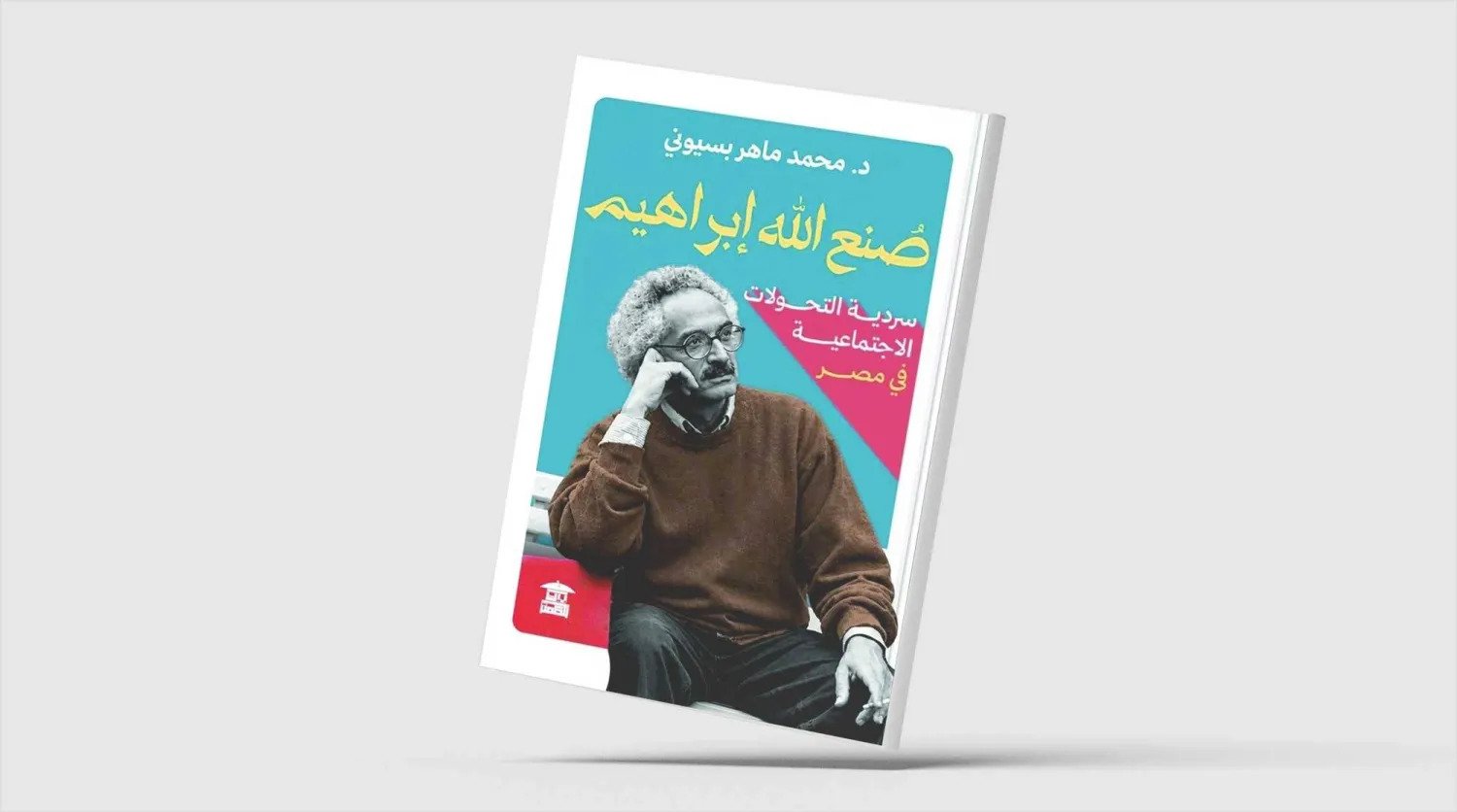
A new book, Sonallah Ibrahim: A Narrative of Social Transformations in Egypt, has recently been published by Bayt al-Hikma for Culture in Cairo. Written by Egyptian literary critic Dr. Mohamed Maher Bassiouni, the book is based on the premise that the late novelist, whose first death anniversary is being commemorated these days, possessed an acute awareness of the profound social transformations taking place in Egypt, as well as an exceptional sensitivity to their harsh repercussions on individuals and social classes. This led him to draw the characters of his novels from Egyptian society and, through their lives and destinies, analyze the structure of society and its dramatic transformations. He rendered this analysis in a literary form that sought to express reality, even when it clashed with the prevailing viewpoint imposed by the power of authority and the allure of propaganda.
The book emphasizes the powerful presence of reality in Sonallah Ibrahim’s novels and argues that he approached social issues aesthetically, avoiding the banalities of ideological political commitment. Instead, he focused on the ordinary human being of everyday life: someone who does not adorn himself with politics, sing its anthems, or believe in its myths; a person of homes and streets, of unrewarding work, broad aspirations that are repeatedly frustrated, prevailing suffering, and fleeting moments of joy. The author notes that a profound examination of the reality of the Egyptian individual reveals tragedy in virtually every detail of life—a tragedy inseparable from that of his society in the Third World, which became vulnerable to every form of exploitation. No sooner had it freed itself from traditional colonialism than it fell into the grip of an even harsher form of domination: commodity-based exploitation.
In the book’s introduction, the author writes that Sonallah Ibrahim “is one of the authors of comprehensive literary projects that seek to engage with the social/historical referent without sacrificing the aesthetic value of the narrative text. Indeed, he was constantly experimenting, continually transcending his previous work, and giving his texts distinctive features that reflected a particular conception of literary creativity. He interrogated social and political history, proposing his own interpretation of the rapid and violent transformations in the structure of Egyptian society over a period of merely six decades.”
The book consists of an introductory section addressing the history of the sociological study of literature, followed by three chapters entitled “Methodology and Terminology,” “Narrative Procedure,” and “Narrative Interpretation,” and concludes with a section outlining the study’s principal findings.
Methodologically, the author draws on the sociology of the text, as developed through the theoretical propositions of Pierre Zima, with the aim of extracting the worldview of the social group represented by the novelist. He focuses particularly on the elements of character and language, which were central to the novelist’s exploration of the profound impact of diverse and rapidly changing social transformations on Egyptian society and its individuals. The study excludes some of Sonallah Ibrahim’s novels that deal with other Arab and international societies.
Mohamed Maher Bassiouni has previously published two books: China in 65 Years and Place in the Arab Novel: An Applied Cultural Study.
Source: Asharq Al-Awsat
Most read