Silence as an Act of Resistance to Preserve Life

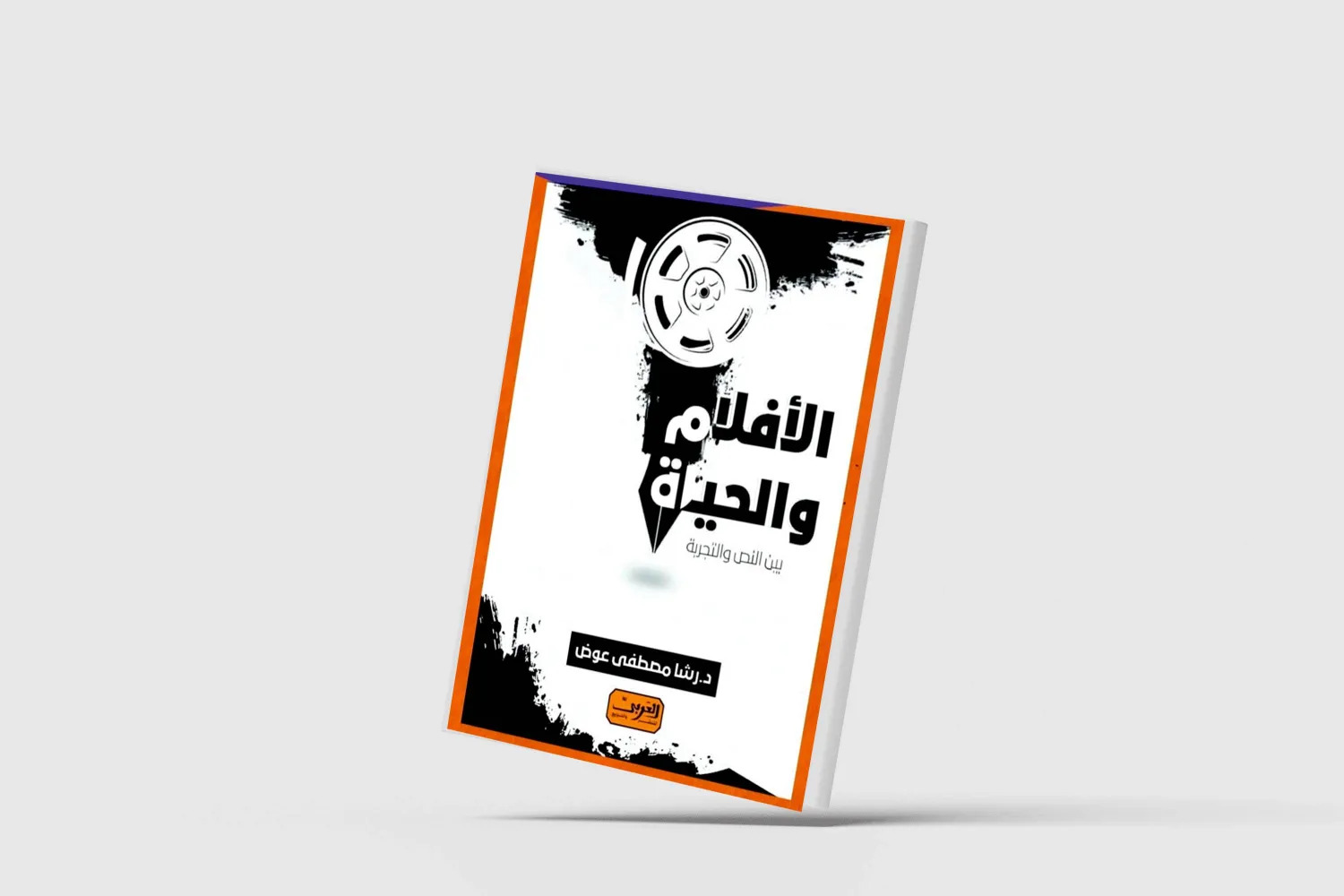
In her recently published book Films and Life, released by Al-Arabi Publishing House in Cairo, researcher Dr. Rasha Mostafa Awad revisits some of world cinema’s most memorable films through the lens of psychology, placing them within broader cultural, social, and human contexts that go beyond the conventional boundaries of technical and aesthetic film criticism.
Among the films she examines closely is The Pursuit of Happyness, the 2006 American biographical drama inspired by the true story of Chris Gardner, a man struggling against poverty and seemingly insurmountable circumstances. Directed by Gabriele Muccino and starring Will Smith, the film follows Gardner as he fights to build a better life for himself and his young son after financial hardship tears his family apart.
Awad draws particular attention to one of the film’s most powerful scenes. During one of his bleakest nights, Chris takes refuge with his young son in a public restroom at a train station. The night is heavy, the floor cold, as though the setting itself has come to embody the outer limits of despair. Sitting on the floor with his back against the wall, Chris holds the door shut with a trembling foot, as if trying to keep the cruelty of the entire world outside, separated from him and his child by nothing more than a fragile door.
In that dark corner, Awad argues, Chris is confronting far more than poverty. He is struggling to preserve his own sense of identity, fighting not to become, in the eyes of his sleeping child, a defeated man.
The silence of the scene transforms it into something greater than a portrait of deprivation. It becomes a rare moment in which a human being is stripped down to his deepest truth, after every external layer of security and certainty has fallen away. When life deprives us of every external refuge, Awad suggests, the only shelter left is the one we carry within ourselves. It is there, in forced isolation, that a deeper kind of vision can emerge—a spark that darkness does not extinguish, but may instead awaken in the midst of profound crisis.
Research in neuropsychology has shown that under extreme stress, the brain reorganizes its priorities as part of an instinctive response to existential threat. The limbic system, closely associated with emotion and fear, becomes more active, while rational and analytical thinking may recede. In such moments, human attention narrows toward what is most fundamental: survival, safety and the will to endure.
Pain, from this perspective, can open an unexpected window onto the self—not the self we present to others, but the one revealed when appearances and social roles fall away.
Darkness, then, is not necessarily the opposite of vision. It may be the place from which vision first emerges. Drawing on Nietzsche’s reflections on suffering and creation, Awad presents rupture not merely as destruction but as a possible beginning: every fracture can become an opportunity for reconstruction for those willing to confront the fragments.
The scene of Chris holding his son behind a fragile door can therefore be read as more than an act of resistance to poverty. What emerges there is an existential vision—one that does not promise an easier life, but asks us to become deeper through hardship. The answer is not to escape pain, but to move through it with all our vulnerability intact, sustained by the hope that meaning can ultimately prove stronger than adversity.
Later, Chris Gardner leaves a homeless shelter holding his son’s hand. His slow footsteps carry the weight of everything he has endured. On the cold pavement, he catches his reflection in the window of a parked car and sees a man fighting not only for survival, but also to remain worthy in his own eyes.
He pauses, smooths his hair, adjusts his shirt collar and straightens his simple tie. The gesture is not an attempt to deceive the world with appearances. It is an effort to repair something within himself: an inner image he knows to be fragile, yet too precious to surrender, however long the night of hardship may last.
For Awad, this is where the film reveals one of its most enduring insights: at the lowest points in life, preserving one’s inner dignity can itself become a quiet, everyday act of heroism.
When everything else has been taken away, one choice remains—to refuse to let anyone, or even circumstances themselves, take away one’s sense of worth.
And so, each morning, when Chris catches his reflection in a window and adjusts his appearance, the gesture becomes almost symbolic: a man gathering the fragments of a dream and holding them together with his own hands, silently telling himself: “I am still here. I am still alive. And I am still worthy.”
The Devil Wears Prada: The Price of Success
Awad also turns her attention to another iconic 2006 film, The Devil Wears Prada, starring Meryl Streep and Anne Hathaway. The comedy-drama, set against the glamorous yet unforgiving world of high fashion, explores the pressures and compromises demanded by an intensely competitive professional environment.
At the center of the story is Andy Sachs, an ambitious but unpretentious journalism graduate with little interest in fashion. She unexpectedly becomes the assistant to Miranda Priestly, the formidable editor-in-chief of the prestigious Runway magazine, who subjects her to relentless pressure and assigns her seemingly impossible tasks.
Rather than treating the film simply as a lighthearted drama about the fashion industry, Awad reads it as an existential conflict—one that speaks to the struggle of the ordinary individual confronted with the seductions and demands of modern capitalism.
In this interpretation, Miranda Priestly becomes a contemporary embodiment of the “devil.” Yet this devil does not arrive in a frightening or grotesque form. It appears instead as prestige, influence, social status and exquisite clothes—a world dazzling enough to persuade people, almost imperceptibly, to compromise the principles that once defined them.
Awad traces Andy’s psychological transformation as a gradual erosion of her authentic self. At first, Andy rejects the superficial values of the fashion world. But as she becomes increasingly immersed in its rituals and rewards, she begins sacrificing the relationships that once grounded her—her friendships, her romantic relationship and, ultimately, parts of her own identity—in an effort to meet Miranda’s relentless expectations.
Yet the film also allows the audience to see the human cost hidden behind Miranda’s carefully constructed image of power.
Her fractured family life and the artificial social world surrounding her become a living warning to Andy, revealing the price that may accompany a distorted vision of professional success. What appears from the outside to be power, prestige and achievement may conceal profound personal loss.
The decisive moment comes when Andy discovers that she can still stop.
She can still say no.
Her decision to walk away becomes an act of psychological liberation. By refusing to surrender herself completely to the world she has entered, she rejects its seductive glamour and chooses instead to return to a more authentic version of herself.
For Awad, the moment raises a broader philosophical question that extends far beyond the film itself: Does modern life leave us with enough foresight and self-awareness to recognize when success is costing us too much—and to refuse before it is too late?
Or will the relentless pressures of contemporary life gradually erode that capacity, reducing existence to an endless pursuit of consumerist illusions, social prestige and carefully curated images captured for the camera?
In both The Pursuit of Happyness and The Devil Wears Prada, the struggle is ultimately not simply against poverty, professional pressure or social expectations. It is a struggle to preserve something more fundamental: the self.
One film finds resistance in the determination to hold on to dignity when almost everything else has been lost. The other finds it in the courage to walk away from success when its price becomes the loss of one’s identity.
In both cases, resistance can be remarkably quiet. Sometimes it is simply the decision to endure. Sometimes it is the decision to refuse. And sometimes, amid hardship, temptation and uncertainty, survival begins with the simple insistence on remaining true to oneself.
Most read