 العربية
 English
Russia’s Interests in Syria Extend Far Beyond Air and Naval Bases

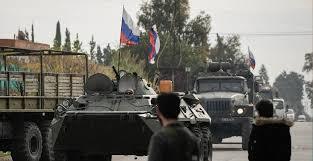
Preserving its military facilities remains an important priority for Russia. Yet Moscow’s ambitions in Syria reach well beyond this objective—particularly in terms of the symbolism attached to participating in the construction of a “new Syria.”
The visit by the head of the incumbent authority in Damascus, Ahmad al-Sharaa, to Moscow within a few months was widely interpreted as centering on the future of Russia’s air and naval bases in the country. This assessment may well be accurate, especially given the logistical role these bases play in supporting Russia’s “Africa Corps,” which operates across several regions of the continent. Nevertheless, Russia’s interests in Syria cannot be reduced to the military dimension alone.
As al-Sharaa emphasized during his first meeting with President Vladimir Putin, he envisions a pivotal Russian role in contributing to the building of a “new Syria.” This orientation has previously been analyzed as a joint, “post-modern” state-building endeavor, drawing inspiration from the spirit of Soviet-era nation-building projects undertaken across the Global South during the Cold War.
For Moscow, the Syrian model today serves a set of interlocking interests, foremost among them the preservation and expansion of economic ties—an objective of particular significance under the weight of Western sanctions. Russia is seeking to position its companies to play a role in post-crisis reconstruction activities, as it has attempted in several African contexts, including the Democratic Republic of the Congo, the Alliance of Sahel States, the Central African Republic, and Sudan.
Notably, many observers had anticipated a rapid decline in Russian influence in Syria following the fall of President Bashar al-Assad. Yet the growing partnership between al-Sharaa and Putin has defied such expectations. It offers a potential template for other states where Russia may face comparable setbacks in the future—such as a post-Maduro Venezuela, and perhaps even Iran at a later stage.
The Syrian precedent suggests that the United States will not always succeed in compelling states to sever their ties with Moscow, even amid political realignments. While Venezuela, for instance, may come under greater U.S. pressure to curtail cooperation with Russia under the doctrine of American hemispheric primacy, Moscow has reaffirmed the continuation of diplomatic relations and military-technical cooperation between the two countries.
Experience indicates that states which realign with Washington yet adopt a pragmatic approach similar to al-Sharaa’s model can reduce excessive dependence on the United States or other international patrons, thereby expanding their political room for maneuver.
This model is likely to carry motivational appeal for a range of countries—whether those emerging from conflict or undergoing strategic repositioning, as in the Syrian case, or relatively stable and geopolitically non-aligned states across the Global South. For such countries, balanced partnerships with Russia may be viewed as a means of maximizing national interests without becoming beholden to a single power.
اﻷكثر قراءة


Read also