The U.S.–Israeli Confrontation with Iran: An Initial Assessment of Trajectories and Implications


Dr. Taha Ali Ahmed
The launch by the United States and Israel into a decisive phase of the Middle East’s complex strategic landscape—through coordinated strikes targeting Iranian sites—was not merely a series of tactical operations. Rather, it carried a political message centered on deterrence and credibility, while simultaneously underscoring the limits of diplomacy in a highly polarized geostrategic environment.
Israel’s operation “Roaring Lion” and the United States’ “Overwhelming Fury” were framed as instruments of military-led “coercive diplomacy,” aimed at degrading Iran’s nuclear and missile infrastructure and restoring a regional order that has been eroding in recent years. With the assassination of Iran’s Supreme Leader, Ayatollah Ali Khamenei, both sides appear to have crossed a point of no return.
U.S. President Donald Trump described the strikes as “major combat operations” against “imminent threats,” signaling a sharper and more uncompromising turn toward unilateralism in Washington. Israeli Prime Minister Benjamin Netanyahu, for his part, situated the attack within Israel’s longstanding doctrine of preemptive action, arguing that Iran’s proximity to the nuclear threshold constitutes an existential threat that cannot be contained, only neutralized.
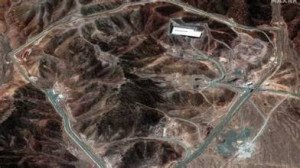
The convergence of American hardline instincts and Israeli security anxieties thus produced a critical moment of escalation. At the heart of the crisis lies Iran’s nuclear trajectory. The June 2025 strikes by Washington and Tel Aviv inflicted tangible damage on Iran’s strategic facilities but did not eliminate Tehran’s capacity to rebuild. Reports of covert reconstruction efforts, coupled with concerns raised by the International Atomic Energy Agency, reinforced U.S. and Israeli suspicions that Iran may have reached enrichment levels compatible with military use.
Washington’s insistence on “zero enrichment” and the full dismantlement of Iran’s nuclear infrastructure collided directly with Tehran’s red lines. The collapse of the Geneva talks, therefore, was not a mere diplomatic setback but the inevitable outcome of fundamentally irreconcilable strategic objectives.
While the nuclear dimension sits at the core of the confrontation, it is not the only driver. Israeli security calculations are also shaped by Iran’s missile arsenal and its network of regional proxies. Even as the capabilities of Hezbollah and Hamas have declined and the Assad regime in Syria has fallen, Israel views even a symbolic Iranian crossing of the nuclear threshold as a transformative shift in the regional balance of power. Months of joint planning with Washington reflected a shared assessment that once deterrence erodes, it can only be restored through decisive action.
Trump’s “maximum pressure” policy provided the broader framework for this approach. Following the setbacks of 2024, which appeared to strengthen the so-called “Axis of Resistance,” the United States sought to reclaim regional initiative. Since January 2026, American military movements across the Middle East have conveyed clear deterrent signals while simultaneously preparing the operational ground for potential escalation.
These pre-crisis indicators blended preventive logic with alliance management and considerations of reputation and credibility.
Inside Iran, widespread protests driven by deteriorating economic conditions since December 2025—and the state’s harsh security response—have exposed deep structural fissures. Trump’s explicit call for Iranians to change their regime highlighted perceived vulnerabilities that may have emboldened both Washington and Tel Aviv to move toward direct intervention.
Regionally, the repercussions were immediate and combustible. Iran’s retaliatory strikes against Israel and U.S. bases in the region confirmed that escalation was no longer hypothetical but an unfolding reality. Tehran’s proxies in Iraq and Yemen signaled a strategy of “sustained attrition,” even if with limited capabilities. Meanwhile, the Strait of Hormuz—one of the global energy market’s critical chokepoints—has returned to the center of strategic anxiety. Gulf states hosting U.S. bases now face a delicate balancing act: reinforcing deterrence without sliding into broader confrontation.
At the humanitarian and political level, civilian casualties, infrastructure damage, and potential displacement have deepened societal fractures. Iran now faces unprecedented internal turbulence that could reshape regional alignments—potentially strengthening Israeli ties with Sunni Arab states while diminishing, if not burying, Shiite influence in the near to medium term. Such shifts risk prolonging conflict, exacerbating instability in Lebanon and Iraq, and further weakening an already fractured regional order.
Globally, the shock to energy markets and oil price volatility threaten to intensify inflationary pressures and slow growth in Europe and Asia. Russia and China, Iran’s strategic and economic partners, have condemned the strikes, yet their capacity for direct intervention remains limited. The crisis also constitutes a fresh test for the resilience of the global nuclear non-proliferation regime.
Most significantly, recent events reveal a shift in U.S. strategic preferences toward the use of force over political consensus, signaling a recalibration of Washington’s grand strategy. Legal debates over the legitimacy of preemptive strikes and sovereignty are likely to persist. Yet the clearest message so far is that the United States is prepared to undertake “decisive action” when it perceives the balance of power tilting against it.
The current escalation is not an isolated episode but the cumulative outcome of years of mistrust, diplomatic paralysis, and mounting reliance on military solutions. Israel and the United States may succeed in degrading Iranian capabilities and restoring deterrence. However, once the logic of force is activated in a region marked by fragility and overlapping conflicts, the risk of uncontrollable spillover becomes acute.
Ultimately, the Middle East now stands at an exceptionally fragile strategic crossroads, where deterrence calculations intersect with the dangers of unintended escalation.
The true test lies not in the ability to launch strikes, but in the capacity to contain them. The central question confronting regional actors and the international community is whether this escalation can be confined within manageable limits—or whether the region is on the verge of a new wave of instability whose political, economic, and human costs will far exceed any anticipated gains.
Most read



Read also