
Downing the U.S. Drone and the Expansion of Strikes: A Shift in the Aerial Engagement Equation?

Dr. Taha Ali Ahmed
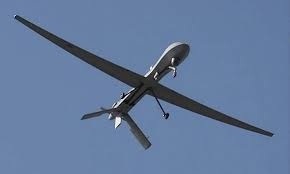
Iran’s announcement that it shot down a U.S. MQ-9 Reaper drone marks a notable development in the ongoing aerial confrontation and raises important questions about the evolving balance of power in the skies, as well as the extent to which freedom of air operations may now be constrained for both sides.
First: The Significance of Downing the MQ-9
The MQ-9 Reaper is a heavy, medium-altitude, long-endurance unmanned aerial system designed for armed reconnaissance, intelligence gathering, and precision strikes. Despite its advanced capabilities, it is not a stealth platform. It operates at speeds significantly lower than fighter aircraft, making it more vulnerable to detection and engagement, particularly when flying at reduced altitudes.
If confirmed, the shootdown would indicate that Iran still retains functioning pockets of air defense capable of engaging medium-altitude targets, despite the sustained strikes that have targeted its defensive infrastructure since the outset of the conflict. This development carries two principal implications:
-
An operational message: Iranian airspace is not entirely permissive.
-
A deterrent-psychological message: It reinforces the narrative of defensive resilience in the face of adversary air superiority.
Second: The State of Iranian Air Defense
Iran’s air defense network has been subjected to concentrated strikes, weakening its ability to maintain an integrated protective umbrella. However, air defense effectiveness is not measured solely by the number of operational batteries. It also depends on the ability to preserve mobile or reserve assets capable of conducting localized engagements.
The downing of a drone—rather than a manned aircraft—does not signify restored defensive dominance. Nevertheless, it suggests that the effort to fully “neutralize the skies” has not been completed. Moreover, the operational requirements of unmanned systems, particularly those tasked with monitoring ballistic missile launch sites across Iran’s vast territory, may necessitate flight profiles that increase their exposure to engagement.
Third: Implications for Air Tactics
This development is likely to prompt adjustments in U.S. and Israeli operational tactics, including:
-
Raising minimum operating altitudes.
-
Intensifying electronic warfare and jamming operations.
-
Expanding intelligence efforts to locate and neutralize remaining Iranian air defense assets.
-
Increasing reliance on space-based reconnaissance or stealth aircraft for sensitive missions.
Conversely, Iran may seek to leverage the incident for strategic messaging, reinforcing morale and signaling its ability to impose incremental costs on its adversaries.
Fourth: Missile Saturation and the Stress Test of Air Defenses
Alongside aerial developments, the opposing front has witnessed what has been described as one of the largest Iranian missile escalations to date, targeting areas in Israel, including the greater Tel Aviv region. This reflects what is commonly referred to as a “missile saturation strategy,” aimed at exhausting air defense systems through volume of fire rather than solely through precision.
In this context, the effectiveness of air defense systems is measured not only by interception rates but also by their ability to withstand sustained, simultaneous waves of incoming threats.
Fifth: Claims of Targeting a U.S. Aircraft Carrier
Reports concerning the targeting of the U.S. aircraft carrier Abraham Lincoln require careful distinction between claims of targeting and verified impact. Aircraft carriers operate under layered defensive architectures, including naval missile defense systems, electronic countermeasures, and escorting destroyers equipped for air and missile defense. As of now, there has been no official U.S. confirmation of a direct hit.
Sixth: Expansion of the Strike Geography
Operational maps indicate that strikes have shifted from central Iran toward western and northwestern regions, including Tabriz, Zanjan, Hamadan, and Qom, alongside previous targeting of sovereign and strategic sites in Tehran. This geographic expansion suggests an effort to broaden operational pressure and disrupt command-and-control structures.
Conclusion: A Multi-Domain War of Attrition
The downing of the drone does not fundamentally alter the overall balance of air power. Rather, it signals that the conflict has entered a more complex phase, characterized by an interplay between tactical deterrence and strategic messaging.
The current confrontation increasingly resembles a multi-domain war of attrition, with each side seeking to undermine the other’s ability to exercise uncontested air control, while maintaining sufficient maneuvering space to avoid uncontrolled escalation into full-scale war.
In this evolving environment, the skies remain a continuous testing ground—both for military technology and for each side’s capacity to manage escalation without losing control of the conflict’s tempo.
Most read




Read also