“Qusra”: From Settler Terror to Silent Annexation

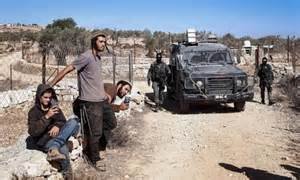
Qusra, a small town on the southern outskirts of the Palestinian city of Nablus, has drawn limited international attention—and particularly some attention in the United States—to what is happening in the occupied Palestinian territories.
The most prominent issue is Israeli settler terrorism. The expression itself carries considerable significance. U.S. Ambassador Mike Huckabee used the term despite his explicit support for settlement in the occupied Palestinian territories. His position appeared to shift temporarily because Israeli settlers, whom he described as terrorists, had surrounded the home of a Palestinian who holds American citizenship. This prompted condemnation and outrage, but only to end the siege of that particular home—not the sieges imposed on countless Palestinian homes whose residents are left without water, food, or electricity.
The Israeli army subsequently dismantled two tents belonging to the settlers described as terrorists, while leaving other tents in place. It then expelled the remaining Palestinians from their homes on the pretext that the area would be converted into a military barracks to maintain security in the region.
The army’s actions in this manner achieved the settlers’ primary objective. It followed the familiar first step in plans to seize Palestinian land: an attack is launched against the landowners. When they resist with whatever limited means they may have, the confrontation is portrayed as a dispute requiring the intervention of the occupation army. The army then orders the Palestinians to evacuate while allowing the settlers to establish a small settlement outpost. Eventually, the outpost receives all the necessary approvals and privileges, along with water and electricity infrastructure and building permits.
What is happening in Qusra is merely one example. It is not the first, and all indications suggest that it will not be the last.
The settlement offensive is not an isolated event. It is a policy and a systematic approach pursued by Israel’s institutions as a whole. Terrorist settlers are not merely the product of an extremist Israeli environment, nor are they a recent phenomenon produced by the current extremist government headed by Benjamin Netanyahu, whose ministers include staunch extremists such as Bezalel Smotrich and Itamar Ben-Gvir. This is a government that denies Palestinian rights and, in essence, denies their very existence.
Rather, the settlers constitute an active and organic component of the implementation of the broader Israeli-Zionist strategy aimed at controlling all of Palestine and preventing the establishment of a Palestinian state on the territories occupied since 1967.
Since the 1970s, the Gush Emunim movement emerged to promote settlement throughout the entirety of Palestine as a central component of Jewish religious belief. It also played a direct role in establishing numerous settlements. The same idea was promoted by the religious-nationalist Yeshivot movement, accompanied by programs to train local settler leaders and attract new settlers.
In recent years, other groups have emerged, including the Hilltop Youth, which has focused on violent actions against small Palestinian communities, particularly in the Jordan Valley and agricultural areas, and Lehava, which calls for complete separation between Palestinians and Jews in the occupied territories and promotes highly extremist religious ideas.
On the legal front, the organization Regavim has emerged as a prominent actor. It monitors property-ownership cases, works to legalize settlement activities, challenges Palestinian property rights, and organizes protests against any decisions involving the evacuation of settlement outposts, regardless of how small they may be.
Administratively, settler councils have been established as official bodies responsible for managing settlements and planning and implementing infrastructure. In addition, funding organizations—most notably Elad and Amana—play a central role in establishing settlements, purchasing land, constructing and managing residential units, particularly in the occupied West Bank and in and around Jerusalem.
Settlement expansion, accompanied by terrorism, the seizure of Palestinian land, the deprivation of Palestinians, and the destruction of infrastructure—particularly water infrastructure on which Palestinians depend to irrigate their agricultural land—constitutes an integrated system.
It combines biblical and religious interpretations that are used to deny Palestinian rights altogether, administrative structures, legal organizations, domestic and foreign sources of funding, the recruitment of personnel, and the identification of locations to be targeted in coordination with official authorities. The objective is either to establish new settlement outposts or expand existing ones, which over a decade or more can develop into major population centers. These centers are then used to justify the seizure of additional adjacent land on the grounds of accommodating population growth and the natural expansion of the settler population.
Settler activities intersect with decisions taken by successive Israeli governments over the past seven decades to establish residential areas on Palestinian land that had been expropriated from its owners and confiscated, and to designate such land as “state land,” whether under questionable security justifications or for explicitly settlement-related purposes.
This has been accompanied by a deliberate policy of weakening the Palestinian Authority and drying up its financial resources, including through delays in transferring funds owed to it under the so-called clearance mechanism established by the Oslo Accords, or by withholding portions of those funds under the pretext of compensating Israelis who were targeted by Palestinians and are classified as victims of terrorism under the Israeli definition.
This has deepened the Palestinian Authority’s crisis and weakened its primary role in protecting Palestinians and providing the necessary conditions for them to remain, survive, and live on their land.
The decision by Israeli Defense Minister Israel Katz to transfer law-enforcement powers concerning settlers from the military to the Israeli police exposes both the concealed and openly stated intentions behind extending Israeli sovereignty, through seemingly secondary administrative measures, into Areas A and B.
These areas are considered occupied territories and are currently administered by the occupation army. Under Defense Minister Katz’s approach, however, they would come under the authority of the Israeli police following the establishment of a special force for this purpose and the provision of the equipment, weapons, and funding required for its intended mission.
Katz’s decision represents the official face of expanding settlements without fanfare and the beginning of a process aimed at imposing a degree of direct Israeli sovereignty over the entirety of the occupied Palestinian territories.
The decision is dangerous. It constitutes a prelude to the implementation of Israeli sovereignty—a step that was previously considered impossible because international circumstances were thought to prohibit it. The current extremist government, however, sees the matter differently.
Originally published in Asharq Al-Awsat.
Most read


Read also