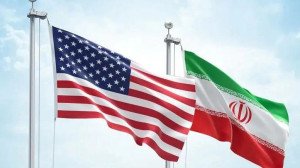
The crisis surrounding the Strait of Hormuz appears to France to be more than another chapter in the confrontation between the United States and Iran. It has evolved into a multidimensional international crisis in which maritime security intersects with the stability of global energy markets, mounting economic pressures in Europe, and the future of strategic balances in the Gulf.
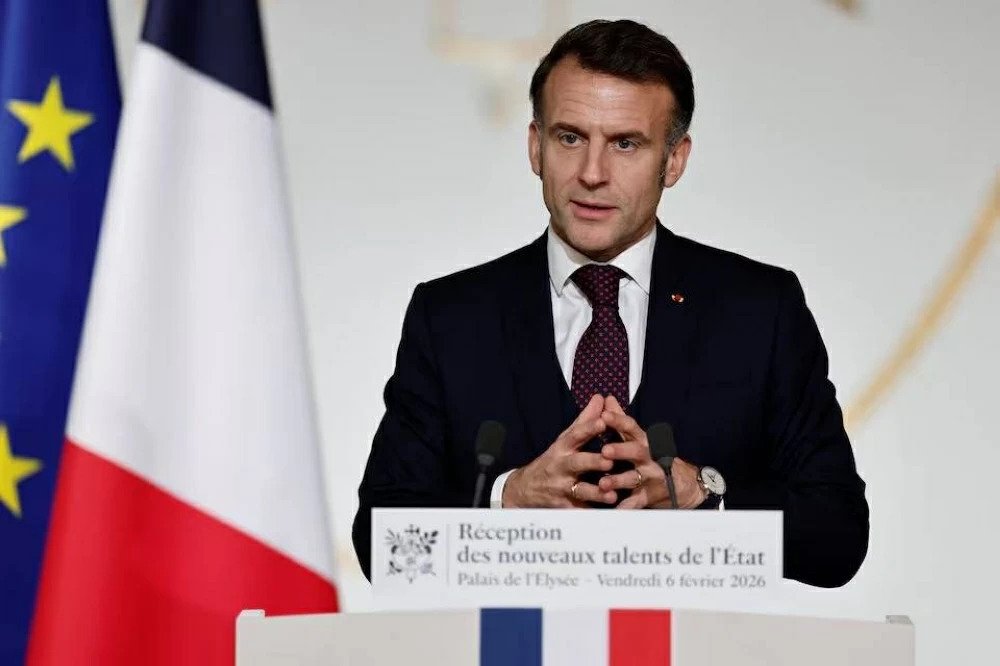
Against this backdrop, Paris is engaging diplomatically in New York, alongside the meetings of the United Nations General Assembly, with the aim of promoting the peaceful reopening of the strait and safeguarding freedom of navigation, while simultaneously seeking to build a broader framework for addressing the consequences of the energy crisis. French President Emmanuel Macron has emphasized that France is working to facilitate the peaceful reopening of the Strait of Hormuz, while also announcing efforts within the Group of Seven to strengthen coordination on energy reserves, supplies, and production capacity.
From a Regional Crisis to a Global Economic Security Issue
The significance of the French initiative lies partly in the fact that Paris is treating the Strait of Hormuz as a critical node in the global economy rather than merely as an arena for military confrontation between Tehran and Washington.
The strait is one of the world's most important maritime routes for oil and gas shipments, and the sharp decline in shipping through it has generated significant disruption in energy markets. Recent data indicate that commercial shipping activity has fallen substantially compared with pre-war levels, contributing to pressure on crude oil prices, fuel markets, shipping costs, and insurance premiums.
This helps explain the priority France has assigned to the issue. The longer the disruption continues, the less the crisis can be confined to the countries bordering the Gulf. Its effects increasingly reach Europe, Asia, and energy-importing economies through higher transportation and insurance costs, increased energy prices, and renewed inflationary pressures.
Freedom of navigation through Hormuz has therefore become a matter of international economic security, extending well beyond the bilateral calculations of Iran and the United States.
Paris Seeks to Separate Navigation from the Broader Conflict
One notable feature of the French approach is the attempt to treat the reopening of Hormuz as an objective that can be pursued alongside the more difficult political and security disputes.
This does not mean that Paris is ignoring disagreements over Iran's nuclear program, regional security, or military capabilities. France has stressed that its diplomacy seeks a sustainable diplomatic solution addressing the various dimensions of the Iranian challenge while simultaneously emphasizing the need to guarantee freedom of navigation.
In practical terms, however, separating the navigation issue from the broader dispute could create a limited diplomatic space even while the major disagreements remain unresolved.
This raises one of the central questions confronting the French initiative: Can a temporary understanding on freedom of navigation be established without waiting for a comprehensive settlement of the wider U.S.-Iranian confrontation?
If such an arrangement proves possible, Hormuz could become an initial test of whether the crisis can be managed even before it can be resolved.
From Diplomacy to Maritime-Security Arrangements
France is not approaching the issue solely as a diplomatic mediator. It is also seeking practical arrangements aimed at protecting commercial shipping.
Paris has previously discussed, together with the United Kingdom, a multilateral defensive initiative intended to help restore maritime traffic through the strait, including the protection of commercial vessels and, where necessary, mine-clearing operations. France has indicated that such measures could be activated when the necessary political conditions are in place.
In New York, French Foreign Minister Jean-Noël Barrot went a step further by proposing cooperation with India to safeguard freedom of navigation in both the Strait of Hormuz and the Bab el-Mandeb. This suggests that Paris increasingly views the security of maritime corridors as an interconnected issue extending from the Gulf to the Indian Ocean and the Red Sea.
This is significant because protecting maritime traffic cannot be reduced simply to deploying naval vessels or escorting tankers. Maritime corridors are connected to a much wider network involving ports, pipelines, refineries, storage facilities, insurance markets, and transportation infrastructure.
A sustainable strategy for Hormuz therefore requires consideration of the entire energy system rather than the strait alone.
The Energy Crisis and Domestic Pressure in France
France's diplomatic activism cannot be separated from the domestic pressures facing the country.
Higher fuel and energy prices represent a direct challenge for the French government, not only because of their impact on households but also because of their consequences for public finances, economic activity, transportation, and industry.
During his meeting with French political leaders on September 18, Macron acknowledged that rising fuel and energy prices had become a direct source of pressure on citizens, while emphasizing that France was simultaneously working to secure alternative supplies and reduce its dependence on the Strait of Hormuz.
French foreign policy thus has a clear domestic dimension. Success in mitigating the external energy crisis could directly affect the government's ability to manage economic and social pressures at home.
Yet this linkage also carries risks. If the crisis persists, the French government's room for maneuver could narrow further, increasing pressure for rapid measures to cushion households and businesses from rising costs.
The G7: From Managing Prices to Managing Risk
Paris is also attempting to shift part of the response to the energy crisis to the level of the Group of Seven.
Macron has announced plans for a G7 meeting in the coming weeks to discuss strategic reserves, coordination on exports and production capacity, and the possible use of strategic stocks to ease pressure on energy markets.
This approach reflects a growing recognition that the energy crisis is no longer simply a supply problem; it is also a problem of risk management.
Even if Hormuz is reopened, the effects of the disruption will not disappear immediately. Markets will need time to regain confidence, insurance and shipping costs may remain elevated, and energy-importing countries will continue to worry about the possibility of renewed disruption.
France is therefore pursuing two parallel tracks: a diplomatic track aimed at reopening Hormuz, and a strategic-economic track aimed at reducing excessive dependence on the strait.
India, the Gulf, and the Red Sea: Expanding the Framework
Recent French diplomatic activity also indicates an understanding that the security of Hormuz cannot be separated from the security of the Red Sea and Bab el-Mandeb.
Paris has discussed with India the need for cooperation on freedom of navigation in Hormuz and Bab el-Mandeb, while also seeking closer coordination with Gulf states on energy and regional stability.
Macron has also referred to alternative energy-supply routes, including infrastructure projects and pipelines that could facilitate the movement of gas from Iraq toward the Mediterranean, alongside cooperation with Saudi Arabia and Egypt to expand gas and refined-product supplies toward the eastern Mediterranean.
The objective, therefore, appears to extend beyond simply reopening Hormuz. Paris is also seeking to build a more diversified network of energy routes.
That distinction is crucial. Reopening the strait addresses the immediate crisis, whereas diversifying supply routes addresses one of the structural sources of vulnerability in the existing energy system.
The Central Challenge: Can Security Be Separated from Politics?
The fundamental problem, however, remains political rather than logistical.
Freedom of navigation in Hormuz is directly linked to the level of confrontation between Iran and the United States, the security arrangements in the Gulf, the positions of regional states, and the ability to establish an arrangement acceptable to the principal parties.
A Reuters report on September 22 quoted an Iranian official as saying that Tehran was prepared to reopen the strait within seven days if the United States reduced its military presence and lifted its blockade of Iranian ports.
Regardless of the prospects for such a proposal, it illustrates the nature of the dilemma. From Tehran's perspective, maritime navigation is not entirely separate from the broader conflict, whereas Western governments are seeking to treat it as an issue that can at least partially be insulated from the wider confrontation in order to prevent a deeper shock to the global economy.
This leaves French diplomacy facing a highly complex challenge: How can freedom of navigation be transformed from an instrument of confrontation into a shared interest without first resolving all the other disputes?
New York as a Testing Ground for Diplomacy
The French diplomatic effort comes at a moment when the United Nations General Assembly provides an unusually dense environment for direct and indirect contacts.
The presence of the major actors in New York allows a series of meetings that may not produce a final agreement but can nevertheless test the possibilities for negotiation and identify areas of convergence.
There has already been intensive diplomatic activity surrounding Hormuz during the New York meetings, at a time when energy-importing countries are facing growing economic pressures. Macron also met U.S. President Donald Trump in New York, while France advanced proposals concerning the reopening of Hormuz and the protection of energy infrastructure.
The importance of New York, therefore, may not lie in the likelihood of producing a comprehensive agreement. Its value may instead lie in opening specific negotiating channels around issues that can be addressed independently, particularly maritime security and energy supplies.
Temporary Arrangements or Comprehensive Settlement?
Ultimately, the French approach raises a question that extends beyond the reopening of a maritime passage.
If diplomacy succeeds in securing freedom of navigation on a temporary basis, it could create room for de-escalation and broader negotiations. If, however, maritime traffic remains hostage to military and political confrontation, any security arrangement will remain vulnerable to collapse with the next escalation.
The issue is therefore, at its core, a test of the very concept of crisis management.
France may not be capable of resolving the U.S.-Iranian confrontation, but it can attempt to create limited space for agreement on maritime security and energy. It may not be able to guarantee stability in global oil and gas markets by itself, but it can promote collective mechanisms within the G7. Nor can it eliminate global dependence on Hormuz quickly, but it can accelerate the development of alternative supply routes.
Such a gradual approach may prove more realistic than waiting for a comprehensive settlement of every outstanding dispute in the Middle East.
Hormuz as a Test of the International System
Ultimately, the Strait of Hormuz crisis exposes the vulnerability of the global system to geographic chokepoints.
A narrow maritime passage can influence oil and gas prices, supply chains, inflation, government budgets, and social stability in countries thousands of kilometers away from the Gulf.
This gives the French initiative significance beyond French foreign policy itself. It represents an attempt to redefine energy security as a collective-security issue and to incorporate freedom of navigation into international arrangements broader than immediate military calculations.
Yet the success of such an approach will depend on the ability of the parties to distinguish between issues that require comprehensive political settlements and those that can be temporarily insulated in order to protect shared humanitarian and economic interests.
In that sense, the Strait of Hormuz may ultimately prove to be more than an energy transit route. It could become a practical test of the international community's ability to construct limited areas of agreement within major conflicts whose conditions for comprehensive settlement have not yet fully emerged.
Most read




Read also