
Morocco And The Imbroglio Of Mediterranean Border Security

Introduction
The relationship between Morocco and Europe over border security is one of the most intricate and paradoxical dimensions of contemporary Euro-Mediterranean politics. It is simultaneously a security partnership, a migration-management bargain, a geopolitical negotiation, an economic relationship, and an arena of persistent disagreement over sovereignty, human rights, responsibility, and the meaning of Europe’s external frontier. Morocco has become indispensable to European efforts to control irregular migration across the Western Mediterranean and Atlantic routes, while Europe remains indispensable to Morocco as its principal economic, commercial, investment, and diplomatic partner. Yet this mutual dependence has not produced a stable or symmetrical relationship. Rather, it has generated what may appropriately be described as an imbroglio: a dense web of overlapping interests, conflicting expectations, institutional ambiguities, and competing conceptions of sovereignty.
The fundamental paradox is straightforward. Europe increasingly expects Morocco to act as a protective barrier for a border that is legally European but geographically located, in significant part, outside the European Union. Morocco, for its part, accepts substantial responsibility for migration control and transnational security while insisting that its cooperation cannot be reduced to the role of Europe’s “border guard.” The European Union (EU) itself acknowledges the importance of Morocco as a strategic partner in migration governance, border management, combating migrant smuggling and trafficking, while simultaneously insisting that such cooperation must respect fundamental rights and international protection standards. (Migration and Home Affairs) The result is neither simple cooperation nor straightforward confrontation, but a highly conditional relationship in which security cooperation is continuously entangled with diplomacy, trade, mobility, development assistance, and broader geopolitical interests.
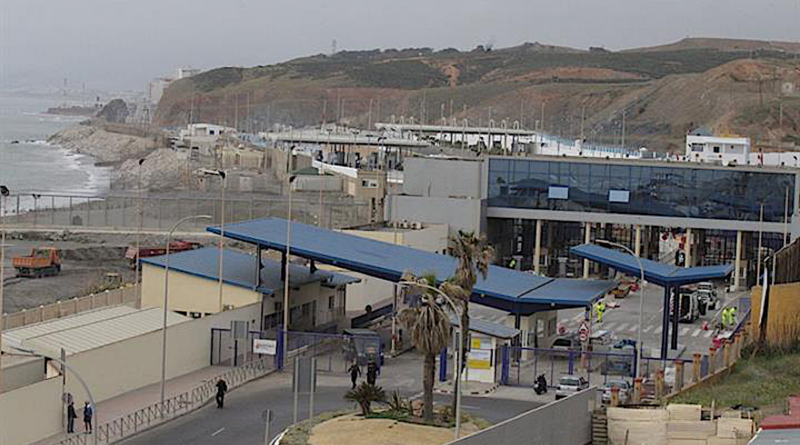
The recent crisis around Ceuta in July–August 2026 has dramatically exposed these contradictions. A massive influx into the Spanish enclave, followed by a rapid reinforcement of Moroccan and Spanish security measures, demonstrated both the extraordinary importance of bilateral coordination and the fragility of a system heavily dependent upon the operational cooperation of a third country. Reuters reported that more than 72,000 people surged toward Ceuta during the July crisis and that dozens of people died, while Morocco subsequently reinforced the border and arrested migrants attempting further crossings. (Reuters) The episode therefore deserves to be understood not simply as another migration emergency but as a revealing stress test of the architecture of European border externalization.
From European Border to Moroccan Buffer Zone
The contemporary imbroglio cannot be understood without examining the transformation of the European border itself. Traditional conceptions of the border imagined it as a territorial line separating one sovereign state from another. European integration complicated this model by abolishing many internal borders while simultaneously strengthening the external frontier of the Schengen area. Border control consequently moved outward, becoming progressively embedded in foreign policy, development cooperation, policing agreements, intelligence exchange, readmission arrangements, and partnerships with countries of origin and transit.
Lavenex (2006) famously conceptualized this process as the movement of immigration control “up and out”: upward toward European governance and outward into the sphere of external relations. (Taylor & Francis Online) Bialasiewicz (2012), similarly, demonstrated how European border work extends far beyond the territorial boundaries of the EU, transforming neighbouring countries into operational components of European securitization. (DOI) The Moroccan case represents perhaps one of the clearest manifestations of this transformation because Morocco is simultaneously a sovereign North African state, a major African migration country, a transit territory, and an operationally indispensable component of Europe’s southern border regime.
This externalization has produced practical benefits for Europe. By preventing migrants from reaching European territory in the first place, European states can shift the point of intervention from asylum procedures and reception facilities inside Europe to prevention, interception, surveillance and containment outside Europe. The EU itself now describes integrated border management as encompassing prevention and detection of irregular migration and cross-border crime while also requiring mechanisms to identify persons in need of international protection. (International Partnerships)
Yet the externalization model generates a profound accountability problem. When European border controls are exercised through Moroccan territory or Moroccan security institutions, the distinction between European responsibility and Moroccan responsibility becomes blurred. Who is accountable when force is used at the Moroccan side of the border? Who bears responsibility for migrants intercepted before reaching European jurisdiction? What mechanisms ensure access to asylum? Where does European border management end and Moroccan sovereign authority begin?
These questions are not merely legal technicalities. They lie at the heart of the contemporary politics of the Mediterranean border.
Morocco as Europe’s Southern Security Partner
Morocco’s importance to Europe extends far beyond migration. The country is an important partner in counterterrorism, intelligence cooperation, organized-crime prevention, trafficking control, maritime surveillance and broader regional security. Frontex, Europol and national European security agencies operate within an increasingly interconnected security environment in which Morocco occupies a strategically significant position between Europe, West Africa, the Atlantic and the Mediterranean.
The EU describes its relationship with Morocco as a “strong partnership,” rooted in the 1996 Association Agreement, which entered into force in 2000, and strengthened by Morocco’s Advanced Status in 2008. The European Commission specifically identifies border management, combating migrant smuggling and human trafficking as important areas of EU support for Morocco. (Migration and Home Affairs) Frontex’s institutional development has further strengthened this broader European border-security architecture; the agency has become a central actor in European integrated border management and supports Member States in managing external borders, returns and cross-border security. (Migration and Home Affairs)
Morocco’s security contribution is therefore substantial. It includes surveillance of land and maritime approaches, dismantling smuggling networks, preventing departures, intercepting migrants before they reach European territory, and coordinating intelligence with European authorities. The European Union Agency for Asylum notes that Spain and Morocco intensified operational coordination on border management and maritime surveillance during 2025, coinciding with a significant decline in irregular migration along the Western African route. (European Union Agency for Asylum)
This cooperation illustrates a central reality: Europe’s border security increasingly depends upon security capacities located outside Europe.
But dependence creates bargaining power. Morocco is not merely an implementer of European policy. It possesses geographical, diplomatic and operational leverage. Its location means that European security objectives cannot be achieved without Moroccan participation. Consequently, migration cooperation has become part of a wider Moroccan strategy of strategic bargaining in which migration, security, Western Sahara, trade, investment and diplomatic recognition can become interconnected.
Chtatou (2026a) argues that Morocco’s position as a “forced stepping stone” for African migrants reflects a structural asymmetry in which European externalization has transformed Morocco into a buffer territory between Africa and Europe. (Eurasia Review) This perspective is useful because it moves the analysis away from the simplistic assumption that Morocco merely “controls Europe’s border.” Morocco is itself confronted by migration pressures generated by conflicts, inequality, demographic transformations and governance crises elsewhere in Africa. It therefore simultaneously protects Europe from migration pressures and absorbs some of the consequences of Europe’s increasingly restrictive migration regime.
The Ceuta and Melilla Imbroglio
Nowhere is the complexity of Morocco–Europe border relations more visible than in Ceuta and Melilla. These two Spanish enclaves constitute exceptional spaces: they are Spanish territories on the African continent, surrounded by Morocco, and therefore represent the most visible geographical manifestation of Europe’s African frontier.
For Morocco, however, the enclaves remain an unresolved sovereignty question. For Spain, they are integral parts of Spanish territory. The incompatibility of these positions creates a structural tension beneath border cooperation. The two countries can cooperate extensively on migration control while simultaneously disagreeing over the territorial status of the very spaces around which much of that cooperation takes place.
The August 2026 crisis has demonstrated the fragility of this arrangement. Following the July mass crossings, Spain reinforced security around Ceuta while Morocco intensified its own security operations. Reuters reported that Morocco subsequently arrested migrants attempting to reach Ceuta and that Spain deployed hundreds of additional officers and reinforced physical barriers. (Reuters) At the same time, Spain rejected renewed Moroccan discussion of sovereignty over Ceuta and Melilla, reaffirming that their territorial status was non-negotiable. (Reuters)
This coexistence of cooperation and disagreement is the essence of the imbroglio. Morocco and Spain can cooperate intensely at the operational level while disagreeing fundamentally at the geopolitical level.
Chtatou (2026b) argues that the Ceuta crisis exposed the “structurally asymmetrical” character of Morocco–Spain border cooperation and demonstrated how quickly operational cooperation can become politically vulnerable when domestic law, bilateral diplomacy and migration pressures intersect. (Eurasia Review) His argument is particularly significant because it shows that border management cannot be separated from the wider political relationship between the two states.
The Strategic Bargain: Security for Partnership
European migration cooperation with Morocco is best understood as a strategic bargain rather than a one-dimensional security contract. Europe needs Morocco to control migration; Morocco needs European investment, market access, political recognition, technology, mobility arrangements and development assistance. Consequently, migration cooperation is embedded within a broader political economy.
The European Commission’s 2025 programming explicitly links support for Morocco’s National Strategy for Immigration and Asylum with integrated border management, migrant protection and integration, while emphasizing a rights-based approach. (Middle East, North Africa and the Gulf) This illustrates the duality of European policy: Morocco is expected simultaneously to strengthen its security capacity and to improve migrant protection.
Such expectations are not necessarily contradictory in principle. Effective border governance can coexist with protection of human rights. The problem arises when the political priority attached to preventing arrivals becomes greater than the priority attached to ensuring safe access to asylum and legal mobility.
This is where the European externalization model becomes problematic. Europe has increasingly invested in making irregular migration more difficult while failing to create legal pathways on a comparable scale. As a result, the border becomes more technologically sophisticated, more militarized and more geographically dispersed, but the underlying demand for mobility does not disappear.
The EU’s own migration strategy increasingly combines border management, anti-smuggling operations, returns and migration diplomacy. Its June 2026 action plan for the Channel route, for example, emphasizes disruption of smuggling networks, stronger external-border management and returns, while also advocating cooperation with countries of origin and transit. (Migration and Home Affairs) The same logic is relevant to the Moroccan case: Europe seeks to manage migration along the entire route rather than merely at the geographical line of entry.
The Human Rights Dilemma
The greatest moral and legal difficulty in Morocco–Europe border security relations concerns the tension between deterrence and protection.
Border control is a legitimate function of sovereign states. States have the right to regulate entry, combat trafficking, prevent organized crime and protect public security. Yet sovereignty is constrained by international human rights law and refugee law. Persons fleeing persecution or serious harm retain rights that cannot simply be extinguished by the geographic relocation of European border controls.
The European Union itself recognizes this tension. The EU Agency for Asylum noted in its 2026 assessment that the debate over external borders revolves around balancing strong responses to emergencies and threats with effective access to protection for people in need. (European Union Agency for Asylum) This formulation captures the fundamental contradiction: the stronger the deterrence architecture becomes, the greater the risk that vulnerable persons will be prevented from accessing protection.
Morocco faces its own contradiction. Since the adoption of the National Strategy for Immigration and Asylum in 2013, Morocco has developed a more institutionalized migration policy and conducted regularization campaigns. Yet its security apparatus remains heavily involved in preventing irregular migration. Chtatou (2026c) emphasizes that Moroccan migration governance operates at the intersection of sovereignty, security and human rights, producing a persistent contradiction between humanitarian aspirations and securitarian imperatives. (Eurasia Review)
The problem, therefore, should not be reduced to accusations against Morocco or Europe individually. The deeper issue is structural. When European states finance or encourage third-country border enforcement, they effectively participate in practices occurring beyond their own territorial jurisdiction. Yet they do not always possess corresponding mechanisms of democratic or judicial accountability over those practices.
This creates what might be called an accountability deficit of externalized sovereignty.
Migration as a Diplomatic Instrument
The Moroccan case also illustrates the growing politicization of migration. Migration cooperation is never purely technical. Border control can become a diplomatic instrument because states that control strategic migration routes possess leverage over destination countries.
This does not necessarily mean that Morocco deliberately “weaponizes” migration whenever a crisis occurs. Such claims require careful evidence and should not be assumed simply because migration flows fluctuate. Indeed, the causes of sudden movements can include economic hardship, misinformation, smuggling networks, weather, judicial decisions, domestic political developments and spontaneous collective behavior. Recent reporting on Ceuta highlighted the role of social media and legal developments in creating incentives for attempted crossings. (Reuters)
Nevertheless, the structural possibility of migration leverage is undeniable. Europe’s dependence on neighbouring states creates asymmetrical interdependence: the EU has economic and financial leverage, while transit countries possess geographical and operational leverage. Collyer (2016) demonstrates how EU relations with southern Mediterranean countries increasingly operate through geopolitical bargaining over migration governance. (Taylor & Francis Online)
This bargaining logic explains why migration is repeatedly linked, directly or indirectly, to wider questions such as trade, visas, development assistance, security cooperation and diplomatic recognition.
Morocco’s relationship with Spain is particularly illustrative. The restoration and deepening of bilateral cooperation after periods of severe tension demonstrated that migration management can become part of a much broader strategic rapprochement. Yet the sovereignty dispute over Ceuta and Melilla remains unresolved. The coexistence of these two realities is not an anomaly; it is the defining feature of the relationship.
Europe’s Dependence on Morocco—and Morocco’s Dependence on Europe
The relationship should therefore be conceptualized through strategic interdependence, rather than dependency alone.
Europe depends on Morocco because of geography. Morocco is the closest major African partner to Spain and sits astride important Western Mediterranean and Atlantic migration routes. It also occupies a strategically important position in relation to West Africa, the Sahel and the Atlantic.
Morocco depends on Europe because of economics. The European Union is Morocco’s central commercial and investment partner, while European tourism, remittances, trade and industrial integration remain crucial to the Moroccan economy.
This interdependence gives both sides leverage, but not equal leverage in every domain. Europe possesses greater financial and market power; Morocco possesses significant geographical and operational power. The resulting relationship is therefore neither colonial dependency nor symmetrical partnership. It is a negotiated asymmetry.
This distinction is essential. Describing Morocco simply as “Europe’s border guard” understates Moroccan agency. Conversely, describing European migration policy as entirely imposed upon Morocco underestimates the benefits and bargaining opportunities Morocco derives from cooperation.
The reality lies between these positions.
Toward a More Balanced Border Governance Model
The future of Morocco–Europe border security relations cannot depend exclusively on increasing fences, patrols, surveillance systems and interception capacities. These measures can reduce irregular crossings temporarily, but they cannot eliminate the structural drivers of migration.
A more sustainable framework should rest on five pillars.
First, genuine co-responsibility. Europe should recognize that externalized border control creates shared responsibilities. If European security objectives depend upon Moroccan institutions, then European financial and political support should be accompanied by stronger transparency, monitoring and human-rights safeguards.
Second, legal mobility. Expanded labour mobility, student mobility, circular migration and regulated recruitment can reduce incentives for dangerous irregular journeys. The EU already identifies legal migration and Talent Partnerships, including with Morocco, as part of its cooperation with third countries. (Migration and Home Affairs) Such programmes should be expanded rather than treated as secondary to enforcement.
Third, joint action against smuggling networks. Migrant smuggling should be addressed as organized transnational crime rather than simply as a migration problem. This requires intelligence cooperation, financial investigations, cyber-monitoring and prosecution of trafficking networks while ensuring that humanitarian assistance to migrants is not criminalized.
Fourth, a rights-based border regime. Border security and human rights should not be treated as mutually exclusive. The EU’s own policy framework recognizes integrated border management as including mechanisms for identifying people who require international protection. (International Partnerships) The challenge is to translate this principle into operational practice.
Fifth, depoliticization of humanitarian mobility. Migration should not become a bargaining chip in every diplomatic disagreement. The more migration is securitized and politicized, the more vulnerable bilateral relations become to sudden crises.
Conclusion
The imbroglio of Morocco–Europe border security relations is ultimately a product of a deeper contradiction within the European migration project. Europe has created an internal area of free movement while progressively relocating the management of mobility beyond its territorial borders. Morocco has become one of the principal external pillars of that system. Yet Morocco is not merely a passive buffer. It is a sovereign state with its own interests, diplomatic priorities, security calculations and geopolitical ambitions.
The July–August 2026 Ceuta crisis has exposed the limits of a border regime built heavily upon externalization. A system that appears highly secure under normal circumstances can become remarkably fragile when political, legal, technological and social conditions suddenly converge. The episode also demonstrates that border security cannot be separated from sovereignty disputes, domestic politics, judicial decisions, social media, humanitarian protection and bilateral diplomacy. (Reuters)
The central lesson is therefore that Europe cannot permanently outsource the political responsibility for its border while retaining exclusive ownership of the legal and moral definition of that border. Nor can Morocco indefinitely reconcile its identity as an African state, a Mediterranean partner and a European security interlocutor without confronting the contradictions inherent in its intermediary position.
A mature Morocco–Europe partnership should consequently move from border externalization toward border co-governance; from unilateral deterrence toward shared responsibility; from episodic crisis management toward institutionalized cooperation; and from a narrow conception of security toward a comprehensive conception incorporating human security, legal mobility, development and dignity.
The objective should not be to construct an impregnable “Fortress Europe” with Morocco as its outer wall. Such a model is strategically unstable and morally problematic. The more durable objective should be to construct a shared Euro-Mediterranean security space in which Morocco is treated neither as Europe’s gatekeeper nor as a mere migration buffer, but as an equal strategic partner whose sovereignty, interests and responsibilities are recognized alongside Europe’s legitimate security concerns.
The paradox is that Morocco and Europe need each other precisely because neither can solve the migration and border-security problem alone. The imbroglio will therefore persist until both sides recognize that the Mediterranean border is not simply a line to be defended. It is a political space to be governed jointly, a humanitarian space to be protected, and a geopolitical space in which security, sovereignty and human mobility must be reconciled rather than artificially separated.
References
- Bialasiewicz, L. (2012). Off-shoring and out-sourcing the borders of EUrope: Libya and EU border work in the Mediterranean. Geopolitics, 17(4), 843–866. (DOI)
- Cassarino, J.-P. (2010). Readmission policy in the European Union. European Parliament, Directorate-General for Internal Policies. (Parlement Européen)
- Chtatou, M. (2026a, June 15). Morocco: A forced stepping stone to illegal African immigration to the European “Eldorado”. Eurasia Review. (Eurasia Review)
- Chtatou, M. (2026b, July 31). Ceuta’s sudden migration surge: Law, politics, and border governance. Eurasia Review. (Eurasia Review)
- Chtatou, M. (2026c, June 17). Moroccan migration governance: Balancing sovereignty, security, and human rights. Eurasia Review. (Eurasia Review)
- Collyer, M. (2016). Geopolitics as a migration governance strategy: European Union bilateral relations with Southern Mediterranean countries. Journal of Ethnic and Migration Studies, 42(4), 606–624. (Taylor & Francis Online)
- Collyer, M., & King, R. (2016). Narrating Europe’s migration and refugee “crisis.” Human Geography, 9(2). (Sage Journals)
- European Commission. (2025). Migration cooperation with third countries: Partnership and cooperation with third countries on migration. European Migration Network. (Migration and Home Affairs)
- European Commission. (2025). Southern Neighbourhood: Cooperation with Morocco. Directorate-General for Migration and Home Affairs. (Migration and Home Affairs)
- European Commission. (2025). Frontex celebrates 20 years of achievements in European border management. Directorate-General for Migration and Home Affairs. (Migration and Home Affairs)
- European Commission. (2025). Integrated Border Management Fund—Border Management and Visa Instrument 2021–2027. Directorate-General for Migration and Home Affairs. (Migration and Home Affairs)
- European Commission. (2026, June 17). Commission strengthens migration management along the Channel route. Directorate-General for Migration and Home Affairs. (Migration and Home Affairs)
- European Union Agency for Asylum. (2026). Asylum Report 2026: Enhancing border management. EUAA. (European Union Agency for Asylum)
- European Union Agency for Asylum. (2026). Latest asylum trends: Annual analysis—Summary. EUAA. (European Union Agency for Asylum)
- Lavenex, S. (2006). Shifting up and out: The foreign policy of European immigration control. West European Politics, 29(2), 329–350. (Taylor & Francis Online)
- Reuters. (2026, August 14). Morocco arrests 111 migrants headed for Spain’s Ceuta in security crackdown. Reuters. (Reuters)
- Reuters. (2026, August 15). Spain disregarded Ceuta warnings before migrant rush, say border workers’ unions. Reuters. (Reuters)
- Reuters. (2026, August 12). Spain rejects discussing sovereignty of enclaves with Morocco. Reuters. (Reuters)
Most read



Read also