
Morocco And Israel After The Abraham Accords: From Historical Conviviality To Strategic Partnership And Possible Model For Greater Middle East Of Peac

Introduction: From Historical Memory to Strategic Partnership
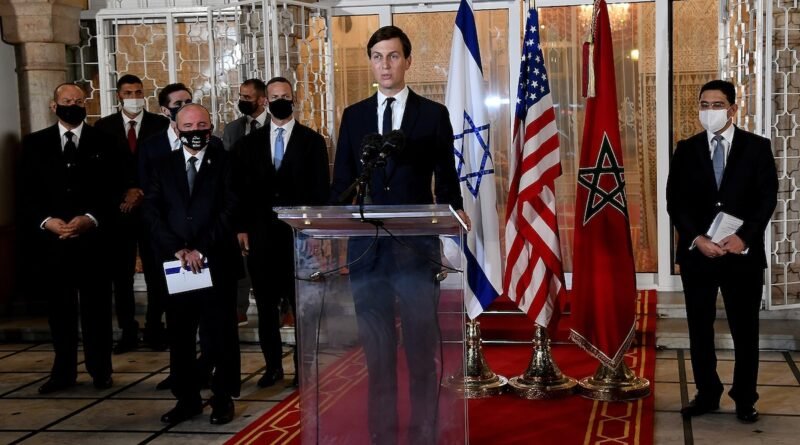
The rapprochement between Morocco and Israel following the Abraham Accords represents one of the most consequential experiments in contemporary Middle Eastern diplomacy. Announced in December 2020 and formalized through the United States–Morocco–Israel trilateral declaration of December 22, 2020, the restoration of diplomatic relations did not emerge from a historical vacuum. Rather, it institutionalized a relationship whose social, cultural, economic and human foundations reach deep into the longue durée of Moroccan history. Few bilateral relationships in the Middle East and North Africa carry so dense a layering of memory, migration, religion and geopolitics simultaneously, and fewer still have been asked to bear the symbolic weight of demonstrating that an Arab-Muslim monarchy and the Jewish state can build something more durable than a transactional peace.
The Moroccan-Israeli relationship is therefore unusual. It is simultaneously geopolitical and civilizational, strategic and human, contemporary and historical. Its contemporary architecture rests on several pillars: diplomatic normalization, expanding economic exchanges, agricultural and water cooperation, tourism, technological partnerships, cultural and educational exchanges, and increasingly sophisticated defense and security cooperation. Yet beneath these functional dimensions lies an even deeper reservoir: the historical presence of Jewish communities in Morocco and the persistence in Israel of a large Moroccan Jewish population whose memories, customs, religious traditions, cuisine, music and attachment to Morocco constitute a remarkable human bridge between the two countries (Ben-Layashi & Maddy-Weitzman, 2010; Chtatou, 2023).
It would nevertheless be analytically excessive to describe the relationship as an “absolute alliance.” Morocco and Israel have developed a strategic partnership, but they do not possess an alliance in the formal sense of a mutual-defense treaty, nor do their governments agree on every major regional question. Indeed, Morocco continues to affirm its support for Palestinian rights and a two-state solution, while the Gaza war has generated substantial political and societal tension around normalization. The relationship is therefore better understood as a multidimensional strategic convergence embedded within a historically distinctive Moroccan-Jewish relationship, one whose durability depends on institutions rather than on the political fortunes of any single leader in either country.
This distinction matters because it strengthens rather than weakens the larger argument advanced in this essay. Morocco and Israel do not need to become identical political actors to demonstrate that cooperation between an Arab-Muslim monarchy and a Jewish state is possible. Their experience suggests instead that historical memory, pragmatic diplomacy, economic interdependence, technological cooperation and cultural recognition can coexist with political differences, and even with sharp disagreement over specific regional crises. In that sense, the Moroccan-Israeli experience may offer principles for a future Greater Middle East model based not upon the elimination of disagreement, but upon the institutionalization of cooperation despite disagreement — a model of pluralism under pressure rather than of manufactured harmony.
As I have argued elsewhere, normalization should not be interpreted simply as a diplomatic transaction. It can also be understood as the institutionalization of long-standing cultural affinities, commercial contacts, human connections and security cooperation (Chtatou, 2023, 2026a). The Moroccan case consequently raises a larger question, one that this essay treats as its organizing problem: can the historical experience of Moroccan-Jewish conviviality be transformed into a contemporary architecture of regional peace, understanding and development? Or does the invocation of a shared past risk becoming a rhetorical ornament attached to what remains, at bottom, an ordinary security and trade relationship between two states pursuing their own interests?
The answer proposed here is cautiously affirmative — but only if conviviality is transformed from historical memory into institutions, education, economic interdependence and political responsibility. Memory alone cannot sustain a partnership; nor can transactional diplomacy alone give that partnership legitimacy among the broader publics whose consent ultimately determines whether normalization survives political shocks such as the Gaza war. The essay proceeds in twelve sections. It begins with the deep historical foundations of Jewish life in Morocco, moves through the diasporic bridge created by Moroccan Jewish emigration to Israel, examines the Abraham Accords as an act of institutionalization rather than creation, and then works systematically through the economic, agricultural, security, diplomatic, educational and cultural dimensions of the contemporary relationship. It closes by asking whether the principles embedded in the Moroccan-Israeli case can be generalized into a broader regional architecture, and by confronting directly the limitations imposed by the unresolved Palestinian question.
Methodologically, the essay draws on diplomatic history, the sociology of diaspora and memory, and international relations theory concerning institutionalization and interdependence, treating Morocco-Israel relations as a case that speaks to broader debates about how normalization agreements acquire, or fail to acquire, durable social legitimacy. It is written in the conviction — defended most fully in Section 11 — that historical accuracy and diplomatic usefulness are not in tension but are, properly understood, mutually reinforcing: an honest history of coexistence, with its full complexity intact, offers a sturdier foundation for contemporary partnership than a sanitized one.
1. A Relationship Older than the Modern Nation-State
The deepest foundation of Moroccan-Israeli relations is not the 2020 agreement. It is the extraordinary historical depth of Jewish life in Morocco, a depth that predates by many centuries the modern categories — nation-state, citizenship, foreign policy — through which the relationship is now conventionally discussed.
Scholars generally place the Jewish presence in Morocco at roughly two millennia or more, although the precise origins remain debated. The National Library of Israel notes that Jews may have maintained a communal presence in Morocco as early as the first century BCE, while Ben-Layashi and Maddy-Weitzman (2010) emphasize the approximately 2,000-year historical presence of Moroccan Jewry. My own research has described this history as extending across more than two and a half millennia, while emphasizing that Jewish and Muslim interaction in Morocco involved not only tolerance but complex forms of social, economic and cultural interdependence (Chtatou, 2023, 2025, 2026a). Successive waves of arrival — pre-Islamic settlement, the late-antique diffusion of Jewish communities across North Africa, and the later influx of Sephardic exiles following the 1492 expulsion from Spain — layered upon one another to produce a Moroccan Jewry that was never monolithic, but rather a mosaic of Arabic-speaking, Berber-speaking and Spanish-speaking communities distributed across coastal cities, imperial capitals, and the Atlas and Anti-Atlas mountain ranges.
The word conviviality is particularly useful here. It should not be confused with an idealized image of uninterrupted harmony. Moroccan Jewish history contains periods of prosperity and protection, but also episodes of discrimination, political constraint and violence. The status of Jews under Islamic rule was legally differentiated through the dhimmi framework, and relations between Jewish and Muslim communities varied considerably according to dynasty, locality, economic circumstances and political context (Ben-Layashi & Maddy-Weitzman, 2010; Chetrit, 2019). Periods such as the Almohad era imposed severe constraints on non-Muslim communities, while later Alawite sultans extended forms of royal protection that allowed Jewish communities, and particularly Jewish courtiers, merchants and diplomats, to occupy influential positions in commerce and statecraft.
Yet historical complexity does not invalidate the significance of coexistence. On the contrary, it makes the Moroccan experience more instructive. Jews and Muslims shared neighborhoods, marketplaces, agricultural spaces, artisanal activities, saints’ shrines, languages, musical traditions and patterns of everyday life. Chetrit (2019), for example, documents the intimate but sometimes ambivalent relations between Jews and Amazigh communities, including economic cooperation and shared cultural practices in the mountainous interior, where Jewish artisans, moneylenders and itinerant traders were embedded within tribal economies structured around reciprocal obligation and protection. Marglin (2016), meanwhile, demonstrates how legal institutions facilitated the integration of Jews into the broader social fabric of modern Morocco, showing that Jewish litigants regularly used Islamic courts alongside rabbinical tribunals, a practice that reveals a degree of legal pluralism and mutual recognition rarely acknowledged in accounts that treat Jewish and Muslim Morocco as hermetically separate legal worlds.
Boum (2013) adds a complementary dimension by examining how Muslim Moroccans themselves remember the departed Jewish communities of their towns and villages. His ethnographic work in southern Morocco reveals that memories of Jewish neighbors persist among Muslims decades after Jewish emigration, expressed through place names, oral narratives about shared festivals, and continued visitation to Jewish cemeteries and saints’ tombs. This asymmetry — a diaspora that remembers Morocco intensely from Israel, and a Muslim population that remembers its absent Jewish neighbors with a mixture of nostalgia, ambivalence and occasional erasure — is itself a subject worthy of sustained sociological attention, because it shapes how each side narrates the relationship today.
The Moroccan experience therefore constitutes neither a utopian paradise nor merely a history of persecution. It was a historically contingent form of shared social existence, produced by specific economic structures (the mellah as both a protected quarter and a site of restriction), specific political arrangements (royal protection extended selectively and revocably), and specific cultural practices (shared pilgrimage to saints’ shrines venerated by both communities, shared culinary repertoires, and mutually intelligible registers of Judeo-Arabic and Moroccan Arabic).
This distinction is crucial for the contemporary partnership. Peace cannot be constructed on mythology. It must be constructed on a mature historical consciousness capable of recognizing both coexistence and conflict, both protection and inequality, both solidarity and difference. A diplomacy that only celebrates convivencia while erasing its darker chapters risks producing a brittle narrative, easily punctured by critics; a diplomacy that instead acknowledges the full historical record produces a more resilient, because more honest, foundation for cooperation.
2. The Moroccan Jewish Diaspora as a Human Bridge
One of the most extraordinary characteristics of Morocco-Israel relations is that the two societies are connected by a vast human bridge: Moroccan Jews and their descendants in Israel. Few bilateral relationships anywhere in the world are underwritten by so large and so demographically consequential a diaspora.
At the establishment of Israel in 1948, Morocco possessed one of the largest Jewish communities in the Arab and Muslim world, numbering approximately 250,000–300,000 people according to the National Library of Israel. Most subsequently emigrated, particularly to Israel, France, Canada and other countries, in waves that accelerated after 1948, again after Moroccan independence in 1956, and again following the 1967 war, when regional tensions made continued Jewish life in several Arab states increasingly precarious even in a country, such as Morocco, where the monarchy actively discouraged departure and sought to protect its Jewish subjects.
The Moroccan Jewish population in Israel subsequently became one of the country’s most important ethnic and cultural communities, numbering in the hundreds of thousands when descendants are included, and exercising substantial influence in Israeli politics, business, the arts, and popular culture. Its members carried with them Moroccan Arabic, Judeo-Arabic, Judeo-Berber traditions, religious customs, culinary practices, musical repertoires and memories of Moroccan cities and villages — Fez, Marrakesh, Essaouira, the Atlas foothills — that have been transmitted, sometimes with remarkable fidelity, across two and three generations born in Israel.
This diaspora has transformed the relationship between Morocco and Israel into something more profound than ordinary interstate diplomacy. It creates what may be called a diasporic diplomatic infrastructure: a dense, largely informal network of family ties, religious pilgrimage, culinary nostalgia, musical performance, and periodic return visits that long preceded, and arguably helped enable, the formal normalization of 2020.
A Moroccan-Israeli family may simultaneously possess an emotional relationship with Morocco, a political relationship with Israel and a religious relationship with Jewish historical memory. Moroccan synagogues, cemeteries and pilgrimage sites remain objects of attachment for Israeli Jews of Moroccan origin, who travel to Morocco in significant numbers for the annual hilloula pilgrimages to venerated tzaddikim, for family visits, and increasingly for organized heritage tourism supported by Moroccan state institutions. Conversely, Moroccan institutions increasingly recognize Jewish heritage as part of the national historical narrative, restoring synagogues and Jewish cemeteries, cataloguing archives, and integrating Jewish sites into national tourism strategy.
This development is particularly important because the 2011 Moroccan Constitution explicitly recognizes the Jewish component of Moroccan identity alongside Arab-Islamic, Amazigh and Saharan-Hassani components. The significance is conceptual as much as constitutional: Jewish history is not represented merely as an external minority history but as part of Morocco’s national historical formation. This constitutional recognition provides a domestic legal and symbolic anchor for the relationship with Israel that few other Arab states possess, since it frames engagement with Jewish heritage — and by extension with the Jewish state — as an expression of Moroccan self-understanding rather than as a concession to external pressure.
As I argued in my earlier work, Moroccan Jews in Israel constitute a “new diaspora,” paradoxically living in the Jewish state while maintaining powerful cultural and emotional connections with their ancestral Moroccan homeland (Chtatou, 2021). This is a paradox worth dwelling on: diaspora is normally theorized as a condition of exile from a sovereign homeland, yet Moroccan Jews in Israel inhabit their own sovereign Jewish homeland while continuing to narrate Morocco — not Israel — as the site of ancestral rootedness, culinary memory and, for many families, continued property and burial rights.
This human dimension gives Morocco-Israel relations a resilience that purely transactional diplomacy often lacks. Diplomatic relationships built solely on strategic calculation can be reversed relatively quickly when the underlying calculation changes; relationships embedded in family memory, religious pilgrimage and cultural production are far more resistant to reversal, because they are sustained by millions of individual decisions — to visit, to cook a remembered dish, to teach a grandchild a Judeo-Arabic lullaby — that operate independently of, and often prior to, government policy.
It is worth pausing on the mechanics of this diasporic bridge, because they are often described in general terms without attention to the specific institutions that sustain it. Moroccan-Jewish associations in Israel maintain active ties to town-of-origin networks — landsmanshaft-like organizations built around specific Moroccan cities such as Fez, Meknes, Casablanca or Essaouira — that organize commemorative events, fund the restoration of ancestral synagogues, and coordinate group pilgrimages timed to coincide with the hilloula calendar. These associations function as intermediary institutions between individual family memory and formal state diplomacy, translating private nostalgia into organized, and therefore politically legible, demand for continued engagement with Morocco.
The Moroccan state, for its part, has invested deliberately in sustaining this bridge rather than allowing it to atrophy as successive generations grow more distant from direct lived memory of Morocco. Restoration projects for Jewish cemeteries and synagogues across the country, the digitization of rabbinical archives, and the integration of Jewish heritage sites into national tourism itineraries all represent a conscious policy choice: to treat the diaspora not as a closed historical chapter but as an ongoing resource for the kingdom’s international image and, increasingly, for its relationship with Israel specifically. This investment predates 2020 by decades, which is itself evidence for the argument that normalization institutionalized an existing relationship rather than inventing one.
3. The Abraham Accords: Normalization or Institutionalization?
The December 2020 normalization agreement should be placed within this longer history rather than treated as its point of origin. To read the Accords as the beginning of the Moroccan-Israeli relationship is to mistake the moment of formalization for the moment of creation.
The Abraham Accords represented a major transformation in Middle Eastern diplomacy more broadly. Their central philosophy was that cooperation, commerce, technological exchange, interfaith dialogue and people-to-people contact could produce incentives for stability, in explicit departure from the land-for-peace sequencing that had structured earlier Arab-Israeli negotiations. The official declaration emphasizes coexistence, religious freedom, intercultural dialogue, scientific cooperation, commerce, tolerance and opposition to radicalization, positioning normalization as a generator of peace rather than merely its eventual reward.
Morocco’s decision was also deeply pragmatic. The trilateral agreement was associated with the United States’ recognition of Moroccan sovereignty over Western Sahara, making the normalization process part of a broader strategic bargain in which Rabat secured what it regards as its most consequential foreign-policy objective in exchange for restoring ties with Israel. The Western Sahara dimension remains essential to understanding Rabat’s calculus (Guzansky & Marshall, 2023), and no honest account of Moroccan motivations can omit it: normalization with Israel was never pursued by Morocco as an end in itself, but as one element within a wider strategy of consolidating international recognition of Moroccan sovereignty over the disputed territory.
But reducing normalization to a transactional bargain would be equally incomplete. Morocco had already maintained discreet relations with Israel for decades, and official diplomatic relations had existed during the 1990s, when liaison offices operated in Rabat and Tel Aviv following the 1994 opening prompted by the Oslo process. Economic, intelligence and human contacts had survived even after the formal rupture of 2000, when the Second Intifada prompted Morocco to close its liaison office under domestic and regional pressure (Chtatou, 2021, 2023). The relationship therefore moved through cycles of formal opening, informal continuation, and renewed formal opening — a pattern that suggests underlying structural interests on both sides persisted even when official diplomacy was suspended.
The Abraham Accords consequently performed an important function: they converted informal relationships into institutions. This institutionalization is the real strategic breakthrough, more consequential in the long run than the initial announcement itself, because institutions outlast the political moment that creates them.
Embassies and liaison offices, ministerial visits, business delegations, agreements, academic partnerships, direct flights, tourism, military contacts and commercial exchanges create organizational constituencies with an interest in preserving the relationship. Peace becomes progressively less dependent upon individual leaders and more deeply embedded in bureaucratic, economic and societal structures. Airline route planners, university international-affairs offices, chambers of commerce, defense procurement officers and tour operators each acquire a stake in continuity that survives changes of government and even periods of acute political tension, because reversing an institutionalized relationship imposes costs — lost contracts, cancelled academic exchanges, disrupted supply chains — that a purely symbolic relationship does not.
It is worth noting, too, that institutionalization is a gradual and still incomplete process. Full embassies were not immediately established in either capital, and the pace of implementation across different sectors has been uneven, with security and defense cooperation advancing considerably faster than cultural and educational cooperation, a disparity examined further in Section 8. The institutionalization thesis therefore describes a trajectory rather than a finished achievement, and its ultimate success will depend on whether the slower-moving sectors — education, culture, civil society exchange — eventually catch up to the faster-moving ones.
A further feature of the institutionalization thesis deserves emphasis: the Accords also institutionalized expectations, not only agreements. Once a bilateral relationship is formally announced by heads of state and endorsed by a major external guarantor such as the United States, both governments acquire a reputational stake in demonstrating that the relationship produces tangible results. This reputational logic helps explain the striking speed with which sectoral agreements — in aviation, trade promotion, taxation, agriculture and defense — followed the initial December 2020 declaration, since each additional agreement served simultaneously as a substantive achievement and as evidence, for domestic and international audiences alike, that normalization was more than a symbolic gesture.
At the same time, the institutionalization process has not been immune to interruption. The Gaza war produced visible strain: public demonstrations in Moroccan cities, parliamentary criticism, and periodic signals from Rabat emphasizing continued solidarity with Palestinians alongside continued engagement with Israel. That the relationship survived this strain without formal rupture — unlike the 2000 precedent discussed above — is itself evidence of how much institutional depth had accumulated between 2020 and 2023, even as it underscores that institutionalization provides resilience, not immunity, against political shock.
4. From Diplomacy to Economic Interdependence
The economic dimension is perhaps the most promising component of the partnership because economic interdependence can create constituencies for stability that operate independently of any single government’s political orientation.
The two countries have established cooperation in industry, agriculture, tourism, water management, technology, energy, health, logistics, aerospace, automotive production and other fields. Morocco’s Ministry of Industry and Commerce has specifically identified Industry 4.0, agrifood, automotive and aerospace industries, textiles, water technologies, renewable energy, outsourcing, medical devices and pharmaceuticals as areas with significant potential, reflecting Morocco’s own industrial strategy of moving up regional and global value chains in precisely those sectors where Israeli technology firms possess comparative advantage.
The Moroccan Ministry of Economy and Finance has likewise emphasized the development of bilateral trade and investment and identified tourism, agriculture and water as particularly promising sectors — a convergence between Moroccan ministerial priorities and Israeli technological strengths that helps explain why these three sectors have moved furthest, furthest and fastest, among the various strands of the economic relationship.
The economic relationship remains relatively modest compared with Morocco’s commerce with the European Union, the United States or major Asian partners. The World Bank has characterized Morocco’s direct trade links with Israel as limited. This is an important corrective to exaggerated narratives of an already fully integrated economic partnership, and it should temper any tendency to overstate, for public-relations purposes, the current scale of Moroccan-Israeli commerce. The European Union alone accounts for the overwhelming majority of Moroccan trade, and no plausible medium-term trajectory positions Israel as a comparable partner in aggregate volume.
Nevertheless, strategic importance does not necessarily correspond to absolute trade volume. Small trade flows can carry disproportionate strategic significance when they concern technologies that are difficult to substitute, or when they open access to networks — venture capital, research consortia, defense-industrial supply chains — whose value cannot be captured by customs statistics alone.
Israel offers Morocco technological expertise in areas where Morocco faces structural challenges: water scarcity, precision irrigation, agricultural productivity, cybersecurity, digitalization and technological innovation. Israel’s status as a global leader in agritech and water technology, built over decades of adaptation to its own arid conditions, makes it a natural technical partner for a country whose own agricultural sector faces mounting climatic stress. Morocco, in turn, offers Israel access to North African markets, African economic networks, Atlantic infrastructure and a strategic geographical position connecting Europe, Africa and the Mediterranean — access that is difficult for Israel to obtain through any other Arab partner given Morocco’s simultaneous membership in the African Union, its extensive network of free-trade agreements, and its Atlantic-facing port infrastructure at Tanger Med and, prospectively, Dakhla.
This creates a relationship of complementarity rather than mere transaction. Complementary relationships, unlike zero-sum trade competition, tend to deepen over time as each side becomes progressively more embedded in the other’s supply chains, research networks and investment portfolios — a dynamic that, if sustained, could eventually narrow the gap between Morocco’s economic engagement with Israel and its far larger engagement with European and American partners, even if full parity remains unlikely.
A further consideration bears on how the economic relationship should be evaluated methodologically. Bilateral trade statistics capture goods that cross the border directly, but they systematically understate the economic significance of technology licensing, joint ventures, venture-capital investment and knowledge transfer — precisely the categories of exchange that matter most in the Morocco-Israel case. An Israeli agritech firm that licenses irrigation software to a Moroccan cooperative, or an Israeli venture fund that co-invests in a Moroccan fintech startup, may register only marginally in customs data while nonetheless transferring capabilities that reshape Moroccan productive capacity over the medium term. Any serious accounting of the economic relationship must therefore look beyond aggregate trade figures toward these less visible, but potentially more consequential, channels of exchange.
The tourism sector offers a related illustration of how modest headline numbers can understate deeper significance. Direct flights between Morocco and Israel, launched in the wake of normalization, opened a route that had previously required transit through Europe, cutting travel time substantially for the tens of thousands of Israelis of Moroccan origin seeking to visit ancestral towns, alongside a smaller but growing number of Israeli tourists with no personal Moroccan heritage drawn by Morocco’s broader appeal as a destination. Tourism receipts, like trade figures, remain small relative to Morocco’s flows from Europe, but the demographic composition of Israeli visitors — disproportionately connected to the diasporic bridge examined in Section 2 — gives this modest tourism relationship an outsized symbolic and social function that a purely economic accounting would miss.
5. Agriculture and Water: Cooperation under Conditions of Scarcity
Agriculture represents one of the most intellectually interesting dimensions of the partnership because it links technology with the existential problem of climate change, a problem that neither country can solve unilaterally and that creates a genuine, rather than merely rhetorical, community of interest.
Morocco is increasingly exposed to drought, water scarcity, desertification and agricultural vulnerability, with successive years of below-average rainfall placing severe strain on both rain-fed agriculture and the reservoirs that supply the country’s major cities. Israel has developed sophisticated expertise in drip irrigation, desalination, precision agriculture, wastewater reuse and agricultural technology, built over decades of necessity in a country with comparably scarce freshwater resources but a far more developed technological base for managing that scarcity.
The cooperation therefore transcends conventional trade. It concerns the political economy of survival, and specifically the question of how a country like Morocco, whose rural population remains large and whose agricultural sector remains a major employer, can adapt its farming practices and water infrastructure quickly enough to keep pace with accelerating climatic change.
Agricultural cooperation can become a bridge between societies because it produces visible benefits for ordinary citizens. Unlike military cooperation, which remains largely invisible to the public, irrigation systems, agricultural training, water-saving technologies and improved crop productivity can directly affect rural livelihoods, in ways that farmers themselves can see, measure and communicate to their neighbors. This is a crucial distinction for the sociology of normalization: technologies that visibly improve a farmer’s yield or reduce a household’s water bill build a different, and arguably more durable, kind of public legitimacy than a defense memorandum signed in a ministerial office.
Ben-Meir, Skalski-Fouts, and Hernandez (2022) have explicitly examined agricultural development as an interfaith bridge in Morocco, arguing that agricultural cooperation can connect the preservation of Moroccan Jewish heritage with contemporary development. Their argument suggests a model in which heritage tourism, interfaith dialogue and practical agricultural collaboration reinforce one another, rather than operating in separate diplomatic silos, so that a farming cooperative benefiting from Israeli irrigation technology might also become a site of interfaith encounter and heritage preservation.
This suggests a larger regional principle: water diplomacy could become the ecological equivalent of security diplomacy. Instead of treating water scarcity as a source of future conflict — as much of the conflict-forecasting literature on the Middle East has long warned — states could transform it into a platform for cooperation.
Israel, Morocco, Jordan, Egypt, the Gulf states and potentially other MENA countries could develop joint research, desalination, water recycling, drought-resistant agriculture and climate-adaptation networks. Such a network would not require the resolution of underlying political disputes to function; indeed, functional water and agricultural cooperation has historically proven more resilient to political shocks than higher-profile diplomatic initiatives, precisely because its benefits are immediate, local and difficult to reverse without direct cost to the populations that depend on them.
Such cooperation would create a form of regional interdependence in which peace becomes materially productive — an interdependence built not on the abstraction of shared values but on the concrete reality of shared rivers, shared aquifers, and a shared climatic future that none of these states can escape independently of the others.
6. Security and Defense: The Most Rapid Strategic Convergence
The security relationship has developed with extraordinary speed, outpacing every other dimension of the partnership and raising, in equal measure, both strategic promise and normative concern.
The November 24, 2021 defense memorandum between Morocco and Israel formalized cooperation in defense and security and provided a framework for intelligence cooperation, military training and defense-industrial relationships. Its rapid conclusion, less than a year after the normalization declaration, signaled that security cooperation was, for both governments, among the most immediately actionable — and most immediately valuable — dimensions of the new relationship.
Subsequent military exchanges demonstrated that this was not a symbolic agreement. Senior military officials from both countries visited each other’s capitals, while cooperation expanded into defense technology, intelligence, cyber capabilities and military exercises. The Middle East Institute notes that more than 30 agreements, accords and memoranda had been concluded across multiple sectors, with military cooperation among the fastest-moving areas — a pace that reflects both the technical maturity of Israel’s defense industry and the acuteness of Morocco’s own perceived security needs.
The security relationship is also connected to Morocco’s broader strategic environment, particularly the Western Sahara dispute, Algerian rivalry and concerns regarding Iranian influence. The Institute for National Security Studies has observed that Morocco has sought to enhance its military capabilities partly in response to threats involving the Polisario Front and has received Israeli assistance in this broader process, including reported cooperation in surveillance drones, air-defense systems and cyber-defense capabilities that Morocco has sought to integrate into its broader modernization of the Royal Armed Forces.
Nevertheless, this military dimension requires careful normative scrutiny. A peace-oriented regional order cannot simply replace one form of militarized rivalry with another. Defense cooperation can contribute to deterrence, intelligence-sharing and counterterrorism, but it can also deepen arms competition, particularly in a regional environment already characterized by rising defense expenditure across North Africa and the wider Sahel-Maghreb space. The objective should therefore be security cooperation in the service of regional stability, not an arms race disguised as normalization — a distinction that is analytically clear but politically difficult to enforce, since the same technologies and training programs that enhance deterrence can also, depending on how they are deployed, escalate a regional rivalry.
This is especially important in the post-October 7 environment. The Abraham Accords have demonstrated considerable resilience, but their social legitimacy has been damaged by the Gaza war. Guzansky and Podeh (2025) argue that security and economic cooperation among the Abraham Accords countries has remained resilient despite the conflict, even though the war has severely damaged public perceptions and demonstrated that the Palestinian question cannot simply be bypassed. This is a critical finding: it suggests a growing divergence between elite-level institutional cooperation, which has proven remarkably resilient, and mass public opinion, which has proven far more volatile and far more attentive to Palestinian suffering than the institutionalization thesis alone would predict.
That divergence carries a warning for the security relationship in particular. Defense and intelligence cooperation, by its nature, is the least transparent and least publicly legible component of the Moroccan-Israeli partnership; deepening it without a corresponding deepening of the more publicly visible pillars — education, culture, economic benefit to ordinary citizens — risks widening the gap between what governments do and what publics perceive, a gap that becomes politically dangerous precisely at moments of regional crisis such as the one produced by the Gaza war.
A comparative note is useful here. Among the Abraham Accords signatories, Morocco’s security relationship with Israel is distinguished less by its scale — the UAE’s defense-industrial ties with Israel are, in several respects, more extensive — than by its embeddedness within a pre-existing, historically dense bilateral relationship. Where security cooperation between Israel and Gulf states has developed largely on the basis of shared threat perception regarding Iran, Moroccan-Israeli security cooperation layers a shared threat calculus concerning regional instability onto a bilateral relationship already thickened by decades of migration, cultural exchange and intermittent formal diplomacy. This layering does not exempt the security relationship from the normative concerns raised above, but it does suggest that Moroccan-Israeli defense cooperation is less likely than some other Abraham Accords security relationships to collapse abruptly should threat perceptions shift, precisely because it does not depend solely on a shared adversary for its rationale.
7. The Diplomatic Dimension: Morocco as a Bridge
Morocco’s relationship with Israel is distinctive because Rabat has never abandoned its Palestinian diplomacy, even as it has deepened its bilateral relationship with Israel. This dual commitment is not a contradiction to be explained away but a deliberate diplomatic posture that Morocco has sustained across multiple decades and multiple phases of the Arab-Israeli conflict.
Morocco has historically supported Palestinian statehood and the two-state solution while simultaneously maintaining channels with Israel. King Mohammed VI chairs the Al-Quds Committee of the Organization of Islamic Cooperation, giving Morocco a particular diplomatic role regarding Jerusalem — a role that predates the Abraham Accords by decades and that Morocco has consistently invoked, both before and after 2020, as evidence that its relationship with Israel does not entail abandonment of Jerusalem’s Islamic and Christian significance or of Palestinian claims to the city.
This dual position creates the possibility of bridge diplomacy. Rather than treating normalization and Palestinian solidarity as mutually exclusive, Morocco can argue that engagement with Israel provides additional diplomatic channels through which Palestinian interests can be articulated — channels that, Moroccan officials have suggested, may prove more effective than the isolation strategies pursued by states that maintain no relationship with Israel at all.
This is not always politically convincing, particularly among critics of normalization who view any bilateral relationship with Israel as a legitimation of policies toward Palestinians that Morocco itself has repeatedly criticized. But strategically it offers a potentially important model: dialogue does not require political agreement, and normalization does not necessarily require abandoning Palestinian rights. The credibility of this model depends heavily on Morocco continuing to use its channels — the Al-Quds Committee, its bilateral relationship with Israel, its standing within the Organization of Islamic Cooperation — in ways that produce tangible benefit for Palestinians, rather than allowing the bridge-diplomacy claim to become a rhetorical device detached from concrete action.
Indeed, a future regional architecture will require precisely this kind of differentiated diplomacy: the capacity to hold multiple, sometimes tensioned, commitments simultaneously, rather than collapsing regional relationships into a single binary of alliance or hostility. Morocco’s decades of practice in exactly this kind of differentiated diplomacy — supporting Palestinian statehood while maintaining intermittent, and now formal, relations with Israel — constitutes an underappreciated diplomatic asset, one that other states considering normalization might study as a template for managing the tension between bilateral engagement with Israel and continued solidarity with Palestinians.
8. Culture and Education: The Missing Pillar
Here lies perhaps the greatest weakness of the Abraham Accords, and the pillar whose underdevelopment poses the greatest long-term risk to the durability of the entire architecture.
The agreements have advanced rapidly in diplomacy, commerce, tourism and security, but social transformation has been slower. My own analysis has emphasized that the accords require stronger educational, intercultural and interreligious dimensions if they are to become sustainable peace architecture rather than elite diplomatic arrangements (Chtatou, 2025, 2026b, 2026c). An elite diplomatic arrangement, however well institutionalized at the level of ministries and embassies, remains vulnerable to public backlash if the broader population has never been given the historical and cultural literacy needed to understand why the relationship exists and what it might offer them.
This is where Morocco possesses a potentially unique comparative advantage. The Moroccan model demonstrates that Jewish heritage can be incorporated into national identity without threatening Muslim identity. Jewish cemeteries, synagogues, mellahs, pilgrimage sites, museums, archives, music and culinary traditions can be presented not as foreign objects but as components of Moroccan civilization — a framing made possible precisely by the constitutional recognition discussed in Section 2, and reinforced by decades of royal patronage for the restoration of Jewish heritage sites.
The teaching of Jewish history in Moroccan schools is particularly significant (Chtatou, 2023), it has emphasized the importance of incorporating Moroccan Jewish history and culture into education as a means of combating ignorance and extremism, arguing that young Moroccans who grow up entirely unaware of the Jewish dimension of their own national history are more vulnerable to imported narratives that frame Jews solely through the lens of the Israeli-Palestinian conflict, rather than through the lens of centuries of shared Moroccan life.
The same principle could be extended throughout the MENA region, where school curricula in many countries provide students with almost no substantive exposure to the history of Jewish, Christian or other minority communities that were, for centuries, integral to the social fabric of the societies in which they lived.
An Abrahamic curriculum would not replace Islamic, Jewish or Christian religious education. Rather, it would teach students the interconnected histories of the three traditions: their scriptures, intellectual exchanges, philosophical encounters, scientific contributions, periods of coexistence, periods of conflict and shared cultural spaces. Such a curriculum would need to be honest in exactly the sense argued in Section 1 — presenting coexistence alongside conflict, protection alongside inequality — since a sanitized curriculum would be as vulnerable to disillusionment as a sanitized diplomatic narrative.
As I recently argued, such a curriculum could transform civilizational literacy into an upstream instrument of peacebuilding and prevention of radicalization (Chtatou, 2026d). The logic here is preventive rather than merely commemorative: a population equipped with genuine historical literacy about religious pluralism is less susceptible, over the medium term, to the binary and often conspiratorial narratives that extremist movements deploy to frame interfaith relations as inherently and eternally hostile.
Education would thus become a form of preventive diplomacy — slower to show results than a ministerial agreement, but potentially far more durable, because it operates on the generation that will inherit the relationship rather than merely on the generation that negotiated it.
Concrete institutional vehicles for this educational agenda already exist in embryonic form and merit deliberate expansion. University partnerships between Moroccan and Israeli institutions, still modest in number, could be scaled into joint degree programs, particularly in fields — water engineering, agritech, public health — where the substantive cooperation described in Sections 4 and 5 already creates demand for jointly trained specialists. Museum partnerships, of which Morocco’s own network of Jewish heritage museums offers a domestic template, could be extended into loan agreements and joint curatorial projects with Israeli institutions holding complementary Moroccan-Jewish archival material. None of these initiatives is individually transformative, but their cumulative effect, sustained across a decade rather than a news cycle, is precisely the kind of slow institution-building that Section 3 identified as the substantive achievement of normalization.
It is worth adding that the deficit in cultural and educational cooperation is not unique to the Moroccan-Israeli case; it characterizes the Abraham Accords as a whole, where ministries of trade and defense have consistently outpaced ministries of education and culture in translating normalization into concrete programs. This pattern likely reflects the differential political risk involved: economic and security cooperation can be justified in the language of national interest even amid public skepticism, whereas educational curricula touch directly on how a society narrates its own identity to its children, and are consequently subject to far more intense domestic contestation. Recognizing this asymmetry is a precondition for addressing it, since it suggests that closing the educational gap will require not merely additional funding but a sustained public argument — of exactly the kind this essay attempts — about why civilizational literacy serves the national interest as concretely as trade or security cooperation does.
9. From Bilateral Partnership to Greater Middle East Architecture
The real importance of Morocco-Israel relations lies not simply in the bilateral relationship. It lies in whether its principles can be generalized to other pairs of states, and ultimately to a broader regional order.
A future Greater Middle East cannot be constructed exclusively through treaties signed by governments. It requires an architecture combining security, development, connectivity, culture and human mobility — an architecture in which no single pillar is asked to carry the full weight of legitimation, as has arguably happened when normalization has been sold to publics primarily on the basis of security or economic promises alone.
The Moroccan-Israeli relationship offers at least seven transferable principles, each of which corresponds to a section of this essay and each of which, taken alone, is insufficient — their combined and mutually reinforcing operation is the actual source of resilience.
First, historical reconciliation: societies should recover forgotten histories of coexistence without romanticizing them, following the model of honest historical reckoning discussed in Section 1.
Second, functional cooperation: states should begin with practical problems — water, food, energy, infrastructure, health and technology — where mutual benefits are obvious and where, as Section 5 argued, the benefits are visible enough to build grassroots legitimacy independent of high politics.
Third, economic interdependence: trade and investment should create material constituencies for peace, even where, as Section 4 showed, the absolute volume of that trade remains modest relative to other partnerships.
Fourth, security cooperation: intelligence-sharing and counterterrorism mechanisms should prevent non-state actors from destroying regional stability, while remaining subject to the normative scrutiny outlined in Section 6 so that security cooperation reinforces rather than substitutes for broader peacebuilding.
Fifth, educational transformation: curricula should teach young people about neighboring civilizations rather than merely about their own, addressing directly the deficit identified in Section 8.
Sixth, people-to-people diplomacy: tourism, academic exchanges, student mobility, artistic collaboration and religious pilgrimage should make peace socially tangible, building on the diasporic infrastructure described in Section 2 rather than treating it as a historical curiosity separate from present-day policy.
Seventh, Palestinian inclusion: no regional architecture can become fully legitimate while the Palestinian question remains unresolved, a principle developed at length in Section 10 below and one that this essay treats as non-negotiable rather than as an optional addendum.
These principles correspond closely to the original philosophy of the Abraham Accords, which explicitly envisioned cooperation in science, medicine, commerce, culture, religious freedom and intercultural dialogue. What the Moroccan case adds, distinctively, is a demonstration that these principles can draw on a genuine, centuries-deep historical reservoir rather than being invented from diplomatic first principles — a resource not equally available to every Abraham Accords signatory, and one that other states seeking to build similarly resilient partnerships may need to construct through education and cultural exchange rather than inherit from history.
A skeptic might object that the seven principles enumerated above amount to little more than a checklist of diplomatic good intentions, detached from the hard constraints of interest and power that actually determine state behavior in the Middle East. This objection deserves a direct answer rather than dismissal. The principles are not proposed here as a substitute for interest-based diplomacy but as a description of the conditions under which interest-based diplomacy becomes durable rather than transient. States will continue to pursue security and economic advantage regardless of any normative framework; the question this essay poses is narrower and more practical — namely, which configurations of interest-based cooperation prove resilient under political stress, and which collapse. The Moroccan case suggests that cooperation embedded across multiple, mutually reinforcing pillars — historical, economic, security, educational, diplomatic — survives shocks that cooperation confined to a single pillar does not.
10. The Palestinian Question: The Indispensable Test
The greatest limitation of the Moroccan-Israeli model is also its greatest opportunity, and this essay would be dishonest if it treated the Palestinian question as a peripheral complication rather than as the central unresolved variable determining the long-term legitimacy of the entire normalization project.
The Abraham Accords demonstrated that Arab-Israeli normalization can advance without prior resolution of the Palestinian conflict. This was historically significant, breaking with decades of Arab League consensus that had conditioned normalization on prior Israeli withdrawal and Palestinian statehood. But it also created a structural weakness that has become increasingly apparent since October 2023.
Normalization cannot indefinitely substitute for conflict resolution. The Gaza war demonstrated this dramatically. Public opinion in Arab societies remains deeply affected by Palestinian suffering, while governments must balance strategic interests with popular sentiment. The resilience of official cooperation therefore should not be confused with popular reconciliation, a distinction already flagged in Section 6 and one that deserves emphasis here as the essay’s central caveat: institutional resilience at the elite level coexists with, rather than resolves, deep and often intensifying popular anger over the fate of Palestinians.
The lesson is not that normalization was mistaken. Rather, it is that normalization must become a means toward a broader peace architecture, not an alternative to resolving the underlying conflict. States that treat normalization as a substitute for, rather than a contribution toward, Palestinian statehood are building on a foundation that public opinion will eventually test, and possibly crack.
Morocco’s experience is potentially important here because the kingdom has preserved its relationship with Israel while maintaining a public commitment to Palestinian statehood. My recent work has therefore argued that Moroccan “conviviality” could potentially provide conceptual resources for thinking about coexistence in Gaza and the West Bank, provided the historical model is adapted critically rather than romanticized (Chtatou, 2026b). The adaptation must be critical precisely because the asymmetries of power, dispossession and ongoing conflict that characterize the Israeli-Palestinian relationship today have no clean analogue in the historical Moroccan-Jewish relationship, which unfolded under Muslim sovereignty rather than under conditions of occupation or contested statehood.
The future regional order should therefore move from the logic of normalization despite Palestine toward the logic of normalization contributing to a viable Palestinian-Israeli peace — a shift in framing that is not merely rhetorical but that carries concrete policy implications: Morocco and other Abraham Accords states should be expected, and should expect themselves, to leverage their relationships with Israel actively on behalf of Palestinian statehood, rather than treating normalization and Palestinian diplomacy as parallel tracks that never intersect.
11. The Limits of the “2,500-Year Alliance” Thesis
The proposition that Morocco and Israel constitute an alliance rooted in 2,500 years of conviviality is intellectually powerful, but it requires qualification, and this essay has deliberately avoided endorsing it in its unqualified form throughout the preceding sections.
There was no continuous Morocco-Israel interstate relationship for 2,500 years because neither the modern Kingdom of Morocco nor the modern State of Israel existed for most of that period. What existed was a long history of Jewish life in Morocco and Jewish-Muslim interaction within Moroccan society, under a succession of dynasties, empires and political configurations that bear only a distant relationship to the two contemporary states that now claim this history as the foundation of their partnership.
The correct historical formulation is therefore not that Morocco and Israel have been allies for 2,500 years, but that the contemporary Moroccan-Israeli partnership draws upon a Jewish-Moroccan historical relationship extending over approximately two millennia or more. This distinction matters analytically because it separates the historical fact of long Jewish presence and Jewish-Muslim interaction — which is well documented — from the anachronistic projection of a modern interstate alliance backward across two and a half millennia during which neither state existed.
This is not a semantic distinction. Historical credibility is indispensable to peacebuilding. If coexistence is presented as an uninterrupted golden age, critics can easily dismiss it as political mythology, and that dismissal, once made, tends to discredit the entire normalization narrative along with the exaggeration that triggered it. If, however, the history is presented honestly — with its achievements, inequalities, tensions and remarkable examples of solidarity, as Section 1 attempted to do — it becomes far more persuasive, precisely because it can withstand scrutiny.
The strength of Moroccan conviviality lies precisely in its imperfection. A history that includes the Almohad persecutions alongside the Alawite protections, that includes both the confinement of the mellah and the genuine neighborliness documented by Boum (2013) and Chetrit (2019), offers critics far less purchase than a history scrubbed clean of its contradictions. Honest history is, paradoxically, the more durable diplomatic asset.
12. From Conviviality to a New Regional Social Contract
The deepest lesson of Morocco-Israel relations is consequently not diplomatic. It is sociological, and it is the argument toward which every preceding section of this essay has been building.
Peace is not merely the absence of war. It is the creation of institutions, memories, interests and social relationships that make peaceful coexistence more advantageous than confrontation — a definition that moves the analytical center of gravity away from treaties and toward the slower, less visible work of institution-building, education and economic entanglement examined throughout this essay.
This is the essence of the Moroccan experience. For centuries, Jewish and Muslim Moroccans participated in a common social world. They did not become identical, nor did religious differences disappear. Instead, difference was incorporated into a larger civilizational framework, one flexible enough to accommodate distinct legal statuses, distinct religious practices and distinct communal institutions without those distinctions collapsing into permanent hostility.
The contemporary partnership can build upon that historical experience by translating conviviality into institutional interdependence — precisely the movement from memory to structure that this essay has traced across the economic, agricultural, security, diplomatic and educational domains.
Such a transformation could eventually produce a new regional social contract based on five interconnected freedoms: freedom of belief, freedom of movement, freedom of economic exchange, freedom of cultural expression and freedom from political violence. None of these freedoms, on its own, suffices; their interconnection is the point, since a regional order that secures economic exchange while neglecting freedom from political violence, or that permits cultural expression while restricting movement, will remain partial and therefore fragile.
The Abraham Accords would then cease to be merely normalization agreements and become the foundations of a Greater Middle East Community. Such a community would not necessarily require a supranational organization comparable to the European Union. It could initially consist of overlapping networks: a Middle Eastern water community; an agricultural innovation network; a regional renewable-energy market; a health and biotechnology consortium; a cybersecurity forum; an academic mobility scheme; a cultural heritage initiative; and eventually a common economic corridor connecting the Gulf, the Levant, North Africa and Europe.
Morocco could occupy a privileged position within such an architecture because of its geographical, cultural and diplomatic characteristics. It is simultaneously North African, Atlantic, Mediterranean, African, Arab, Amazigh and Muslim, while its Jewish heritage provides an additional bridge toward Israel and the wider Jewish world. Few states in the region combine so many overlapping identities and geographic vectors, a combination that positions Morocco not merely as one node among many in a future regional architecture but as a plausible convening hub for several of the sectoral networks described above.
It bears emphasizing, in closing this section, that a social contract of this kind cannot be legislated into existence by treaty alone; it must be cultivated across the ordinary institutions of daily life — schools, universities, chambers of commerce, municipal twinning arrangements, artistic collaborations — that this essay has surveyed sector by sector. The Moroccan-Israeli case is instructive precisely because it shows both how far such cultivation can proceed when historical memory, diasporic connection and state policy align, and how much remains undone when one pillar, education chief among them, lags behind the others.
Conclusion: Morocco as a Possible Laboratory of Middle Eastern Peace
The Moroccan-Israeli relationship after the Abraham Accords should therefore be understood neither as a simple diplomatic normalization nor as an “absolute alliance.” It is something more complex and potentially more important: a multidimensional strategic partnership built upon a historically exceptional human relationship.
Its foundations are unusually broad. There is the ancient Jewish presence in Morocco; the survival of Moroccan Jewish identity in Israel; decades of discreet contacts; diplomatic normalization; American strategic involvement; economic cooperation; agricultural and water technology; tourism; cultural exchanges; academic relations; and increasingly sophisticated defense cooperation. Few bilateral relationships anywhere in the world are simultaneously anchored in so ancient a past and so rapidly evolving a present.
The partnership has also demonstrated resilience. Even after the profound shock produced by the Gaza war, the broader Abraham Accords framework has continued to generate institutional cooperation. Israel’s Knesset was still discussing the strengthening and expansion of the Accords in February 2026, while emphasizing their potential as a framework for wider regional integration.
Yet resilience should not be mistaken for completion. The relationship remains vulnerable to regional war, Palestinian suffering, public opinion, domestic political pressures and geopolitical rivalry. Economic exchanges remain relatively small compared with Morocco’s relations with Europe. Military cooperation can contribute to deterrence but also carries escalation risks. Historical conviviality can inspire reconciliation, but it cannot erase the realities of modern nationalism, nor can it substitute for the political resolution of the Palestinian question that this essay has treated throughout as an indispensable, rather than optional, horizon.
The decisive question is therefore whether Morocco and Israel can move from strategic cooperation to strategic reconciliation. That would require a second generation of the Abraham Accords: one that goes beyond diplomatic normalization toward education, culture, water, food security, climate adaptation, science, youth exc
Most read



Read also