Migration to the Gulf in Arabic Novels

A British Book Combining Scholarly Precision with Critical Insight
Since the nineteenth century, there have been numerous works of Arabic literature, travel books, and memoirs centered on the migration season to the North—Europe or North America. The examples hardly need to be recalled: Rifa'a al-Tahtawi, Tawfiq al-Hakim, Yahya Haqqi, Tayeb Salih, Suhail Idris, and others. But what about the season of migration from South to South—from an Arab African or Asian country to the Gulf states?
This is the question addressed by a book published in English this summer: Migration to the Gulf in the Arabic Novel (Edinburgh University Press, 2026, 271 pages), by Nadeen Dakkak, a lecturer in the Department of English and Creative Writing at the University of Exeter in Britain. The book is the latest volume in the Edinburgh Studies in Modern Arabic Literature series, edited by Dr. Rasheed El-Enany. Since the series was launched in 2013, more than 30 books have been published.
The emergence of oil from the desert sands—and the rapid modernization that followed—ushered in major geopolitical, social, and economic transformations that affected life in the Gulf states and turned them into destinations of great interest and objects of hope for thousands who dreamed of obtaining an “employment contract” that would enable them to return home better equipped to cope with the rising cost of living and the economic pressures weighing on themselves and those who depended on them.
The subject of migration to the Gulf was addressed during the 1970s and 1980s by Egyptian and Palestinian, Palestinian-Jordanian, Lebanese, and Eritrean writers. Among these works are Abdel Rahman Munif’s quintet Cities of Salt; Gamal al-Ghitani’s The Message of Insight into Destinies; Muhammad Abd al-Salam al-Omari’s Descend into Egypt and Silence of the Sand; Alaa al-Deeb’s trilogy Children Without Tears; Hanan al-Shaykh’s The Story of Zahra—and, in particular, Gazelle Tracks—as well as two short stories from her collection Desert Rose; Muhammad al-Mansi Qandil’s Selling a Human Soul; and others.
Among the works examined by Nadeen Dakkak is Ibrahim Nasrallah’s novel The Fever Plains (1985), about a young teacher working in an Arab country on a temporary contract. We see him lying in bed, delirious with fever after being bitten by a mosquito. It is a Kafkaesque vision arising from a sense of helplessness and oppression.
There is also Ibrahim Abdel Meguid’s The Other Town (1991), whose protagonist is a philosophy graduate working in an administrative position at a company in an Arab town. The story is narrated in the first person. Overwhelmed by a sense that his life has stagnated, he attempts to keep a diary and becomes addicted to trivial television programs and American series. Yet his return to Egypt after a year abroad offers no promise of anything better. Dr. Muhammad Badawi identifies the novelist’s techniques here as suspense, a narrative language that focuses on certain details while overlooking others, and the perspective of an observer of events.
Samrawiya (2012), a novel by Eritrean short-story writer Haji Jabir, depicts the confusion of the second generation of migrants. Omar meets a young woman named Samrawiya in a café in Asmara and falls in love with her at first sight. The novel occupies a space between fiction and reality, embodying the Eritrean experience of displacement from the homeland. Omar’s father and grandparents are forced to leave their country following the violent political conflicts surrounding Eritrea’s war of independence from Ethiopia. The narrative does not follow a linear path; instead, it moves between childhood and adulthood and travels across several cities.
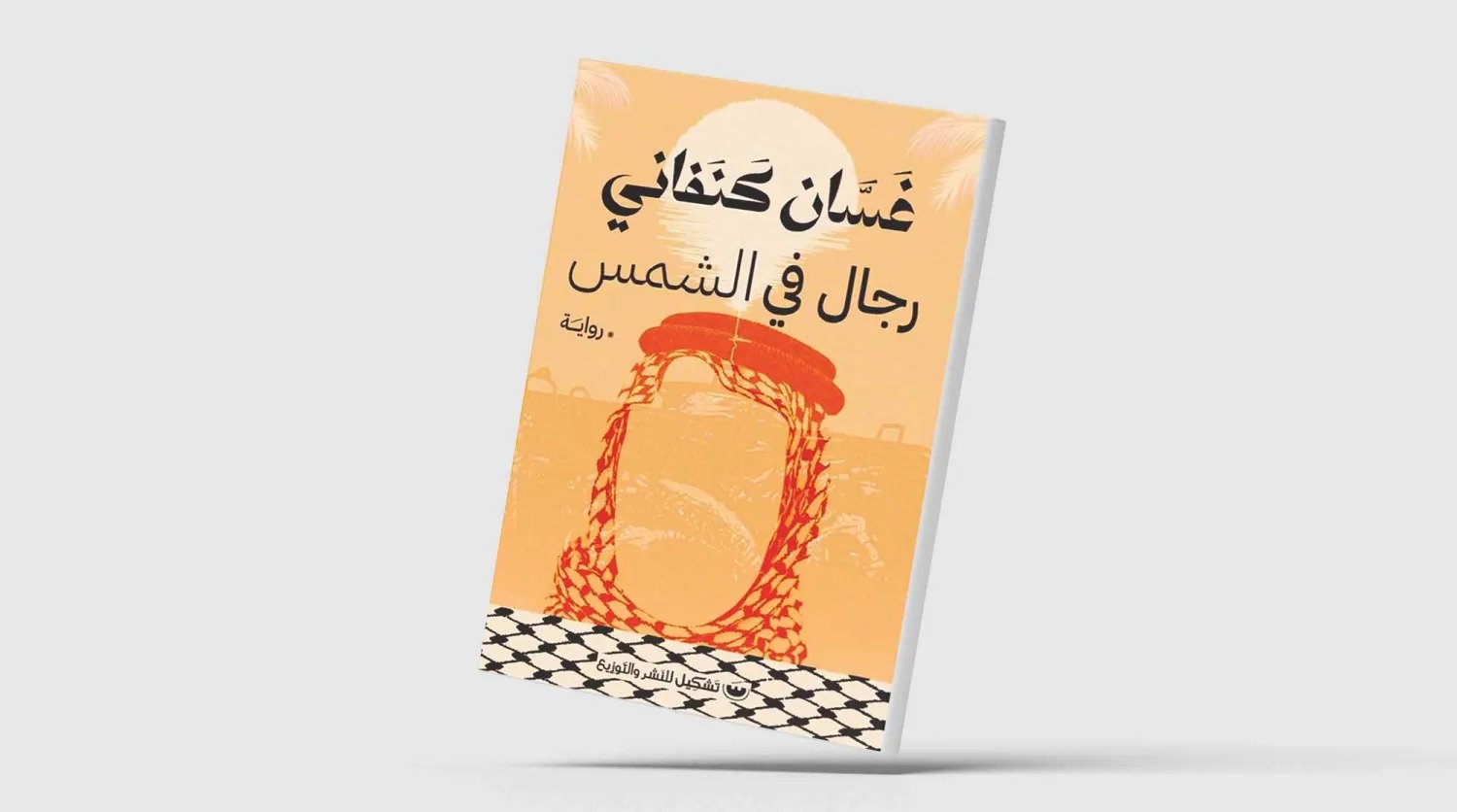
In the background of these works stands Palestinian writer Ghassan Kanafani’s Men in the Sun (1962), which strikes a tragic note. It depicts the ordeal of being uprooted from an occupied homeland and a dream that turns into a nightmare through the story of three Palestinians attempting to reach Kuwait across the Iraqi desert. Their journey ends in death by suffocation inside the water tank of the truck transporting them under the scorching heat.
If novels about migration to the Gulf can be considered a literary genre in their own right—albeit on a limited scale—what future awaits this genre?
Nadeen Dakkak concludes her book by observing that it is difficult to speculate about the foreseeable future or determine whether the genre will receive further additions. Yet the indications suggest that, in the long term, a movement toward greater plurality may become the dominant trend, reflecting the diversity that exists on the ground and the intricate ways in which its strands intersect. Numerous writings published in literary magazines across the Gulf states and on online platforms testify to this tendency.
No single book can cover everything that can be said about its subject. Nor would it be fair to demand that Nadeen Dakkak mention everything that has ever been written about the Gulf. Nevertheless, I missed one work that I believe cannot be omitted in this context, since it lies squarely at the heart of the author’s subject: the Egyptian novelist Muhammad Jibril’s novel The Gulf.
The protagonist of the novel, Raouf al-Ashry, is a journalist working in the Gulf region during the Iraqi invasion of Kuwait. The scenes shift between Kuwait, Muscat, and Alexandria. Place plays a prominent role in the work, where the contradictions of modernity and tradition coexist, and the latest technological inventions of the West confront traditional cultural values that shape behavioral motives and patterns of life.
Apart from this omission, I have nothing but praise for a book that—like the other volumes in the series to which it belongs—combines scholarly precision, penetrating critical insight, and meticulous typographical production.
Reprinted from Asharq Al-Awsat.
Most read