Libya Between a Crisis of the State and a Crisis of Settlement: Why Political Deadlock Is Becoming an Existential Threat

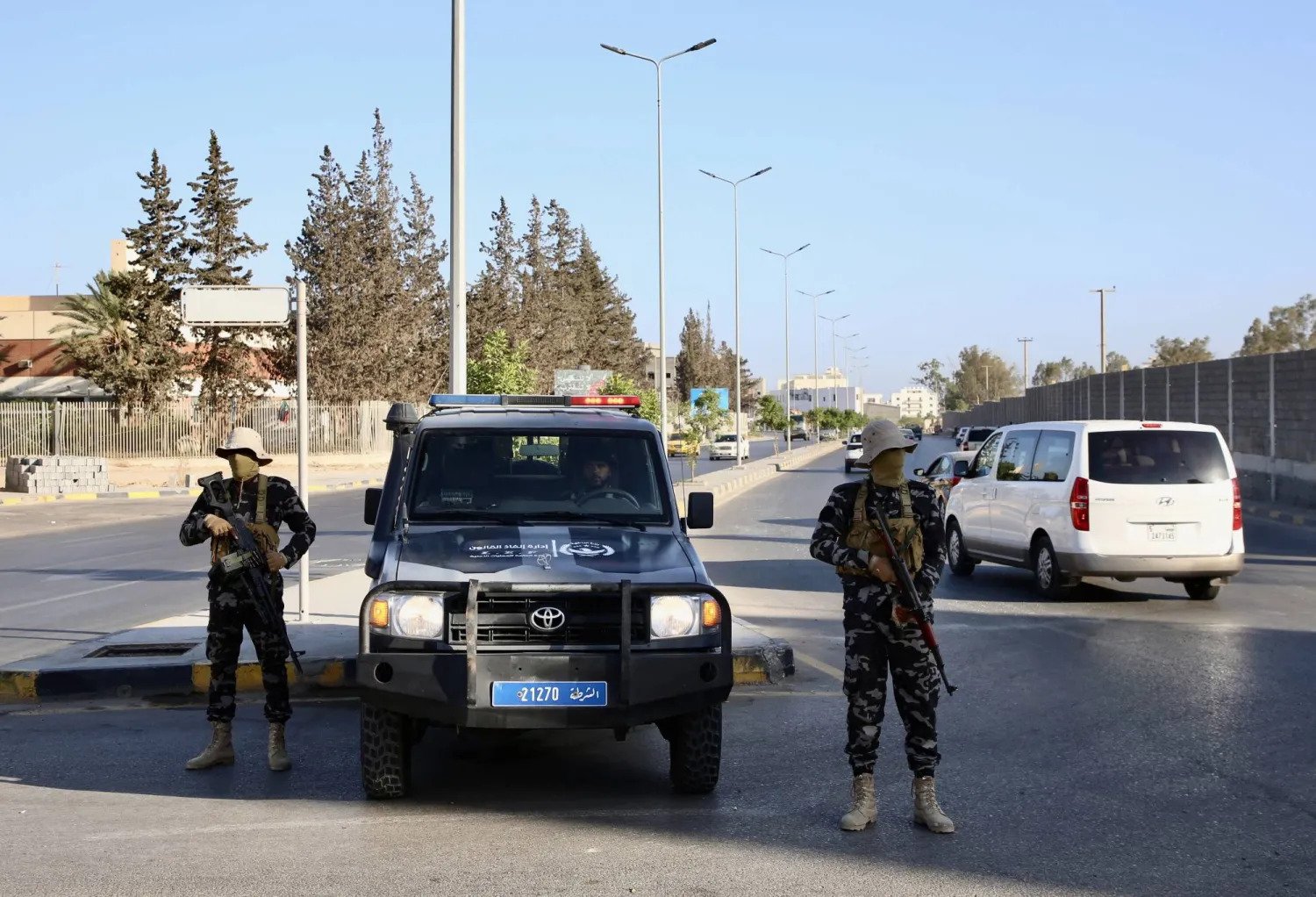
The Libyan crisis is no longer simply a political dispute between two governments or a struggle over legitimacy between competing institutions. It has gradually evolved into a complex crisis that strikes at the very idea of the state. The problem is no longer merely who governs Libya, but rather how to rebuild a national authority capable of governing, monopolizing the legitimate use of force, managing national wealth, providing public services, and bringing an endlessly prolonged transitional period to an end.
Perhaps the most serious lesson from recent developments is that the gap between the political crisis and citizens’ everyday lives is rapidly narrowing. When electricity cuts occur, citizens do not see merely a technical failure in the power grid. When services deteriorate or prices rise, they do not perceive these as isolated administrative problems; rather, they see them as further evidence of the state’s inability to function. When such crises coincide with prolonged political deadlock, protests over electricity become, at their core, protests against the political system that has produced this paralysis.
That is precisely what happened in Tripoli and other parts of western Libya in recent weeks. Electricity outages triggered widespread protests, road closures, the shutdown of institutions, and an assault on the Mellitah Oil and Gas complex, while demonstrations spread to Tripoli, Zawiya, Misrata, and other areas.
Yet interpreting these developments as merely service-related protests would be a political mistake. Electricity was the spark; the real fuel behind the protests is the accumulation of frustration with a state that has remained deferred for fifteen years.
From an Electricity Crisis to a Crisis of Legitimacy
The significance of the latest protests lies in what they reveal about the changing relationship between society and political authority. Over the past years, Libyans have grown accustomed to recurring security, political, and economic crises. But the persistence of these crises has steadily reduced citizens’ capacity to endure them.
When citizens protest against power cuts and then block roads or enter institutions linked to the energy sector, the message goes beyond a demand for basic services. It is a declaration that the social contract itself is increasingly being called into question.
More dangerously, energy in Libya is not simply an economic sector; it is at the heart of the country’s financial and political structure. Oil finances the state, gas feeds power plants, and energy institutions lie at the center of the balance of power between domestic and international actors. Thus, when public anger moves from the streets to energy facilities, it carries a deeply troubling message: when citizens lose confidence in the state’s ability to manage national resources, they begin to treat those resources themselves as arenas of political struggle.
Recent attacks on oil and electricity infrastructure in Zawiya have further exposed this vulnerability, demonstrating that energy infrastructure has become directly exposed to political and security tensions.
The electricity crisis, therefore, is not really an electricity crisis.
It is a crisis of the state’s ability to transform oil wealth into security, public services, and legitimacy.
The Deeper Problem: Libya’s “Political Economy of Division”
Over the years, Libya has reached a point where political division is no longer merely a consequence of conflict; it has also created economic, security, and political beneficiaries.
The existence of rival governments and institutions, multiple centers of armed power, and the geographical distribution of influence have turned the state itself into an arena for the allocation of resources, positions, and privileges.
This exposes one of Libya’s most complex paradoxes:
The state is weak as an institution, yet powerful as a source of rent.
Control over government means access to public expenditure. Control over institutions means influence over resources. Control over territory means possession of bargaining power vis-à-vis political rivals.
This is one reason why elections—which appear on the surface to be the natural solution to the crisis—have themselves become a source of anxiety for some political actors. Genuine elections would not simply mean choosing a new government; they could also mean losing access to networks of influence and patronage that have emerged during the transitional period.
The Libyan question has therefore become more complicated than simply asking:
When will elections be held?
The real question is:
Who can guarantee that those who lose the elections will accept their results?
Why Have Previous Settlements Failed?
One of the central problems with the international approach to Libya has been the tendency to treat the conflict as a dispute that could be resolved through power-sharing.
But Libya is not suffering solely from a problem of distributing political power. It is suffering from a problem concerning the very nature of power itself.
If a new government is formed without unifying security and military institutions, reforming the rent-based economy, establishing clear rules for distributing oil revenues, and creating guarantees that prevent the use of force to impose political outcomes, then the new government will simply become another layer placed on top of the old structure.
This helps explain why transitional governments continue to change while the transitional period itself never ends.
Changing individuals without changing the rules of the game merely reproduces the crisis.
This is why statements by some Libyan officials about the need for “painful concessions” are more realistic than discussions of superficial consensus. The crisis does not stem from a lack of initiatives as much as it stems from the absence of political willingness to pay the price of compromise.
The American Paradox: Military Progress Ahead of Political Progress
Perhaps the most striking aspect of recent developments is that the military track appears, in some respects, to be moving faster than the political track.
Joint military exercises involving forces from different parts of Libya under the Flintlock 2026 exercise represented an important development. For the first time, Libya hosted a joint training site involving forces from the country’s divided military structures as part of an exercise led by U.S. Africa Command.
This development carries an important strategic implication:
If forces from eastern and western Libya can train together, why is it so difficult to agree on a unified government?
The answer is that unifying military capabilities may be less costly for political elites than unifying political authority.
Military commanders may cooperate against a common threat, but military cooperation does not necessarily mean that they are prepared to surrender the political and economic influence they have accumulated.
Military progress, therefore, should not automatically be interpreted as a precursor to political settlement.
Washington Enters Through the Oil Gate
The current U.S. initiative must be understood within this context as an attempt to change the incentive structure.
The approach led by Massad Boulos is not focused solely on negotiations between political institutions. It also links the unification of political and economic institutions to the prospect of broader investment and economic cooperation. Washington has emphasized that the objective of its initiative is to support Libya’s unification and create conditions for elections, while stressing that the details of any unification agreement must ultimately be determined by Libyans themselves.
Yet this approach faces a fundamental dilemma.
The oil that could serve as an incentive for unity is also one of the principal drivers of competition for power.
If access to oil wealth is one of the motivations behind political rivalry, then promises of greater oil investment will not resolve the problem unless transparent and equitable institutions exist first to guarantee the distribution of revenues.
The question, therefore, is not simply: How can Libya increase oil production?
It is:
Who controls the oil? Who oversees the revenues? How are they distributed? And who guarantees that increased production does not simply increase the ability of elites to purchase political loyalty?
This is the real heart of Libya’s political economy.
The Danger of “Freezing” the Conflict Instead of Resolving It
There is another danger in any settlement based primarily on power-sharing among existing elites.
A settlement may succeed in stopping open conflict while failing to build a state.
That is the difference between political peace and political stability.
Peace means that rivals have stopped fighting.
Stability means that the rules of the game have become sufficiently legitimate and accepted that no actor needs to resort to force to protect its interests.
If the crisis ends with the formation of a new presidential council, a new government, or another arrangement for distributing positions, while security and economic institutions remain divided among multiple centers of power, Libya may simply move from a phase of war into a phase of institutionalized management of division.
That can sometimes be more dangerous than war itself, because it gives the division a long-term institutional form.
The United Nations Faces a Different Test
Meanwhile, the United Nations Support Mission in Libya, under the leadership of Hanna Tetteh, is seeking to advance the “Structured Dialogue” and the UN roadmap toward a framework capable of leading to elections and institutional unification.
Washington has also continued to emphasize its support for the UN-led process, including through meetings between Boulos and Tetteh, where the complementarity between the U.S. initiative and the UN roadmap has been underscored.
But the central problem facing the United Nations is not a shortage of ideas. It is an implementation crisis.
The longer the transitional process continues, the greater the ability of transitional institutions to develop interests of their own—and the more ending the transitional period becomes a threat to the interests of some political actors.
This is the central paradox of Libya’s political process:
The actors who are supposed to end the transitional period have become part of a structure that benefits from its continuation.
That is why it is not enough for the United Nations to produce another roadmap. What is needed is a mechanism that makes obstructing the roadmap politically and economically more costly than implementing it.
Could the Protests Become a Turning Point?
The latest protests may be more significant than they initially appear.
Libyan society is no longer protesting only against a particular government. Public anger is increasingly being directed toward an entire political system. This creates two opposing possibilities.
The first is that the protests could become organized popular pressure capable of pushing political elites toward a genuine settlement leading to elections and institutional unification.
The second is that competing forces could exploit public anger to redistribute influence, turning the protests from an instrument of pressure for reform into another tool in the struggle among competing centers of power.
The real test, therefore, will be whether Libya’s political elites can respond to the protests through political means.
Libya Needs a Foundational Bargain, Not a Power-Sharing Deal
A sustainable solution should not simply be another bargain between the House of Representatives and the High Council of State, nor merely an agreement between eastern and western governments, nor even simply an understanding between military forces.
Libya needs a new foundational bargain.
Such a bargain should rest on five interconnected principles:
-
A unified executive authority with a clearly defined mandate and limited duration, whose primary mission is to deliver elections rather than manage an open-ended transitional period.
-
Clear rules governing oil revenues, ensuring transparency, national distribution, and preventing resources from being weaponized politically.
-
The gradual unification of security and military institutions, through arrangements that protect the interests of the various parties without turning the state into a hostage of armed commanders.
-
A viable constitutional and electoral framework, addressing in advance the issues that undermined previous electoral efforts.
-
International guarantees that do not replace Libyan decision-making, but prevent external actors from being used by domestic parties to obstruct a settlement.
This requires redefining the international role.
The objective should not be for external powers to choose who governs Libya, but to help change the incentives that make continued division more profitable than ending it.
Conclusion: Libya Does Not Lack Solutions—It Lacks a Situation in Which the Cost of Solving the Crisis Is Lower Than the Cost of Stagnation
This may be the most important conclusion.
Libya does not suffer from a lack of international initiatives, an absence of ideas, or even an inherent impossibility of reaching an understanding between east and west. Recent developments have demonstrated that cooperation in military and financial spheres is possible, including a unified national budget and joint military exercises.
The problem is that moving from partial cooperation to a comprehensive political settlement requires political elites to relinquish some of the gains they have accumulated during years of division.
That is the hardest part.
Libyans do not need another agreement merely to distribute positions among competing elites. They need an agreement that changes the rules governing the distribution of power and wealth.
If that does not happen, the electricity crisis will return, the oil crisis will return, the protests will return, and new governments will emerge only to be replaced by others—while the state itself remains suspended between temporary governments, competing institutions, armed groups, and external interests.
Yet the current moment, despite its dangers, may represent a rare opportunity.
The convergence of popular anger, economic pressure, partial military rapprochement, U.S. diplomatic engagement, and the UN process creates a window in which Libya’s political settlement could potentially be rebuilt on a different foundation.
But that window will not remain open indefinitely.
If Libya’s political elites continue to treat the protests as an electricity problem, the division as a problem of competing governments, and oil as merely a source of financing, the crisis will continue. If, however, they recognize that the core problem is the absence of a state capable of transforming power and wealth into institutions, rights, and public services, Libya may finally begin moving from crisis management to state-building.
Most read


Read also