Israel and Iran: The Doctrine of a Preemptive Strike Between Regime Change and Electoral Calculations

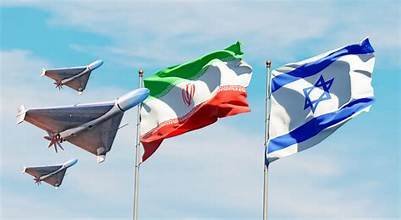
Benjamin Netanyahu’s announcement that Israel is prepared to strike Iran preemptively, even without American assistance, reflects a shift in Israeli security thinking from containing the Iranian threat to attempting to impose a new strategic order. However, the prospect of regime change in Tehran, coupled with Iranian threats of a more devastating response, places the region in an increasingly dangerous situation in which military deterrence, Israeli electoral considerations, and the limits of the partnership with Washington are deeply intertwined.
The escalation between Israel and Iran is no longer confined to exchanges of threats over Iran’s nuclear programme or the boundaries of its regional influence. It increasingly concerns the nature of Iran’s political system itself and Israel’s willingness to move from a strategy of weakening its adversary to an attempt to reshape the governing order in Tehran. Netanyahu’s declaration that Israel is prepared to launch a preemptive strike without waiting for American approval signals a determination to assert the independence of Israeli military decision-making while keeping the option of direct confrontation open.
In response, warnings from Iran’s military leadership reflect Tehran’s commitment to a deterrence strategy based on threatening to expand the scope of any confrontation and increase its costs. The exchanges between the two countries are therefore more than a series of military messages. They form part of a broader struggle over the future strategic balance in the Middle East and over which side has the ability to impose limits on the other’s actions.
From Containing the Threat to Preempting It
Netanyahu’s presentation of Israel’s updated 2026 national security doctrine, the first such presentation in approximately a decade, signals an attempt to redefine Israel’s security priorities in light of its confrontation with Iran. The Israeli prime minister identified the prospect of Tehran acquiring nuclear weapons as the foremost threat to his country, declaring that Israel was prepared to take the initiative and prevent its adversaries from striking first.
This approach carries implications that extend beyond concerns about Iran’s nuclear programme. The concept of a preemptive strike, as Netanyahu presents it, rests on the premise that Israel should not wait for a threat to materialise fully or develop into a direct attack. Instead, it should take military action to prevent its adversary from reaching a point at which it believes its capacity to inflict damage on Israel has become greater than Israel’s ability to contain it.
However, extending the definition of the threat to include the future of the Iranian regime opens the door to a far more complex strategic shift. There is a fundamental difference between targeting specific nuclear facilities or military capabilities and declaring regime change to be a political objective. The former can be presented as a limited operation intended to weaken an adversary’s capabilities. The latter reflects an ambition to reshape the political and security environment of a major regional power, with all the risks of prolonged escalation and unpredictable consequences that such an undertaking entails.
In this context, Netanyahu stated that the objectives he had set did not depend on American approval, explicitly including the overthrow of the Iranian regime among his goals. He also claimed that Israel had completed “90 per cent” of its mission to defeat its enemies.
These statements reflect a desire to demonstrate that Israel no longer considers itself obliged to wait for full agreement with Washington before making critical military decisions. However, the declared independence of Israeli decision-making does not necessarily mean that Israel can dispense with American support, whether in the areas of weapons supplies, intelligence, and air defence or in the diplomatic and political backing it might require if a strike escalates into a wider regional war.
Israeli Military Independence and the Limits of the American Partnership
Netanyahu’s statements place Israeli-American relations in a delicate position. On the one hand, the American partnership remains one of the most important pillars of Israel’s strategic strength. On the other, the Israeli prime minister seeks to make clear that this partnership does not give Washington the right to block decisions his government considers essential to Israel’s security.
This rhetoric allows Netanyahu to send two messages simultaneously. The first is directed at Iran: Israel’s military threat does not necessarily depend on direct American participation. The second is aimed at the Israeli public: the government retains the freedom to act against what it describes as an existential threat.
Yet the declaration of readiness to act independently raises practical questions about Israel’s ability to manage a prolonged confrontation. A preemptive strike might achieve specific tactical objectives, but it would not necessarily eliminate Iran’s nuclear programme, bring down its government, or prevent Tehran from retaliating. A wider confrontation could also demand substantial military and defensive resources while placing increasing pressure on Israel’s home front.
The real test of Israeli independence, therefore, is not simply whether the country can launch the first strike. It is whether it can manage the political, military, and economic consequences, prevent a limited operation from developing into a prolonged war, and avoid becoming more dependent on external support than its initial declarations suggest.
Israeli Elections Enter the Equation
The escalation carries additional political significance because it coincides with Israel’s parliamentary elections, scheduled for October 27, and President Donald Trump’s announcement of support for Netanyahu.
The American endorsement comes as the Israeli prime minister seeks to strengthen his electoral position and present the confrontation with Iran as evidence of his government’s ability to address major security threats. In this context, Netanyahu quoted Trump as saying that the two countries had accomplished extraordinary things together, weakened Iran and what he described as the Iranian axis, and removed the immediate threat.
Netanyahu also stated that his partnership with Trump would continue with the aim of eliminating the Iranian threat within the next two years, or perhaps sooner, urging Israeli voters to listen to the American president.
These messages reveal a clear intersection between security calculations and electoral considerations. The threat of confronting Iran can be used to project an image of decisive leadership capable of taking the initiative, while American support gives Netanyahu an opportunity to present his relationship with Washington as a political and security asset.
However, the timing of the escalation alongside the elections does not mean that the Iranian threat is merely an electoral instrument or that security considerations are absent from Israeli decision-making. A more plausible interpretation is that security and political calculations interact: leaders may act on genuine strategic assessments while simultaneously using their positions to strengthen their domestic standing.
The danger arises when political competition narrows the space for diplomatic manoeuvring, particularly when backing away from a threat or accepting a settlement that falls short of publicly declared objectives can be portrayed at home as weakness or failure.
Tehran Raises the Stakes of Deterrence
Iran’s leadership, meanwhile, is responding to Israeli and American rhetoric by insisting that any new attack would not simply repeat previous confrontations but would instead trigger a stronger and wider response.
Ali Abdollahi, head of Iran’s military headquarters, warned that any American or Israeli miscalculation would be met with a different and more forceful response, arguing that both countries had repeatedly tested Iran’s ability to fight. He also rejected threats to overthrow the Islamic Republic or divide and destroy the country, insisting that Iran remained standing.
These messages are intended to increase the anticipated cost of any Israeli military decision by suggesting that an initial strike would not end the confrontation but could instead trigger a series of retaliatory actions whose scope would be difficult to contain.
However, threats of a more devastating response would affect not only Israel and the United States. They could also expose the wider region to greater risks, particularly if the confrontation spread to sites, military bases, and interests associated with either side, or disrupted trade routes, energy markets, and maritime traffic.
Iran’s forceful rhetoric, including personal attacks on Trump and assertions about the weaknesses of its adversaries, also serves a political purpose: projecting confidence and demonstrating an unwillingness to retreat under pressure. Yet the effectiveness of this rhetoric will ultimately depend on Tehran’s ability to translate its threats into credible deterrence without becoming trapped in a confrontation whose costs exceed its calculations.
The Deterrence Dilemma: How Can Both Sides Avoid the War They Threaten?
The central paradox is that Israel and Iran use escalating rhetoric to avoid defeat and compel the other side to back down. Yet the same rhetoric may increase the likelihood of the very confrontation each side seeks to enter on more favourable terms.
Israel wants to convince Tehran that continued development of its nuclear or military capabilities will not shield it from attack. Iran, in turn, wants to convince Israel that any strike would carry substantial costs and unpredictable consequences. The success of each strategy depends on how convincingly the other side perceives the threat, not merely on the intensity of the statements.
Deterrence becomes more fragile, however, when political objectives expand to a point where they cannot easily be achieved through limited military action. Weakening certain military capabilities does not necessarily eliminate the Iranian threat. Attacking nuclear facilities alone cannot guarantee a change in the calculations of Iran’s leadership, while seeking to overthrow the regime could consolidate domestic support around it or push the confrontation in unexpected directions.
Conversely, an Iranian threat of comprehensive retaliation could lead Israel to conclude that waiting would make a future confrontation even more costly, thereby reinforcing the logic of a preemptive strike rather than containing it.
This is where diplomatic channels and communication mechanisms become particularly important. They can help prevent miscalculations about intentions or the interpretation of military movements as the beginning of a wider attack. Even amid deep mistrust, the ability to clarify the limits of military operations and distinguish political threats from actual military decisions remains important in reducing the risk of unintended escalation.
Regime Change: A Political Objective That Military Force Cannot Guarantee
Netanyahu’s declaration that regime change in Iran is among his objectives is one of the most sensitive aspects of the escalation. Political transformation in a country as large and complex as Iran cannot be reduced to the destruction of facilities or the weakening of military capabilities. Nor is there any guarantee that external pressure will produce the political outcome sought by the attacking state.
War may weaken certain state institutions or capabilities, but it can also produce different outcomes, including a more hard-line leadership, an expansion of the conflict, or greater complications for any subsequent negotiations. Furthermore, if regime change becomes an explicit objective, fundamental questions arise about what follows: Who would assume power? How would state institutions be governed? What would happen to internal security and national unity? And what guarantees could prevent a prolonged political vacuum?
The shift from preventing Iran from acquiring nuclear weapons to seeking regime change therefore represents a transformation in the nature of the mission itself. Although the former is highly complex, it can be linked to measurable criteria involving nuclear capabilities, monitoring, and weapons development. The latter concerns the future of the political system and outcomes that are difficult to predict in advance or control from abroad.
Nor is the declaration of major military progress sufficient to prove that strategic objectives have been achieved. The ultimate measure is not simply the extent of the damage inflicted on an adversary, but whether that damage produces a more stable security environment or opens the door to another cycle of conflict.
The Middle East Faces a New Test
The potential consequences of a confrontation are not confined to Israel and Iran. Any major escalation could place countries across the region under additional political, security, and economic pressure, increase risks to energy markets, trade, and maritime traffic, and force governments to prepare for the possibility of a war extending beyond its immediate theatre.
Israel’s reliance on American support, despite its insistence on independent decision-making, also makes Washington’s position an important factor in determining the course of the escalation. Political and military backing could strengthen Israel’s ability to act, but it could also confront the American administration with the consequences of a conflict that it may not necessarily want to see expand or continue.
Meanwhile, Tehran’s insistence on a forceful response may be intended to prevent further attacks, but it could also increase the likelihood of a wider conflict if Israel concludes that the Iranian threat requires more extensive military action.
The issue, therefore, is not simply which side possesses the capacity to deliver the most powerful strike. It is which side can achieve its political objectives without pushing the region into an open-ended war whose outcome becomes increasingly difficult to control.
Conclusion: Escalation Alone Cannot Determine the Balance of Power
Israel’s new rhetoric reflects an attempt to combine preemptive deterrence, independent military decision-making, and the ambition to change Iran’s regime at a time when Netanyahu is seeking to strengthen his political position ahead of the elections. Tehran, in turn, is raising the stakes by threatening a more forceful response in an effort to make the cost of any new attack high enough to deter Israel and the United States from carrying it out.
The fundamental dilemma, however, is that broader declared objectives do not guarantee their achievement, and the ability to start a war does not necessarily confer the ability to control its course or outcome. Israel may be capable of inflicting significant damage on its adversary, but that does not guarantee the collapse of the Iranian regime or the elimination of the threats it perceives. Iran may increase the cost of confrontation, but that does not guarantee that it can prevent further attacks or avoid their consequences.
Ultimately, the region faces a confrontation in which national security calculations intersect with electoral considerations and political ambitions. If mutual threats evolve into military decisions with open-ended objectives, both sides may find themselves in a war that exceeds their initial calculations.
Avoiding this outcome requires more than displays of strength. It requires a realistic assessment of consequences, effective communication channels, and a political process capable of containing threats before they develop into a confrontation that becomes difficult to stop.
Most read



Read also