
The question of Israel’s withdrawal from southern Lebanon can no longer be assessed through the lens of the 2000 and 2006 models. Each period unfolded under a distinct political and military context, while the current landscape appears to be shaped by far more complex dynamics, in which Israel’s security calculations intersect with the military posture of Hezbollah, the future of its weapons, the role of the Lebanese Armed Forces, the nature of international guarantees, and, above all, the arrangements currently being negotiated.
At the heart of this equation lies the geography of southern Lebanon, which has become one of the key factors in understanding Israel’s conduct. Rather than necessarily reverting to the model of controlling a broad geographical strip, as occurred during earlier periods, the pattern of Israeli military activity in areas such as Shkeif, Zawtar, and Ali al-Taher suggests the possible emergence of a different approach—one centered on controlling strategic positions and elevations with significant operational value.
This does not necessarily mean that Israel has an officially declared “doctrine” calling for the establishment of a belt of high ground. The available evidence is insufficient to establish such a doctrine conclusively. Yet the pattern of military operations and the locations receiving particular attention raise a strategic hypothesis worthy of consideration: Israel may be shifting from the concept of controlling territory to controlling the geography that shapes the conduct of war.
From a Security Belt to Strategic Positions
The importance of the high ground in southern Lebanon lies in the fact that whoever controls it gains enhanced capabilities for surveillance, reconnaissance, and fire control, as well as the ability to influence troop movements and supply routes. Accordingly, control of a strategically located elevation can deliver military advantages that exceed those offered by control of a much larger area, but at a lower deployment cost.
This is where Ali al-Taher takes on particular significance. Its elevated position and its commanding view over Nabatieh and large areas extending toward Iqlim al-Tuffah give it military value that goes well beyond its physical size. The same applies, to varying degrees, to Shkeif, Zawtar, and other elevated positions that can provide the side controlling them with a broader field of surveillance and fire control.
In this sense, the battle for southern Lebanon may not necessarily be about controlling as much territory as possible. Rather, it may increasingly be about who possesses the ability to control the broader terrain through the positions that exert the greatest operational influence.
This helps explain Israel’s interest in the high ground. Holding these positions can serve three objectives simultaneously: denying Hezbollah their use as observation, command, and support positions; reducing Hezbollah’s ability to threaten settlements in northern Israel; and creating geographical depth that gives Israel greater early-warning capabilities and a stronger ability to respond to potential military activity.
Yet this approach contains its own contradiction. The very elevations that provide Israel with a military advantage can also become costly positions that must be defended and supplied. The question, therefore, is not simply whether Israel can reach these locations, but whether it can retain them militarily and politically.
Ali al-Taher: A Test of the New Equation
Against this backdrop, Ali al-Taher represents more than a geographical point on the operational map. It could become a practical test of the nature of Israel’s strategy in the next phase.
If Israel seeks to establish a conventional security belt, controlling contiguous areas would be the natural objective. But if its priority is to establish a network of strategic positions, the value of Ali al-Taher lies not in its inclusion within an occupied area, but in its position within a broader geographical network of elevations that enable control over the surrounding terrain.
This distinction is fundamental because it shifts the debate from the question of “How far will Israel withdraw?” to a more complicated one: “Who will exercise effective control over the positions that determine the security of the area after a withdrawal?”
This could also redefine the very meaning of withdrawal. Israel might withdraw from broad areas while retaining specific positions it considers essential to its security. At the same time, it could seek security arrangements designed to prevent Hezbollah from returning to these locations—through the deployment of the Lebanese Army, international arrangements, or monitoring mechanisms—thereby reducing the need for direct Israeli territorial control.
The Issue Is Not the Summits Alone
Reducing Israel’s strategy to control of the “summits,” however, would be an oversimplification. The military value of an elevation does not derive solely from its height, but also from its relationship to roads, deployment areas, supply lines, command positions, and the surrounding terrain.
Accordingly, if the “belt of high ground” hypothesis proves accurate, what Israel may actually be seeking is a multi-point defensive network, rather than a continuous geographical line. Elevated positions can be used for surveillance, while actual defensive positions may be located below the crest or along its sides, where troops are less exposed to fire and have greater freedom of movement.
This also explains why control of a particular elevation does not necessarily imply establishing a permanent military presence on its summit. The real objective may instead be to deny the adversary the ability to use the surrounding area militarily, or to create a battlefield reality that makes it more difficult for Hezbollah to rebuild its military infrastructure in these areas.
The Cost of Ground Operations Limits Israel’s Ambitions
Geographical calculations, however, cannot be separated from calculations of cost. Ground control over southern Lebanon remains an extremely complex undertaking, particularly in an environment where Hezbollah possesses extensive experience in fighting across mountainous and rural terrain.
This creates an Israeli trade-off between direct ground presence and deterrence from a distance. The larger the area of deployment, the greater the number of forces required to protect positions and supply lines, and the greater the potential human cost. Concentrating on selected strategic positions, by contrast, could provide a degree of operational control without incurring the same level of cost.
Yet this equation remains fraught with risks. Isolated positions can become liabilities if they are not integrated into a broader political and security framework. The success of any Israeli strategy along these lines will therefore depend not only on the ability to seize high ground, but also on the ability to translate military control into a sustainable security arrangement.
Why Is the 2000 Withdrawal Difficult to Replicate?
One of the problems with the current debate is the repeated comparison with Israel’s withdrawal in 2000. That withdrawal took place under a completely different political and security environment.
On May 25, 2000, Israel withdrew from southern Lebanon after approximately 22 years of occupation. The decision was closely linked to Israel’s domestic calculations, particularly the rising human and economic costs of maintaining a military presence in Lebanon. The withdrawal also took place against the backdrop of UN Security Council Resolution 425, but it was not the product of a conventional Lebanese-Israeli political agreement.
Today, however, Israel does not view southern Lebanon as a theater separate from the question of Hezbollah and the future of its military capabilities. Withdrawal is therefore no longer simply a matter of geography; it has become part of a broader security equation aimed at preventing the re-emergence of threats along Israel’s northern border.
2006: A Different Model of Withdrawal
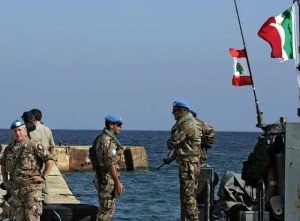
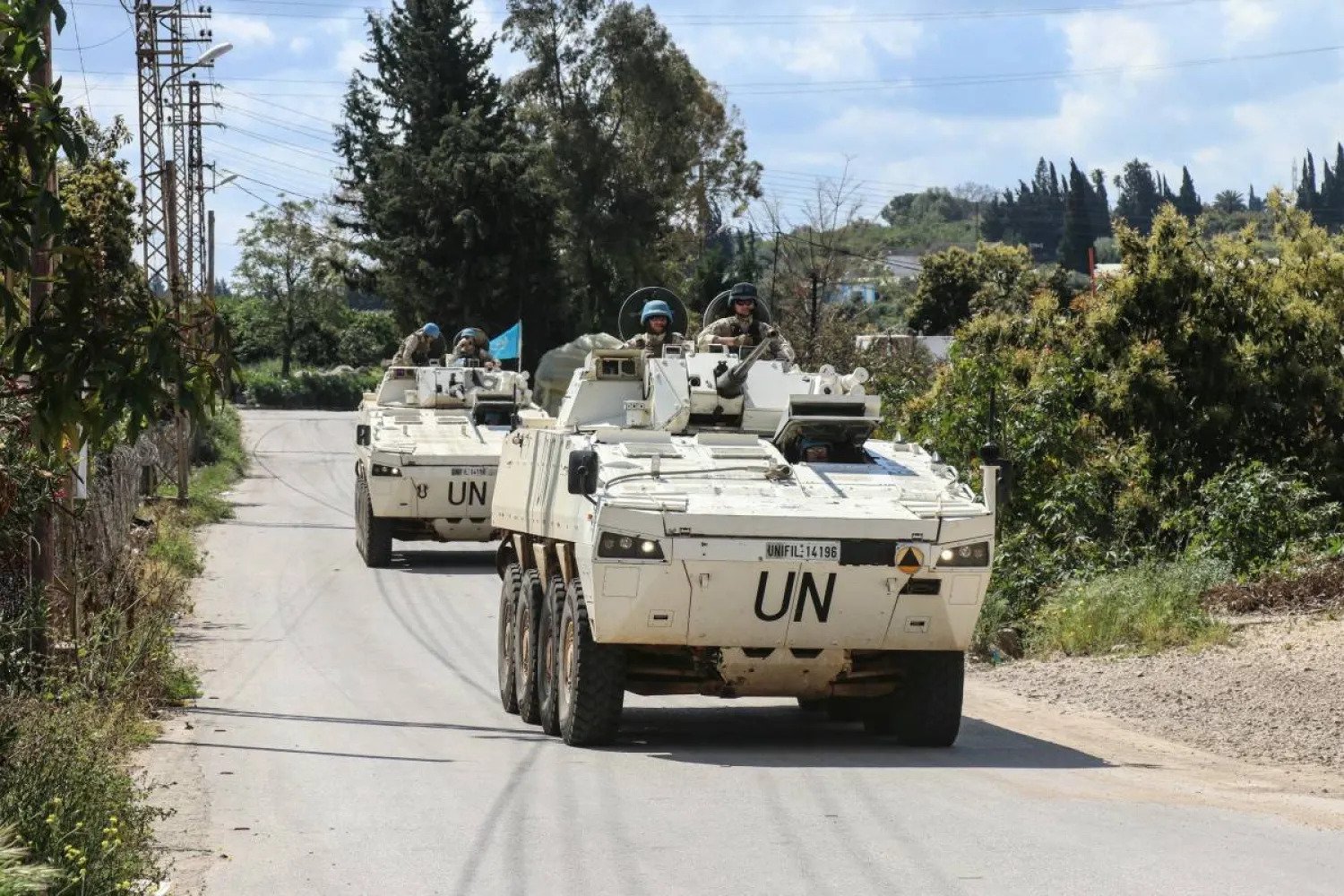
The 2006 experience was based on a different set of circumstances. The cessation of hostilities was linked to the Israeli-Lebanese war and the adoption of UN Security Council Resolution 1701, which reshaped the security arrangements in southern Lebanon and expanded the deployment of UN forces and the Lebanese Army.
The problem, however, is that despite its importance, Resolution 1701 did not resolve the underlying roots of the conflict, nor did it eliminate disputes over the border and contested points. Subsequent developments also exposed the limits of international arrangements in preventing renewed tensions.
Any new agreement, therefore, is unlikely to be a simple repetition of Resolution 1701. The current equation will probably require more detailed arrangements concerning military presence, the deployment of the Lebanese Army, monitoring mechanisms, Hezbollah’s weapons, the border, and guarantees for implementation.
The United States: The Key to a Settlement
At this particular juncture, the United States appears more important than ever. While the United Nations, France, and other actors played significant roles in earlier phases, Washington’s ability to influence Israeli decision-making remains a decisive factor in any potential settlement.
This does not mean, however, that the United States can simply impose an Israeli withdrawal. Washington itself must balance its support for Israel’s security with the need to prevent the conflict from expanding, while also preserving Lebanon’s stability and preventing the collapse of existing security arrangements.
The negotiations, therefore, may ultimately revolve less around the question of withdrawal versus no withdrawal than around the price required to make withdrawal acceptable from the Israeli perspective. If Washington can provide security arrangements that offer Israel credible alternatives to direct territorial control, withdrawal may become more feasible. If Israel continues to regard such guarantees as insufficient, however, the high ground will remain both a military and political bargaining chip.
Between Withdrawal and the Redefinition of Security
The fundamental dilemma is that Lebanon is demanding an Israeli withdrawal from its territory, while Israel views certain areas of southern Lebanon as part of its future security architecture. Between these two positions lies an exceptionally complex negotiating space.
If the high ground becomes an Israeli “red line,” any agreement will not simply be an agreement over withdrawal lines. It will be a negotiation over who controls the geography and who has the right to use it for military purposes.
This is precisely why current developments matter. The issue is ultimately not whether Israel will retain Ali al-Taher, Shkeif, or other positions, but whether these locations will become the template for a new security arrangement in southern Lebanon.
This may represent the most significant transformation: Israel does not necessarily need to occupy all of southern Lebanon to achieve its security objectives; it may be sufficient to prevent its adversary from controlling the elevations that would turn southern Lebanon into an effective platform for threatening northern Israel.
Yet the viability of this equation depends on Israel’s ability to translate military superiority into a sustainable political settlement. Occupying the high ground may be militarily feasible, but it does not by itself answer the question of the day after: Who will administer these areas? Who will guarantee that Hezbollah does not return? And who will prevent them from becoming permanent flashpoints?
The battle for the high ground may therefore appear, on the surface, to be a geographical struggle. At its core, however, it is a struggle over the nature of the security order that will govern southern Lebanon in the next phase.
Just as the 2000 withdrawal reflected an Israeli decision to rid itself of the costs of occupation, and the 2006 withdrawal formed part of an international settlement following the war, any future withdrawal—if it occurs—may be fundamentally different: a withdrawal from territory accompanied by the retention of influence over strategic positions.
This is ultimately where the next phase will be decided: Will negotiations produce a genuine Israeli withdrawal that reasserts Lebanese sovereignty, or will they lead to a new formula that redefines withdrawal itself—allowing Israel to leave large areas while retaining its grip on the geographical keys that it considers most sensitive?
Most read


Read also