
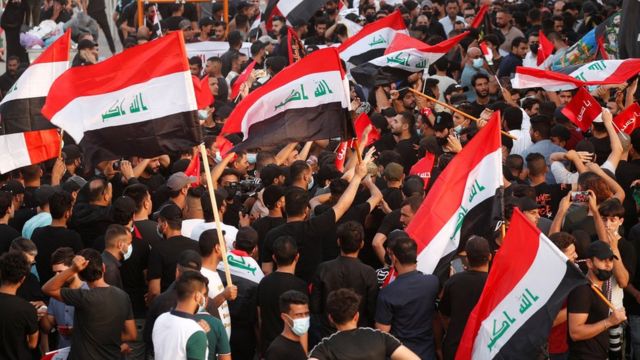
he formation of the government of Ali Falih al-Zaidi represents a pivotal political moment in modern Iraqi history—not only because of the balance of power that produced it, but also because it emerges within an exceptionally complex domestic and regional environment in which the imperatives of rebuilding the state intersect with the dilemmas of armed influence and structural fragmentation within the political system.
Al-Zaidi, who comes from a business and investment background and enjoys the backing of the Shiite Coordination Framework, presents himself as the representative of a political current seeking to move Iraq away from the model of the “parallel state” toward that of a normal sovereign state capable of monopolizing authority, arms, and economic decision-making.
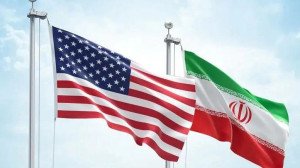
Yet despite the theoretical appeal of this vision, it collides with a heavy legacy shaped over more than two decades of upheaval following the 2003 U.S.-led invasion of Iraq, the reconstruction of the political system along sectarian and partisan lines, and the subsequent expansion of Iranian influence within Iraq’s political, security, and economic structures. At the heart of this dilemma lies the issue of the Popular Mobilization Forces (PMF), which has become the most sensitive obstacle to any attempt at rebuilding the Iraqi state.
Iraq Between Formal Legitimacy and Parallel Power
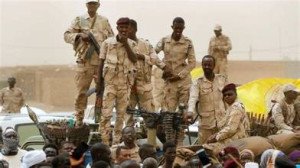
Since the establishment of the PMF in 2014 in response to the “fatwa of sufficient jihad” issued by Iraq’s Shiite religious authority against the expansion of Islamic State, these formations played a decisive role in preventing the collapse of the Iraqi state and containing an existential security threat. However, their gradual transformation into a parallel security, political, and economic structure created a complex model of “dual authority,” whereby the Iraqi government found itself unable to exercise full control over the instruments of force within its own territory.
Although the PMF was granted legal status under Law No. 40 of 2016, the core problem remained unresolved. The ideological and organizational nature of several PMF factions continued to bind them organically to Iranian influence and to transnational regional networks that transcend the Iraqi state itself.
This reveals the central paradox: the same political forces that supported al-Zaidi’s rise to power are also the forces whose influence largely depends on the continuation of this parallel structure.
The Dilemma of Restricting Arms to the State
Al-Zaidi has proposed a project for restructuring the Iraqi economy as a necessary gateway to combating corruption, attracting investment, and rebuilding the state. Yet this project cannot be separated from the challenge of restricting weapons exclusively to state institutions—the true test facing any attempt to reconstruct Iraq’s political order on a more stable and institutional basis.
Restructuring the PMF would not merely involve administrative or legal reforms; it would require redefining the relationship between the state and armed power, and between constitutional legitimacy and ideological legitimacy. In practical terms, such a process would necessitate three highly sensitive steps:
- Confiscating heavy and medium weaponry from armed factions and placing it fully under state control.
- Reintegrating fighters into professional state institutions such as the army, police, and intelligence services.
- Reducing the political influence of armed factions within parliament and state institutions.
These measures, however, collide with the realities of power on the ground. PMF factions do not perceive themselves as outlaw militias; rather, they regard their weapons as part of a broader “resistance equation” and regional deterrence strategy. Furthermore, these factions possess extensive influence within parliament and state institutions, alongside significant social and economic networks tied to salaries, patronage, and protection structures.
Consequently, any attempt to forcibly dismantle the PMF could easily be interpreted within Shiite political circles as a direct political and security assault, potentially opening the door to intra-Shiite conflict whose consequences would be catastrophic for both Iraq and the wider region.
The Limits of the American Approach
Al-Zaidi’s vision intersects with broader American and Western ambitions to rebuild the Iraqi state and curtail the influence of armed groups. Yet Iraq’s recent experience demonstrates that the language of threats, sanctions, and military pressure often grants such groups additional legitimacy within their own social environments by reviving narratives of “resistance” and “defense of sovereignty.”
For this reason, the success of any reform project appears contingent upon a transformation in the American approach itself—from one centered on direct security pressure to one based on institutional and economic incentives.
The United States retains powerful tools in this regard, particularly concerning Iraq’s banking system, financial transfer mechanisms, and support for transparency and governance reforms. Such measures could gradually reduce the shadow economy from which armed networks benefit.
Likewise, easing financial restrictions on Iraq while linking such relief to clear structural reforms could provide al-Zaidi’s government with greater room for domestic maneuvering without appearing as an executor of foreign agendas.
The Regional Dimension and Iraq’s Economic Reconstruction
The success of any state-restructuring project in Iraq cannot be separated from its surrounding regional environment. For decades, Iraq has served as an arena for intersecting Iranian, American, Gulf, and Turkish influence, rendering its internal fragility inseparable from broader regional rivalries.
In this context, providing a regional safety umbrella for al-Zaidi’s government becomes a strategic necessity. Such a framework would depend on shifting from the logic of “aid and grants” toward long-term investment in sectors such as oil, electricity, agriculture, and infrastructure.
Building a productive economy capable of absorbing Iraq’s large youth population is the essential condition for drying up the social environment that pushes many young Iraqis toward armed organizations. Iraq’s crisis is not merely a security crisis; it is fundamentally a crisis of statehood, economy, and national identity. The more the state fails to provide employment opportunities, services, and social stability, the more parallel structures present themselves as substitutes for official institutions.
Conclusion
Iraq today stands at a historic crossroads. Al-Zaidi’s government theoretically possesses an opportunity to launch a reform process capable of restoring the idea of the Iraqi national state. Yet the success of this process depends on its ability to manage the delicate balance between reform and confrontation, and between the necessities of state-building and the realities of power on the ground.
Restructuring the PMF is not merely a security issue—it lies at the core of the struggle to redefine the Iraqi state itself: will Iraq remain a state in which official authority coexists with parallel centers of power, or can it gradually evolve into an institutional state that monopolizes sovereignty, law, and arms?
The answer to this question will determine not only the future of al-Zaidi’s government, but the future of Iraq itself in the years ahead.
Most read


Read also