
Reaching a political understanding between the United States and Iran does not mark the end of the nuclear crisis; rather, it signals the beginning of its most challenging phase. Past experience has consistently demonstrated that the success of any nuclear agreement depends not on the commitments written into the text, but on the effectiveness of the mechanisms designed to verify compliance. In this context, international verification has emerged as the most sensitive pillar of the new U.S.-Iran memorandum of understanding, as it will determine whether the international community can genuinely confirm Tehran’s adherence to its nuclear obligations amid decades of mutual distrust and the additional complexities created by recent military strikes on Iranian nuclear facilities.
Verification: The Cornerstone of the Agreement
For more than two decades, the core dispute between Iran and Western powers has not centered solely on uranium enrichment itself, but on the ability of independent international inspectors to verify Iran’s nuclear activities. Consequently, any new agreement will remain fragile unless it establishes a comprehensive verification regime that grants the International Atomic Energy Agency (IAEA) unrestricted access to nuclear facilities, the authority to inspect fissile materials, and the capability to monitor the entire nuclear fuel cycle.
Although the IAEA Director General has announced that technical arrangements for inspections—including procedures, timelines, and access protocols—will soon be finalized, experts believe that the Agency has long prepared detailed contingency plans outlining inspection priorities. Chief among these priorities is locating Iran’s stockpile of highly enriched uranium (HEU), the most strategically significant component of the country’s nuclear program because of its potential to be rapidly converted into weapons-grade material.
The Challenge of Highly Enriched Uranium
Iran’s accumulated stockpile of uranium enriched to 60 percent represents the first major obstacle to any verification process. While the preliminary agreement stipulates that the material will be downblended inside Iran under IAEA supervision, the effectiveness of this commitment depends entirely on how the process is implemented.
Effective verification begins well before the dilution process itself. Inspectors must first measure and characterize the existing stockpile, monitor every stage of the downblending process, and ultimately seal the resulting material to ensure future accountability. If Iran were permitted to conduct the dilution independently before presenting the material to inspectors, substantial uncertainties would arise regarding whether the entire stockpile had actually been processed or whether undeclared quantities remained hidden. Such ambiguity would revive the very trust deficit that has defined the Iranian nuclear file for years.
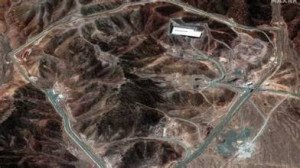
The issue is further complicated by uncertainty surrounding approximately 450 kilograms of highly enriched uranium. International authorities remain unable to determine whether these materials remain buried beneath bomb-damaged facilities or have been secretly relocated to undisclosed locations following U.S. and Israeli military strikes.
Halting Enrichment: Political Commitment Versus Technical Verification
A political declaration suspending uranium enrichment, by itself, offers little reassurance unless accompanied by a robust verification mechanism capable of detecting undeclared nuclear activities. Experts in nuclear nonproliferation therefore argue that the credibility of any Iranian commitment depends on the scope of authority granted to international inspectors.
This authority must include rapid access to suspected facilities, comprehensive disclosure of nuclear-related information, and the ability to inspect locations without prolonged negotiations or procedural delays. Every delay increases the opportunity to conceal evidence, relocate sensitive equipment, or alter facilities before inspectors arrive—scenarios that have repeatedly complicated previous monitoring efforts.
Some U.S. officials have also advocated transferring the downblended uranium outside Iran for storage in an internationally supervised nuclear fuel bank. Such an arrangement would significantly reduce the possibility of future re-enrichment, although Tehran is likely to resist the proposal on sovereignty grounds.
The Additional Protocol: The Most Powerful Verification Instrument
One of the most significant lessons from the 2015 Joint Comprehensive Plan of Action (JCPOA) is that conventional safeguards alone are insufficient to verify a sophisticated nuclear program. Consequently, the IAEA’s Additional Protocol has become widely recognized as the most effective verification tool available for any future agreement.
Unlike standard safeguards, the Additional Protocol extends the Agency’s oversight beyond declared nuclear facilities to encompass the entire nuclear fuel cycle, including centrifuge manufacturing plants, research centers, production infrastructure, and supply chains associated with nuclear activities.
Although Iran signed the Additional Protocol in 2003, it never formally ratified it, choosing instead to implement it provisionally during limited periods before suspending its application as political tensions intensified. This decision significantly reduced the IAEA’s ability to maintain continuous oversight of Iran’s nuclear activities.
Military Strikes Have Created a New Verification Crisis
The challenges facing international inspectors are no longer limited to political restrictions. Recent U.S. and Israeli strikes against Iranian nuclear facilities have introduced entirely new operational obstacles.
By denying inspectors access to damaged sites, Iran disrupted what the IAEA describes as the "continuity of knowledge"—the Agency’s uninterrupted ability to track nuclear materials, equipment, and inventories over time. As a result, inspectors no longer possess a complete picture of Iran’s current nuclear assets or their precise locations, making future verification efforts considerably more difficult than during previous monitoring missions.
Moreover, the extent of structural damage at several facilities, combined with the potential presence of unexploded ordnance, could significantly delay inspection activities and complicate efforts to reconstruct the comprehensive database the Agency maintained before the military strikes.
A Crisis of Trust Beyond Technical Issues
The current negotiations reveal that the dispute extends far beyond technical questions and reflects a profound crisis of confidence between Washington and Tehran. The United States insists that any agreement must rely on continuous verification rather than political assurances, while Iran views expanded inspection authorities as a potential threat to its national security and military infrastructure.
Accordingly, the decisive battle over the agreement will not revolve around the number of centrifuges or enrichment levels, but around the limits of international inspections, the transparency of Iran’s disclosures, and the speed with which Tehran responds to IAEA requests for access.
The Future of the Agreement: Success Depends on Verification
Current developments suggest that the new U.S.-Iran memorandum of understanding may succeed in establishing a political framework capable of reducing regional tensions. However, it will only evolve into a durable and credible agreement if its verification mechanisms can bridge the profound trust gap that has accumulated over more than two decades of nuclear disputes.
Conversely, any weakness in the inspection regime, delays in granting access to inspectors, or continued uncertainty regarding Iran’s highly enriched uranium stockpile would leave the agreement vulnerable to collapse at the first major political or security crisis. Ultimately, the future of the agreement will not be decided solely at the negotiating table, but within Iran’s nuclear facilities themselves, where the IAEA’s ability to restore confidence through effective verification will determine whether diplomacy can achieve lasting success in one of the world's most complex nuclear disputes.
Most read


Read also