Iran’s Generation Z: Between Domestic Opposition and National Cohesion in Times of External Threat

Iran’s Generation Z has frequently been portrayed as the social force most capable of challenging state-imposed restrictions and even as the generation most likely to drive a protest movement capable of threatening the stability of the regime itself. This perception has gained momentum as members of this generation have taken a leading role in successive waves of protest in recent years and embraced a new political discourse that is more outspoken in its criticism of religious authority and more receptive to the values of individual freedom and the borderless digital sphere.
Yet the behavior of this generation during the U.S.-Israeli war against Iran diverged from many Western assessments that assumed external military escalation would automatically create an opportunity to intensify domestic pressure on the regime. Despite possessing advanced digital tools that give Iranian Generation Z considerable capacity for mobilization and influence in the public sphere, a substantial part of its activity — particularly across digital platforms — shifted toward a nationalist discourse supportive of the state’s position in confronting an external threat, rather than using the crisis as a catalyst for domestic political change.
This behavior should not be interpreted as an ideological transformation or complete alignment with the authorities. Rather, it reflects the complexity of this generation’s political consciousness and identity. Iranian Generation Z draws a clear distinction between opposing the regime domestically and allowing that opposition to be instrumentalized within external contexts that could deprive it of national legitimacy or push the country toward scenarios of chaos and instability.
Iran’s Generation Z: The Emergence of a New Consciousness Beyond Traditional Frameworks
Iranian authorities have long behaved as though their principal concern is no longer confined to external threats but increasingly extends to profound domestic transformations driven by younger generations. The establishment has viewed Generation Z as a social actor that is difficult to contain, particularly amid recurring waves of protest.
The regime’s perception of this generation as a sensitive political challenge has been reinforced by the existence of an Iranian opposition abroad offering explicit political alternatives, potentially elevating the threat from social unrest into a strategic challenge to the structure of the regime itself, especially given the ease with which ideas circulate through digital spaces.
The influence of Generation Z, however, is not confined to politics. It extends deeply into the social and cultural spheres.
This generation demonstrates an unprecedented willingness to challenge imposed social norms, whether concerning dress codes or patterns of everyday life. Through slogans such as “Woman, Life, Freedom,” it has expressed a transformation in which demands are no longer limited to political reform but extend toward redefining what constitutes a normal life and where the boundaries of individual freedom should lie.
Within this framework, everyday practices — clothing, behavior, and modes of expression — acquire political significance even in the absence of explicitly formulated political discourse.
This behavior takes on an even deeper dimension when viewed through the tools employed by this generation. Young Iranians use technology to circumvent restrictions and transform digital platforms into an alternative public sphere in which they produce their own symbols and discourse.
This trajectory is also reinforced by persistent economic hardship. Sanctions and inflation have contributed to deteriorating living conditions, particularly among educated young people. More importantly, however, this deterioration is no longer interpreted merely as a temporary economic crisis. It has increasingly been reframed as evidence of structural deficiencies in governance, transforming material frustration into political alienation.
Economic grievances are therefore no longer separate from political criticism; they have become part of a broader perception of the failure of the existing model.
The following are among the principal factors that have driven Iran’s Generation Z to adopt perspectives different from those that prevailed among earlier generations.
1. Generation Z and the Leadership of a Renewed “Identity Project”
During its early years, the Iranian regime succeeded in creating a degree of social cohesion based on a complex combination of revolutionary and religious legitimacy. Velayat-e Faqih, or the Guardianship of the Islamic Jurist, provided an overarching framework linking political authority with religious leadership.
This fusion was not merely a constitutional formula. It evolved into a broad mobilizing discourse based on the concepts of revolution, sacrifice, and confrontation with external enemies.
The Iran-Iraq War played a decisive role in consolidating this cohesion. It reinforced a sense of national unity and enabled the regime to reproduce its legitimacy through continuous mass mobilization.
At the same time, the state relied on its ideological institutions, including the media and education system, to reshape collective identity within a revolutionary Islamic and anti-Western framework. This contributed to the creation of a relatively unified conception of belonging and loyalty.
In this sense, social cohesion during that period was not produced solely through repression. It also reflected a degree of compatibility between the state’s discourse and the lived experience of a generation whose consciousness had been shaped by revolution and war, providing the regime with a measure of credibility and stability in its early years.
That cohesion, however, did not remain intact.
Beginning in the 1990s, it gradually eroded under the impact of social and economic transformations, the expansion of education, and greater exposure to the outside world. These processes were partially reinforced during the reformist presidency of Mohammad Khatami, although they did not lead to a fundamental restructuring of the relationship between state and society.
In recent years, younger generations have increasingly gravitated toward secular values and individualism. The transformations driven by Iranian youth can therefore be understood as a contemporary manifestation of a renewed “identity project” that no longer conforms to the identity frameworks the state has sought to institutionalize since the revolution.
Young Iranians today do not approach identity as a fixed condition or a ready-made framework into which they can simply integrate. Rather, they view it as a dynamic and continuous process of reconstruction shaped by everyday experience and by growing interaction with changing social and cultural spaces both inside and outside Iran, particularly through digital media.
Within this context, identity politics among Generation Z has become more complex and expansive. It is no longer confined to conventional political demands concerning participation or rights but extends to a deeper questioning of what it means “to be Iranian,” challenging an official discourse that for decades has emphasized ideological homogeneity and sought to unify identity within a single centralized narrative.[1]
Iranian Generation Z also differs from previous generations because it is the cumulative product of decades of informal but sustained exposure to the outside world despite the strict restrictions imposed by the regime.
From the spread of videotapes in the 1980s, through satellite television in the 1990s, to the internet and social media in the new millennium, this generation grew up amid a pronounced gap between a closed official discourse and a far more open cultural reality.
This gap did more than broaden young people’s awareness of the outside world. It contributed to the early development of critical consciousness and made them more capable of comparing their lives with possibilities available beyond Iran’s borders.
Unlike previous generations, which often consumed or imitated global culture privately to avoid confrontation with the authorities, Generation Z has gone further by using technology to express itself publicly, build networks, and even mobilize protests against state-imposed restrictions.
For this generation, openness to the world is no longer a marginal cultural preference but an integral component of self-definition.
Its rejection of the regime, therefore, cannot be reduced solely to economic or political considerations. It is also rooted in a deeper perception of the mismatch between the system of values and norms imposed by the state and the possibilities young Iranians see elsewhere in the world.[2]
In everyday life, this process manifests itself through cultural, linguistic, and digital forms of expression, as well as appearance and lifestyle choices. Young people do not merely reject traditional frameworks; they construct new identities reflecting both their individual experiences and global aspirations.
Identity politics in Iran thus provides an entry point for understanding a deeper transformation in the structure of social consciousness. Generation Z is attempting to reconcile national belonging with a redefinition of that belonging on more individualistic and flexible terms that transcend the singular framework that has long dominated official definitions of Iranian identity.
Iranian Generation Z consequently appears more inclined toward hybrid and multiple identities and more capable of questioning traditional classifications. Its identity is formed within a permanent space of tension between what the state imposes and what individuals construct for themselves.
This generation therefore represents more than a passing social transformation. It reflects a deeper shift in the structure of Iranian consciousness and in the nature of the relationship between society and the state in the Islamic Republic.[3]
Within this context, social media — particularly TikTok — has become far more than a means of communication. It functions as a space in which political and social consciousness and meaning are reproduced.
According to official estimates, Generation Z — those born between 1997 and 2012 — accounts for approximately 22 percent of Iran’s population, around 77 percent of whom live in urban areas.[4] Many use sophisticated digital applications and platforms, making them a digitally connected generation capable of organized mobilization that the regime’s traditional instruments of repression cannot easily control.
2. Social Media and the Formation of a New Generation Z Consciousness: Harnessing Digital Trends
Digital content is inherently multimedia, combining images, sound, and text in a condensed, fast-moving, and emotionally charged form.
It has therefore changed not only the form of expression but also the way reality itself is perceived, turning political issues into part of an immediate, everyday visual experience.
Protest content on these platforms cannot be understood as a collection of isolated clips. Rather, it forms part of an interconnected digital cultural ecosystem that produces meaning through repetition, imitation, and the circulation of visual symbols.
This pattern of interaction has contributed to the emergence of what might be described as “affective publics,” in which social connections intersect with feelings of anger, solidarity, and fear to generate protest energy that transcends geographical boundaries and reconnects Iran’s domestic sphere with transnational spaces.
The highly visual nature of these platforms has also made political messages more immediate and effective. A single image can now encapsulate complex realities of repression or resistance without requiring linguistic mediation, as demonstrated by images of women rejecting compulsory hijab or using bodily expression as a form of protest.
By repurposing popular and easily reproducible trends, such as “Get Ready With Me” and makeup videos, this generation has succeeded in introducing major issues such as violence and repression into familiar everyday digital formats, increasing their potential reach and impact.
“Get Ready With Me” is one of TikTok’s most recognizable visual formats and is normally used for everyday content related to personal appearance. Within the context of Iranian protests, however, the format has been radically repurposed.
Videos have featured phrases such as: “Get ready with me to see how I get killed in Iran.”
Such formulations transform an everyday entertainment format into political discourse expressing fear, violence, and threat.[5]
Videos have also shown women wearing hijab while appearing distressed or crying, creating an immediate visual association with Mahsa Amini. Such imagery represents more than visual performance; it recodes political reality into a direct emotional form that is easy to understand and circulate.
Cutting one’s hair and burning the hijab have likewise become powerful protest symbols.
Hair-cutting has deep roots in Persian culture as an expression of grief, anger, and protest. The symbol was revived during recent Generation Z-led demonstrations, visually reconnecting contemporary events with a longer history of women’s resistance.
Burning the hijab, by contrast, is a more modern protest practice expressing direct rejection of imposed control over the body and identity. On TikTok, the act functions as a condensed image of political refusal, often requiring no verbal explanation.
More importantly, these practices demonstrate a tactical understanding of the nature of digital platforms.
Trends operate as ready-made templates that can be repeated and imitated, allowing individual experiences to be transformed into an accumulating collective discourse.
Content therefore moves beyond personal expression to construct a visual environment that condenses violence into emotionally powerful human moments capable of engaging viewers at a deep affective level.
In this sense, Generation Z does not merely use trends as instruments of expression. It re-engineers them into flexible tools of protest capable of adapting to censorship while simultaneously producing widely circulated political discourse.
This distinguishes the generation clearly from its predecessors, which lacked both these technological tools and this degree of digital awareness.[6]
3. The “Repression-Mobilization” Paradox
Youth movements have long been a major driving force for political change in Iran, from student activism during the final years of the Pahlavi era to the Green Movement of 2009 and successive waves of protest between 2019 and 2022.
What distinguishes more recent protests, however, is the transition of young people from occasional participants to central and sustained actors in shaping the public sphere.
This generation is not driven solely by conventional factors such as economic crises or social restrictions. Its consciousness is formed at the complex intersection of blocked institutional channels for participation and growing awareness of inequality, particularly gender inequality.
Youth activism is therefore no longer merely a reaction to crises. It has become an expression of a deeper structural transformation in the relationship between society and the state, which explains the fundamental difference between Generation Z and earlier generations.[7]
More importantly, this generation demonstrates an unprecedented willingness to bear the costs associated with this consciousness and defend it in the public sphere.
Where earlier experiences of repression — such as bans on rock concerts and other cultural restrictions — encouraged older generations to adapt cautiously, Generation Z often interprets such repression as further evidence of the necessity of confrontation rather than avoidance.
One need only observe everyday life in Iran’s major cities: changing dress codes, patterns of cultural consumption, underground music, the language of younger generations, and the growing presence of women in social spaces.
These signs point to a profound transformation.
Tehran and other cities are undergoing what might be described as an “identity reconstruction” without any official decree or formal plan. Change is emerging from below, from within society itself, rather than from the state.
These transformations are not superficial. They reflect a transition from a society managed from above toward one increasingly reproducing and redefining itself from within.
The distinctiveness of Generation Z therefore lies not only in its tools or global awareness, but also in its role within an undeclared social project seeking gradually and quietly — yet profoundly — to reconstruct Iran from the bottom up.[8]
Available assessments suggest that repression does not extinguish mobilization but instead often leads to its reactivation within a relatively short period.
This reflects a structural transformation in the relationship between fear and political participation.
This dynamic — which can be described as the “repression-mobilization paradox” — reveals that repression is no longer as effective a deterrent as it once was. Instead, it may act as a catalyst for deeper politicization among young people.
This shift is evident in how the new generation frames its experience of repression: fear is transformed into moral outrage, while collective trauma develops into a sharper political consciousness that increasingly perceives the state as an actor lacking legitimacy.
Unlike earlier generations, which tended to absorb shocks or adapt to them, Generation Z regards repression as additional evidence of the need for confrontation rather than avoidance.
This deepens the generational divide and makes its activism not merely an extension of previous protest movements but a qualitative transformation in the structure of political action within Iranian society.[9]
Generation Z in Moments of External Threat
Iran’s Generation Z has increasingly been viewed as a social and political actor capable of influencing the trajectory of domestic transformation.
Western observers have interpreted its extensive digital presence and new forms of protest as indications that it could evolve into a powerful source of pressure on the Iranian regime, potentially generating a strategic advantage in the broader confrontation with Tehran.
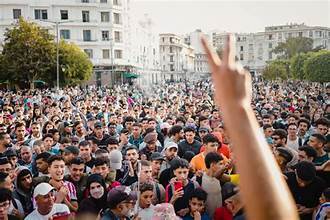
This perception was reinforced by the extensive participation of young people in the waves of protest that swept Iran before the U.S.-Israeli war against the country. Thousands of Iranians took to the streets to protest the collapse of the currency and rising prices, before slogans moved beyond economic grievances to explicitly political demands such as “Death to the dictator.”
Yet the growing visibility of this generation does not necessarily mean that it possesses the capacity to produce political transformation in the conventional sense.
So far, Generation Z still lacks a comprehensive political project or an organizational structure capable of converting widespread discontent and protest momentum into a clearly defined institutional alternative.
Moreover, it confronts a state that retains a considerable degree of security and ideological cohesion and possesses effective mechanisms for control, coercion, and the reproduction of political authority.
External calls for regime change also failed to generate a meaningful mass response within Iranian society. This included statements by Donald Trump suggesting that Iranians might use the war as an opportunity to change the regime.
This reaction can be understood in light of a crucial historical factor: the nature of Iranian political consciousness toward foreign intervention.
Iran’s enduring sensitivity to Western support for domestic protest movements cannot be understood without considering the legacy of the 1953 coup against Iranian Prime Minister Mohammad Mossadegh, an event that remains a defining moment in modern Iranian political memory.
Within Iran’s collective consciousness, the coup is not regarded merely as an intelligence operation backed by the U.S. Central Intelligence Agency to overthrow an elected government. It is remembered as a foundational moment that entrenched the belief that Western powers are prepared to intervene directly whenever Iranian interests conflict with their geopolitical calculations.[10]
The Iranian regime has consistently succeeded in invoking this historical legacy to frame domestic unrest through the language of foreign intervention and “soft war.”
Consequently, when Tehran accuses the United States or Israel of attempting to exploit domestic protests to weaken the state, the narrative draws on a historical precedent that gives it a degree of credibility even among some groups opposed to the regime.
Against this backdrop, Generation Z’s reluctance to participate in a project aimed at overthrowing the regime during wartime can be better understood, despite its profound disagreements with the authorities.
A significant segment of this generation distinguishes between opposing the government domestically and appearing aligned with foreign pressure or intervention during an armed conflict.
The critical attitude of young Iranians toward the regime does not necessarily imply a willingness to embrace externally driven narratives of political change, particularly given the powerful role of national sovereignty and historical suspicion of Western intentions in modern Iranian political consciousness.
The position of a broad segment of Iranian youth therefore proved considerably more complex than Western assumptions that external military pressure would automatically trigger a domestic uprising.
For many, war is not perceived as an ideal opportunity for political change but as a moment of national danger that could produce chaos or reproduce patterns of foreign intervention that have left deep historical scars.
During the war, therefore, Generation Z repositioned itself within a broader national framework and pragmatically reordered its priorities.
This repositioning does not necessarily reflect loyalty to the regime. Rather, it expresses a conscious distinction between legitimate domestic opposition and participation in an external conflict shaped by geopolitical calculations that do not necessarily serve the generation’s immediate interests.
It is therefore difficult to reduce Iranian Generation Z to a simple binary of opposition versus loyalty.
This generation demonstrates the capacity to combine opposition to the regime, on the one hand, with participation in a broader national moment when the country faces an external threat, on the other.
War, with all the destruction and instability it entails, has revived memories of the experiences of other countries in the region.
Field reports indicated that Iranians, including young people, were divided between fear of war and a desire for change, alongside widespread recognition that chaos could prove worse than the existing situation.
The question circulating among members of this generation was no longer simply:
“How do we bring down the regime?”
Rather:
“What would be the cost of its collapse under conditions of foreign intervention?”
The importance of this generation lies in its capacity to reshape collective consciousness and patterns of social thought and behavior, gradually redefining the relationship between the individual and the state and introducing new conceptions of identity, authority, and belonging into contemporary Iranian society.
Iranian Generation Z therefore does not display political apathy so much as a capacity to reorder its priorities in moments of danger, shifting from a logic of protest toward one of social cohesion.
This transformation helps explain why the war did not become an immediate opportunity to overthrow the regime despite the accumulated momentum of previous waves of popular anger.[11]
During the war, digital spaces emerged among Generation Z as a practical alternative to the restricted physical public sphere.
Platforms such as Discord and WhatsApp became tools for reproducing social solidarity, exchanging information, and providing psychological support during bombardment and service disruptions.
Generation Z also used various means to demonstrate its rejection of the war.
One particularly significant example was a letter addressed to UN Secretary-General António Guterres and UN Assistant Secretary-General for Youth Affairs Felipe Paullier, signed by more than 100,000 members of Iran’s Generation Z at the height of the military escalation.
The letter carried notable political and social significance. Youth discourse redirected its focus outward, emphasizing the humanitarian costs of the attacks — from thousands of casualties, including hundreds of children, to the destruction of schools and infrastructure — while drawing on the concepts of international humanitarian law and children’s rights in addressing the international community.
During this period, domestic divisions temporarily receded in favor of a collective sense of danger.
Iranian Generation Z also demonstrated a remarkable ability to use its expanding technological capabilities and digital spaces as instruments for producing meaning and reshaping political narratives, rather than merely as tools for communication or cultural consumption.
Deeply embedded in the global digital sphere, this generation did not engage with Western culture simply as a reflection of technological and communicative openness. Instead, it repurposed Western cultural symbols and expressive tools within local political contexts to advance its own interpretation of the conflict.
This was particularly evident in the extensive use of digital satire and memes, which became effective instruments for communicating targeted political messages not only to domestic audiences but also to American and Western publics, with the aim of presenting an alternative narrative to the dominant U.S. discourse surrounding the war.
In this sense, memes and digital satire became part of the “soft power” deployed by this generation in the digital sphere.
The content did not merely use the English language; it also absorbed the vocabulary of American culture, its discursive patterns, and its forms of humor and satire. This gave such material considerable capacity to circulate and exert influence across multiple platforms, generating millions of views and interactions.[12]
Although the extent of its actual political impact remains unclear, this phenomenon takes on particular significance in the context of indirect confrontation with the United States, where the digital sphere itself becomes an arena for producing and directing meaning.
Audiences often turn away from the harsh realities of war toward content that simplifies events in a language and format they can understand. This is precisely what the “Lego videos” created by these young Iranians sought to accomplish: they made the conflict easier to understand from an Iranian perspective while simultaneously tapping into currents of dissatisfaction within the United States.[13]
One of the most widely circulated narratives linked Trump and Netanyahu to the Epstein case, suggesting that the war was intended to divert public attention from the controversy.
Because similar claims were already circulating within some segments of U.S. public discourse, the content found a receptive audience.
As The Guardian put it, if Iran could manufacture devastating missiles as quickly as it produces satirical memes, U.S. Central Command might already be raising the white flag.[14]
Conclusion
Iran’s Generation Z differs from previous generations because it has been shaped by a radically different social and digital environment.
It is a generation that grew up in a more connected and open world, where traditional ideological discourse has become less effective in the face of values centered on individualism and freedom.
The COVID-19 pandemic further accelerated this transformation by pushing broad segments of young people more deeply into digital spaces, expanding their awareness of the world and fostering a critical consciousness less constrained by the state’s traditional boundaries.
Yet this transformation did not evolve into a revolutionary project seeking to overthrow the regime at the first moment of external disruption, including during wartime.
Iranian Generation Z does not operate according to the logic of traditional revolutionary generations. Its approach is more pragmatic.
It views war primarily as a threat to social stability, everyday life, and economic security rather than as an immediate political opportunity for regime change.
As a result, this generation has tended to adapt while maintaining a critical distance from the authorities rather than engaging in an all-out confrontation that could open the door to broader chaos or foreign intervention.
The distinctiveness of this generation therefore lies in the fact that it does not challenge the regime by exploiting external opportunities. Instead, it is gradually redefining the relationship between the state, society, and national identity over the long term.
The real challenge it poses to the Iranian regime is therefore not the immediate danger of overthrow.
Rather, it lies in Generation Z’s cumulative capacity to transform social and political consciousness in ways that may, over time, render the state’s traditional instruments of control increasingly ineffective.
References
[1] Chen Li, Iran’s Gen Z and the Beginning of De-Islamization, modern diplomacy, January 24, 2026: https://moderndiplomacy.eu/2026/01/24/irans-gen-z-and-the-beginning-of-de-islamization/
[2] Arash Aalaei, Iranian Counterculture and Gen Z, washingtoninstitute, 4 Jan 2023: https://www.washingtoninstitute.org/policy-analysis/iranian-counterculture-and-gen-z
[3] Alireza Azeri Matin, IRANIAN YOUTH’S IDENTITY POLITICS: COSMOPOLITAN ASPIRATIONS, SELF-REPROACH AND LIVED EXPERIENCES OF BELONGINGNESS TO THE NATION, International Journal of Humanity, August 2022:
[4] هدية كيميائي، نسل زد، نمادهای ملی را سلاح مبارزه با جمهوری اسلامی کرده است، ایراناینترنشنال:
https://www.iranintl.com/fa/202601071678
[5] Tom Walsh, TikTok as a site of social protest in Iran’s Gen-Z uprising, sage journals, March 18, 2024: https://journals.sagepub.com/doi/10.1177/09579265241234351
[6] Ibid.
[7] Bih Ni Lee, Youth Movements and Political Transformation in Iran: Will 2026 Be a Turning Point?, Faculty of Education and Sports Studies Universiti Malaysia Sabah, January 2026:
[8] كامبيز حسيني، إيران في مفترق طرق.. النظام يسعى للبقاء والمجتمع يرغب في التجدد، إيران إنترناشيونال، 9 أكتوبر 2025:
https://www.iranintl.com/ar/202510091500
[9] Bih Ni Lee, op. cit.
[10] HERB KEINON, As Iranians rise up against Islamic regime, US and Israel navigate between solidarity and sabotage, 2 JANUARY 2026: https://www.jpost.com/middle-east/iran-news/article-882064
[11] Chisom Okorafor, The Iran War Is a Disaster for Young People, 24 March 2026: https://ips-dc.org/the-iran-war-is-a-disaster-for-young-people/?utm_source=chatgpt.com
[12] SAM McNEIL, Pro-Iran groups have used AI to troll Trump and try to control the war narrative, AP news, 9 April 2026: https://apnews.com/article/ai-meme-war-iran-trump-6622aa77b833cbd470b53ed7d43be9bd
[13] The Pro-Iran Meme Machine Trolling Trump With AI Lego Cartoons, wired, 9 April 2026: https://shorturl.at/DLD4e
[14] Patrick Wintour, Viral victory: Iran is beating the land of tech bros in the social media wars, the guardian, 15 April 2026: https://www.theguardian.com/world/2026/apr/15/iran-beating-us-social-media-wars?utm_source=chatgpt.com
Most read


Read also