Intelligence Penetration: A Case Study of the Syrian Intelligence Archives

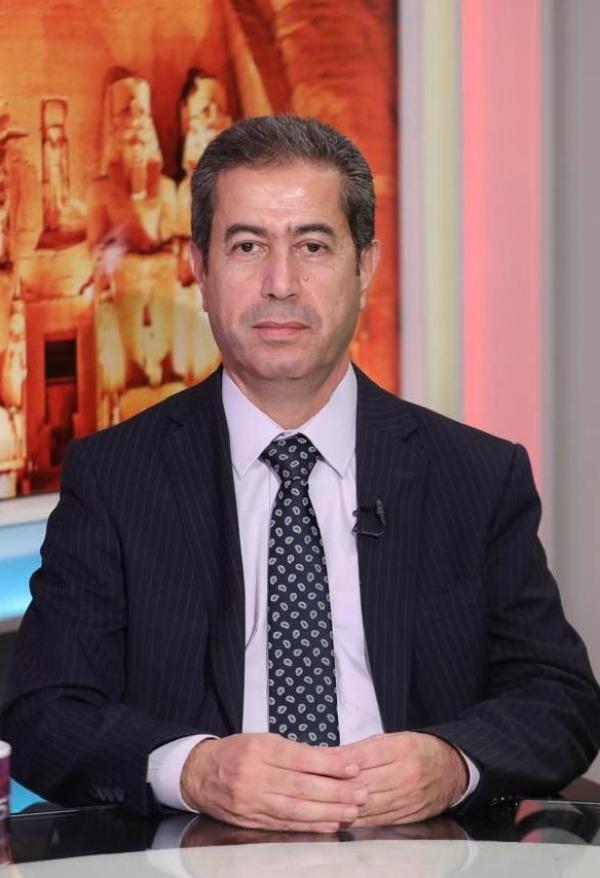
Dr: Theeb Qaralleh
The results of the Israeli–Iranian war—especially during its early days—captured the attention of states, intelligence agencies, peoples, and individuals alike, all eager to understand the scale, nature, and tools of what appeared to be an unprecedented Israeli intelligence penetration of the Iranian arena—an infiltration that came as a major shock to all parties.
Weeks before the exchange of strikes between Tehran and Tel Aviv, both sides had announced what they described as “intelligence achievements,” while other countries may have quietly accomplished major intelligence penetrations on the Syrian front. In a demonstrative manner, Israel declared that it had recovered—through a complex secret operation in cooperation with an allied intelligence service—the archive of its famous spy Eli Cohen. Iran, in turn, announced that it had obtained a “precious intelligence treasure” containing Israel’s hidden secrets through a large-scale covert operation.
Anyone familiar with the basic principles of intelligence work understands that acquiring such “intelligence treasures” requires strict secrecy rather than public disclosure, and that “secrets” lose their strategic value once the opposing side becomes aware of them. The adversary will immediately begin changing its plans, methods, sources, and target banks, eventually identifying the vulnerability through which it was penetrated.
Therefore, it can be confidently concluded that the Israeli and Iranian announcements were far removed from any genuinely professional intelligence operations with lasting strategic impact. Rather, they fall within the realm of psychological warfare and media propaganda, aimed at achieving two primary objectives: boosting domestic morale and sending threatening messages to other parties regarding their intelligence capabilities and the potential use of obtained information when necessary.
Notably, Arab media outlets treated both announcements as established facts, repeating their content dozens of times without subjecting them to analysis, investigation, interpretation, or inference. This reinforces the notion that the Arab reader and viewer has increasingly become a passive recipient—highly impressionable yet weak in analytical engagement—making it easier to shape perceptions, beliefs, and ultimately reactions.
Only hours after the ceasefire between Tel Aviv and Tehran was announced, Israeli sources confirmed that cyber and intelligence warfare against Iran would continue, asserting that such actions do not constitute a violation of the ceasefire. Meanwhile, it was reported that Iran immediately began—reportedly with Chinese assistance—establishing a new security agency whose primary mission is to combat Israeli intelligence infiltration of the Iranian arena. It is rumored that approximately 700 Iranian citizens, along with a similar number of foreigners, are currently involved in activities serving Israel’s Mossad.
The scale of Israeli infiltration into Iran should sound alarm bells across Arab capitals, which may one day discover that they were “asleep in honey” while Israel quietly worked to undermine their internal structures.
Accordingly, an immediate and comprehensive review by all Arab states—without exception—of their military strategies, security structures, and institutional fortifications is an urgent and unavoidable necessity, based on the assumption that some form of infiltration already exists.
It should not be ruled out that, following the end of the first round of conflict with Iran, Israel may engage in political or security provocations against one Arab state or another at any time and under any pretext, whenever such actions serve its interests, agendas, and expansionist projects.
In this context, a critical question arises regarding the Syrian intelligence archives after the fall of Bashar al-Assad’s regime: Who now possesses them? Are they in the hands of the new authorities in Damascus, or have they been transferred to third parties—and if so, to whom? What impact might they have in the coming phase, given their extreme strategic sensitivity, particularly if their contents are used as tools of threat, blackmail, and regional or international bargaining?
The danger of controlling this archive lies in the ability of its holder to expose the former regime’s covert relationships and dealings, both domestically and internationally, thereby enabling the blackmail of regional and global actors.
Logically, the cumulative archive—spanning more than fifty-five years—likely contains sensitive information on secret security cooperation between the Syrian regime and Arab and Western states, as well as armed movements and terrorist organizations.
Undoubtedly, whoever possesses the Syrian intelligence archive—whether obtained through political bargaining, logistical support, or outright purchase—can leverage it to negotiate with other states and position themselves as a key player in Syria’s future.
The strategic motivations driving certain states to seek possession of such an archive include self-protection, fearing it may contain sensitive files documenting previous communications with the Syrian regime or armed groups. Regionally, holding such documents enables the blackmail of rivals and the imposition of bargaining power in Syria’s political settlement and struggle for influence. Internationally, transferring copies or parts of the archive to Western intelligence agencies (such as those of the United States, Britain, or Germany) could elevate the holder to the status of a key security partner and influential sponsor in shaping Syria’s future.
It is highly likely that one of these states—Turkey, Qatar, Russia, or Iran—has obtained a copy of the Syrian intelligence archive through its close relationship with the former regime or with Hay’at Tahrir al-Sham following its control of Damascus, either directly or via an affiliated intermediary.
As for the possibility that the former Syrian regime destroyed its security archives prior to its collapse, experiences of fallen states—such as Iraq, Libya, East Germany, and Romania—suggest that the complete and rapid destruction of such vast archives is highly unlikely and logistically impractical amid the chaos of collapse.
Smuggling the archive abroad (to Iran or Russia) before the fall remains plausible, as such a move would constitute a means of protection and future negotiation for the regime. However, it is almost certain that influential figures within the former regime retained copies for personal survival or future bargaining.
The most realistic scenario in Syria suggests that parts of the archive fell into the hands of armed factions such as Hay’at Tahrir al-Sham, the Syrian National Army, or the Southern Front, while other portions were looted by local groups that may sell—or have already sold—segments of it. Some materials will likely be leaked for personal or political blackmail.
Accordingly, it is not unlikely that in the coming period—after files are sorted, classified, decoded, and exploitation methods assessed—we will witness orchestrated leaks through foreign media outlets revealing information that implicates or embarrasses certain states, damages diplomatic relations, or exposes Syrian opposition groups, with the aim of settling scores or achieving political gains.
Most read