How Israel Has Redefined the Rules of Conflict with Hezbollah

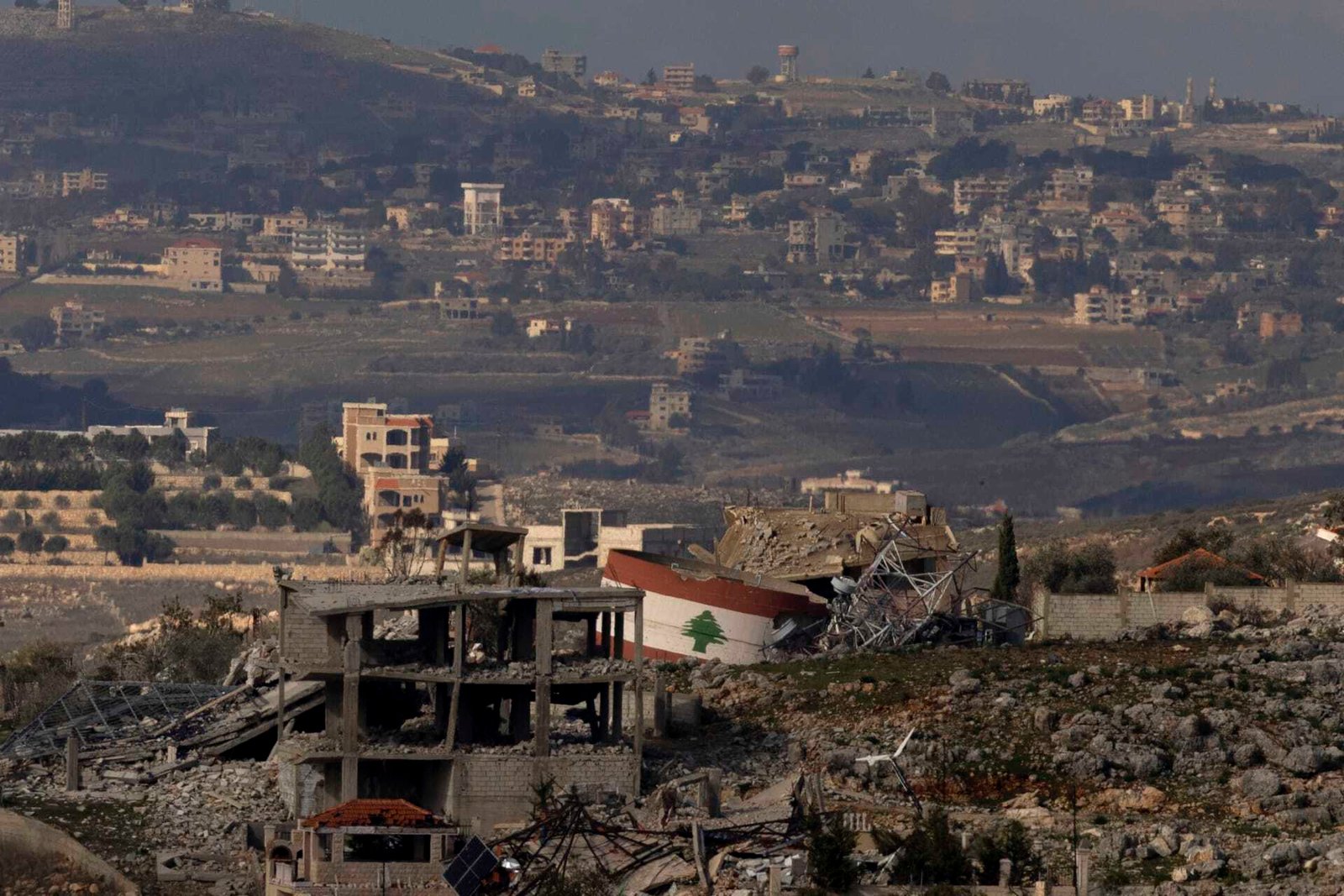
The latest war between Israel and Hezbollah was not merely another round in the long-running conflict along the Lebanese-Israeli border, nor simply a confrontation distinguished by a different intensity of fire or a new generation of weapons. More importantly, it revealed a deeper transformation involving the rules through which the war itself is managed.
The front that had remained, since the July 2006 war, largely governed by an informal system of mutual deterrence, calibrated responses, and a shared interest in avoiding full-scale war now appears to be facing a fundamentally different model. The central question is no longer simply: What will the other side do if we attack it? Increasingly, it has become: Can the other side be prevented from acquiring the ability to attack in the first place?
This is where the significance of the transformation lies.
Whereas the post-2006 equation was based on deterrence through punishment—making the cost of war sufficiently high to prevent it—the emerging equation increasingly appears to be based on deterrence through denial: destroying or disrupting the capabilities that could generate a threat before they are actually used.
Israel, therefore, has not merely changed the rules of engagement. It is attempting to change the logic of the conflict itself: from a confrontation governed by mutually recognized limits on the use of force to one in which the stronger party seeks to impose the tempo of the confrontation on its opponent through informational and technological superiority.
I. The 2006 Rules Were Not Peace—They Were a System for Managing War
To understand the current transformation, one must first examine the nature of the system that emerged after the 2006 war.
The tacit understandings were not a peace agreement, nor did they end the conflict between Israel and Hezbollah. Instead, they created a form of asymmetric deterrence equilibrium.
Both sides understood that a full-scale war would be costly, even though the nature of those costs differed substantially.
Israel possessed overwhelming advantages in airpower, intelligence, and technology, while Hezbollah possessed missile capabilities and a system of deployment that enabled it to inflict damage on the Israeli home front. As a result, equations such as “Beirut versus Tel Aviv” and “the Dahiya versus Haifa” emerged.
These equations did not mean that the two sides were equal in military strength. Rather, they meant something more complicated: military superiority does not necessarily translate into the ability to achieve a political victory at an acceptable cost.
That is a crucial distinction.
Deterrence does not require parity in power. It requires the weaker side to possess the ability to make the stronger side's use of force politically, militarily, or economically costly enough that it would prefer not to bear those costs.
This was why the southern front could remain for years in a condition that might be described as “neither war nor peace”: an ongoing conflict, but one operating within a defined ceiling.
UNIFIL, military liaison channels, and international mediation—particularly American mediation—were part of the structure that helped keep that ceiling in place.
Yet this system rested on a fundamental assumption: both sides were more interested in avoiding full-scale war than in forcibly changing the rules of the game.
That assumption is what began to collapse.
II. October 7 Was Not Merely an Israeli-Palestinian Event
One of the most important consequences of the regional war that followed October 7, 2023, was the effective erosion of the separation between different fronts.
The Lebanese front no longer operated solely according to the logic of the Lebanese-Israeli border. It increasingly became part of a broader regional conflict environment.
This transformation helps explain the erosion of the post-2006 rules.
Deterrence can function relatively effectively in a bilateral conflict. It becomes considerably more fragile when the conflict turns into a network of interconnected fronts, in which an operation in Gaza can trigger a response in Lebanon, an attack in Lebanon can send a message to Iran, or an Israeli operation in Syria can alter calculations on the Lebanese front.
In other words, geography is no longer the true boundary of the conflict.
Israel increasingly views Hezbollah's military capabilities not simply as a local defensive force, but as part of a regional network that could be activated at a time chosen by Tehran or its allies.
This makes preventing the accumulation of military capability more important than waiting for that capability to be used.
That is precisely the shift from deterrence through punishment to deterrence through denial.
III. The Real Revolution Is Not in the Missile—It Is in the Information
One of the most important conclusions that can be drawn from the report is that the deeper military transformation is not simply the increased use of drones or precision strikes. It is the shift of the center of gravity from firepower to operational knowledge.
In conventional warfare, possession of firepower is a decisive factor.
In the emerging model of warfare, however, the question that precedes the use of force is:
Who sees first? Who identifies the target first? And who can make the decision and execute the strike before the target disappears or becomes a threat?
This is where intelligence itself becomes a weapon.
A drone does not win a war on its own. A precision missile cannot achieve its effect without information about its target. Airpower becomes an instrument of control only when it is connected to an intelligence, surveillance, communications, and decision-making system capable of transforming information into rapid action.
For this reason, “informational balance” may be a more accurate concept than simply describing the situation as a shift in the balance of military power.
The side that possesses a greater ability to see, identify, and strike can determine the tempo of the war even without occupying territory.
This is precisely where the concept of “control through firepower” becomes significant.
IV. Israel Is Trying to Move from Responding to Threats to Creating an Environment Without Threats
The most consequential new rule is preemptive action.
Under traditional deterrence, a state waits for a threat to materialize and then responds.
Under deterrence through denial, however, merely possessing a future capability to inflict damage can become grounds for targeting that capability.
This fundamentally alters the equation.
The conflict is no longer concerned solely with what Hezbollah has done, but with what it might do in the future.
Consequently, rebuilding military capabilities itself becomes a target.
This creates a serious political dilemma: the more successful Israel becomes at preventing Hezbollah from rebuilding its military capabilities, the more likely it is to broaden its definition of the threat to include not only existing weapons, but also the infrastructure capable of producing weapons in the future.
This creates a logic of open-ended warfare.
As long as a potential threat can justify a strike, and as long as rebuilding military capacity can be defined as a potential threat, a ceasefire does not necessarily mean the end of military operations.
This helps explain the transformation in the meaning of a ceasefire described in the report: from an actual cessation of military operations into a political framework under which some degree of military activity may continue.
V. The Problem with the New Equation Is That It May Produce a War Without an End
Here lies the central paradox.
A strategy of preemptive strikes may appear more efficient than fighting a full-scale war. It allows Israel to destroy specific targets, reduce the opponent's capabilities, and avoid prolonged ground occupation.
But its tactical success may contain a strategic problem.
If the objective is to prevent the opponent from rebuilding its military capabilities, then this requires sustained surveillance and repeated strikes over an extended period.
In other words, success in preventing full-scale war may turn into a permanent system of limited warfare.
This creates a new model that might be described as “continuous low-threshold warfare.”
There is neither full-scale war in the traditional sense nor genuine peace, but rather an ongoing sequence of strikes, retaliatory actions, assassinations, surveillance, and covert operations.
This makes the political question more important than the military one:
How long can Israel sustain such a model without generating the very incentives for escalation that it seeks to prevent?
VI. The Decline of Deterrence Does Not Necessarily Mean the Collapse of Hezbollah
It would be easy to interpret the current transformation as simply a transition from Hezbollah's strength to Hezbollah's weakness.
That conclusion, however, would be premature.
The report itself describes a transformation in Hezbollah's concept of deterrence—from immediate deterrence to delayed attritional deterrence.
This means that, under conditions of a direct imbalance of power, Hezbollah may neither be capable of nor interested in responding in the way it did after 2006.
Instead, it may seek to change the nature of the conflict itself.
Rather than preventing Israel from carrying out a strike, its objective may become raising the cost of continued Israeli operations.
The question therefore shifts from “Can Hezbollah prevent Israel from acting?” to:
Can Hezbollah make Israel's freedom of action costly enough to become politically unsustainable?
This is the essence of attritional deterrence.
The weaker side does not necessarily seek to prevent every strike. Instead, it may place its wager on time.
VII. The Most Dangerous Political Transformation Is the Shift from Mutually Accepted Rules to Rules Imposed by One Side
In the post-2006 period, the rules of engagement were largely the product of implicit interaction between the two sides.
In the emerging phase, Israel is attempting to make the rules of engagement a unilateral decision.
This is a politically significant difference.
Rules imposed by one side are not necessarily stable, because they derive their authority not from the acceptance of the other side but from the ability to enforce them.
Their continuation therefore depends on the persistence of the power imbalance that produced them.
This is also their fundamental vulnerability.
If the balance of power changes, if Hezbollah succeeds in rebuilding its capabilities, or if new regional factors emerge, the imposed rules may themselves be tested.
Thus, operational dominance does not necessarily equal strategic dominance.
Israel may be able to determine when and where it strikes, but it cannot necessarily determine how the opponent will respond, nor how the political and social environment generating the conflict will evolve.
VIII. What Happened to the “Beirut for Tel Aviv” Equation?
The erosion of this equation can be regarded as one of the clearest indicators that an entire phase of the conflict has ended.
The old equation rested on a simple premise: if Beirut were destroyed, the Israeli home front would not be immune from retaliation.
But when Israel becomes capable of conducting repeated, precise operations against specific military infrastructure without necessarily triggering an immediate full-scale war, the value of the threat of broad retaliation declines.
This creates a fundamental problem for deterrence:
If the opponent no longer fears using force because the inevitable consequence is no longer full-scale war, then the deterrent threat loses part of its effectiveness.
This does not mean that deterrence has disappeared.
Rather, it may have changed its location.
Instead of deterrence being based on preventing the first strike, it increasingly becomes a matter of preventing the other side from converting tactical superiority into a lasting strategic victory.
IX. Lebanon Faces the Dilemma of a State on Whose Territory the War Is Being Fought
There is a political dimension that tends to be overlooked in purely military analyses of the rules of engagement: the position of the Lebanese state.
The more Lebanon's territory becomes an open operational arena, the less the question concerns only Israel and Hezbollah. It increasingly concerns who possesses the authority to decide war and peace in Lebanon.
The continuation of Israeli strikes on the grounds of preventing the reconstruction of military capabilities places the Lebanese state before an extremely difficult dilemma.
If it cannot prevent the use of its territory for military purposes, its sovereignty becomes questionable.
If it attempts to impose the state's monopoly over weapons by force, it risks entering a highly sensitive internal conflict.
And if it accepts the status quo, it faces an environment in which a ceasefire alone may not be sufficient to restore full sovereignty.
Thus, the rewriting of the rules of engagement between Israel and Hezbollah is not merely a military issue. It directly concerns the very concept of the Lebanese state.
X. From “Ending the War” to “Managing the Conflict”
Perhaps this is the deepest political transformation.
After 2006, the implicit objective was to prevent another war.
The emerging model, by contrast, appears closer to managing the conflict rather than ending it.
That is a major distinction.
Conflict management means accepting continued tension while keeping it within levels that can be controlled.
It is based on the assumption that full-scale war is undesirable, but comprehensive peace is unavailable.
Limited strikes, assassinations, surveillance, localized responses, mediation, and threats therefore become instruments for managing the level of violence.
The report clearly describes this shift from broad strategic responses to limited tactical responses and rapid containment of escalation.
Yet this model carries a permanent danger:
Every operation intended to contain escalation can, under certain circumstances, become a cause of escalation.
An assassination can trigger retaliation; retaliation can trigger a counterstrike; the counterstrike can create domestic pressure for another response. Thus, a strategy of “escalation management” can evolve into a chain of incremental escalations that ultimately crosses the very threshold that all sides sought to avoid.
Conclusion: Israel Has Won the Initiative—but Who Will Win the Test of Time?
The transformation on the Lebanese-Israeli front can be summarized as a shift from a balance of deterrence to an imbalance of initiative.
In the post-2006 period, both sides were largely constrained by fear of the costs of war.
In the emerging phase, Israel appears better able to determine the timing, location, and objectives of strikes, drawing on intelligence and technological superiority to impose the operational tempo.
But this does not mean that Israel has achieved a strategic resolution of the conflict.
Military initiative is not the same as political victory. Technological superiority does not eliminate the opponent's ability to adapt. And the ability to destroy existing capabilities does not guarantee the ability to prevent the conflict from reproducing those capabilities.
Indeed, the central paradox is that a strategy designed to prevent threats may require continuous warfare in order to succeed.
The key question for the next phase is therefore not simply:
Who is militarily stronger?
The answer to that question appears increasingly clear.
The more important question is:
Can Israel transform its military and intelligence superiority into a stable deterrence system, or will its reliance on preemptive strikes produce a permanent cycle in which capabilities are rebuilt and then destroyed again?
If Israel succeeds in sustaining this equation for an extended period, the region may be entering a new model of conflict: neither full-scale war nor peace, but Israeli firepower dominance confronted by Lebanese attritional deterrence.
If, however, Hezbollah succeeds in rebuilding its ability to threaten the Israeli home front or develops means of reducing Israel's intelligence advantage, the new rules of the game may themselves begin to erode.
The Lebanese front is therefore not merely entering a new phase of conflict. It is becoming a test of an entire theory of modern warfare:
Can security be achieved by preventing an adversary from possessing the capacity to wage war, or does the continuous effort to deny that capacity reproduce war indefinitely?
That is the paradox that will shape the future rules of engagement between Israel and Hezbollah.
Israel may now possess greater ability to control the beginning of each round, but not necessarily its ending; Hezbollah may be less capable of preventing the strike, but it may still retain the ability to influence the cost of continuing it.
The conflict has therefore moved from the equation of “Who can hurt the other more?” to a more complex strategic question:
“Who can impose the tempo of the conflict—and who can endure the longer war of time?”
Most read


Read also