How Have the World’s Writers and Philosophers Viewed Their Libraries?

Throughout history, from the earliest ages to the present day, the books and works to which writers and creative thinkers have devoted their intellects, distilled insights, and personal struggles have always been celebrated by millions of readers. These readers have regarded them as sources of knowledge, guides toward the right path, and lights capable of leading them out of the tunnel of ignorance.
Abu Uthman al-Jahiz may well have been one of the literary figures who most passionately celebrated the book and extolled its virtues. In Al-Bayan wa al-Tabyin (The Book of Eloquence and Demonstration), he described the book as “the companion who does not flatter you, the friend who does not tempt you, the companion who never tires of you, and the neighbor who never grows impatient with you.” Perhaps al-Jahiz’s description of the book found its later echo in al-Mutanabbi’s famous verse: “The noblest place in the world is the saddle of a swift horse, and the finest companion among mankind is a book.”
What is striking is that, in the modern era, libraries are no longer limited to being carriers and instruments of knowledge. They have themselves become subjects of literary reflection, sources of inspiration, and objects of celebration among writers and authors, who have never ceased praising reading and encouraging the acquisition of books, going so far as to document how they established their own home libraries.
Since the number of works devoted to this subject is too great to enumerate, it is sufficient to mention among them Alfred Hessel’s The History of Libraries, Lionel Casson’s Libraries in the Ancient World, and Henry Miller’s The Books in My Life.
If the Argentine writer and thinker Jorge Luis Borges, who became blind at an early age, imagined paradise as a vast and infinite library, his passion for books was passed on to his assistant Alberto Manguel, who for several years read various works aloud to him, before going on to write several books of his own about the rituals of reading and writing and the aesthetics of books and libraries. Among his most notable works are The Library at Night, A History of Reading, The City of Words, and The Library Book.
The book I Fold the World into My Library, compiled and translated by the Egyptian writer Ahmed al-Zanati, may be regarded as one of the notable publications that chronicles, in an engaging style combining usefulness and pleasure, the intimate—and sometimes ambiguous—relationship between writers and the books they acquire. It also explores their reading habits and the ways in which they established their libraries.
As it becomes clear that each of the writers examined by the author had a relationship with books and libraries different from that of the others, we cannot help but pause at length over Arthur Schopenhauer, who viewed the books he carefully collected not merely as instruments of knowledge, but as his ideal means of escaping from human hypocrisy and pretense.
In a letter he sent to a friend after deciding to travel far from his birthplace, the author of The World as Will and Representation wrote: “The hardest thing for me to leave behind is my public and private library. Without the serenity of books, I would have surrendered to despair over this life long ago.”
Schopenhauer’s praise of books was not confined to a single occasion or particular text. At the beginning of the manuscript of his autobiography, he wrote: “Since my contemporaries among my own people were unable to relieve my loneliness, I chose instead the company of those who resemble me, those whom death has already taken, and who wandered through the world as I do. Here, their lifeless letters inspire in me an affection more genuine than the companionship of the living, and pour upon me a serenity deeper than the peace of those endowed with souls.”
Although Schopenhauer’s description of the book as a comforting companion has something in common with Abu Uthman al-Jahiz, the difference between the two is nevertheless immense. Al-Jahiz was a sociable being, inclined toward optimism and wit, and possessed a positive outlook on the world, whereas Schopenhauer was the complete opposite of all these qualities.
Another important observation that the author does not overlook is that Schopenhauer was not entirely impartial in choosing the books he acquired. His choices were influenced by his personal temperament, and not solely by purely literary or creative criteria.
While his admiration for his fellow German Johann Wolfgang von Goethe led him to acquire all of Goethe’s works in various editions, as well as the works of Lessing, Immanuel Kant, and Heinrich Heine, he completely ignored the works of major writers such as Ludwig Tieck and Heinrich von Kleist, as well as Friedrich Hölderlin, whom Martin Heidegger regarded as the practical embodiment of the ontology of Being.
Yet Schopenhauer’s excessive praise of books and libraries did not prevent him from warning against excessive reading. He believed that the mind could become suffocated by too much reading just as the stomach becomes overwhelmed by too much food.
In his view, some of those who had drowned in a flood of books had become slaves to what other people’s lines dictated to them, their minds weighed down by the ideas of others.
The British writer Henry Wheatley, meanwhile, emphasized the importance of selectivity in building libraries and avoiding the random accumulation of their contents. At the same time, he noted that the library of the German Emperor Marcus Severus consisted of only four volumes containing the works of Plato, Pliny, Plutarch, and Ptolemy.
Wheatley considered selectivity the most important secret in creating a library, arguing that the ideal library reflects the mind and spirit of its owner only through his inclination toward careful selection.
The German critic Walter Benjamin, by contrast, defended the principle of excessive book collecting, even when it was motivated purely by pleasure or undertaken in anticipation of some future intellectual need.
While emphasizing the distinction between collecting books for the sake of showing them off and collecting them for the purpose of acquiring knowledge, the Canadian writer Robertson Davies openly admitted that he had been unable to resist the temptation of books, acquiring both those he needed and those he did not, without any intention of stopping the enormous stream of books that continued to flow into his library.
To support his argument with examples, Robertson recounted the French writer Anatole France’s response when someone asked him whether he had read all the books in his library: “Not even a tenth of them, sir. I don’t suppose you use your best china every day.”
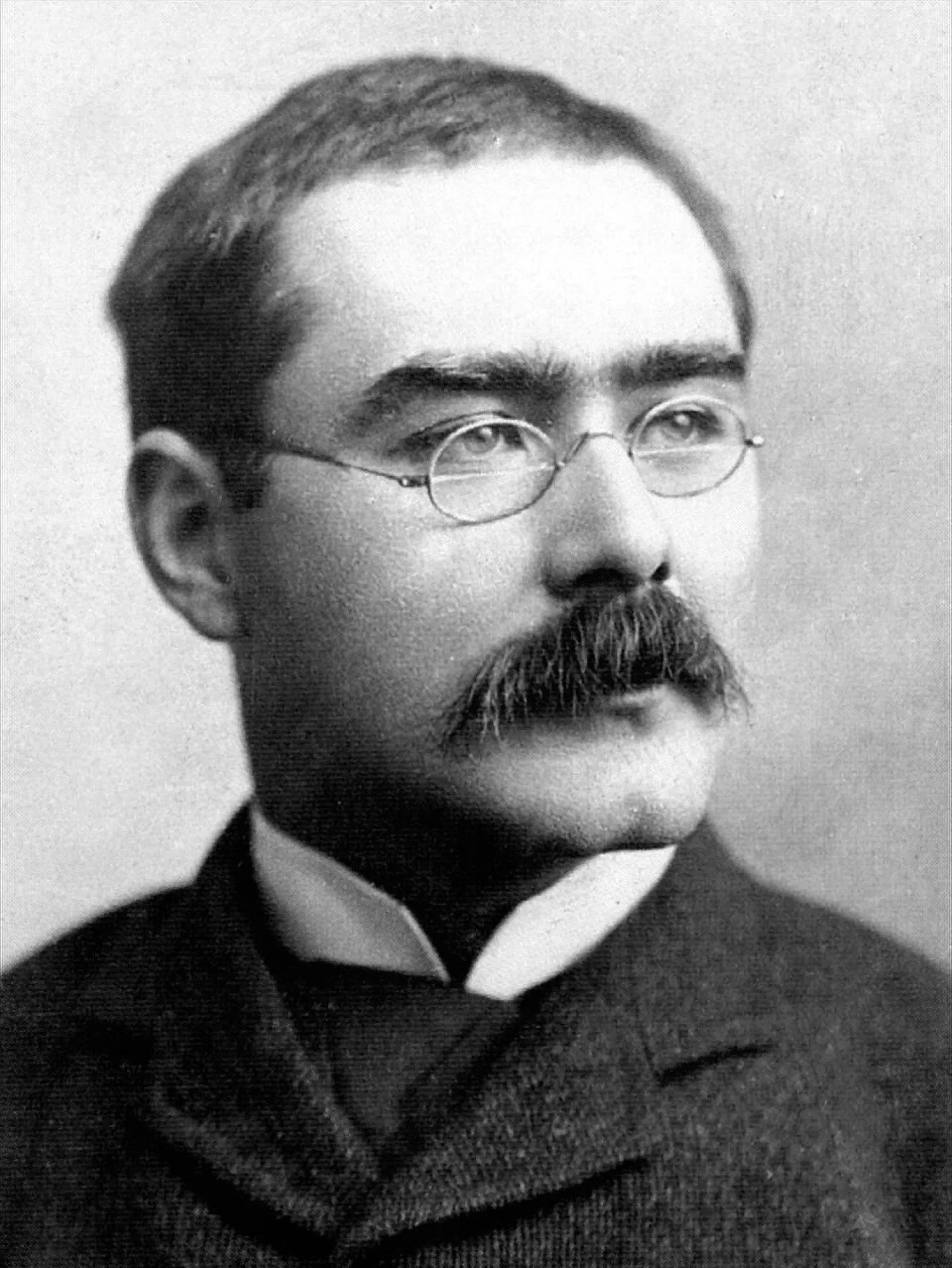
By contrast, the British writer Rudyard Kipling emphasized that reading in itself is not conclusive evidence of the moral virtue or corruption of the reader. Rather, everything depends on the wisdom of his choice of books.
If a person approaches reading with an alert intellect and a lively mind, he may, within certain limits, become the heir of the great figures of the past and connected to them by an invisible bond.
For the perceptive man, in the view of the Nobel Prize-winning author, is the one who knows the finest models in the world of books, because those models alone enable him to understand the meaning of the world.
The German writer Hermann Hesse does not depart far from the perspective Schopenhauer established regarding reading. He believed that one should not race after reading as a degree-seeker races toward a professorship, or as a naive patient enters a pharmacy and, in search of an effective remedy, proceeds to swallow every medicine and drug it contains.
Indeed, we can hardly help but feel astonished at Hesse’s belief that people in his time read excessively and gave reading more attention than they ought to, or at his statement that excessive reading does not honor literature but rather does it harm.
Yet our astonishment quickly takes on a different character when we read the verses of the author of Siddhartha, in which he addresses the reader movingly:
All the books of the world will not bring you happiness,
but they will teach you the secret of returning to yourself.Your self is a vessel for everything you need;
your self is a vessel for the sun, the stars, and the moon.The light you seek dwells within your own breast,
and the wisdom you seek upon the shelves of libraries
radiates its light from within every page,
because it is your own light.
Source: Asharq Al-Awsat newspaper.
Most read