
Recent developments in the U.S.-Iran confrontation reveal a significant shift in Washington’s calculations—not merely in the tools of warfare it is employing, but in the very nature of the objective it seeks to achieve. After preventing Iran from acquiring a nuclear weapon appeared to be the central goal of the confrontation, the U.S. administration has begun to reorder its priorities, placing stable oil prices and protecting the American economy at the forefront, while retaining the nuclear issue as a secondary objective.
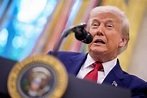
This shift acquired clear political significance when U.S. President Donald Trump reposted remarks by Treasury Secretary Scott Bessent, who spoke of economic measures against Iran that, in his description, would be unprecedented in the history of economic isolation of states. Trump’s decision to repost the remarks was more than a response to a media statement; it can be interpreted as a signal that the administration has embraced this course and given it political backing at the highest level.
Oil Before the Nuclear Issue
An even more revealing indication came from U.S. Vice President J.D. Vance, who said that Washington’s primary priority in the war had become keeping oil prices low for Americans, while preventing Iran from acquiring a nuclear weapon had become the second priority.
This ordering reveals an important change in U.S. calculations. The nuclear issue represents a long-term strategic threat, whereas rising oil prices impose a direct economic and political cost that American citizens can feel quickly. Higher energy prices can feed inflation, affect economic growth, influence elections, and shape public perceptions of the administration’s performance.
Accordingly, the Strait of Hormuz is no longer merely a military or geographical detail in the war. It has become the point where U.S. national security interests intersect with domestic economic priorities.
The Strait of Hormuz: From an Iranian Pressure Card to the Center of the Conflict
By closing the Strait of Hormuz, Tehran has succeeded in reshaping the agenda of the confrontation. Instead of allowing the war to remain confined to the traditional question of Iran’s nuclear program, the more urgent question has become: Who has the ability to control one of the world’s most strategically important energy corridors?
This is where the significance of the strait becomes apparent for both Iran and the United States.
For Tehran, Hormuz represents a pressure instrument that can be used to raise the cost of war for its adversaries and link any political or economic settlement to the reopening of the maritime passage.
For Washington, however, its continued closure threatens a domestic objective that has become increasingly urgent: keeping oil prices low. The battle over Hormuz, therefore, is no longer merely a naval confrontation; it has become a struggle over the American economy itself.
Why Has Washington Chosen the Economic Track?
With the diplomatic track appearing stalled and Washington and Tehran maintaining conflicting conditions for reopening the strait, the U.S. administration appears to be moving toward an alternative that does not necessarily require a military resolution to the war.
Instead of expanding military operations, Washington could seek to turn Iran’s economy into the primary battlefield.
This is what Bessent’s remarks about new measures to be announced suggest. Based on the information currently available, these measures appear to go beyond a conventional package of sanctions. The underlying concept is to combine pressure on Iran’s financial channels with continued pressure on trade and energy flows, effectively turning the economy into a comprehensive front in the conflict.
Success in such a strategy would not necessarily require the overthrow of the Iranian regime or its complete capitulation. A more realistic objective could be to raise the cost of continuing the confrontation to a level that forces Tehran to reconsider its calculations.
“Maximum Pressure” in a New Form
This approach appears to resemble a renewed version of the “maximum pressure” strategy, but with tools more closely adapted to the circumstances of the current war.
Traditional economic pressure relies primarily on sanctions, restricting access to the global financial system, and targeting oil exports. Under the current circumstances, however, these instruments could be integrated with maritime pressure and efforts to control trade and energy routes.
Washington would thus be operating through a three-dimensional formula:
Money + Trade + Energy = Strategic Pressure on Iran.
Yet this strategy also carries significant risks. If economic pressure leads to a collapse in the currency, a decline in exports, or disruptions to Iranian trade, Tehran could respond with further escalation rather than retreat—particularly if it concludes that Washington’s objective is to economically strangle Iran as a prelude to imposing broader political demands.
Can Washington Afford the Cost of Hormuz?
The fundamental paradox is that the U.S. strategy seeks to pressure Iran while simultaneously confronting the possibility that the continued closure of Hormuz could drive global oil prices higher. That would directly contradict the objective identified by Vance as the administration’s top priority.
This is where the limits of American power become apparent.
Washington can exert enormous pressure on Iran’s financial system, but it cannot ignore the global consequences of disruption to one of the world’s most important energy corridors. Any sharp increase in oil prices could translate into inflationary pressure inside the United States, undermining some of the gains the administration seeks to achieve domestically.
The real battle, therefore, may not be over Washington’s ability to economically punish Iran, but over its ability to impose economic costs on Iran without those costs ultimately being transferred to the American economy.
A Battle of Resolve, Not Merely a Battle of Sanctions
From this perspective, the current confrontation increasingly resembles a battle of resolve. Washington is betting that Iran’s economy is more fragile and has limited capacity to absorb prolonged shocks. Tehran, meanwhile, is betting that its geographical position and its ability to leverage the Strait of Hormuz give it the power to increase the cost of confrontation for the United States and its allies.
If Iran succeeds in keeping the strait closed or sufficiently disrupted, it will not be putting pressure only on Washington. It will also be putting pressure on global markets and on U.S. allies in Europe and Asia.
If, on the other hand, Washington succeeds in tightening the financial and commercial noose while keeping energy prices under control, it will have shifted the center of gravity of the war from the military sphere to the economic sphere—a domain in which the United States possesses enormous structural advantages.
Conclusion: Washington Is Looking for a Lower-Cost Exit
The latest statements suggest that the Trump administration is currently less inclined to expand the war militarily and more interested in achieving its objectives through economic pressure while containing the consequences of the Hormuz crisis.
This does not mean, however, that the war has become purely economic. Financial pressure cannot be separated from maritime pressure; the energy weapon cannot be separated from negotiations; and the U.S. economy itself has become part of the conflict equation.
The most important question in the next phase, therefore, will not simply be: Can Washington economically strangle Iran?
Rather, it will be: Can Washington use the economy as a weapon to compel Tehran to make concessions over Hormuz and the nuclear issue without triggering a surge in oil prices that turns the war itself into an economic and political burden for Americans?
If Washington succeeds, it may have found a way to exit the war at the lowest possible military cost. If it fails, however, “maximum economic pressure” could become another factor prolonging the conflict rather than bringing it to an end.
Most read



Read also