
From Normalization To Regional Architecture: Morocco, Israel, And The Future Of The Abraham Accords In A Turbulent Middle East

Introduction: Can the Moroccan Exception Become a Regional Model?
The normalization of relations between Morocco and Israel in December 2020 was initially read by many observers as one more component of the American-sponsored Abraham Accords, and therefore as part of a broader transactional reconfiguration of the Middle East driven by security calculation rather than by any deeper civilizational logic. That reading is not wrong, but it is insufficient, because it treats Rabat’s decision as functionally interchangeable with Abu Dhabi’s, Manama’s, or Khartoum’s, when in fact the Moroccan-Israeli relationship carries historical, cultural, religious, economic, diplomatic, strategic, and increasingly societal dimensions that distinguish it sharply from the purely strategic bargains conventionally associated with Arab-Israeli diplomacy. The relationship is rooted not only in contemporary national interest but in a centuries-long history of Jewish presence in Morocco, in patterns of Jewish-Muslim coexistence, and in the continuing weight of Moroccan Jewish identity within contemporary Israeli society. Morocco may consequently represent one of the very few Arab states in which normalization can plausibly be narrated not as a rupture with the past but as a partial recovery of an older historical relationship that colonization and the Arab-Israeli wars interrupted without ever fully erasing.
The question that follows is therefore larger than the bilateral relationship itself: can the Moroccan experience be transformed into a wider regional model capable of extending the logic of the Abraham Accords to other MENA countries? The answer proposed here is cautiously affirmative, but only if “extension” is understood not as mechanical reproduction of Morocco’s agreement, but as the construction of a differentiated regional architecture resting on several mutually reinforcing pillars: historical reconciliation, recognition of religious and cultural pluralism, economic interdependence, technological cooperation, diplomatic dialogue, security coordination, educational exchange, and, above all, a credible pathway toward Palestinian political rights and statehood. Without that last pillar, every other achievement risks remaining hostage to the next round of violence in Gaza, Lebanon, or the West Bank.
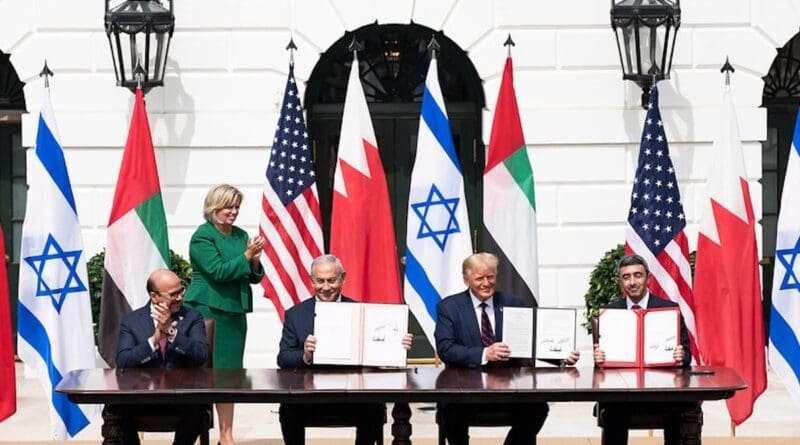
This distinction matters because the Abraham Accords emerged from a non-repeatable geopolitical conjuncture. The UAE, Bahrain, Morocco, and Sudan possessed different interests, political systems, and domestic constituencies when they normalized in 2020, so the agreements cannot be understood as a single causal model producing identical consequences everywhere. What the September 2020 declaration did establish was a normative vocabulary centered on coexistence, mutual understanding, religious freedom, intercultural dialogue, commerce, science, medicine, and opposition to radicalization (The White House, 2020). The task confronting policymakers today is to convert that vocabulary from rhetoric into a durable regional ecosystem capable of surviving war and public backlash.
The Moroccan case is especially important because it bridges narratives elsewhere treated as mutually exclusive. Morocco is simultaneously an Arab-Muslim country, an Amazigh country, a Mediterranean country, an African country, and a country with deeply embedded Jewish heritage, and its monarchy has cultivated a conception of national identity in which Judaism figures as a constitutive component of Moroccan civilization rather than the memory of a departed minority. This constitutional recognition supplies a cultural infrastructure on which relations with Israel could be built well before 2020 made them official. As Chtatou (2025) argues, Moroccan Jewish culture emerged from centuries of interaction among Amazigh, Arab, Andalusian, Sephardic, and Islamic environments, producing a complex formation irreducible to the categories of “Jewish” and “Muslim” understood as hermetically sealed identities. Chtatou (2026c) extends this further, describing Jewish and Amazigh heritage as co-constitutive strands in the making of Moroccan civilization rather than parallel minority histories running alongside a supposedly more authentic Arab-Islamic mainstream.
The historical dimension matters analytically because diplomatic agreements survive more easily when societies can locate them within pre-existing narratives of legitimacy rather than experience them as impositions from above. Long before 2020, Morocco had cultivated discreet but significant contacts with Israeli officials, while hundreds of thousands of Israelis of Moroccan origin retained familial, cultural, and emotional ties to Morocco across three generations. Normalization therefore reopened channels that had never entirely closed. The partnership has since expanded into diplomacy, tourism, trade, technology, agriculture, culture, education, and security, and academic analysis increasingly describes it as a multilayered process of institutionalization rather than a single transaction (Maghraoui, 2025).
This essay argues that the Moroccan-Israeli experience offers a potential regional template but not a transferable blueprint. Its transferable elements are the underlying principles: historical reconciliation as diplomatic capital, functional cooperation across sectors, deliberate institutionalization, sustained investment in people-to-people relations, and economic interdependence deep enough to raise the cost of rupture above the cost of continuation. Its non-transferable elements include Morocco’s monarchical structure, its specific Jewish diaspora, its relationship with the United States, and its Western Sahara diplomacy. Any serious effort to extend the Accords must proceed through a differentiated strategy in which each state defines its own interests and sequencing, rather than through the false expectation that a single template can be transplanted from Rabat to Riyadh, Cairo, or Tunis.
The greatest obstacle remains the Palestinian question. The war that followed the October 7, 2023 Hamas attack demonstrated dramatically that Arab public opinion has not ceased to regard Palestine as a central moral and political issue, whatever governments calculate in private. Arab Barometer found that support for normalization declined sharply after the Gaza war; in Morocco, support fell from 31 percent before October 7 to approximately 13 percent in the 2023-2024 surveys (Arab Barometer, 2025). Saudi Arabia has repeatedly stated that it will not establish relations with Israel absent a credible path toward Palestinian statehood (Ministry of Foreign Affairs of Saudi Arabia, 2025). The future of normalization therefore cannot be built on economic benefits alone while treating Palestine as an external variable rather than a central condition.
The strategic proposition advanced here is that the next generation of the Abraham Accords must become less about normalization with Israel narrowly conceived and more about regional normalization among states, societies, economies, religions, and historical memories. Such a transformation would not eliminate disagreement over Palestine; it would create mechanisms through which disagreement is managed without foreclosing cooperation elsewhere, so that a single war does not automatically unravel two decades of accumulated economic and scientific investment. The Accords therefore face a structural choice: remain a collection of bilateral agreements permanently vulnerable to war and backlash, or evolve into a broader architecture of regional cooperation resilient enough to absorb shocks. The Moroccan experience suggests the latter path is possible, but only if normalization becomes embedded within a larger project of reconciliation, development, coexistence, and conflict resolution.
A further consideration deserves emphasis at the outset. Comparative regional experience suggests that peace agreements concluded without deep societal buy-in tend to ossify into what might be called “cold peace,” a condition Egypt and Jordan have each, in different ways, exemplified for decades: formal diplomatic relations sustained at the governmental level while popular sentiment remains largely unreconciled. The Moroccan case matters analytically precisely because it suggests a route out of that trap, not through the sudden manufacture of popular affection, which no diplomatic instrument can produce, but through the patient cultivation of a historical narrative in which normalization appears as continuity rather than rupture. Whether that narrative can be extended, adapted, or reconstructed for societies lacking Morocco’s specific demographic and constitutional inheritance is the central empirical and strategic question this essay seeks to address across its subsequent sections, moving sequentially through the economic, security, religious, educational, and geopolitical dimensions of a possible second-generation regional architecture.
The Abraham Accords: From Diplomatic Normalization to Regional Reconfiguration
The Abraham Accords marked a significant departure from the traditional Arab-Israeli diplomatic paradigm. Earlier agreements, particularly Egypt’s 1979 treaty and Jordan’s 1994 treaty, were overwhelmingly shaped by direct bilateral conflicts, territorial questions, and the unavoidable centrality of the Israeli-Palestinian conflict. The Abraham Accords were structurally different because they joined Israel with Arab states that had not fought conventional wars against it. Their logic was consequently more geopolitical and functional than territorial, oriented toward future opportunity rather than resolution of a specific historical grievance.
The September 2020 declaration explicitly emphasized “mutual understanding and coexistence,” religious freedom, intercultural dialogue, science, medicine, commerce, and opposition to radicalization (The White House, 2020). The choice of Abraham as symbolic anchor was deliberate: it sought a civilizational vocabulary connecting Judaism, Christianity, and Islam rather than presenting the region solely through territorial conflict, a genuine innovation whose practical translation into policy remains incomplete.
The agreements were nevertheless transactional in important respects. The UAE and Bahrain sought deeper security and technological relationships with Israel and the United States. Morocco’s normalization was explicitly linked to American recognition of its sovereignty over Western Sahara. Sudan’s agreement was tied to its removal from the American list of state sponsors of terrorism. The Accords thus demonstrated a durable proposition: normalization becomes politically feasible when governments perceive concrete, calculable benefits rather than abstract appeals to peace.
This should not be dismissed as cynical diplomacy, since international relations rarely rest on idealism alone. The more consequential question is whether transactional beginnings can generate institutionalized relationships with independent social and economic foundations. The UAE case is instructive: the Emirati-Israeli relationship expanded well beyond its initial security rationale into trade, investment, tourism, innovation, logistics, energy, and services, with bilateral trade reaching roughly 3.2 billion dollars in 2025 under a Comprehensive Economic Partnership Agreement (UAE Ministry of Foreign Affairs, 2026). Such developments illustrate a governing principle: normalization becomes resilient once the cost of reversing it exceeds the cost of maintaining it.
Yet interdependence alone cannot guarantee political durability, and the Gaza war exposed the limits of elite-driven normalization. Arab Barometer’s research shows that normalization became substantially more difficult across the region after October 2023 (Arab Barometer, 2025). This does not mean existing agreements will collapse, since firms and elites have strong incentives to preserve arrangements embedded in trade flows. It does suggest governments must distinguish between cold normalization, sustainable through state institutions despite public disapproval, and warm normalization, which requires genuine public legitimacy and cannot be decreed from above. The future of the Accords depends on closing that gap, a generational project rather than a diplomatic event.
Morocco: Why the Moroccan-Israeli Relationship Is Different
Morocco occupies a distinctive position because its relationship with Judaism predates the modern state system by centuries. Jewish communities participated in Moroccan economic, cultural, and social life across successive dynasties, and although the population declined dramatically through twentieth-century emigration following 1948, the historical relationship persisted in memory, family ties, and institutional practice long after the demographic exodus.
As Chtatou (2025) emphasizes, Moroccan Jewish culture is a synthesis of Amazigh, Arab, Andalusian, Sephardic, and Islamic influences rather than a self-contained import. Jewish communities developed distinct traditions in music, language, cuisine, ritual, commerce, and architecture while participating in the broader fabric of Moroccan society. Chtatou’s earlier work on the encounter between Amazigh and Jewish populations traces how this cultural substratum germinated over centuries of proximity in the Atlas Mountains, the Souss, and the pre-Saharan oases, producing hybrid practices that resist any clean separation between “Jewish” and “Berber” inheritance (Chtatou, 2019). Such coexistence was neither perfect nor uniformly peaceful; it contained discrimination under the dhimmi status and recurring political tension, yet it also produced durable, repeatedly renewed forms of coexistence embedded in Moroccan historical memory.
The concept of convivencia is useful here if employed critically rather than nostalgically, referring not to an idyllic paradise but to the institutional and social mechanisms through which distinct communities inhabited a shared space while maintaining separate religious identities. Chtatou’s study of Sefrou documents a city whose urban fabric was structured for generations around religious symbiosis between Islam and Judaism, with shared festivals, shared saints, and overlapping economic networks (Chtatou, 2020). His research on Tiznit documents an even longer, millenary pattern of coexistence between Imazighen and Jews in the pre-Saharan south, sustained by trans-Saharan trade networks (Chtatou, 2023b). His broader work on Jewish-Muslim conviviality shows the relationship was never restricted to abstract theological tolerance: Jews and Muslims shared markets, neighborhoods, and at times overlapping devotional traditions centered on common saints (Chtatou, 2022b), while his work on shared beliefs emphasizes the proximity created by common monotheistic narratives and overlapping prophetic genealogies (Chtatou, 2022a). His account of the golden age of Judaism in Al-Andalus situates Moroccan Jewish life within a wider Iberian and Maghrebi intellectual world whose echoes persisted in Morocco long after the fall of Granada (Chtatou, 2021b, 2021c).
The Moroccan state has increasingly incorporated this pluralistic heritage into national identity. Under King Mohammed VI, Jewish heritage has received institutional recognition through restored synagogues and cemeteries, museum projects, and official discourse naming the Jewish component of Moroccan identity. Morocco’s 2011 Constitution formalizes this, acknowledging the country’s diverse components, including explicitly the Hebrew dimension of national identity. Chtatou (2022c) documents the specific case of Amazigh Jews, whose double minority status illustrates how Moroccan identity has been constructed through layered rather than mutually exclusive belonging.
This policy creates an important distinction between Moroccan normalization and a purely geopolitical alliance. Israel is not presented to Moroccan society simply as an external state with which Morocco has discovered common interests; it is connected to a large diaspora whose memories and family histories create a transnational bridge operating independently of any government’s policy. The Moroccan-Israeli relationship therefore possesses a cultural dimension that exceeds ordinary diplomacy, and Israeli officials of Moroccan descent continue to invoke that heritage as a living connection. This geostrategic relationship should be understood through the interaction of historical memory and contemporary interest (Chtatou, 2023a), a multilayered structure that Maghraoui (2025) likewise emphasizes: normalization is not a single event but an ongoing process of institutionalization in which diplomatic, economic, security, social, and cultural relations progressively deepen or stall.
From Convivencia to Strategic Partnership
The most important lesson of the Moroccan experience is that history can function as diplomatic capital, a proposition that conventional realist accounts of international relations tend to underestimate. Morocco’s Jewish heritage has become a genuine diplomatic resource because it supplies a language through which relations with Israel can be legitimized both domestically and internationally, in a way purely security-driven partnerships cannot replicate. This matters in a region where political narratives frequently divide populations into mutually exclusive identities, treating solidarity with one community as requiring hostility toward another. The Moroccan model suggests an alternative: national identity can be layered and cumulative rather than exclusive and zero-sum. Morocco does not cease being a Muslim-majority Arab-Islamic monarchy by recognizing its Jewish heritage as constitutive; recognition of Judaism does not require abandoning Palestinian solidarity, and cooperation with Israel does not require agreeing with every Israeli policy.
Morocco demonstrates that a country can maintain vocal, institutionalized support for Palestinian rights while sustaining diplomatic, economic, and security relations with Israel. Its king chairs the Al-Quds Committee of the Organization of Islamic Cooperation, defending Jerusalem’s Islamic character, even as the kingdom maintains active relations with Israel across multiple sectors. This apparent contradiction is better read as strategic dual engagement: preserving open channels with Israel while sustaining unambiguous commitment to Palestinian aspirations, on the theory that influence requires presence rather than absence. Precisely because it refuses the binary logic dominating much regional discourse, this model could become an increasingly important template as other Arab states search for language to justify normalization to skeptical publics.
The Economic Logic: From Bilateral Trade to Regional Interdependence
The economic dimension provides perhaps the strongest structural argument for expansion, since interdependence generates constituencies with material interests in preserving cooperation despite periodic political turbulence. The Middle East and North Africa suffer persistent structural fragmentation: regional trade remains low relative to other world regions, supply chains orient toward Europe, Asia, or North America rather than neighbors, and water scarcity, energy insecurity, food dependence, youth unemployment, and technological inequality create common vulnerabilities no single state can resolve alone.
Israel possesses advanced capacity in water management, agricultural technology, cybersecurity, medicine, biotechnology, and artificial intelligence. Gulf countries possess capital, infrastructure, logistics networks, and sophisticated sovereign wealth institutions capable of financing large regional projects. Morocco possesses agricultural potential, ambitious renewable-energy plans, Atlantic and Mediterranean connectivity, expanding automotive and aerospace manufacturing, and a strategic location linking Europe, Africa, and the Middle East. This complementarity remains only partially exploited through a patchwork of bilateral agreements rather than an integrated regional framework.
The UAE-Israel relationship demonstrates what occurs when complementary capabilities are connected through deliberate institutional design. The objective should be to move from bilateral agreements toward genuine regional value chains: Moroccan agricultural production linked with Israeli water technologies, Emirati capital, Saudi logistics, and European markets; renewable-energy projects connecting North African solar potential with European demand through interconnectors and green hydrogen corridors; digital infrastructure linking Israeli innovation with Gulf capital and Moroccan engineering capability; tourism organized around multi-country itineraries rather than disconnected bilateral phenomena.
The underlying logic is well established: countries that trade, invest, travel, educate one another’s students, and build joint infrastructure acquire durable incentives to preserve stability, since rupture costs rise with the depth of the relationship. Recent empirical research on earlier Arab-Israeli agreements suggests normalization generates substantial dividends through investment, trade, institutional credibility, and financial flows (Kovác & Spruk, 2025). Although Egypt and Jordan’s experiences cannot be replicated wholesale, the evidence supports the broader proposition that peace and economic integration reinforce one another. Tourism deserves particular emphasis: Salman (2024) argues it played a genuinely positive role in implementing normalization among Israel, Morocco, Bahrain, and the UAE, creating direct encounters between citizens rather than only diplomats, and converting an abstract foreign-policy decision into lived experience. For the Accords to survive politically, this social dimension must expand well beyond its current elite orientation.
A further structural point concerns financing architecture. Existing multilateral development institutions in the region, whether Gulf-based sovereign funds, the Islamic Development Bank, or bilateral American and European development agencies, currently operate largely in parallel rather than jointly, financing overlapping and sometimes duplicative projects rather than co-financing an integrated regional pipeline. A dedicated Abraham Accords investment vehicle, capitalized jointly by Gulf sovereign wealth funds, Israeli institutional investors, Moroccan and Egyptian development banks, and interested European and American partners, could concentrate capital on precisely the cross-border projects, energy interconnectors, water pipelines, digital corridors, and agricultural supply chains, that individual national development banks are structurally unable to finance alone because the returns and the risks are distributed across borders that no single national institution is mandated to manage.
The Security Dimension: Cooperation Without Militarization
Security cooperation is another major component of the Moroccan-Israeli relationship and of the Accords more broadly. Since 2020, bilateral relations have developed significant defense and intelligence dimensions, including formalized cooperation and sustained high-level military contacts, in a region marked by transnational terrorism, missile and drone proliferation, cyber threats, and persistent rivalry among regional powers.
Yet a genuine danger exists. If the Accords become primarily a security coalition against Iran, they risk reproducing precisely the regional polarization a more ambitious architecture ought to transcend. The future architecture should distinguish between defensive cooperation against genuinely transnational threats, terrorism, cybercrime, trafficking, piracy, disasters, organized crime, and formal bloc politics organized around a permanent adversary. A more inclusive security architecture, eventually capable of incorporating dialogue with Tehran rather than excluding it categorically, would prove more sustainable than a rigid bloc structure.
Morocco’s own posture is instructive, since its foreign policy has historically avoided complete alignment with any single bloc, maintaining substantive relations simultaneously with the Gulf, Europe, the United States, sub-Saharan Africa, and Asia. This diplomatic flexibility could allow Rabat to serve as a bridge within any future security architecture rather than a component of a rigid anti-Iran axis. The same principle should guide the Accords broadly: security cooperation should organize around identifiable common threats rather than permanent enemies whose exclusion forecloses future flexibility.
The Palestinian Question: The Structural Constraint
No serious analysis of the Accords’ future can avoid the Palestinian question. Their greatest structural weakness was the implicit assumption that normalization could advance independently of progress on the Israeli-Palestinian conflict. That proved only partially correct: normalization without a prior comprehensive settlement was possible, but insulating it from Palestinian violence, large-scale Israeli operations, humanitarian catastrophe, and the resulting shifts in Arab opinion proved considerably harder.
The October 7, 2023 attack and the subsequent Gaza war fundamentally altered the regional environment. Arab Barometer’s findings are revealing: Moroccan support for normalization stood at roughly 31 percent in 2021-2022, one of the higher levels among surveyed countries, before falling to approximately 13 percent after the Gaza war (Arab Barometer, 2025). This is not an abstract statistic; it demonstrates that the social legitimacy of normalization remains contingent on perceptions of Israeli conduct even in the country whose normalization possesses the deepest historical and cultural foundations of any Accords signatory. If Moroccan opinion proved this sensitive, the corresponding sensitivity in states lacking comparable civilizational infrastructure is likely greater still.
The implication is not abandonment but embedding normalization within a framework that addresses Palestine rather than bypassing it. Saudi Arabia’s position illustrates the emerging consensus with particular clarity: in February 2025 its Foreign Ministry reiterated that it would not establish relations with Israel absent an independent Palestinian state with East Jerusalem as its capital (Ministry of Foreign Affairs of Saudi Arabia, 2025). Riyadh thus represents both the greatest potential prize for expansion and the clearest demonstration that normalization cannot bypass Palestine through economic inducements alone.
The future of the Accords therefore depends on a conceptual transformation: Palestine should not be treated merely as the obstacle to regional normalization; Palestinian statehood should become one of its foundations. This reverses the original sequencing logic of normalization first, Palestine later. The region should instead move toward normalization, Palestinian state-building, economic integration, and regional security developing as mutually reinforcing processes advancing in parallel. Such an approach would not require Israel to accept every Palestinian demand, nor Arab governments to abandon their bilateral interests; it requires recognizing that durable regional legitimacy depends on visible, measurable progress that publics no longer automatically discount.
It is worth noting that the sequencing argument advanced here does not require a single, comprehensive final-status agreement to precede every further step of regional cooperation, an expectation that has repeatedly proven unrealistic across three decades of failed negotiation attempts since Oslo. What it requires instead is a credible, internationally monitored trajectory, encompassing incremental territorial, governance, and security benchmarks, whose steady fulfillment publics across the region can observe and verify independently of government assurances. The distinction between an open-ended promise and a monitored trajectory is not merely rhetorical; it is precisely the distinction Arab publics have learned, through decades of unfulfilled diplomatic commitments, to demand before extending renewed trust to their own governments’ foreign policy choices.
Why Saudi Arabia Is the Critical Test
If the Accords are to become a genuine regional architecture, Saudi participation is indispensable. Riyadh possesses unparalleled religious, economic, and political weight: custodian of Islam’s two holiest cities, the largest Arab economy, a major energy producer, and an increasingly autonomous geopolitical actor. Saudi normalization would carry a transformative symbolic effect, but Riyadh has demonstrated, at considerable cost, that it will not accept normalization without a credible Palestinian pathway. The Saudi position is best understood not as anti-normalization but as an argument for a different kind of normalization, embedded within a comprehensive regional settlement rather than offered as a stand-alone gesture.
Saudi Arabia could become the architect of a second-generation framework tying normalization to a broader package encompassing Israeli-Arab relations, Palestinian state-building, Gaza reconstruction, regional infrastructure, energy and water cooperation, deepened economic integration, credible security guarantees, sustained religious and cultural dialogue, renewed American commitments, and expanded European participation, transforming the Accords from bilateral agreements into a genuine regional grand bargain. The central challenge is political credibility rather than technical design: Riyadh cannot appear to reward Israeli policies widely perceived as violating Palestinian rights, given its own claims to religious and pan-Arab leadership, while Israel cannot expect Arab states to absorb the domestic costs of normalization indefinitely while Gaza’s images remain fresh. The bargain must therefore be genuinely reciprocal.
The UAE: The Most Advanced Economic Laboratory
The UAE represents the most developed example of functional normalization. It has demonstrated that relations with Israel can become deeply institutionalized even amid persistent political disagreement over Palestine, with bilateral economic relations expanding across investment, tourism, technology, energy, logistics, and trade (UAE Ministry of Foreign Affairs, 2026). The Emirati experience offers a useful lesson: normalization survives politically when it becomes ordinary rather than perpetually extraordinary, when companies routinely collaborate, flights operate on regular schedules, universities establish standing partnerships, and businesspeople no longer treat bilateral contact as requiring special justification. The challenge facing the broader project is reproducing this ordinariness in relationships that remain far more self-consciously exceptional.
The UAE model cannot simply be copied. The Emirates possesses a distinctive political economy built on hydrocarbon wealth, highly centralized decision-making, substantial financial resources, and a small citizen population that limits domestic constraint compared with larger, more politically complex Arab states. Nevertheless, the underlying principle, functional normalization achieved through the deliberate accumulation of ordinary economic and social contact rather than diplomatic proclamation alone, remains broadly transferable even where the specific Emirati conditions that facilitated it are not.
Bahrain, Oman, Jordan, and Egypt: Four Different Pathways
Bahrain’s relationship with Israel emerged partly from its close strategic relationship with the United States and its Gulf security concerns, shaped by proximity to Iran and a delicate internal balance. Its future within the Accords depends on whether normalization acquires sufficient economic and social depth to survive future crises, given a domestic political space considerably more constrained than the UAE’s.
Oman presents a different possibility rooted in its distinctive diplomatic tradition of mediation and strategic neutrality, serving repeatedly as a discreet channel between adversaries, including at various points the United States and Iran. Oman has maintained informal channels with Israel while preserving relations with Iran and other actors most Gulf states treat as adversaries. Its comparative advantage is therefore not immediate normalization but mediated normalization, functioning as a diplomatic laboratory in which sustained dialogue precedes formal recognition.
Jordan and Egypt form an even more complex category, since both already possess formal peace treaties dating to 1994 and 1979. Their challenge is not normalization in the legal sense but transforming formal, largely elite-level peace into meaningful societal cooperation. This reveals an important limitation of standard Accords discourse: the region lacks a simple binary between “normalized” and “not normalized” states. Egypt and Jordan have long-standing but socially thin relations; the UAE, Bahrain, Morocco, and Sudan entered the 2020 process with varying depth; Oman and Qatar have maintained varying informal contact; Saudi Arabia has pursued strategic engagement without formal relations. The appropriate objective is therefore not simply to “add countries” to a fixed list, but to cultivate a continuum of regional engagement along which states can be positioned differently and move gradually as circumstances permit.
The Maghreb: A Special and Difficult Environment
The Maghreb illustrates both the possibilities and the sharp limitations of expansion. Morocco is already a central node, but Tunisia, Algeria, and Libya present very different realities. Algeria’s deep rivalry with Morocco, compounded by Western Sahara and its own position on Palestine and Israel, makes rapid normalization highly improbable. Tunisia’s fragile domestic environment and its tradition of pan-Arabist political culture make formal normalization difficult whatever elites might privately calculate. Libya’s institutional fragmentation makes the question largely premature until basic state coherence is restored.
This demonstrates that the Accords cannot be expanded through diplomatic pressure or American incentive alone. Regional integration must proceed through variable geometry, with states participating at different levels and speeds: one may begin with cultural cooperation, another with tourism, another with water technology, another with full diplomatic relations, another with infrastructure participation absent formal normalization. Such flexibility, far from representing a diplomatic half-measure, would make the architecture considerably more resilient, since it would not require every state to reach the same point simultaneously for the architecture as a whole to generate cumulative benefit.
The Religious and Interfaith Dimension
The Accords contain a dimension underdeveloped relative to its symbolic prominence: religion treated as substantive policy rather than decoration. The choice of “Abraham” was not accidental; invoking a shared patriarchal figure across Judaism, Christianity, and Islam signaled a civilizational rather than purely transactional framework. Yet symbolism alone cannot sustain a durable religious dimension; religious diplomacy must become institutional, embedded in curricula and joint research rather than confined to ceremonial gestures.
Morocco offers an unusually powerful example. Moroccan Jewish-Muslim relations historically included shared sacred spaces, joint saint veneration, and overlapping social traditions that blurred rather than reinforced confessional boundaries. Chtatou’s research (2022a, 2022b) documents these in ethnographic detail, while broader comparative scholarship shows religious boundaries across North Africa and the wider Mediterranean have historically been more permeable than modern nationalist narratives, Arab-Islamic or Zionist, often suggest (Albera, 2009; Ben-Ami, 1998). Boum’s (2013) ethnography of how contemporary Muslim Moroccans remember an absent Jewish community demonstrates this shared history persists in collective memory even where the Jewish population itself has entirely departed.
The lesson is profound: interfaith coexistence should be taught not as tolerance of a separate other, but as recognition of a shared historical world whose boundaries were always more negotiated than contemporary narratives acknowledge. This could ground an Abrahamic educational curriculum across MENA, including comparative study of the three traditions as historically interacting; Jewish history within Arab and Muslim societies and Islamic influence within Jewish intellectual traditions; Moroccan convivencia and Andalusian interaction as documented cases; rigorous Holocaust and antisemitism education alongside equally rigorous Palestinian history, taught without erasure of either narrative; religious literacy, conflict transformation, deradicalization, and civic education oriented toward pluralism rather than a single authorized narrative. The goal is not theological homogenization, impossible and undesirable given genuine doctrinal difference, but religious literacy without requiring theological agreement, on the premise that informed disagreement is considerably less dangerous than uninformed hostility, particularly for a generation raised on social media’s simplified narratives.
A practical mechanism for institutionalizing this vision could take the form of a standing Abrahamic Council of religious scholars and educators, drawn from recognized Jewish, Christian, and Islamic institutions across the participating states, charged not with adjudicating theological disputes but with jointly reviewing school curricula, textbooks, and religious broadcasting for content that dehumanizes another Abrahamic community. Such a council would carry no binding authority over sovereign educational systems, but its findings, published regularly and made available to journalists, parliamentarians, and civil society organizations, could create reputational incentives for governments to revise material that a joint panel of respected religious authorities has identified as inflammatory, functioning as a soft mechanism of accountability considerably less intrusive than formal diplomatic pressure.
Education as the Long-Term Infrastructure of Peace
Diplomatic agreements are signed by governments; peace, in any durable sense, is sustained by societies across generations. Egypt and Jordan possess decades-old treaties, yet public attitudes have often remained deeply critical, with normalization confined largely to government and security channels. The lesson is unambiguous: normalization unaccompanied by educational and societal transformation remains structurally fragile.
The Accords should therefore establish a genuine regional educational network. Universities in Morocco, Israel, the UAE, Bahrain, Saudi Arabia, Jordan, and Egypt could establish joint degree and research programs in Mediterranean studies, Middle Eastern politics, Jewish and Islamic studies, comparative religion, conflict resolution, water management, climate science, artificial intelligence, and public health, organized as standing institutional partnerships rather than one-off conferences. Scientific cooperation is particularly promising because it creates communities of technical expertise whose collaboration is less dependent on political ideology than humanities or diplomatic exchange; engineers working jointly on desalination are less likely to allow political disagreement to derail collaboration than diplomats negotiating a treaty text, because shared technical standards supply an alternative basis for cooperation. The objective should be a regional knowledge economy of peace, in which the Accords’ original emphasis on science, medicine, and commerce, frequently overshadowed by diplomatic symbolism, proves in the long run more consequential than the symbolism itself.
Culture: The Forgotten Dimension of Diplomacy
Culture has too often been treated as ornamental rather than as genuine infrastructure comparable in importance to trade agreements. Morocco demonstrates this clearly: Moroccan Jewish heritage connects Rabat and Jerusalem through music, cuisine, pilgrimage, and architecture, operating continuously and independent of any government’s current priorities. Chtatou’s documentation of Jewish music and singing traditions (2022d) illustrates exactly this kind of infrastructure, shared repertoires still performed and transmitted that formal diplomacy alone could never manufacture.
The same principle could be applied elsewhere: Abrahamic heritage festivals, Jewish-Muslim musical exchange, restoration of Jewish heritage sites fallen into disrepair after their communities’ departure, shared museum exhibitions presenting interconnected rather than parallel narratives, translation programs, culinary diplomacy, youth exchanges, and joint historical research. The underlying objective is demonstrating that Middle Eastern history cannot be neatly divided into separate Jewish, Arab, Muslim, Christian, Persian, and European histories, however convenient such separation is for contemporary nationalist narratives. The region has always been interconnected through trade, migration, and scholarship, and honestly recovering that interconnection, rather than romanticizing it, can become a genuine foundation for reconciliation precisely because it complicates the simplified narratives on which much conflict currently feeds.
The Diaspora as a Strategic Bridge
One of Morocco’s greatest assets is its Jewish diaspora, whose strategic value is frequently underappreciated in analysis focused narrowly on state-to-state relations. Hundreds of thousands of Israelis possess Moroccan ancestry, and Moroccan Jewish identity remains culturally significant within Israeli politics across generations, sustained through music, cuisine, and continued institutional ties, creating a human bridge that operates independently of, and often more durably than, formal policy.
Other Arab states possess comparable resources currently unexploited. Egyptian, Iraqi, Syrian, Yemeni, Libyan, and Lebanese Jewish communities once formed important components of their societies before near-total displacement across the mid-twentieth century; their histories have largely disappeared from regional education, neglected in both the countries they departed and, given historically greater attention to Ashkenazi history, in Israel itself. Restoring these histories would demonstrate that Jewish presence in the Arab world was constitutive rather than foreign. The same restoration should apply symmetrically to Arab histories within Israel and Palestinian histories throughout the region: historical pluralism, to be coherent, must be reciprocal rather than selective. A mature architecture cannot demand Arabs remember Jewish history while ignoring Palestinian history, nor demand Israelis remember Palestinian suffering while ignoring Jewish histories in Arab societies.
The Role of the United States
The United States remains indispensable but its role should evolve. The first Accords were heavily dependent on direct American sponsorship, incentives, guarantees, and, in Morocco’s case, recognition of Western Sahara. A second-generation architecture should remain connected to Washington, whose regional weight remains unmatched, but become considerably less dependent on unilateral American mediation as the exclusive driving mechanism. The United States could continue functioning as guarantor, convenor, economic partner, security provider, technological partner, and diplomatic facilitator, but regional countries should increasingly own the process substantively rather than treating it as an American-designed initiative to which they are merely invited. A durable order cannot permanently depend on an external hegemon whose domestic priorities and electoral cycles inevitably introduce discontinuity into what must be a multi-decade project.
Europe and the Mediterranean Dimension
Europe should also become more deeply involved. The Mediterranean is not merely a boundary separating Europe from MENA but a historical space of interaction spanning millennia. Morocco’s position is especially significant, connecting Europe, Africa, the Atlantic, and the Middle East in a genuinely quadrilateral reach few regional states can match. A broader framework could therefore evolve into a Mediterranean partnership linking Israel, Morocco, Gulf states, Egypt, Jordan, and European partners in renewable energy, green hydrogen, water and food security, migration governance, maritime security, higher education, digital infrastructure, and climate adaptation.
Morocco’s own experience illustrates the potential of pragmatic, multidimensional partnership. Chtatou (2026a) describes the evolving Franco-Moroccan relationship as a model of balanced Euro-Mediterranean dialogue, managing a complex colonial history and periodic friction while sustaining deep economic, security, and cultural cooperation across successive French governments. The same principle can be extended to the wider architecture: the Mediterranean should become a space of connection rather than the frontier of separation it is frequently framed as today.
Africa: The Missing Dimension of the Abraham Accords
One of the most underappreciated features of Morocco’s position is its African dimension, largely absent from mainstream Accords discussion. Morocco has positioned itself as a bridge between Africa, Europe, the Arab world, and the Atlantic, investing heavily in African diplomacy since rejoining the African Union in 2017. Its relationship with Israel could therefore acquire a genuine African component in agriculture, water management, public health, renewable energy, and infrastructure, with Morocco functioning as intermediary connecting Israeli expertise with African development needs and Gulf capital.
Such a triangular model would significantly expand the geographical reach of the Accords beyond their current Gulf-centric framing, and would help prevent their being perceived, as they frequently are, exclusively as a security framework organized around containing Iran. An African dimension could instead position the Accords as part of a broader Afro-Mediterranean development architecture with a positive economic agenda extending well beyond great-power rivalry.
The Iranian Factor: From Containment to Regional Balance
Iran remains an unavoidable element of regional geopolitics. The conflicts following October 2023 demonstrated how deeply interconnected the Iranian-Israeli rivalry, Hezbollah, the Houthis, Iraqi militias, Syria, Gaza, and Red Sea security had become, such that a crisis in any single node rapidly propagated across the system. The contemporary Middle East is genuinely, as Chtatou (2026b) argues, a crucible in which multiple overlapping conflicts and rivalries interact, producing systemic instability that bilateral agreements struggle to insulate against.
The evident temptation is to transform the Accords into an explicit anti-Iran coalition. That would be strategically understandable but politically insufficient as a foundation for durable order, since it would foreclose de-escalation and permanently structure the region around an adversarial relationship that need not be permanent. Deterrence without dialogue tends toward miscalculation rather than stable equilibrium. The Gulf states themselves have shown genuine interest in reducing tensions with Iran; the 2023 Saudi-Iranian normalization demonstrated that Gulf governments do not necessarily want a permanent cold war. The Accords should therefore remain compatible with regional de-escalation rather than opposed to it. Israeli-Arab cooperation should not require Arab governments to choose permanently between Israel and Iran, a choice most Gulf states have shown little appetite for making absolutely. The more achievable objective is regional equilibrium, in which Iran is eventually incorporated into overlapping cooperative frameworks on shared threats even as other disagreements persist.
The Post-Gaza Challenge: Can the Accords Survive the War?
The Gaza war constitutes the most serious stress test the Accords have faced since 2020. It has produced enormous humanitarian suffering, intensified Arab public opposition across every country Arab Barometer surveyed, and generated renewed criticism of Israel throughout the region and beyond. As of August 2026, the environment remains exceptionally unstable, with Gaza, Lebanon, Iran, the Gulf, and Red Sea maritime security interconnected within a still-evolving conflict system, and recent regional statements continue to demonstrate deep Arab and Muslim concern over Israeli military conduct in Gaza (Reuters, 2026).
This environment makes conventional, elite-driven normalization politically difficult for any state not already committed, and has visibly strained even the relationships forged in 2020. But it also creates, paradoxically, an argument for deeper institutionalization rather than retreat. If the Accords remain narrowly configured as bilateral relations with Israel alone, they become structurally vulnerable every time Israel is at war. If they evolve into a genuinely regional platform encompassing reconstruction, infrastructure, education, and conflict prevention, they become considerably more resilient, since their value no longer depends entirely on the bilateral relationship remaining politically comfortable at every moment.
The post-Gaza period therefore presents an extraordinary, if difficult, opportunity for institutional deepening. A future reconstruction framework could involve Morocco, the UAE, Saudi Arabia, Egypt, Jordan, Israel, the United States, Europe, and international institutions working together on Gaza’s physical and institutional reconstruction. Morocco’s reported participation in international stabilization discussions during 2026 illustrates Arab states playing an active, constructive role rather than remaining passive observers, though any such involvement will require clear legal frameworks, meaningful Palestinian political participation, humanitarian safeguards, and credible accountability mechanisms, without which reconstruction risks reproducing the legitimacy deficits that have undermined earlier post-conflict interventions. The objective should be neither renewed Israeli control nor informal Arab tutelage, but genuine Palestinian political and economic reconstruction actively supported, rather than managed, by a regional coalition.
The financing of Gaza’s reconstruction will itself test whether the region can move beyond the transactional model that characterized the first Accords. Estimates of reconstruction costs produced by international organizations since the war’s most intensive phase run into tens of billions of dollars, a sum no single donor, whether Gulf, European, or American, is likely to commit unilaterally given competing domestic priorities and understandable skepticism about governance and accountability on the ground. A pooled regional mechanism, jointly governed by Arab, Israeli, Palestinian, American, and European stakeholders and subject to transparent auditing, would distribute both the financial burden and the political risk more evenly than any bilateral arrangement could, while also embedding Palestinian institutions directly in decisions over how reconstruction funds are disbursed rather than treating Gaza’s population as passive recipients of externally designed assistance.
A New Architecture: From Abraham Accords to Abrahamic Regional Compact
The time may have come to move beyond the original 2020 framework. Instead of asking which countries will “join” the Accords as conceived, policymakers should ask what regional institutions can be built from the existing network. A possible Abrahamic Regional Compact could rest on eight pillars: diplomatic normalization, remaining sovereign and voluntary for each state; Palestinian state-building, accompanied by measurable, verifiable progress with concrete benchmarks; economic integration, through a dedicated regional investment and trade platform financing infrastructure, energy, agriculture, water, and technology no single bilateral relationship could finance alone; human security, encompassing food, water, climate adaptation, health, migration, terrorism, and disaster management; interfaith coexistence, institutionalized rather than ceremonial; educational transformation, teaching religious literacy, pluralism, shared history, antisemitism, Islamophobia, and Palestinian history as integrated civic education; cultural heritage, treating Jewish, Christian, Islamic, Amazigh, Arab, Persian, Ottoman, Andalusian, and Mediterranean inheritance as genuinely interconnected rather than competing patrimonies; and regional security dialogue, a permanent forum eventually including Iran, aimed at reducing escalation and building confidence rather than perpetuating a purely adversarial structure.
Such an architecture would be considerably more ambitious than the original Accords, likely requiring a decade or more of sustained institutional construction rather than a single breakthrough. The alternative, a permanently fragmented collection of bilateral relationships perpetually vulnerable to the next crisis, offers considerably less promise of genuine transformation.
Morocco as Mediator and Model
Morocco could play a particularly important role, given comparative advantages few regional actors possess simultaneously: documented historical Jewish-Muslim coexistence substantiated by extensive scholarship; a Jewish diaspora connected to Israel across generations; sustained political stability under a monarchy durable across six decades of regional turbulence; strong American relations reinforced by Western Sahara recognition; expanding, increasingly institutionalized ties with Israel; extensive Arab and African diplomatic networks; active membership and leadership within the OIC through the Al-Quds Committee; substantive European partnerships, particularly with France and Spain; and the king’s symbolic role regarding Jerusalem, granting religious legitimacy few other Accords signatories can claim.
Morocco can therefore speak simultaneously to constituencies that rarely share the same diplomatic space. It can credibly tell Israel that Arab engagement is possible without surrendering security concerns; tell Arab societies that engagement with Israel does not require abandoning Palestine, given its own sustained institutional commitment through the Al-Quds Committee; tell Western governments that Muslim-majority societies can develop genuinely pluralistic approaches to Jewish heritage; and tell younger generations, who often encounter Jewish history only through the lens of the Israeli-Palestinian conflict, that this history is part of their own national history. Work on Moroccan Jewish culture, Jewish-Muslim conviviality, shared beliefs, and the Moroccan-Israeli geostrategic relationship collectively points toward a proposition with implications beyond Morocco: identity has historically been produced through interaction among multiple communities rather than exclusion of difference (Chtatou, 2022a, 2022b, 2023a, 2025). The Middle East’s greatest historical problem has never been diversity itself but its periodic politicization; the strategic challenge is converting diversity from a recurring source of conflict into a durable resource for cooperation.
The Limits of the Moroccan Model
Nevertheless, Morocco should not become an idealized model. Jewish-Muslim coexistence was not always peaceful, equal, or harmonious across the centuries; Moroccan Jews experienced sustained legal discrimination and periodic violence, just as Moroccan society more broadly experienced instability affecting all communities. Convivencia should be used analytically, as a description of coexistence mechanisms operating under formal inequality, rather than romantically, as though describing an achieved equality that never existed.
Moreover, Morocco’s normalization was facilitated by a specific, largely non-repeatable bargain involving American recognition over Western Sahara, a linkage other states cannot straightforwardly reproduce, nor can the monarchy’s distinctive authority, which allows the palace to conclude major foreign-policy decisions with insulation from immediate electoral pressure few other Arab systems possess. The proper lesson is therefore not “copy Morocco” but to learn from its demonstrated ability to transform historical pluralism into contemporary diplomatic capital, a general strategic insight other states might apply using their own distinct historical resources.
From Transactional Peace to Constitutive Peace
This distinction leads to a broader theoretical argument about peace itself. Transactional peace occurs when states exchange concessions because calculated benefits outweigh calculated costs, remaining only as durable as that calculation. Institutional peace occurs when agreements create organizations, procedures, and mechanisms that progressively raise the cost of conflict, embedding the bargain within structures that outlast the initial calculation. Constitutive peace, the deepest form, occurs when societies redefine their own identities and interests through the experience of cooperation itself, such that the relationship becomes part of how each society understands itself.
The first Accords were primarily transactional and, in advanced cases like the UAE, increasingly institutional. The long-term objective should be constitutive peace, difficult as that transition is. Morocco offers a partial example precisely because its normalization can be interpreted through a pre-existing narrative of pluralism rather than presented as an entirely new departure. Other states face the comparative challenge of developing analogous narratives suited to their own histories, since few possess Morocco’s particular combination of continuous Jewish presence and constitutional recognition of pluralism. Constitutive peace does not require populations to develop mutual affection, an unrealistic standard; it requires only that they recognize coexistence as normal rather than perpetually contested, a considerably more achievable goal.
Public Opinion, Youth, and Digital Diplomacy
The greatest challenge confronting the next phase is not primarily diplomatic but rooted in public opinion, a variable the 2020 process substantially underweighted. Normalization was more broadly acceptable before the Gaza war and declined sharply afterward across virtually every surveyed country (Arab Barometer, 2025), demonstrating that governments cannot indefinitely separate elite foreign policy from societal sentiment. The appropriate response is not propaganda, which tends to generate cynicism once its manufactured character becomes apparent, but transparency: citizens should debate normalization openly, governments should explain benefits candidly while acknowledging genuine disagreements with Israeli policy, and Israeli citizens should be encouraged to understand Arab concerns as legitimate. A dialogue without any disagreement would be transparently artificial; one genuinely capable of managing disagreement without letting it become totalizing would be authentically transformative.
Young people constitute the decisive constituency for the future, simultaneously more globally connected and more exposed to algorithmically amplified polarization than any previous generation. TikTok, Instagram, YouTube, and X can transform isolated incidents into regional crises within hours, amplifying grievance more efficiently than nuance. The Accords therefore need a genuine digital component: regional youth programs bringing together Israeli, Moroccan, Emirati, Bahraini, Saudi, Egyptian, Jordanian, and Palestinian students to collaborate on climate, entrepreneurship, artificial intelligence, and public health projects structured around concrete deliverables rather than performative dialogue sessions. People who build something concrete together are less easily reduced to political caricature by their own societies or by engagement-optimized algorithmic systems.
Water, Climate, and Food: The Quiet Foundations of Regional Peace
Perhaps the strongest future basis for cooperation lies not in ideology but in shared material necessity, a foundation less glamorous than civilizational rhetoric but potentially more durable because it is less contested. The region faces severe water stress, chronic food insecurity, rising temperatures, and complex energy transitions no single state can manage alone. Israel has developed important water-management technologies already applied across the wider region; Morocco possesses substantial experience with desalination, agricultural adaptation, and renewable energy; Gulf states possess capital to finance large-scale projects; Egypt controls strategically vital waterways and possesses enormous agricultural and demographic weight essential to any credible food security framework.
A Middle Eastern Water and Food Security Compact could become one of the most practically significant manifestations of the broader framework, considerably less politically controversial than formal military alliances while remaining directly relevant to ordinary citizens who may otherwise remain skeptical of more abstract diplomatic initiatives. This is precisely the functional cooperation capable of generating the durable social foundations on which more ambitious peace might eventually be built.
The Economic Peace Dividend
The ultimate argument for deepening the Accords is economic: peace should produce visible improvements in ordinary people’s circumstances rather than remaining an abstraction confined to communiqués. If normalization generates investment, employment, tourism, technology transfer, and educational opportunity, citizens can observe its benefits; if it produces primarily ceremonies, procurement deals, and elite business arrangements concentrated among a narrow connected stratum, public legitimacy will remain limited regardless of elite-level success. The challenge is constructing a socially distributed dividend: financing small and medium enterprises rather than only large state-linked corporations, funding student exchanges accessible beyond a narrow elite, supporting vocational education, developing tourism beyond luxury enclaves, financing agricultural modernization reaching smallholder farmers, and investing in community-level projects whose benefits are locally visible. The Accords must become tangible in daily experience rather than remaining an elite project most of the region encounters only through news coverage.
A Five-Stage Road Map for Expansion
A realistic expansion strategy should proceed incrementally rather than forcing simultaneous progress everywhere at once. Stage one preserves and deepens existing relationships: the UAE, Bahrain, Morocco, and Israel should strengthen what exists before pursuing new members. Stage two expands functional cooperation in water, food, climate, medicine, technology, tourism, and education in ways t
Most read



Read also