Escalating Regional Pressure on Saudi Arabia and Threats to Navigation in the Strait of Hormuz

|
|
|
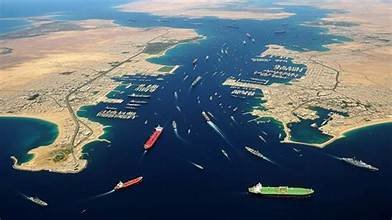
Esc The security developments witnessed in the Gulf region in October 2026 point to an expanding scope of regional confrontation, as pressure has shifted from traditional military theaters to civilian aviation facilities, maritime shipping routes, and infrastructure linked to international energy flows and trade. Attacks attributed to Yemen’s Houthi movement against Saudi airports coincided with incidents involving oil tankers near the Strait of Hormuz, alongside reports of large-scale Iranian missile exercises. These developments raise questions about the strategies pursued by the parties involved in the escalation, the extent to which limited military operations are linked to broader political and economic objectives, and their implications for Gulf security and international markets’ confidence in regional stability. In this context, the significance of the attacks extends beyond the scale of direct physical damage. Their effects may include transportation disruptions, higher insurance and energy costs, and increased pressure on governments, airlines, and shipping companies. Civilian and commercial infrastructure is therefore becoming an increasingly important arena for strategic influence in regional conflicts. Targeting Saudi Airports and Expanding the Scope of Security Pressure According to the report, Saudi Arabia experienced a series of ballistic missile and drone attacks attributed to the Houthi movement between October 10 and 12, 2026. The attacks targeted King Fahd International Airport in Dammam and King Khalid International Airport in Riyadh, amid reports of casualties and disruptions to air traffic. The report states that the attacks on October 10 killed 13 people and injured more than 300, while another attack the following day killed one additional person and injured nearly a dozen others. It also notes that King Khalid International Airport remained closed following the initial attack, while air traffic around Riyadh declined and Jeddah Airport continued operating partially. These developments point to a potentially significant shift in the nature of military pressure. Targeting airports does not necessarily require the complete destruction of aviation facilities; it may instead seek to disrupt their essential functions and undermine confidence in their safe operation. International airports are not merely transportation facilities but critical nodes in global networks of trade, tourism, investment, and economic connectivity. Consequently, any security threat affecting these facilities can produce consequences extending beyond immediate physical damage, including flight diversions, service suspensions, higher operating costs, and reassessments by airlines of the risks associated with serving the Saudi market. These repercussions are particularly significant given the role Saudi airports play in connecting the Kingdom to international markets and supporting its economic diversification, tourism, and logistics development strategies. Disruptions to civil aviation may therefore become a means of exerting pressure on economic interests, even when physical damage remains relatively limited. Nevertheless, a distinction must be made between the actual effects of the attacks and their presumed strategic objectives. Flight disruptions or the temporary closure of an airport do not necessarily indicate the success of a sustained campaign to weaken the Saudi economy. They may, however, increase the cost of managing security risks and place additional pressure on the authorities and transportation companies. The Political Dimensions of Targeting Civilian Infrastructure The targeting of airports raises the possibility that these operations form part of a broader strategy of psychological warfare and political pressure aimed at influencing how investors, travelers, and international airlines perceive Saudi Arabia’s security environment. In such operations, the impact extends beyond physical damage to include extensive media coverage, social media engagement, and precautionary decisions by international institutions. These responses may magnify the economic consequences of attacks, even when the affected facilities remain technically capable of resuming normal operations. This issue is particularly important given Saudi Arabia’s efforts to strengthen its position as a regional center for business, investment, and tourism. The success of these efforts depends, in part, on a stable operating environment, reliable transportation networks, and sustained international confidence in the country’s ability to protect critical infrastructure. In this context, the concept of the “Glass Kingdom,” cited in the report to describe the presumed contradiction between Saudi Arabia’s economic power and its vulnerability to disruption, can be understood as part of a political narrative seeking to highlight the limitations of the security protection afforded by financial and technological resources. However, this characterization remains an interpretive framework and is insufficient, on its own, to determine Saudi Arabia’s actual ability to contain threats or sustain economic activity. The attacks could also intensify domestic and international pressure associated with Saudi Arabia’s intervention in Yemen by increasing the security and political costs of its involvement in the conflict. Assessing the success of such a strategy, however, requires consideration of additional factors, including the effectiveness of air defenses in limiting damage, the speed with which air traffic is restored, and the duration and frequency of subsequent attacks. It is also important not to assume that every decision made by airlines or investors directly reflects the success of the military strategy pursued by the party responsible. Such decisions may instead represent temporary precautionary responses based on independent risk assessments. Economic Consequences and the Challenges of Recovery The potential effects of the attacks extend beyond aviation to Saudi Arabia’s broader economic environment, particularly amid pressures associated with energy markets, public spending, and growth expectations. The report indicates that several international airlines, including carriers within the Lufthansa Group, Air France, and KLM, suspended or extended the suspension of flights to Riyadh. Delta Air Lines also postponed the planned launch of its Atlanta–Riyadh service from October 23, 2026, to March 2027. The report further refers to warnings issued by US and European aviation authorities concerning the risks associated with flying to or over Saudi Arabia. These measures illustrate how security risks can translate into direct and indirect economic costs. Flight suspensions affect passenger and business travel and may constrain access to international events and conferences. They can also increase operating expenses associated with rerouting flights and managing revised schedules. These effects are particularly significant in light of the report’s discussion of economic and energy-sector conferences scheduled to take place in Riyadh in October, as well as the withdrawal of several oil industry executives from the program of one such event. If disruptions persist, they could affect international participation and the Kingdom’s investment image, although determining the scale of these consequences requires subsequent data on actual cancellations and deferred investments. The report also cites a forecast that Saudi Arabia’s real gross domestic product would contract by 3.6 percent in 2026, attributing part of the pressure to weaker oil activity. This figure must be distinguished from the effects of the recent attacks. The broader economic forecast cannot be attributed to security developments alone without assessing the contribution of each underlying factor. Accordingly, the principal economic risk may not necessarily lie in the direct losses caused by the attacks, but in the potential accumulation of their effects alongside existing pressures. This could increase insurance and transportation costs, affect certain travel- and business-related activities, and undermine confidence if disruptions persist. Threats to Navigation in the Strait of Hormuz and the Expansion of the Confrontation Alongside the attacks on Saudi airports, the report refers to attacks or maritime incidents involving oil tankers near the Strait of Hormuz during the same period. According to the report, the United Kingdom Maritime Trade Operations organization stated that two tankers had been struck by unidentified projectiles on October 10 and 11. Iranian media affiliated with the Islamic Revolutionary Guard Corps subsequently published footage purportedly showing a tanker striking a naval mine in the strait. The report also discusses the October 11 attack on the Petro Dolphin oil tanker while it was anchored near Oman’s Port of Sohar. Citing reports that three tankers had been attacked within 72 hours, it notes that the incidents involved vessels operating outside established transit lanes. If the details and attribution of these incidents are confirmed, they would suggest that maritime risks are expanding beyond transit corridors to include anchorage areas near coastal waters. This development presents an additional challenge for shipping companies, as relocating vessels to waiting or anchorage areas does not necessarily insulate them from security threats. The strategic importance of the Strait of Hormuz stems from its central role in the global energy supply system. Disruptions to navigation through the strait affect not only the countries bordering it but also international markets that depend on oil and gas transported by sea. Threats against tankers, or uncertainty regarding the safety of passage, may therefore increase shipping and insurance costs, delay deliveries, and intensify price volatility. From a political perspective, pressure on maritime traffic may serve as a means of increasing the costs of US and regional policies toward Iran and demonstrating the ability to affect international economic interests. However, attributing these objectives to Tehran requires reliable evidence of its responsibility for the incidents. Temporal coincidence and the broader political context are not sufficient to establish centralized direction or a unified strategy. Continued maritime insecurity may also prompt the countries concerned to strengthen patrols and maritime protection measures, potentially increasing the military presence in the region and raising the risk of encounters between opposing forces. Global Energy Markets and the Transmission of Security Risks Developments in the Strait of Hormuz illustrate the close relationship between regional security and global energy markets. Expectations concerning the continuity of energy supplies depend not only on production levels but also on the security of transportation routes and the ability of tankers to reach consumer markets. According to the report, oil prices rose by nearly $2 per barrel on October 12, with Brent crude settling at $106.65 per barrel, up 1.8 percent, amid continued maritime attacks and escalating tensions involving Saudi Arabia. This price movement indicates the sensitivity of markets to geopolitical risks, but it does not establish that the attacks alone caused the increase. Oil prices are shaped by a range of factors, including supply and demand expectations, inventory levels, production policies, and developments in other energy-producing regions. The principal concern is the potential persistence of a “geopolitical risk premium,” meaning the additional amount market participants incorporate into their assessments when the likelihood of supply or transportation disruptions increases. If threats continue, this premium could become more sustained, raising energy costs for consumers, industrial sectors, and transportation services. Conversely, restoring maritime stability and improving the predictability of supply routes could ease price pressures even if political disagreements remain unresolved. Assessing the economic impact of the escalation therefore requires monitoring the duration of disruptions and the volume of affected shipments rather than relying solely on initial market reactions. Iranian Missile Exercises and Their Implications for Deterrence In the context of the same escalation, the report refers to accounts published by Iranian pro-government media claiming that 30 ballistic missiles were launched during large-scale exercises, including missiles of the Khorramshahr and Emad types. These exercises are significant because missile capabilities are closely linked to regional deterrence. States seek to demonstrate their ability to conduct long-range strikes and increase the potential costs of an attack against them. Exercises may also serve as a means of sending political and military signals to adversaries, particularly during periods of heightened tension. The report suggests that these tests may indicate a recovery in Iran’s missile inventory following earlier depletion. However, this conclusion cannot be established solely on the basis of the number of missiles launched. A reliable assessment would require information on the actual size of Iran’s missile stockpile, production rates, replenishment capacity, and operational readiness. The principal significance of the exercises, therefore, lies in Iran’s effort to demonstrate that it continues to possess consequential missile capabilities at a time when its regional and economic interests are under increasing pressure. Nevertheless, it remains necessary to distinguish the political message conveyed by the exercises from what can reliably be inferred about the scale of Iran’s actual military capabilities. Furthermore, the coincidence of the exercises with maritime threats and attacks on Saudi Arabia may reinforce the perception of interconnected regional escalation. It does not, however, establish that these activities are part of a single operational plan or are subject to direct coordination. Sanctions and Aviation Restrictions as Part of the Escalation Environment The report links the attacks on Saudi airports to US and international restrictions on Iranian air travel. It states that the United States imposed sanctions on 27 Iranian airlines on September 8, 2026, and suspended certain authorizations relating to overflights and foreign-operated flights into Iran, after which several countries and airlines announced the suspension or reduction of their services. The measures cited in the report include the suspension of flights to Iran by Turkish, European, and Gulf carriers for varying periods, alongside restrictions affecting certain flights associated with religious travel. Such measures can increase economic and logistical pressure on Iran by reducing its air transportation options and raising the costs of travel and commerce. At the same time, the expansion of these restrictions may intensify political tensions, particularly if Tehran views them as part of a broader strategy to constrain its regional influence. The report raises the possibility that the attacks attributed to the Houthis against Saudi airports were a response to these restrictions or an attempt to weaken Saudi Arabia’s international aviation links and compel Riyadh to devote greater defensive resources to protecting civilian infrastructure. This connection, however, remains a hypothesis requiring independent evidence. The timing of sanctions and attacks is insufficient to establish that aviation restrictions were the direct motivation for the operations. Similarly, establishing Houthi responsibility for an attack does not automatically demonstrate that Iran ordered it. Understanding the relationship between economic pressure and military escalation therefore requires examining the decision-making processes of the parties involved, the degree of autonomy exercised by armed groups, and the nature of the political and military relationships between those groups and regional states. Regional Security and Strategic Implications The developments described in the report involve three interconnected dynamics: the targeting of civilian infrastructure, threats to maritime chokepoints, and the demonstration of missile capabilities. Together, they expand the range of risks confronting regional states, even when individual incidents do not escalate into a broader military confrontation. First, attacks on airports present governments with a difficult trade-off between protecting civilian facilities and maintaining the continuity of air travel. Strengthening security measures is essential, but extensive and prolonged restrictions can generate additional economic costs. Second, attacks on tankers increase the importance of maritime coordination and information-sharing regarding emerging threats. At the same time, responsibility for individual incidents must be established before taking escalatory measures that could widen the confrontation. Third, missile exercises raise concerns about the stability of regional deterrence, particularly when accompanied by actual operations against civilian or commercial targets. This may encourage the countries concerned to strengthen their defensive capabilities, including early-warning systems, air defenses, and the protection of critical infrastructure. Fourth, simultaneous disruptions to aviation and maritime transport can increase pressure on global markets and influence the decisions of investors, insurers, and transportation companies. Such effects do not necessarily require the destruction of a major facility; an increase in perceived risk may be sufficient to alter operational decisions. Nevertheless, the expansion of threats does not make a wider war inevitable. The ability of the parties to contain escalation, the effectiveness of diplomatic channels, and their willingness to avoid repeated attacks on vital interests remain crucial factors in determining the course of the crisis. In sum,The developments examined in the report reveal an expanding regional confrontation that extends beyond direct military engagements to encompass aviation hubs and maritime shipping routes, alongside the demonstration of missile capabilities. This pattern underscores the growing importance of civilian and commercial infrastructure as a means through which military pressure can be transmitted to economies, markets, and public perceptions. For Saudi Arabia, the central challenge is to contain security threats while minimizing their effects on air travel, investor confidence, and economic activity. In the Strait of Hormuz, maintaining stability depends on protecting maritime navigation and ensuring the continuity of energy supplies while avoiding actions that could transform isolated incidents into a broader confrontation. The relationship between these developments and the sanctions imposed on Iran, as well as the nature of coordination between Tehran and the Houthis, remains insufficiently established to support definitive conclusions about the motives behind the escalation or the mechanisms through which it is being managed. Ultimately, the future course of the crisis will depend not only on the military capabilities of the parties involved but also on their ability to manage risks, maintain communication channels, and prevent limited threats from developing into prolonged disruptions affecting Gulf security and the global economy. This underscores the need for an approach combining defensive deterrence, regional and international coordination, independent verification of reported incidents, and diplomatic efforts to contain escalation. |
Most read



Read also