Double Standards in Addressing the War in Sudan

Since the outbreak of the current war in Sudan, developments at the United Nations Security Council concerning the conflict have been closely tied to military developments on the ground. It was therefore not surprising that the U.S. initiative, backed by several European countries, to expand the arms embargo imposed on Darfur to cover the entirety of Sudan coincided with significant shifts on the battlefield. Yet this timing raises legitimate questions about double standards and the uneven approach adopted by some international powers toward the war.
It was striking that several diplomatic initiatives emerged at moments when the Sudanese Armed Forces (SAF) and allied forces had achieved significant military gains, whether through targeted sanctions or calls to expand the arms and aviation embargo. It is true that sanctions have also been imposed on leaders of the Rapid Support Forces (RSF), but these measures have not been sufficient to halt the known and documented flow of weapons or prevent RSF attacks on strategic positions.
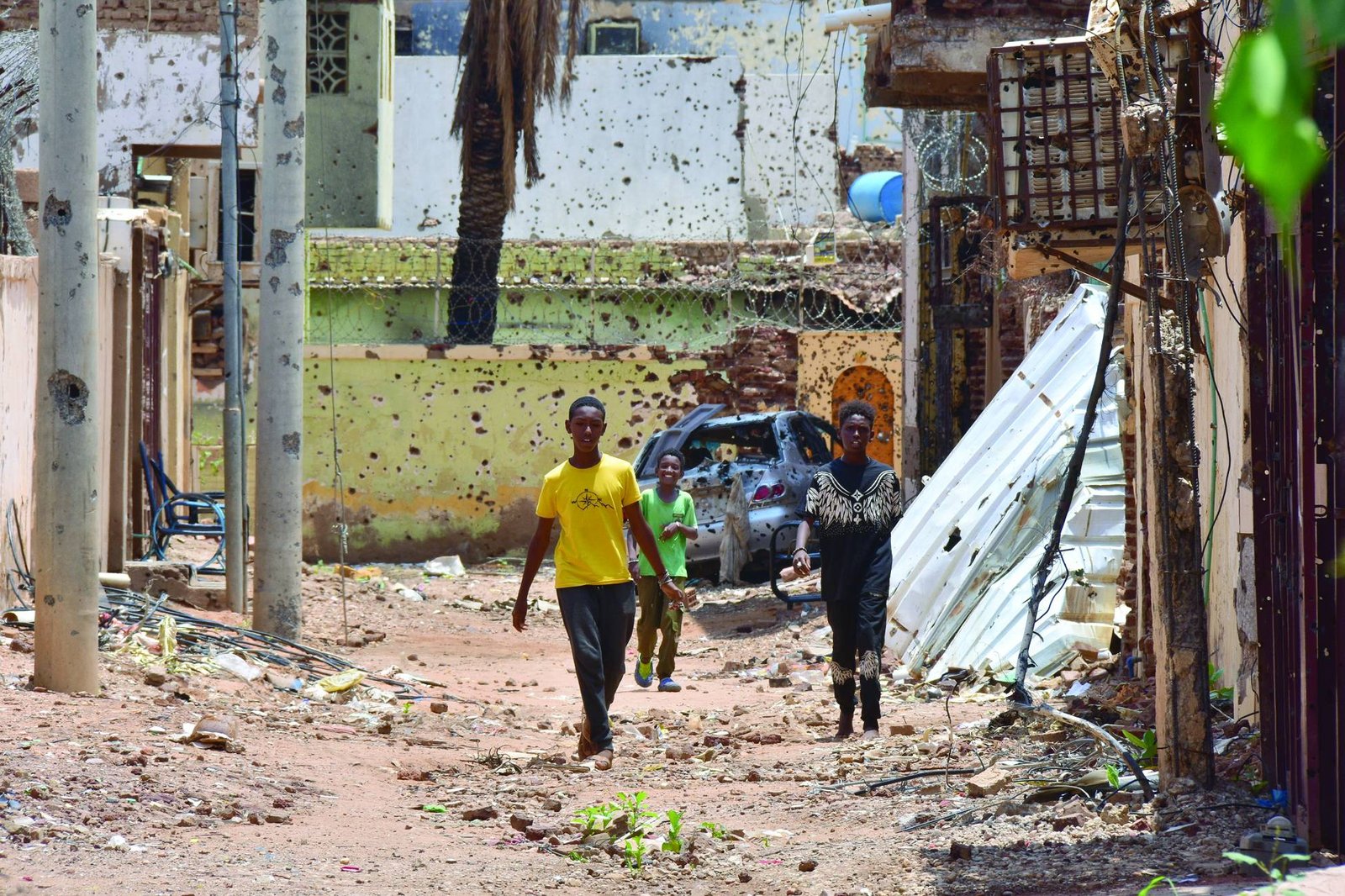
Al-Fashir may be the clearest example. The city remained under siege for nearly 18 months, while its residents endured extremely harsh humanitarian conditions. Yet there was no decisive international action commensurate with the scale of the warnings to prevent the city's fall. After Al-Fashir fell late last year, shocking violations and massacres took place, raising a fundamental question: Why did the international community fail to act with the same urgency when the warnings still offered an opportunity to intervene and prevent the catastrophe?
International testimonies and reports have documented routes used to transfer weapons, drones, and mercenaries to the RSF through regional corridors, including those involving Ethiopia, Chad, and Libya. One of the most prominent testimonies in this regard was delivered by Nathaniel Raymond, Executive Director of the Yale Humanitarian Research Lab, before the British Parliament in late June. Raymond openly criticized the British government, accusing it, along with other Western governments, of hesitating to exert pressure on those supplying the RSF with advanced weapons, out of concern that doing so could harm economic and political interests.
According to Raymond's account, he submitted more than 70 reports and held 24 briefings with British officials between 2023 and 2025. These included documents, satellite imagery, and repeated warnings of an imminent catastrophe in Al-Fashir. Nevertheless, he argued, insufficient concrete steps were taken to prevent the city's fall.
From the beginning of the war, the external intervention fueling the conflict was known, as were many of the actors involved and the routes through which supplies were delivered. Yet Western measures—particularly those led by the United States—to halt the flow of weapons to the RSF have remained, in the view of their critics, limited or largely symbolic, especially when it comes to the sources of those supplies or the countries through which the shipments pass.
Against this backdrop, the U.S. call at the Security Council this week to expand the arms embargo imposed on Darfur to cover the entire territory of Sudan, including drones, was presented as an effort to halt the flow of weapons fueling the war, accompanied by warnings about the humanitarian catastrophe. Yet understanding the timing requires placing the initiative within its broader context.
First, the proposal comes at a time when the military balance appears to be shifting more in favor of the Sudanese Armed Forces, which have advanced in important areas in western Sudan while the RSF has suffered significant losses in personnel and equipment, in addition to continuing defections from its ranks. This raises the question of whether the purpose of expanding the embargo is to weaken the Sudanese Armed Forces at this particular stage and provide the RSF with an opportunity to reorganize its forces.
Second, Security Council Resolution 1591, adopted 22 years ago, failed to halt the flow of weapons or end the fighting in Darfur, nor did it prevent the violations witnessed in the region during the current war. What, then, would make an expansion of the resolution more effective today?
Third, the timing of the initiative raises additional questions, particularly as it coincides with expectations surrounding the final report of the UN Panel of Experts on Darfur and comes shortly before the arms embargo on the region is due to expire on September 12, unless a new arrangement is reached. A leaked draft reportedly indicated that the report would examine in detail the supply of weapons to the RSF and their sources, as well as the issue of Colombian mercenaries participating in the fighting.
Fourth, Security Council discussions have revealed that expanding the embargo will not be easy. Russia has warned against measures that could weaken the Sudanese Armed Forces, while other countries, including Saudi Arabia, Egypt, Pakistan, and China, have emphasized the importance of Sudan's sovereignty, territorial integrity, and state institutions.
No one denies the scale of Sudan's humanitarian tragedy, nor can violations be justified regardless of who commits them. But using the humanitarian dimension to justify selective policies does not help bring the war to an end. The real question is not merely how the war can be stopped, but also how it can be stopped, in what form, under what guarantees, and without turning the end of the fighting into the beginning of state collapse.
The Sudanese Armed Forces are a national institution and a fundamental pillar of the Sudanese state. Weakening or dismantling state institutions is not a path to peace. The experiences of the region and the wider world demonstrate that states whose armed forces have collapsed have rarely found themselves on the other side facing stable peace. Instead, they have often confronted security vacuums and disorder from which recovery is extremely difficult.
Most read



Read also