

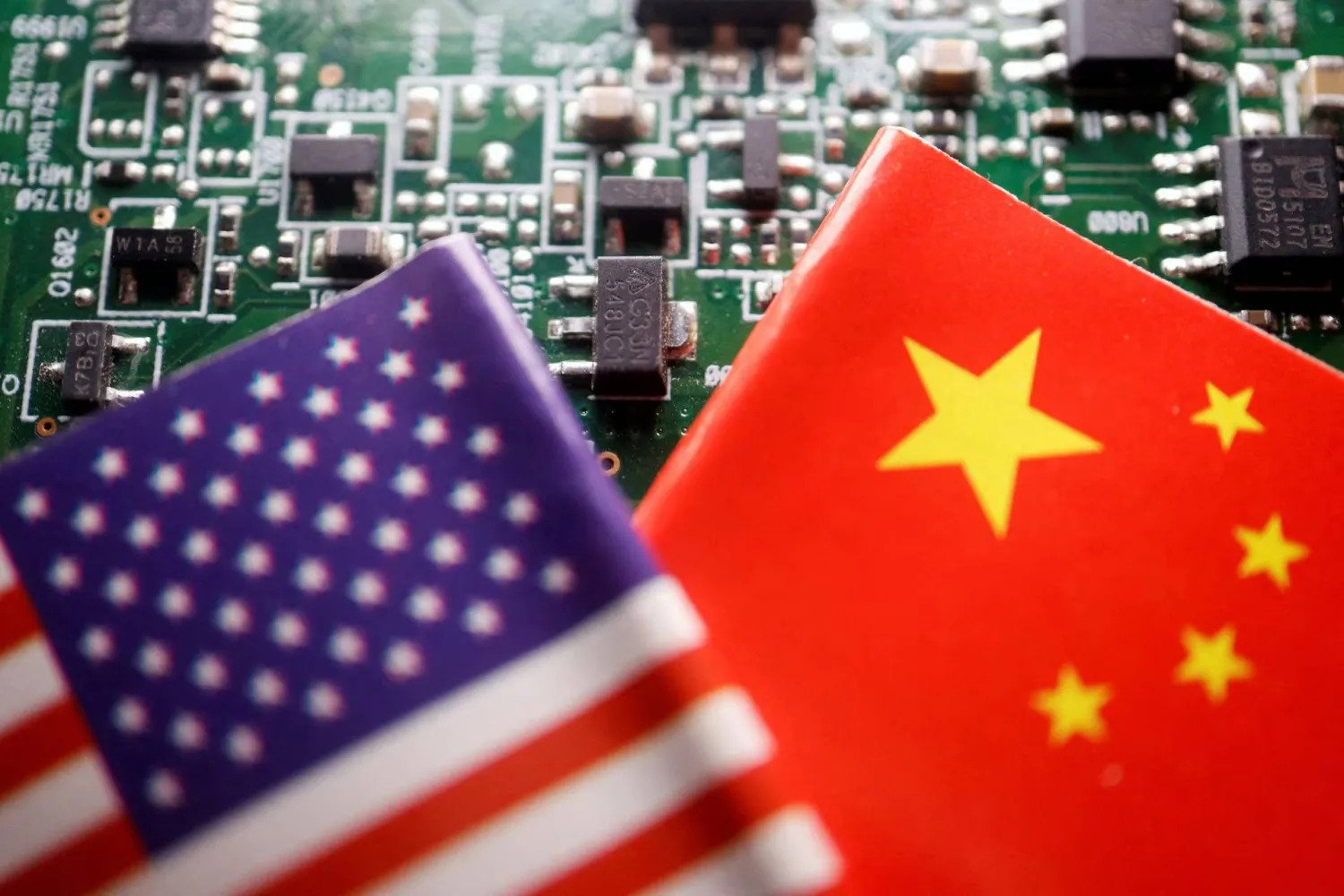
Empires in the twenty-first century are no longer measured by the size of the territories they occupy or the number of armies they deploy across continents. Instead, they are increasingly defined by their ability to control data, dominate digital infrastructure, and lead the race in artificial intelligence. The world is undergoing a historic transition—from an era in which power was rooted in geography to one in which influence is exercised through networks, platforms, and algorithms as much as through military force.
Historically, every empire has revolved around a powerful center that projects authority over its peripheries. From the Roman and Ottoman Empires to the British Empire, imperial dominance depended on territorial conquest, secure transportation routes, and the ability to suppress rebellion through overwhelming force. Roads, ports, and military outposts served as the arteries that sustained imperial control. Yet history repeatedly demonstrates that empires often collapse for the very reasons that once fueled their rise: overexpansion, resource depletion, declining legitimacy, and the emergence of powerful rivals.
While this historical pattern remains constant, the instruments of power have changed fundamentally. In the agricultural age, land was the principal source of wealth. During the Industrial Revolution, manufacturing became the foundation of economic and military superiority. Today, however, data, knowledge, computational capacity, and artificial intelligence have emerged as the strategic resources that determine global influence. As futurist Alvin Toffler argued, whoever controls the dominant source of wealth in a given era ultimately commands its power. In the digital age, that source of wealth is no longer territory but information.
Consequently, geography has not disappeared, but it has lost its monopoly over power. States that possess advanced digital platforms, semiconductor technologies, cloud computing capabilities, and data infrastructure can project influence across continents without deploying a single soldier. Political, economic, and even cultural power can now be exercised remotely through technological ecosystems that transcend national borders.
This transformation explains the gradual shift from the traditional concept of empire toward that of hegemony. Classical empires ruled through direct territorial control and political annexation. Contemporary hegemonic powers, by contrast, shape international affairs through technological superiority, global alliances, economic institutions, financial networks, and digital platforms. Rather than governing territories outright, they establish the rules by which others operate.
The United States provides perhaps the clearest example of this evolution. Since the end of the Second World War, Washington has built an international order supported by military alliances, financial institutions, and technological leadership. In recent decades, American technology giants have become strategic instruments of national influence, shaping global communications, financial systems, public opinion, and even national security. Their impact extends well beyond economics, making them central actors in geopolitical competition.
China, meanwhile, has pursued an alternative model by investing heavily in telecommunications infrastructure, artificial intelligence, semiconductor manufacturing, and digital sovereignty. Beijing's objective is not merely economic competitiveness but the construction of an independent technological ecosystem capable of reducing reliance on Western innovation. Europe has adopted yet another approach, leveraging regulatory power to shape the global digital economy through rules governing data protection, competition, and digital markets.
These developments have given rise to what many scholars describe as "digital empires." The principal battleground of international competition is no longer limited to oil reserves, strategic waterways, or territorial frontiers. Instead, it increasingly revolves around data ownership, technological standards, semiconductor supply chains, cloud infrastructure, and artificial intelligence. Technology companies themselves have evolved into geopolitical actors whose influence sometimes rivals that of nation-states.
This perspective aligns closely with Parag Khanna's concept of Connectography, which argues that connectivity has become more consequential than political borders. In an interconnected world, power belongs to those who control the infrastructure that links economies, societies, and information flows. Geography has not disappeared—it has simply been redefined through digital networks.
Similarly, Anu Bradford, in Digital Empires, argues that the global digital order is increasingly fragmented among three competing regulatory and technological spheres: the United States, China, and the European Union. Each seeks not only technological leadership but also the ability to establish the legal and technical standards that govern the digital world. As a result, cyberspace itself is becoming geopolitically fragmented.
Within this new strategic environment, data has become the defining resource of national power. States capable of collecting, processing, securing, and exploiting vast quantities of information enjoy significant advantages in artificial intelligence, economic productivity, military effectiveness, and diplomatic influence. It is therefore unsurprising that semiconductors, cloud computing, submarine communication cables, satellite constellations, and AI infrastructure have become matters of national security rather than purely commercial concerns.
None of this suggests that military power or geography have become obsolete. Conventional armed forces, strategic waterways, and natural resources remain indispensable. However, their effectiveness increasingly depends on digital superiority. Modern warfare, intelligence gathering, logistics, and command-and-control systems all rely on advanced computational capabilities and secure digital networks.
The defining strategic question of our era is therefore no longer: Who controls the largest territory? Rather, it is: Who controls the world's digital infrastructure? Who owns the data? Who develops the most advanced artificial intelligence? Who sets the technological standards by which the global economy operates?
The empires of the twenty-first century are unlikely to resemble those of the past. They may possess few colonies and occupy little foreign territory, yet they will exercise unprecedented influence through technological ecosystems, digital platforms, and information networks. Their authority will rest not on geographical expansion but on the ability to shape the world's digital architecture.
Just as territorial reach once defined imperial greatness, digital reach is becoming the decisive measure of strategic influence. In an era where the agricultural, industrial, and digital revolutions have converged, technological leadership has become the principal currency of power. The nations that master digital innovation will not merely dominate future markets—they will redefine the international order itself.
Most read



Read also