
In a little-known text, the Spanish poet Federico García Lorca tells of two horsemen who happen to meet at a crossroads somewhere in Andalusia.
“Where are you coming from?” one asks the other.
“From Granada,” comes the reply.
“And where are you going back to?”
“To Granada,” the second horseman answers.
Shortly before they part, the first asks one final question:
“And what do you do for a living?”
The second horseman, visibly astonished by the question, replies:
“What work could possibly be expected of a man who comes from Granada?”
At first glance, the reader may find little in this brief dialogue that appears directly relevant to the subject of this article. The most immediate interpretation is perhaps that Lorca’s almost obsessive love for his southern Spanish city — and his use of the second horseman as a kind of alter ego — led him to suggest, through the voice of his imaginary character, that simply belonging to a city as beautiful and steeped in history as Granada might be enough to fill its inhabitants with such a sense of fulfillment and intoxicating love of place that nothing else need occupy them.
Yet poetry is inherently open to multiple meanings and layers of interpretation. Ever since I first encountered this text several decades ago, it has remained lodged in my memory and drawn me toward another reading: that the second horseman is the poet himself, and Granada is poetry — a self-sufficient art that requires no supplement, insisting on becoming the central preoccupation, lifelong pursuit, and sole “profession” of anyone devoted to it.
Perhaps those who regard poetry as the most narcissistic of arts are not far from the truth. Poetry tolerates no rival and accepts no competing “co-wife.” To achieve its fullest realization — given that its expressive vocabulary opens onto infinite possibilities and countless accidents of juxtaposition — it may require an equally infinite number of lives.
Yet several pressing questions inevitably arise. Some concern whether it is possible to combine two or more arts within a single creative life, and what such plurality means for creative identity. Others concern whether an artist can truly produce two different forms of creative work with equal mastery and depth.
As far as the first question is concerned, what applies to poetry applies, to one degree or another, to the other arts as well. Each refuses half-measures and is reluctant to surrender any portion of the artist’s loyalty to a rival or partner.
A close examination of creative experience across different fields leads us to conclude that the arts, however varied their methods and modes of expression, share at their deepest level something akin to the same genetic characteristics and the same impulse toward exclusivity.
Beyond innate talent, every art demands that its practitioner devote to it the sum of their energy, the peak of their creative intensity, and the fullness of their years. Without such devotion, it will not allow them to reach the Himalayas of creativity; at best, it will leave them somewhere midway between the summits and the foothills.
Despite the enormous cost of possessing a dual or multiple creative identity, many artists and writers have ventured into this dangerous territory, dividing themselves among radically different forms of expression. Yet very few have succeeded in producing two forms of literature or art with equal brilliance and at the same level of achievement.
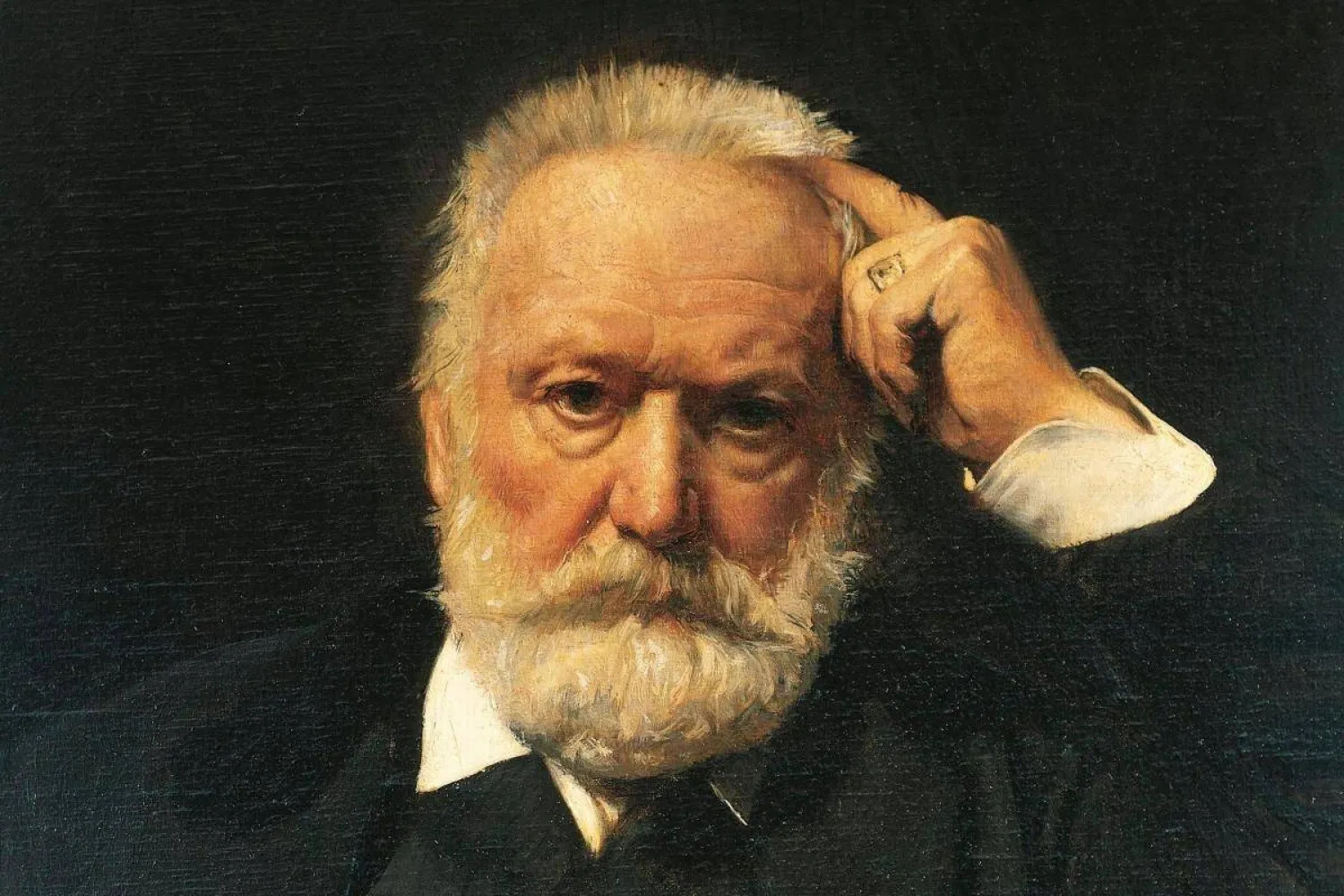
The extraordinary example of the French writer Victor Hugo is perhaps the first that comes to mind when discussing multifaceted genius. His distinguished Romantic achievement in poetry did not prevent him from producing novels of comparable stature and significance, including Les Misérables and The Hunchback of Notre-Dame.
Johann Wolfgang von Goethe, meanwhile, enriched German language and culture with an integrated intellectual and creative project in which the differences in achievement among poetry, philosophy, fiction, and drama do not appear overwhelmingly wide.
Similarly, the Russian writer Boris Pasternak, author of Doctor Zhivago, achieved a comparable balance between two creative poles: poetry and the novel.
European literature and thought have, of course, offered the world numerous examples of composite creative identities.
Alexander Pushkin worked across poetry, narrative fiction, and drama; William Blake combined poetry and painting; Rembrandt left an important written record through diaries; Vincent van Gogh created a remarkable literary legacy through his letters; André Breton wrote poetry and fiction; and Jean-Paul Sartre moved between philosophy, the novel, and the theatre, among many other examples.
Yet what must be emphasized is that each of these figures ultimately inscribed his name in the record of immortality primarily through one central creative field: poetry in the cases of Pushkin, Blake, and Breton; painting in the cases of Rembrandt and Van Gogh; and philosophy in Sartre’s case.
Arab culture, naturally, has not remained untouched by dual or multiple creative identities, particularly when it comes to combining poetry and the novel.
Yet many of those who ventured into this territory were unable to conceal the evident disparity between their primary creative identity and their secondary one, which often appeared closer to an acquired craft or an intellectual pastime than to an innate creative calling.
The poems and poetry collections written by Jabra Ibrahim Jabra, Ghada Al-Samman, Kateb Yacine, Tahar Ben Jelloun, Rashid Al-Daif, and others can hardly be compared, in terms of depth, originality, and distinction, with what they achieved through their fiction.
Likewise, the novels, narrative works, and plays written by Arab poets of widely differing styles and orientations — including Muhammad Al-Maghut, Ghazi Al-Gosaibi, Mohammed Achaari, Abbas Beydoun, Salim Barakat, Paul Chaoul, Hassan Najmi, Abdo Wazen, Ahmed Al-Shahawy, and many others — remain, despite the importance of some of these works, less significant than their poetry and collections, which occupy prominent positions in contemporary Arabic poetics.
The experience of Ibrahim Nasrallah, however, in whose work poetry and the novel stand side by side on almost equal footing, represents one of the rare exceptions that proves rather than disproves the rule.
None of this categorically denies the existence of creators endowed with multiple talents. Yet such an exceptional gift does not descend upon those who possess it as an unqualified blessing. It can equally become a curse — a source of suffering and inner division.
To live simultaneously with two major forms of literature or art is to expose oneself to continual depletion. It can leave the artist vulnerable to physical and psychological crises, especially because each creative form inevitably feeds on the “flesh” of the other, drawing from the same reservoir of energy, imagination, and experience.
The late Lebanese poet Hassan Abdullah once expressed the tragic brevity of life in his characteristically ironic way:
“Life is too little; life is less than two women.”
The same might be said of the difficulties and consequences that arise when creative identity is divided between two competing callings.
Indeed, the anxiety-ridden, almost schizophrenic predicament of a writer attempting to accommodate two creative genres within a single lifetime may resemble that of an ancient Bedouin poet whose passionate attachment to women led him to marry two wives, both of whom he loved deeply.
But when his dreams shattered against the hard rock of reality, he cried out in bitter disappointment:
I married two, in ignorance of the plight
That falls upon the husband of two wives.I thought I’d be a ram between them both,
In comfort with the finest of two ewes.Instead, I turned into a helpless sheep,
Passed back and forth between two vicious wolves.One claims a night, the other claims the next—
And both my nights are everlasting pain.
Source: Asharq Al-Awsat
Most read