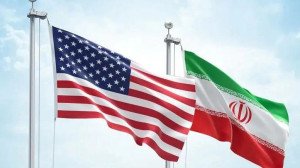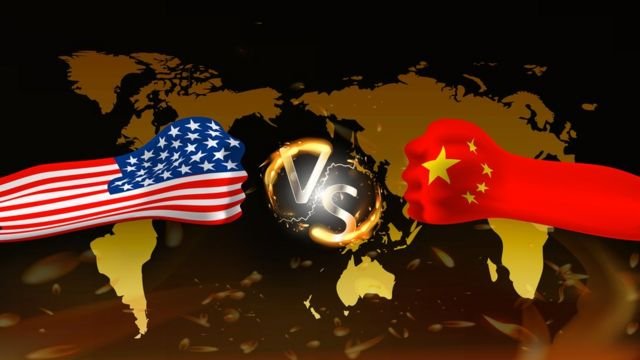
The war between the United States and Iran can no longer be understood simply as a bilateral confrontation between Washington and Tehran. Behind the military operations and economic pressure, another layer of competition is increasingly taking shape—one tied to China’s rise and the broader strategic rivalry between Beijing and Washington.
This does not mean that the United States is fighting China through Iran, nor does it suggest that Beijing has become a direct military participant on Tehran’s side. Yet the continuation of the conflict is increasingly exposing points of friction between the two powers over energy, sanctions, technology, maritime security, and the broader struggle over the regional balance of power in the Middle East and the limits of American influence.
This raises a question that extends beyond the future of the war itself: Is Iran gradually becoming another arena of indirect competition between the United States and China?
China as an Economic Safety Net for Iran
Economics is the starting point for understanding China’s role. Throughout years of Western sanctions, China has become one of the most important outlets allowing Iran to preserve part of its external trade, particularly its oil exports.
This relationship becomes even more significant during wartime because Tehran’s ability to endure does not depend solely on its military capabilities. It also depends on its capacity to finance the state, maintain access to foreign currency, and preserve links to international markets.
From this perspective, Chinese purchases of Iranian oil are more than a commercial relationship. They indirectly affect the effectiveness of Washington’s pressure strategy. As long as Iran can maintain a significant portion of its oil exports, sanctions have a more limited ability to suffocate the Iranian economy and force Tehran to alter its strategic calculations.
Independent Chinese refineries have played an important role in this equation, benefiting from their relatively limited exposure to the Western financial system compared with China’s major state-owned energy companies.
As a result, U.S. pressure has gradually expanded from targeting Iranian institutions to pursuing companies, traders, and logistics networks associated with Iranian oil exports, including Chinese entities.
Washington, however, faces a delicate strategic dilemma. Imposing extensive sanctions on Iranian institutions that are already largely isolated from the global economy is relatively straightforward. The calculation becomes considerably more complicated when major Chinese institutions deeply integrated into the international economy are involved.
Excessively expanding sanctions against Chinese entities could therefore produce the opposite of the intended effect: transforming an effort to isolate Iran economically into a much broader economic confrontation with China.
Technology May Be the More Sensitive Battleground
If oil represents an economic lifeline for Iran, technology may be the more sensitive element of the China-Iran relationship from the perspective of U.S. national security.
Modern wars no longer depend exclusively on finished weapons systems. Navigation technologies, communications equipment, satellite capabilities, microelectronics, sensors, and advanced industrial components can play decisive roles in enhancing a country’s military capabilities even in the absence of direct arms transfers.
This is where the challenge of dual-use goods becomes particularly significant. Technologies originally developed for commercial or civilian purposes can ultimately enter military production and operational supply chains.
Reports have pointed to flows of components from Chinese suppliers to Iran, including electronics and technologies with potential dual-use applications. Washington has also been monitoring procurement networks that it accuses of helping Tehran gain access to technologies associated with its military and nuclear programs.
Allegations have also emerged concerning the possible provision by Chinese entities of information or technological services that could carry operational value for Iranian forces—claims that Beijing has rejected or whose implications it has disputed.
The central issue is not necessarily whether China has become a direct military supplier to Iran. Rather, the controversy reveals a larger problem confronting U.S. strategy: the dividing line between the civilian economy and military power is becoming increasingly blurred.
In an era when military superiority depends on semiconductors, data, satellite imagery, artificial intelligence, and advanced communications, international commercial networks can affect a state’s ability to withstand war without sending soldiers or complete weapons systems.
This is precisely what makes the technological dimension of China-Iran relations potentially more consequential over the long term than simply calculating the volume of Iranian oil purchased by Beijing.
The Strait of Hormuz: Where Competing Interests Converge
The Strait of Hormuz crisis further illustrates the complexity of China’s position.
As one of the world’s largest energy importers, China depends heavily on stable oil and gas flows from the Middle East. Any prolonged disruption to shipping through the Gulf and the Strait of Hormuz would therefore constitute not only an American problem but also a direct threat to Chinese economic interests.
This creates a notable paradox: despite their strategic rivalry, the United States and China share an interest in preventing the collapse of freedom of navigation and maintaining energy flows through the region.
Their motivations, however, are not identical.
The United States views freedom of navigation as part of its longstanding role in protecting the international maritime order, in addition to its broader economic and security interests. China approaches the issue partly through the lens of energy security and the stability of the supply chains on which its economy depends.
Beijing therefore has little interest in seeing Iran collapse or disappear from the Middle Eastern balance of power. At the same time, China would gain little from an open-ended war that destabilizes energy markets or closes critical maritime routes.
This equation helps explain an important feature of Chinese policy: preserving Iran’s economic and political capacity while simultaneously seeking to prevent the confrontation from escalating into an uncontrollable regional war.
Why China Is Unlikely to Become Iran’s Military Ally
Despite the significance of bilateral relations, describing China as Iran’s military ally exaggerates the nature of Beijing’s commitment.
China has a much broader network of interests across the Middle East, and its regional strategy cannot be reduced to its relationship with Tehran.
Saudi Arabia, the United Arab Emirates, and other Gulf states are major economic, commercial, and investment partners for China. The region as a whole also plays a central role in securing Beijing’s energy requirements.
A full military alignment with Iran could therefore threaten one of the most important sources of Chinese influence in the region: Beijing’s ability to maintain relatively strong relationships with competing regional actors simultaneously.
This is one area in which China’s strategy differs from the traditional American alliance model.
Beijing has sought to expand its influence in the Middle East through economics, trade, energy, infrastructure, and diplomacy while avoiding the same security and military costs that the United States has borne for decades.
Iran is therefore an important strategic partner for China, but not necessarily one for which Beijing would be willing to sacrifice the rest of its network of interests across the Gulf.
The Real Test: Can U.S. Sanctions Still Isolate Adversaries?
The deeper significance of the war is that it is testing not only Iran’s military capabilities or Washington’s ability to impose costs on Tehran. It is also testing one of the most important instruments of American power since the end of the Cold War: the ability to use the international financial system to isolate adversaries.
For decades, the United States has relied on the centrality of the dollar, the Western banking system, secondary sanctions, and export controls to restrict targeted states’ access to trade, finance, and technology.
China’s rise introduces a new variable into this equation.
When the world’s second-largest economy is willing to maintain a degree of trade with a sanctioned state, achieving comprehensive isolation becomes considerably more difficult.
Every barrel of Iranian oil that reaches the Chinese market reduces, to some extent, the ability of sanctions to cut Tehran’s revenues. Every technological component reaching Iran through a complex commercial network represents another challenge to export-control regimes. And every attempt by Washington to punish Chinese entities raises the question of how far the United States can go without triggering a broader economic confrontation with Beijing.
In this sense, Iran is becoming a practical laboratory for measuring the limits of American financial power in a world that is less unipolar than it was two decades ago.
China Is Not Only Protecting Iran—It Is Protecting Its Own Strategic Space
Chinese behavior can also be interpreted from a broader perspective. For Beijing, the issue is not Iran alone. It is also about the precedent that could be established if the United States successfully isolates a major country economically and technologically while compelling other actors to sever their ties with it.
China understands that the sanctions and export-control tools currently used against other states could become central components of a future economic or technological confrontation with Beijing itself.
Maintaining commercial, financial, and technological networks capable of operating at least partially beyond the reach of American pressure therefore carries strategic value for China that extends well beyond its relationship with Tehran.
From this perspective, Chinese trade with Iran is not merely a policy decision concerning a Middle Eastern country. It is part of a broader effort to strengthen China’s economic resilience against Western instruments of coercion.
This is where the war with Iran intersects with the larger struggle over the future of the international order.
The Middle East as a New Arena of U.S.-China Competition
For years, discussions of U.S.-China competition have focused primarily on East Asia, the South China Sea, Taiwan, global trade, semiconductors, and artificial intelligence.
The Iranian case suggests that the rivalry is becoming increasingly geographically dispersed.
With its energy reserves, maritime chokepoints, strategic geography, investment networks, and infrastructure, the Middle East is gradually becoming another region in which the interests of the two powers intersect and compete.
This does not necessarily mean that the region will experience a new version of the Cold War in which states are divided into American and Chinese blocs. The emerging landscape is likely to be considerably more complex, particularly because many regional powers are attempting to preserve security relationships with Washington while simultaneously expanding their economic ties with Beijing.
This gives China room to expand its influence without having to militarily displace the United States from the region.
A War Within a Larger Rivalry
It would be an exaggeration to describe the U.S.-Iran war as an undeclared U.S.-China war. Chinese forces are not fighting the United States, and Beijing does not appear interested in turning Iran into a theater of direct military confrontation with Washington.
Yet it would be equally misleading to treat the China factor as marginal.
The war increasingly places the two powers opposite one another across a growing range of issues. Washington relies on military force, sanctions, financial leverage, and technological controls. Beijing, meanwhile, draws on trade, energy purchases, economic networks, diplomacy, and its growing ability to provide partial alternatives to systems dominated by the United States.
The most important question, therefore, may not be whether China will enter the war on Iran’s side, but whether the conflict will accelerate the transition of U.S.-China competition into a new phase.
In that phase, rivalry would no longer be confined to tariffs, semiconductors, and Taiwan. It would extend further into sanctions, energy, maritime chokepoints, the Middle East, and the ability of each power to protect its partners and economic networks from the leverage of the other.
If that happens, one of the war’s most consequential long-term effects may be that it reveals the confrontation over Iran to be part of a much larger transformation in the international system—one in which a single power’s ability to impose comprehensive isolation is diminishing while a rising power seeks to construct economic and diplomatic networks capable of limiting the effectiveness of its rival’s instruments of coercion.
Iran would then represent more than one party in a regional war. It would become one of the arenas in which the defining question of international politics in the years ahead is tested: To what extent can the United States preserve the instruments of power and influence it has built over previous decades, and to what extent can China construct a parallel system capable of limiting their effectiveness without entering into direct military confrontation?
Most read




Read also