Beyond UNIFIL: Is Southern Lebanon Moving from Peacekeeping to “Verification”?

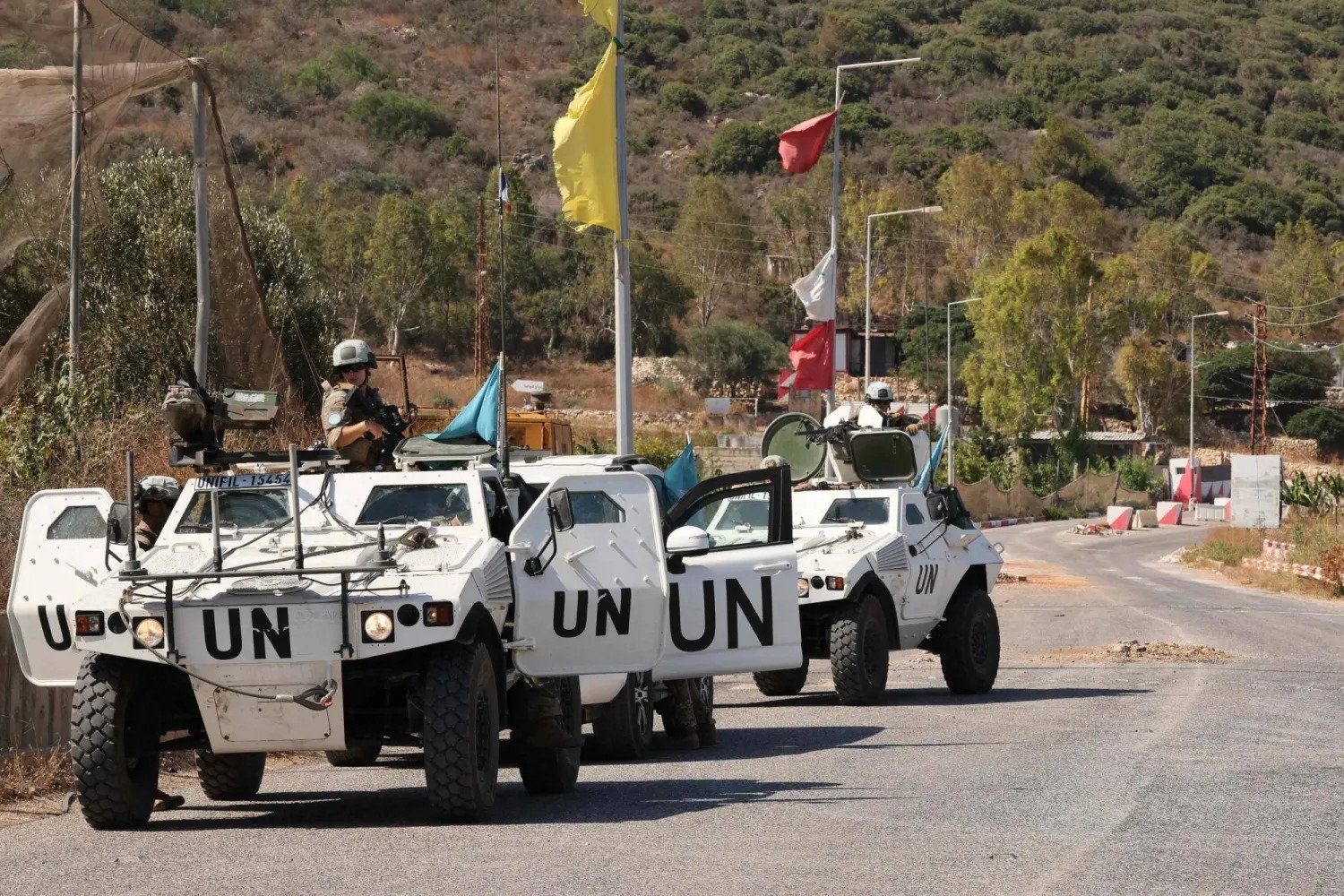
The debate over the future of the United Nations Interim Force in Lebanon (UNIFIL) appears to be moving beyond the question of simply renewing its mandate in a modified form and toward a broader redefinition of the international role in southern Lebanon. While the end of UNIFIL’s mission appears increasingly likely, discussions are now focusing on the nature of the alternative, its identity, its mandate, and—most importantly—the limits of its authority and its relationship with the Lebanese Armed Forces.
This is what makes the coming phase particularly significant. The question is no longer simply: Who will replace UNIFIL? It is: What role will the new force actually perform?
The proposals currently under discussion, according to the report, point toward a possible transition from an international force whose primary role is to monitor implementation of Resolution 1701 and support stability, to a mechanism focused more heavily on verifying the implementation of specific commitments, particularly the exclusivity of weapons south of the Litani River.
If adopted, such a shift could fundamentally alter the nature of the international role in southern Lebanon while raising sensitive questions about Lebanese sovereignty and the limits of external involvement.
The End of UNIFIL Does Not Mean the End of the International Role
UNIFIL’s presence in southern Lebanon, in its current form, has been closely associated with Resolution 1701, which became the principal international framework governing the situation in the south following the 2006 war.
However, the information in the report suggests that the current discussion is moving toward ending this arrangement, with alternatives being considered in which Europe could play a leading role, particularly Italy, France, Spain, and possibly Germany, alongside a potential U.S. role in verification committees.
The end of UNIFIL, therefore, would not necessarily mean the withdrawal of the international community from the Lebanese file. Rather, it could mean a restructuring of both its presence and its function.
This is a crucial distinction, because moving from one arrangement to another involves more than redistributing troops or changing an institutional name. It could reflect a shift in the priorities of the international parties involved.
If the previous mission centered on peacekeeping and monitoring compliance with Resolution 1701, the new mission could focus more heavily on verifying the results of measures carried out by the Lebanese Armed Forces.
The Potential European Force: Continuity and Change
According to the report, the Italian proposal under discussion envisions a smaller but more effective international presence, focused on supporting the Lebanese Armed Forces, protecting civilians, supporting the ceasefire mechanism, monitoring and reporting, and potentially contributing to disarmament-related measures if there is political agreement on them.
This formula contains two seemingly contrasting elements.
On the one hand, there is a desire to preserve a degree of continuity, preventing a sudden international vacuum in the south and maintaining a European role in supporting stability and assisting the Lebanese military.
On the other hand, the focus on verifying weapons exclusivity introduces a new dimension to the mission, directly linking the prospective force to a highly sensitive political and security issue in Lebanon.
The success of a European formula, therefore, will depend not simply on the number of participating countries or the size of the force, but on the nature of the mandate it receives.
From “Peacekeeping” to “Verification”: The Most Important Shift
The conceptual transition from a peacekeeping force to verification committees may initially appear to be an administrative change, but it carries significant political and military implications.
A force that monitors the situation and reports on the level of compliance is fundamentally different from an entity tasked with directly verifying the implementation of specific measures.
The distinction becomes even more important when the issue is weapons exclusivity.
If the Lebanese Armed Forces are responsible for inspections, seizures, and field operations, while the international mechanism merely verifies the results and submits reports, the relationship between the two sides could remain within a framework that is more clearly compatible with Lebanese sovereignty.
But if the international body moves beyond verifying results and begins participating in field operations or directly supervising how they are conducted, the nature of the relationship would change significantly.
This is likely to be one of the most sensitive points in any future arrangement.
Who Will Monitor the Lebanese Army?
The example cited in the report involving the discovery of a weapons depot illustrates the nature of the problem.
If information emerges about the existence of a weapons storage site and the Lebanese Army identifies the location and conducts a raid, there are two possible models.
Under the first, Lebanese forces would carry out the operation and then submit a report to the verification committee, which would review the outcome and confirm that the mission had been completed.
Under the second, the international body would accompany Lebanese forces during the operation or monitor the search on the ground through its personnel, equipment, communications systems, or surveillance capabilities.
The difference between the two models is not merely technical.
Under the first, the Lebanese Army remains responsible for both decision-making and execution, while the international body performs an oversight function after the fact.
Under the second, the international party becomes present within the operation itself.
This raises a fundamental question about who ultimately holds military decision-making authority on the ground.
The Lebanese Army may accept the principle of international verification, particularly if the objective is to support Lebanon’s compliance with international arrangements. But it may face greater difficulty accepting the presence of an external party outside its military chain of command directly directing or supervising its operations.
Weapons Exclusivity and Israeli Withdrawal: Two Interlinked Issues
The debate over weapons exclusivity south of the Litani cannot be separated from the issue of Israeli withdrawal.
This is an important element of the Lebanese position as reflected in the report. Lebanon, according to this view, does not necessarily object to a mechanism for verifying weapons exclusivity, but it wants a clear mechanism for verifying Israeli withdrawal as well.
This creates a question of balance.
If an international body is expected to verify compliance by one Lebanese party with its commitments, then, from the Lebanese perspective, there should also be a clear mechanism for verifying the commitments of the other side.
Otherwise, the verification mechanism could be viewed by Lebanon as an instrument focused primarily on one side of the security equation in southern Lebanon.
The viability of any new arrangement will therefore depend to a considerable extent on its ability to address mutual obligations, rather than focusing exclusively on weapons exclusivity.
The United States and Israel in the Background
The information in the report suggests that there is U.S. interest in giving verification committees greater executive powers, amid Israeli pressure in the same direction.
This makes the identity of the force less important than the nature of the mandate under which it operates.
A European force may be more acceptable to Lebanon, but if it is granted powers extending beyond monitoring and verification to direct supervision of operations, the underlying issue would remain regardless of the nationality of the participating forces.
At the same time, a U.S. role in verification committees could give the new mechanism greater political weight, but it could also make it more sensitive for Lebanese parties that view the U.S. role as part of the broader regional balance.
The dispute, therefore, is not simply about who will participate in the force, but about who will define the rules governing its operations and who will have the final say in interpreting its mandate.
The Lebanese Armed Forces at the Center of the Equation
Perhaps the most important factor in any future arrangement will be the position of the Lebanese Armed Forces.
An alternative to UNIFIL cannot succeed if it weakens the role of Lebanon’s military institution or places it in a subordinate position to an international body.
At the same time, the international community appears interested in ensuring that the Lebanese Army has the capacity to carry out responsibilities related to weapons exclusivity and maintaining stability in the south.
This places the Lebanese Army in a delicate position. It is expected to demonstrate its ability to play a central role in security south of the Litani, while at the same time preserving the independence of its military decision-making.
The most sustainable model may therefore be one in which the Lebanese Army carries out operations while an international mechanism verifies and reports on their implementation, rather than a model in which the international body becomes a direct participant in execution.
Reaching such a balance, however, will require a clear political agreement on the respective powers and responsibilities.
Could “Verification” Become a Form of Oversight?
One of the greatest concerns is that verification could gradually evolve into a form of indirect supervision.
If an international committee begins by receiving reports, then requests additional information, subsequently moves to monitoring operations on the ground, and eventually becomes involved in determining how the Lebanese Army should carry out its duties, the distinction between “verification” and “supervision” could become increasingly blurred.
For this reason, defining the powers of any new mechanism in advance will be essential.
It is not enough to determine what the new force can do. It is equally important to define what it cannot do.
This issue may be no less important than determining the number of troops, their nationalities, or the source of the mission’s funding.
The Real Alternative May Be Political Before It Is Military
The discussions surrounding the future arrangement reveal a broader reality: the future of southern Lebanon will not be determined by the international force alone.
Whatever its mandate, an international presence cannot by itself resolve the issues surrounding weapons, borders, withdrawal, or the relationship between the Lebanese state and the various forces operating on the ground.
An international mechanism can monitor, verify, and report, but it cannot substitute for Lebanese political consensus.
The success of any new arrangement will therefore depend on a broader understanding of the role of the Lebanese state and army, weapons exclusivity, and the reciprocal obligations of the parties along the border.
A More Sensitive Transitional Phase
Lebanon appears to be approaching a transitional phase in the south that goes beyond simply replacing one international force with another.
The issue concerns the redefinition of the relationship among three principal actors: the Lebanese state, the international presence, and the security reality along the border with Israel.
Any new formula will have to balance international security requirements, Lebanese interests, and the need to preserve the role of the Lebanese Army, at a time when these issues are intertwined with broader regional and international calculations.
The success of the next phase will therefore not be measured solely by the parties’ ability to agree on a replacement for UNIFIL. It will depend on their ability to answer the questions that have remained unresolved: What are the limits of the mandate? Who carries out operations? Who verifies them? Who submits the reports? And what mechanism ensures that all parties comply with their commitments?
The Real Test: The Nature of the Role, Not the Name of the Force
Ultimately, the focus on the identity of a potential European force or the number of participating countries may be less important than defining the nature of the role it will perform.
If the new force provides support to the Lebanese Army, protects civilians, monitors the cessation of hostilities, and verifies compliance with obligations, it could represent an enhanced continuation of the international role in southern Lebanon.
But if it moves into direct supervision of Lebanese military operations or acquires broad executive powers, the result would constitute a fundamentally different model from UNIFIL, even if the new force were European in character or retained some of the previous mission’s responsibilities.
The real contest in the coming phase, therefore, will be a contest over the definition of the mandate.
Lebanon needs an international mechanism capable of supporting stability and verifying compliance with commitments, while at the same time preserving the central role of its military and security institutions. The international community wants a more effective mechanism to ensure implementation of security arrangements, while other parties are seeking broader oversight of weapons.
The balance among these competing demands will determine the nature of the period that follows UNIFIL.
At its core, the issue is not simply: Who will replace UNIFIL?
It is: Will the replacement be a force that monitors what Lebanon implements, or one that participates with Lebanon in determining how those measures are carried out?
The answer will shape not only the future of the international presence in southern Lebanon, but also the limits of Lebanese sovereignty and the security balance that will govern the region in the period ahead.
Most read


Read also