
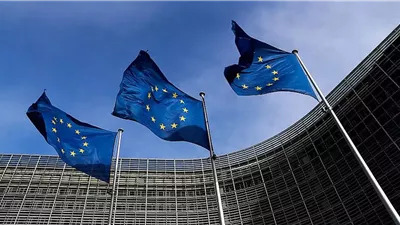
Amid the unprecedented escalation between Iran and Israel, and the growing risks to global energy security, trade routes, and regional alliances, Europe appears to be attempting to reclaim a role it has largely lacked in the Middle East for decades. The emergency meeting convened by the European Union with leaders from the Gulf and broader Middle East was not merely a diplomatic exercise; rather, it reflected a growing recognition within European capitals that the region’s ongoing transformations are no longer distant regional concerns but issues that directly affect European security and prosperity.
Since the end of the Second World War, Europe has largely operated in the Middle East under the strategic umbrella of the United States. Even when major European powers such as France, the United Kingdom, and Germany sought to pursue independent initiatives in the region, their efforts remained constrained by the realities of military power and international influence. Recent developments, however, have pushed the European Union to reconsider its traditional role and reassess its strategic interests in the region.
From Neighborhood Policy to Direct Security Concerns
Perhaps the most significant shift in Europe’s approach to the Middle East is the transformation of the region from a component of the EU’s “neighborhood policy” into a core issue of European national and collective security.
Conflicts in the Middle East no longer generate only local instability; they are increasingly linked to migration flows, energy security, terrorism, organized crime, and the stability of international trade networks. From this perspective, Europe does not view the current confrontation between Iran and Israel simply as another Middle Eastern crisis. Rather, it sees it as a potential threat to a broad range of vital European interests.
Any large-scale disruption in the Gulf, the Eastern Mediterranean, or the Red Sea could have immediate consequences for European economies that are still grappling with the repercussions of the war in Ukraine and the vulnerabilities exposed by recent energy crises.
Consequently, preventing regional collapse has become a strategic objective in itself, even if Europe lacks the capacity to impose comprehensive political settlements.
The European Power Dilemma
Despite this growing awareness, Europe faces a structural dilemma: the gap between the magnitude of its interests in the Middle East and the effectiveness of its instruments of influence.
European experiences over the past two decades have repeatedly demonstrated the limits of European power in the region. In Libya, France and Italy pursued competing agendas and ultimately failed to contribute to the reunification of the country. In Syria, Europe remained largely marginalized compared with Russia, the United States, Iran, and Turkey. In Lebanon, repeated French diplomatic initiatives failed to produce a meaningful breakthrough in the country’s chronic political crisis. Likewise, sustained European support for a two-state solution did little to halt the deterioration of the Palestinian issue or prevent the outbreak of the Gaza war.
These shortcomings reveal not only deficiencies in political will but also the limitations of European influence in a region where military power and strategic deterrence remain central determinants of political outcomes.
Iran: The Core of European Strategic Anxiety
While the war in Gaza has once again placed the Palestinian issue at the center of regional politics, Iran remains the deeper strategic challenge from a European perspective.
European policymakers view Iran’s nuclear program as one of the most sensitive issues shaping the future security architecture of the Middle East. The principal concern is that Iran’s transition from a threshold nuclear state to an actual nuclear weapons state could trigger a regional arms race involving other powers such as Saudi Arabia, Turkey, and potentially Egypt, fundamentally reshaping the region’s security environment.
At the same time, European leaders recognize that sanctions alone have failed to produce decisive changes in Iranian behavior. As a result, a growing school of thought within Europe advocates a dual-track approach that combines pressure with engagement—maintaining economic incentives while simultaneously increasing constraints on any move toward weaponization.
Yet this approach faces a more complicated reality: Iran’s expanding regional influence through a network of allied actors and non-state groups that have become embedded in the security landscape stretching from Iraq and Syria to Lebanon and Yemen.
The Middle East as an Arena of Global Competition
Europe’s broader challenge stems from the fact that the Middle East is no longer simply a turbulent region requiring crisis management; it has become one of the principal arenas of great-power competition.
The United States remains the dominant military actor. Russia has consolidated its presence in Syria. China continues to expand its economic and diplomatic footprint across the region. Within this environment, Europe finds itself in a difficult position: it possesses substantial strategic interests but lacks the level of influence enjoyed by other major powers.
This reality helps explain Europe’s growing interest in Iraq, Syria, Lebanon, the Palestinian Authority, and Egypt. These issues are no longer viewed solely through humanitarian or developmental lenses. Instead, they are increasingly perceived as strategic nodes in a broader effort to contain Iranian influence, prevent economic collapse, preserve regional stability, and mitigate the risks of future migration crises.
The Limits of Europe’s Return
Nevertheless, any discussion of a European “return” to the Middle East should be approached with caution.
The European Union still lacks a fully unified foreign policy, and its collective military capabilities remain limited compared with those of the United States. As a result, Europe’s current strategy appears less focused on reshaping the region and more concerned with managing risks.
Its priorities center on preventing the collapse of fragile states, containing Iranian influence, safeguarding energy supplies and trade routes, and reducing the likelihood of large-scale migration toward European shores.
In other words, Europe’s renewed engagement is driven less by geopolitical ambition than by concern over the domestic consequences of regional instability.
Conclusion
Recent developments demonstrate that the Middle East has once again moved to the forefront of European strategic calculations, albeit under circumstances very different from those of the twentieth century. Europe is not seeking to impose a new regional order; rather, it is attempting to prevent the existing order from unraveling.
As concerns about instability to the south continue to grow, Europe’s ability to shape events will depend on its success in overcoming internal divisions and developing more effective mechanisms for cooperation with regional and international actors.
Against the backdrop of the Gaza war, escalating tensions between Iran and Israel, and intensifying global competition in the Middle East, Europe faces a defining strategic test: can it evolve from an economic and diplomatic power into a genuinely influential geopolitical actor, or will it remain a secondary player in a region that continues to shape the international order far more than it is shaped by it?
Most read



Read also