Between Ankara and Baku: Is the Strategic Alliance Under Pressure from Israel and Iran?

Despite the enduring strategic nature of relations between Türkiye and Azerbaijan since the early 1990s, the partnership has not been entirely free of tensions. Recent developments, however, suggest that current frictions go beyond temporary disagreements and instead reflect a deeper divergence in threat perceptions. This shift is particularly evident in how Ankara and Baku assess the roles of Iran and Israel, with potential implications for regional alignments in the South Caucasus and the re-emergence of major power competition, especially from Russia.
From Security Incident to Strategic Tension
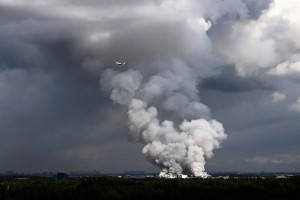
The latest escalation followed a drone strike targeting Azerbaijan’s Nakhchivan region, which prompted a sharply worded response from President Ilham Aliyev toward Iran. While the incident initially appeared to be a limited security event, its political and media repercussions revealed deeper tensions, particularly as pro-government Turkish media outlets issued unusually strong criticism of Azerbaijan.
The rapid sequence of escalation followed by a swift de-escalation in Baku’s tone suggests that the crisis extended beyond bilateral Azerbaijani-Iranian dynamics, reflecting Ankara’s concern over the trajectory of regional escalation and its efforts to contain it.
Diverging Threat Perceptions
At the core of the current tension lies a fundamental divergence in how Türkiye and Azerbaijan perceive regional threats. Ankara appears increasingly concerned that Israel’s regional posture could draw Azerbaijan into a broader confrontation with Iran, thereby raising the risk of Turkish entanglement. Consequently, Türkiye has adopted a more cautious stance, prioritizing de-escalation and strategic restraint.
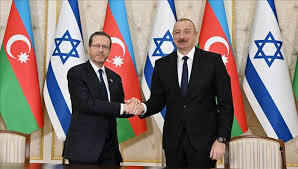
In contrast, Azerbaijan continues to view its relationship with Israel as a critical pillar of its national security. This partnership encompasses extensive cooperation in defense technologies—particularly drones and advanced weapons systems—as well as energy and intelligence collaboration. Moreover, ties with Israel provide Azerbaijan with valuable international leverage, especially in light of persistent criticism of its domestic political system.
At the same time, Türkiye remains Azerbaijan’s primary regional security anchor, placing Baku in a complex position as it attempts to balance two strategically vital but increasingly divergent partnerships.
The Limits of Azerbaijan’s Balancing Strategy
Azerbaijan has long pursued a foreign policy based on balancing multiple external partners to maximize its strategic autonomy. However, recent developments suggest that this approach is facing growing constraints, particularly amid intensifying regional polarization.
Mounting Turkish expectations that Azerbaijan prioritize its alliance with Ankara, alongside Baku’s continued commitment to its ties with Israel, highlight the structural limits of this balancing strategy. The current crisis raises important questions about whether Azerbaijan can sustain such a dual alignment without incurring significant political or strategic costs.
Geopolitical Implications
The divergence between Ankara and Baku carries broader implications for the South Caucasus. A deepening rift could create a relative vacuum in the regional balance of power—one that Russia may seek to exploit in order to reassert its influence, particularly as global attention shifts elsewhere.
Meanwhile, although the United States has shown renewed interest in the region—especially through support for connectivity initiatives and the Azerbaijan–Armenia peace process—its direct engagement remains limited and conditional. As such, any weakening of Türkiye’s role is unlikely to be fully offset by increased U.S. involvement.
Historical Context and Recurring Patterns
Historically, the South Caucasus has been highly sensitive to shifts in great-power alignments. When external balancing mechanisms weaken, the region tends to undergo rapid geopolitical realignments driven by the most assertive external actors.
In this context, current tensions between Türkiye and Azerbaijan reflect more than a temporary dispute; they point to a recurring structural pattern in which regional stability becomes vulnerable when key alliances come under strain.
Conclusion
The evolving dynamics between Ankara and Baku suggest that their relationship is entering a critical phase. If divergences in threat perception persist, the current tensions may evolve from a tactical disagreement into a deeper strategic shift with far-reaching consequences for the South Caucasus.
In an increasingly volatile international environment marked by fluid alliances and strategic recalibration, the trajectory of Türkiye–Azerbaijan relations will remain a key determinant of regional stability in the period ahead.
Most read