Greenland Between American Security and NATO Unity

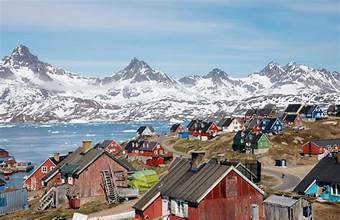
The recent visit by US President Donald Trump’s special envoy to Greenland has reignited debate over Washington’s ambitions toward the Arctic island. While the trip itself produced few tangible outcomes, it underscored a deeper reality: Greenland’s growing strategic importance in the security calculations of the United States and its Western allies.
American interest in Greenland is far from new. Since the Second World War, the island has occupied a critical place in US defense planning. During the Cold War, it served as a vital platform for monitoring Soviet military activity and formed an essential component of North America’s northern defense architecture. Today, as great-power competition returns to the forefront of international politics, Greenland has once again emerged as a strategic asset of growing significance.
Washington’s renewed focus on the island is driven by several interconnected factors. Militarily, Greenland offers an ideal location for missile defense systems and early-warning capabilities. Geographically, it occupies a pivotal position linking North America and Europe across the North Atlantic. Economically, the island is believed to possess substantial deposits of rare earth minerals and other valuable resources that are increasingly important for advanced technology and defense industries. Meanwhile, climate change and the gradual melting of Arctic ice are opening new maritime routes, further elevating Greenland’s geopolitical value.
Yet Greenland’s strategic importance does not necessarily validate proposals advocating its acquisition by the United States. The central flaw in such arguments is that they overlook the nature of the existing relationship between Washington and Copenhagen. Denmark remains one of America’s most reliable European allies, consistently contributing to NATO operations and increasing its investments in Arctic security in response to American concerns. Against this backdrop, suggestions of annexing territory belonging to a NATO ally appear fundamentally at odds with efforts to strengthen transatlantic cohesion.
This contradiction becomes even more significant in the current international environment. Russia’s war in Ukraine has revived fundamental questions about the future of European security and America’s role within the Atlantic alliance. At a time when Washington is urging European partners to shoulder greater responsibility for collective defense, discussions about acquiring territory from a fellow NATO member risk undermining confidence in American commitments and providing strategic competitors with an opportunity to question Western unity.
Moreover, the United States does not need sovereignty over Greenland to achieve its security objectives. Existing agreements with Denmark and Greenland already provide Washington with extensive military access and operational flexibility. Likewise, American companies face few political obstacles to investing on the island. The primary barriers are economic and logistical, stemming from Greenland’s harsh environment, limited infrastructure, and high operating costs rather than any restrictions imposed by local authorities.
The broader significance of the debate lies in the changing geopolitical landscape of the Arctic. Russia continues to expand its military footprint across the region, while China has long viewed Arctic shipping routes and natural resources as opportunities of strategic importance. As competition intensifies, the United States is increasingly compelled to develop a more comprehensive Arctic strategy. However, the success of such a strategy will depend on strengthening partnerships and alliances rather than generating disputes with close allies.
A more pragmatic approach would involve deepening cooperation among the United States, Denmark, and Greenland’s local government. This could include expanding defense coordination, enhancing Arctic surveillance capabilities, improving critical infrastructure, and encouraging commercially viable investment. Such a strategy would advance American security interests while preserving Danish sovereignty and reinforcing NATO cohesion.
Ultimately, Trump deserves credit for drawing renewed attention to Greenland’s strategic importance, a subject that had often been overlooked. Yet the real challenge is not ownership of the island. Rather, it is how the United States and its allies manage the growing competition in the Arctic in a way that strengthens Western security, respects existing alliances, and maintains stability in one of the world’s most strategically important regions. Greenland is no longer merely a remote island covered in ice; it has become one of the key geopolitical crossroads that could shape the future balance of power in the decades ahead.
Most read