The Trade Routes Iran Cannot Afford to Lose

The future of relations between the Central Asian republics—Kazakhstan, Kyrgyzstan, Tajikistan, Turkmenistan, and Uzbekistan—and Iran, now governed under the growing dominance of the Islamic Revolutionary Guard Corps (IRGC), is likely to be defined by pragmatic economic and transit cooperation tempered by heightened strategic caution. While the 2026 conflict has caused immediate disruptions, long-term cooperation is expected to endure, driven by shared interests in regional connectivity and the emergence of a more multipolar international order.
Iran's Shift Toward IRGC Dominance
Following the assassination of Supreme Leader Ali Khamenei and members of his family by U.S.-Israeli forces on 28 February 2026, his son Mojtaba Khamenei assumed the leadership with strong backing from the IRGC. The Revolutionary Guards—particularly under Commander Brigadier General Ahmad Vahidi—have since emerged as the principal power center in Tehran.
The IRGC now shapes key military decisions, influences diplomatic negotiations, and increasingly overshadows civilian institutions, including President Masoud Pezeshkian's administration. Foreign Minister Abbas Araghchi and Parliament Speaker Mohammad Bagher Ghalibaf are themselves former IRGC officers.
Functioning as a "state within a state," the IRGC reportedly controls nearly half of Iran's economy, prioritizing ideological resilience, asymmetric regional influence, and sanctions-evasion mechanisms. At the same time, it continues to build upon Tehran's long-standing "Look East" strategy launched in 2005, which sought deeper political, economic, and strategic engagement with Asia.
A Relationship Built on Pragmatism
Even before the 2026 conflict, Iran's ties with Central Asia had been steadily strengthening, driven primarily by economic interests rather than ideological affinity.
Trade volumes expanded significantly. Tajikistan's bilateral trade with Iran quadrupled within a few years, Kazakhstan pursued a target of $3 billion in annual trade—largely through agricultural exports—while Uzbekistan promoted joint investment initiatives and port agreements. Turkmenistan concentrated on natural gas swaps and pipeline cooperation.
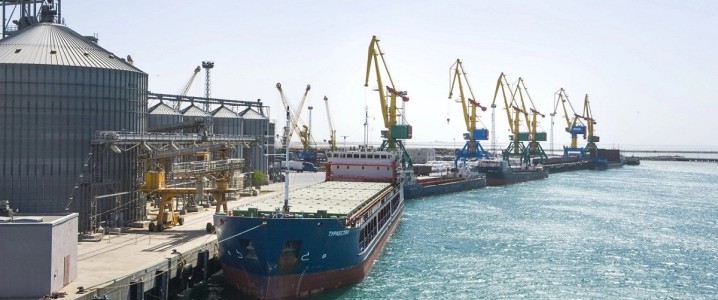
Iran also became an indispensable transit gateway. Through the International North-South Transport Corridor (INSTC) and ports such as Chabahar and Bandar Abbas, Tehran offered the landlocked Central Asian states direct access to the Indian Ocean, reducing dependence on routes passing through Russia, Europe, China, or Afghanistan. The implementation of the Eurasian Economic Union (EAEU)-Iran Free Trade Agreement in May 2025 further reinforced expectations of expanding regional commerce.
The nature of these partnerships varied across the region. Tajikistan benefited from shared Persian linguistic and cultural ties, whereas the other republics focused on practical cooperation in transportation, energy, logistics, and investment. Iran simultaneously positioned itself as both a conduit for sanctions mitigation and a balancing actor against excessive Russian or Western influence.
For their part, Central Asian governments maintained their traditional multi-vector foreign policies, carefully cultivating relations with Iran alongside Russia, China, Turkey, Europe, and the United States. Tehran likewise avoided policies that might destabilize the region, seeking to preserve constructive relations with both Moscow and Beijing while limiting opportunities for expanded U.S. influence.
The Immediate Impact of the 2026 War
The outbreak of war created substantial short-term disruptions.
Iran's temporary ban on food exports in March 2026 affected import-dependent countries such as Tajikistan, while instability surrounding the Strait of Hormuz increased transportation costs and interrupted established trade routes.
Central Asian governments responded cautiously. Most adopted official neutrality while calling for restraint, although Tajikistan, Turkmenistan, and Uzbekistan dispatched humanitarian assistance to Iran. None aligned themselves against Tehran, yet the crisis accelerated efforts to diversify transport corridors in order to reduce dependence on Iranian infrastructure.
What IRGC Rule Means for Central Asia
Historically, the Revolutionary Guards have exercised influence along Iran's northeastern frontier—particularly bordering Turkmenistan—through intelligence networks, cultural engagement, and limited economic leverage.
Unlike the IRGC's expansive role across the Middle East, its approach toward Central Asia has generally remained restrained, emphasizing trade, transportation, and soft power rather than ideological confrontation.
Several important trends are likely to shape future relations.
Despite recent disruptions, Central Asia still requires Iranian transit routes. As landlocked economies, the republics rely on Iranian ports—especially Bandar Abbas and Chabahar—as their shortest access to global maritime trade. Although alternative rail links connecting Central Asia with Pakistani ports continue to develop, the recent conflict demonstrated just how dependent regional commerce has become on Iranian transport corridors.
Rather than abandoning these routes, the republics are likely to restore and strengthen them while simultaneously investing in greater diversification and resilience.
Reconstruction inside Iran could also generate substantial commercial opportunities. Should sanctions ease and rebuilding begin, Central Asian exporters would be well positioned to supply construction materials, grain, metals, engineering services, electricity, logistics, and transportation to Iran's market of approximately 93 million consumers. Iran, in turn, would resume exports of petrochemicals, metals, minerals, and food products to its northern neighbors.
Uzbekistan appears particularly well positioned to deepen cooperation with Tehran. Tashkent has consistently pursued a pragmatic foreign policy focused on economic connectivity rather than ideological alignment. Expanding rail access to the Persian Gulf and Gulf of Oman, increasing regional trade, and strengthening east-west as well as north-south transportation corridors remain central priorities that naturally complement closer ties with Iran.
Kazakhstan likewise has strong incentives to revive bilateral commerce. Prior to the conflict, Astana significantly expanded agricultural exports through Iranian ports, providing an alternative to northern transit routes passing through Russia while opening access to South Asian markets.
Turkmenistan's strategic importance may increase even further. Sharing an approximately 1,100-kilometer border with Iran, it represents Tehran's principal overland gateway to Central Asia. Cooperation is expected to expand in electricity exchanges, natural gas swaps, rail transport, border trade, and logistics, facilitated by Turkmenistan's long-standing policy of permanent neutrality.
Washington's Pressure Campaign
The article argues that the Trump administration is likely to subordinate the economic interests of the Central Asian republics to its broader strategy of isolating Iran.
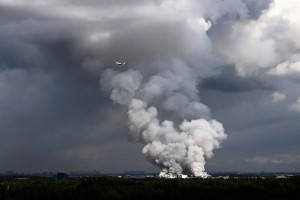
Washington may pressure regional governments to forego commercial opportunities involving Iran while offering little tangible compensation. Meanwhile, U.S. military operations have reportedly targeted infrastructure supporting regional trade, including railway bridges connected to China's Belt and Road Initiative, facilities at Chabahar Port, and transportation infrastructure surrounding Bandar Abbas.
Such actions, the author contends, risk undermining broader Eurasian connectivity while encouraging regional governments to hedge their strategic positions through closer engagement with Russia, China, Turkey, or alternative multilateral organizations.
Connectivity Over Confrontation
Although greater IRGC influence could produce a more assertive ideological posture, economic pragmatism is likely to remain the dominant consideration. Stable borders, reliable trade revenues, access to regional markets, and effective sanctions-evasion networks all serve the Revolutionary Guards' strategic interests.
At the same time, Central Asian governments remain determined to prevent their region from becoming another arena of geopolitical rivalry. Having experienced decades of Soviet stagnation followed by the instability generated by the war in Afghanistan, their overriding priority is economic development rather than strategic confrontation.
Iran itself may place growing emphasis on overland trade routes following the weakening of regional allies such as Hamas, Hezbollah, and the Assad government. Greater reliance on Caspian shipping, the Middle Corridor, and the China-Kyrgyzstan-Uzbekistan railway could therefore become increasingly important components of Tehran's long-term strategy.
Looking Ahead
Over the next one to two years, trade volumes are expected to remain below pre-war levels as governments continue diversifying transportation options. Nevertheless, Iran is unlikely to lose its strategic relevance as a southern gateway for Central Asia.
Assuming hostilities eventually subside, the prospects for renewed economic cooperation remain strong. The International North-South Transport Corridor, Iranian ports, and the EAEU free trade framework all provide institutional foundations for expanding regional commerce.
Ultimately, geography and mutual economic interests are expected to outweigh ideological differences.
Rather than evolving into deep strategic alliances, relations between Iran and the Central Asian republics will likely remain pragmatic, transactional, and carefully balanced. An Iran increasingly influenced by the IRGC is expected to prioritize stability and connectivity along its eastern frontier, while Central Asian governments will continue pursuing multi-vector foreign policies designed to ensure that no single external power—whether Iran, Russia, China, or the United States—can determine their strategic future.
Originally published by James Durso.
Most read



Read also