Battle For Armenia: Yerevan Between Moscow And Washington

One of the states with a very specific position in the international political arena is the Republic of Armenia. In recent years, Yerevan has found itself in a dangerous geopolitical in-between space between Russia and the West. Since the current Armenian Prime Minister Nikol Pashinyan came to power in 2018, he has gradually initiated Armenia’s shift toward the West (the European Union and NATO), alongside a gradual cooling of relations with Russia, on whose energy resources his country is heavily dependent.
Pashinyan’s Electoral Triumph in Armenia
In such tense circumstances, Armenian parliamentary elections were held on Sunday, June 7. Europeans and Americans strongly supported Pashinyan’s party, while the Russians backed opposition parties. Many foreign observers believe Russia made significant efforts in cyber warfare to secure the victory of pro-Russian options. That is true, but it is also true that the West acted in favor of the ruling party as well.
In the end, as expected, Pashinyan’s pro-Western Civil Contract party won with 49.85% of the vote. Second place went to the Strong Armenia party led by oligarch Samvel Karapetyan, which won 23.31% of the vote. He and his party are accused of pro-Russian positions, which is largely accurate. Third place went to the Armenian Alliance with 9.95% of the vote, also a pro-Russian option.
Given these results, it is evident that Armenia will maintain its Western trajectory, which clearly implies initiating the process of EU accession and possibly even NATO membership, although no Armenian politician publicly advocates such a position.
Armenia – an Unquestionable Russian Partner from 1992 to 2018
Before analyzing how Armenia might behave in the geopolitical arena, it is necessary to provide recent historical context. After the collapse of the Soviet Union in 1991, Armenia became a reliable Russian partner. Immediately after the USSR’s collapse, it joined the Commonwealth of Independent States (CIS) to prevent the collapse of its economy, which depended heavily on Russia and neighboring countries.
Armenia also joined the Collective Security Treaty Organization (CSTO), essentially Russia’s version of NATO, which also includes Kazakhstan, Belarus, Kyrgyzstan, and Tajikistan. Article 4 of the organization guarantees collective defense to member states if they are attacked—mirroring NATO’s Article 5.
The strategic partnership between Moscow and Yerevan was crowned when Armenia joined the Eurasian Economic Union (EAEU) in 2015. The country was one of the most reliable Russian partners in the post-Soviet region.
The Armenian Revolution Changes the Geopolitical Position of the Country
However, everything changed after the Armenian Revolution of 2018, which Pashinyan called the Velvet Revolution. He led mass street protests against authoritarian politician Serzh Sargsyan after the latter attempted to become prime minister for a third time. The protests forced Sargsyan to resign, and Pashinyan came to power as prime minister.
It was a classic color revolution, similar to the one carried out in Ukraine in 2014. In both cases, the countries shifted toward the Western camp.
Armenia’s Shift Toward the West Despite Strong Ties with Russia
After coming to power, Pashinyan gradually steered Armenia toward the West while simultaneously distancing the country from Russia (and to a lesser extent China, Iran, and other eastern powers).
This raised questions about the rationality of such a foreign policy orientation. Armenia’s dependence on Moscow is evident: 82% of its gas, 60% of oil and petroleum products are imported from Russia, and 35% of Armenian foreign trade is with Russia.
Despite this dependence, Pashinyan pushed forward. In February 2024, Armenia froze its membership in the CSTO—marking a turning point in a not entirely rational process.
The Cost of Pro-Western Policy: Nagorno-Karabakh
Pashinyan’s shift toward the West did not prevent military defeats of Armenians in Nagorno-Karabakh in 2020 and 2023 (a predominantly Armenian-populated region within Azerbaijan, controlled by Armenia since the 1990s wars). After these defeats, more than 100,000 Armenians fled to Armenia.
The EU, NATO, and the United States did nothing to prevent Azerbaijani offensives or protect the Armenian population. This is unsurprising, as Nagorno-Karabakh is internationally recognized as Azerbaijani territory and Azerbaijan is becoming an important energy supplier to Europe.
Even Russian peacekeepers did not make significant efforts to protect the Armenian population of the unrecognized Republic of Artsakh.
Russia had previously mediated between Armenians and Azerbaijanis, notably in 2016 when it helped broker a ceasefire. But once Armenia shifted toward the West in 2018, Russia no longer had an incentive to support Armenian positions in later conflicts.
“Bromance” of Two Authoritarian Leaders
Populist Pashinyan survived national defeats and continued his pro-Western policy. At the same time, he became an increasingly authoritarian leader, arresting intellectuals and political opponents to consolidate power.
This did not prevent Donald Trump from cooperating with him. Since Trump returned to power in 2025, relations between Yerevan and Washington have significantly deepened.
In August last year, under Trump’s sponsorship, Armenia and Azerbaijan signed a Peace Agreement and Establishment of Interstate Relations. Part of the deal included the Zangezur transport corridor, symbolically named the Trump Route for International Peace and Prosperity (TRIPP). The corridor connects Azerbaijan with its exclave Nakhchivan through Armenian territory.
Armenia retains sovereignty, while the US received a 99-year concession to develop the corridor.
Armenia as a Strategic Asset for Trump
In January this year, a Strategic Partnership Charter between Armenia and the United States was signed. In May, a further strategic agreement was concluded, with US Secretary of State Marco Rubio visiting Yerevan.
Trump is interested in Armenia due to its reserves of iron, copper, zinc, and other minerals. His worldview treats states as corporate assets with varying strategic value.
The goal of US-Armenian cooperation is to weaken Russian, Iranian, and Chinese influence in the Caucasus and strengthen American influence. Unsurprisingly, Iran, Russia, and China have all protested these developments, especially the Zangezur corridor agreement.
Only Trump Can Provide Security Guarantees
A key question remains: will the West protect Armenia and provide security guarantees against a potential Russian invasion?
The EU has no military force, NATO depends on Washington, and only the United States could realistically provide Armenia with such guarantees. No such formal agreement currently exists, though it could emerge under Trump’s administration.
Could Russia Impose an Economic Blockade?
Russia could respond by freezing trade with Armenia, but it is unclear whether Putin would take such a step. Cutting energy exports would also remove Russia’s influence in Armenia entirely.
Russia also maintains a military base in Gyumri, which Pashinyan has said he does not intend to close.
The High Cost of Breaking with Moscow
If Russia cut energy supplies, Armenia could partially replace them with imports from Iran, and also Azerbaijan and possibly Turkey (despite the lack of relations since 1993).
However, Armenia would pay market prices, which are up to three times higher than subsidized Russian energy. This would heavily burden the state budget and households.
Economists estimate Armenia’s GDP could fall by 14–15%, triggering recession, inflation, shortages of electricity, fuel, food, and industrial inputs, as well as capital flight and reduced remittances from the diaspora in Russia.
Can Armenia Withstand Economic Pressure from Russia?
While diversification is possible through Western partners and regional states, it would take years for Armenia to stabilize economically after a rupture with Russia.
A Risky Foreign Policy Strategy
Overall, Pashinyan’s Western pivot appears risky. Armenia would arguably benefit most by becoming a bridge between East and West, given its strategic location between Turkey, Russia, and Iran.
A similar argument was once made about Ukraine’s neutrality. However, that is not the trajectory being pursued.
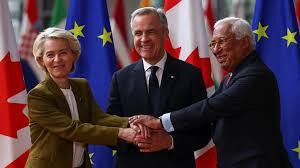
Following Pashinyan’s electoral victory, European Commission President Ursula von der Leyen praised the outcome, while Putin called for a referendum on Armenia leaving the Eurasian Economic Union.
Armenia’s leadership seeks to balance East and West economically, but politically it is clearly aligned with the West.
However, Pashinyan did not win a two-thirds majority, which complicates constitutional changes—particularly regarding territorial claims over Nagorno-Karabakh, a key condition for normalization with Azerbaijan and Turkey.
Armenia is walking on thin geopolitical ice, with its main advantage being its partnership with Washington and Trump. As Henry Kissinger once said: “It may be dangerous to be America’s enemy, but to be America’s friend is fatal.”
Most read